XPEL’s ‘Invisible Product’ Drives Profits in the Automotive Aftermarket
In this week’s Stocks & Markets podcast, we talk with XPEL’s CEO Ryan Pape to learn more about the company and how it delivers profits from a product that disappears when you use it.
You've reached your free article limit
You've read 0 of 1 free Pro articles.
Summary:
- XPEL is a US-based company that is the leader in automotive paint protection film
- Growth will be predominantly in the automotive space, but they have new products that might keep your home looking good, too, and will drive new revenue.
- This is a global business, and we dig into XPEL’s manufacturing strategy in China.
Introduction
I sit down with Ryan Pape, the CEO of XPEL (XPEL) to discuss what he’s doing to drive profits in the automotive aftermarket industry. It’s an interesting conversation that covers business strategy, investing, and the business of cars. I hope you enjoy.
Transcript
Jason Meshnick (00:02.496)
Your car is one of the most expensive investments that you’ll make, but how do you protect it? I mean, sure, there’s insurance, but that only helps after an accident. How do you protect the value of your investment? Today’s guest has that answer and will help us learn more about the company that he manages. I’m Jason Meshnick, the CEO of the Street Pro, and I’m being joined today by a very special guest, Ryan Pape, the CEO of XPEL. Now, for those of you who are not familiar with XPEL, the company makes, sells, distributes, and installs aftermarket products for vehicles and is best known for their paint protection film that protects cars the sorry protects cars from scratches and paint chips. And I will tell you also in the interest of full disclosure that I am a customer and I have this stuff all over one of my cars that I recently took to the track with confidence because I knew that I’d be the car would be protected and to be perfectly frank came back with lots of rubber marks all over it that I was able to pretty much wipe off.
Jason Meshnick (01:00.46)
So I become an even bigger fan of of the product. So before we dig in, I just want to start with a few statistics. So first of all, XPEL has a market cap of around 1.2 billion. It’s got 1143 employees. 2025 earnings were $51 million on $476 million in revenues, and the shares trade on the NASDAQ under the symbol XPEL. Okay, hello
Ryan, welcome to the Street Pro.
Ryan Pape (01:31.067)
Yeah, well thank you Jason and well said and always love having a customer to talk to as well. So, glad you had a good experience so far.
Jason Meshnick (01:42.028)
Yeah, yeah. I’m I’m fairly new to it. I had the car expelled about two years ago and I just have just a additional confidence in driving in driving this car. So it’s it’s been really good. okay. Yeah.
Ryan Pape (01:57.051)
Ari, our history’s told us that since you bought it once, you’ll probably buy it again. So hopefully we’ve got a customer for life in you.
Jason Meshnick (02:03.938)
I think that’s completely true. I think any of my valuable cars will be absolutely covered in XPEL because it it just it just makes sense these days. You spend so much money on on paint or the you know the value of paint. Even if you if you buy a new car and you want some of the nicer colors, some of the rarer colors, right? they charge you for that. So you might as well protect it. yeah. Okay, so let’s let’s dig in. We’ll talk about XPEL.
One the things that I learned in my research is that XPEL is not an AI company like Allbirds has recently decided to become. But my understanding is is that XPEL got its start as a tech company. Can you tell us more about the company and its beginnings?
Ryan Pape (02:47.109)
Sure, yeah, we did, we did. So, you know, embedded in our company is a small software business and it is a tool we have for our customers, our B2B, our professional customers, where we pattern and template basically every car made everywhere. And that’s really to facilitate the premium installation of our films on the car. So everything we sell is ultimately custom cut, the paint protection film, window film, custom cut to…
be applied on the car. And the original beginnings of the company were to be a software company and just basically try and build a business around those templates and selling those templates. And it remains and was an integral part of the company, but it sort of ceased to be the business model of the company a long time ago.
Jason Meshnick (03:39.662)
Okay, great. And how long have you been with the company for?
Ryan Pape (03:43.419)
A long time. I’ve been the CEO since 2009. I was with the company a little bit prior on another stint.
Jason Meshnick (03:52.142)
So you’ve seen all this change during that time. Yeah. so you template every car. How many how many cars is that globally?
Ryan Pape (03:55.195)
For sure.
Ryan Pape (04:02.725)
Well, it’s a lot. It turns into about 200,000 individual patterns that have some set of components and pieces in them. I think it’s one of the things that maybe the car enthusiasts in your audience aren’t shocked to learn, but many people are, which is just how many variations and permutations there are of every car. People think, okay, there’s a bumper, there’s a hood, there’s a door, there’s a roof. No, there may be.
four or five different bumpers with, especially if you’re in the business we are, where you’ve got different cutouts and parking sensors and options and accessories. So it’s sort of a never ending part of the job, but part of what makes us special too.
Jason Meshnick (04:44.851)
How far back did the history go? of the templates?
Ryan Pape (04:47.387)
Oh, well, we go back to the mid 90s with pretty wide coverage and then selectively older than that, you obviously for for makes in years where it makes sense where those cars are still around. But one of the things that has also happened in this business here, we’re in the business of protecting the car. And over time, what we found is people want to protect more and more of the car. So there was a point in time where, you didn’t you didn’t template.
and with the intention of protecting every square inch of paint on the car. But over time, that’s shifted. And there are people, not everyone, but there are buyers that want to protect pretty much every square inch of paint on their car for pretty much every car. not only has the number of vehicles grown, but sort of how we look at covering them has grown during that time too.
Jason Meshnick (05:37.389)
Sure. Yeah. And so when we talk about paint protection film, are we talking just clear or do you do colors as well?
Ryan Pape (05:45.477)
Yeah, so the original business and the majority of the business was clear. And it’s really designed to be a sacrificial layer that’s bonded the paint, sits on top of the paint to protect it from damage. everybody knows, like your experience, that the top satisfaction complaint for a long time for the new car buyer was, I got it, and then what happened to paint jets, right? So we’re here to protect that impulse. And the idea would be that while it’s on there, it’s doing its job, but you never see it.
You know, so not really great when you’re us having to market into product people don’t know about driving down the road when you can’t see it. But, you know, clear film was the start. And then subsequently, we’ve seen interest in sort of the personalization aspect. So really after the clear product was matte, matte films. And so obviously, there’s a, you know, certainly a trend that’s that’s been in existence for a while and in matte paint or satin finish. And doing that with film.
is great, it’s better than paint for that satin finish, and it also gives you the protection. So that’s grown to be not an insignificant part of that business. And then more recently with colored films for those that bought a car and don’t like its original color. But you can imagine of all the customers out there, most of the people are happy with the color they got and then some portion want to to change that.
Jason Meshnick (07:08.631)
Right. No, I remember back in the day when these pain protection films first came out, you’d see after a few years cracking and they would turn yellow and the the quality was pretty bad and I was always skeptical about putting that on on my car. But it seems like today no one’s worried about that. So how how how has the quality changed over time?
Ryan Pape (07:25.559)
Yeah, no, that’s true. mean, the evolution of the product since the very first sort of versions, I mean, really feel like ancient prototypes at this point, you know, it’s changed tremendously. you know, our product is 10 year warranty. So for pretty much anyone who’s who’s owning a car, we’re going to protect it for the life and they’re going to have a good experience with that. And, you know, our product really revolutionized the industry in terms of bringing
the first real long-term durability. And there are other good products in the market now, but for your average customer, they should have confidence that you’re not going to have any problem with the product. The product’s there to prevent a problem, not create one. And the current generation of products are just really amazing for doing that.
Jason Meshnick (08:13.622)
Okay. And so ten year warranty, so the product should last for ten years and then and then what happens?
Ryan Pape (08:19.545)
Yeah, well, mean, you know, like a lot of things, a 10 year warranty is is our warranty, but the real world real world experience is probably even better. Right. So it’s probably there for as long as you own the car. You know, we’re at what, 13 years fleet age now. So if you buy a new car today and if that’s still true 13 years from now, you’re probably in good shape. But, you know, it’s designed to be a one and done, you know, short of collision damage or something that might necessitate replacing it.
It’s not a consumable product. You do it once. It’s there for the life of your ownership. mean, we’ll get testimonials all the time where people are, you know, they take a corner too tight in a parking garage and scrape up their film and the paint is completely unbothered underneath. You know, that’s a great added benefit. Yeah, you want to replace the film in that case. But for the most part, no, you’re going to do it once and enjoy it the whole time you’ve got the car.
Jason Meshnick (09:13.612)
Great. If you could do protect my wife’s tire or wheels from from curb damage.
Ryan Pape (09:20.334)
Yeah, well, it’s interesting you say that. We’re not in the sort of rim business today with a pay protection film or similar, but one of the things that’s been true with this business since the very beginning is that, you know, the people love the product and even though it’s designed and engineered for one application, we find people buying it or procuring it somehow for all sorts of other uses and, you know, putting it on all the things that they love that they want to protect. So,
It’s sort of been a gradual evolution for us to say, you know, which of those are we going to turn into real products and expand what we’re doing because we know people like it. But, you know, the vast majority for us is automotive today, but you wouldn’t have to look too far to find somebody who’s bought this product for years, you know, trying to apply it for protection in other areas of their life.
Jason Meshnick (10:09.814)
Yeah, I know on our house we recently put some kind of a film on the windows and and that blocks some of the light. It’s UV protection, but it also during the day gives us a level of privacy. is that a business that you guys are in as well?
Ryan Pape (10:24.569)
Yeah, yes, we have an architectural film line for exactly that for the residential glass applications in your house. We’ve got products that we’re launching for countertop protection, know, solid stone countertop obviously is actually a big end market and one that particularly resonates with our customer base for whatever reason. That’s something they’ve long thought, hey, I put this on the car, I try and put this on the countertop. So that’s a new application for us.
know, recently in the past two years launched a marine product line. you know, slowly but surely, you know, protecting everything you love is sort of a way that the business is evolving, but pretty hard to compete with people’s cars in terms of things they love.
Jason Meshnick (11:08.202)
Yeah, yeah, exactly. okay, so let’s let’s talk about your product mix. And we we’ve just gotten into that a little bit. so how do you make money? What are what are your key products? Where where does revenue mostly come from?
Ryan Pape (11:20.207)
Yeah, so number one product is paint protection film, which we’ve been talking about. And you just want to think of it in terms of our product sales, you know, call that 70, 70 plus percent of revenue. So that was the initial product and still the core product. The balance of that are the window films, like you mentioned, it’s very small amount going into architectural applications, but a lot of window tinting films going into automotive, you know, very common product to buy at the same time with a new car. When you look at the
The overall revenue mix, that kind of describes our product mix. We’re about 75 % product and 25 % service revenue or install revenue. And that’s really just a part of our business in addition to making and selling the films is installing them in certain applications. We go to market primarily through an aftermarket channel where we’ve got many thousands of product dealers around the world who take our products and install them.
in their local communities. But there are parts of the business where we actually install the products ourselves as well. Some of the OEM applications where we’re in plan with some of the manufacturers. And so there’s a service component of the business that’s been growing as well.
Jason Meshnick (12:34.538)
Okay. So okay, so you own you own some of the dealers as well.
Ryan Pape (12:39.427)
Yeah, we do some and we serve some car dealers and some OEMs for that installation, but businesses as well.
Jason Meshnick (12:47.818)
Okay, great. what what products are doing well right now? I think you’ve answered this already, but
Ryan Pape (12:55.255)
Yeah, well, mean, the paint protection does well because people absolutely love it and it’s the core of what we do. The window film products, you know, really have probably been growing at a faster rate for us, but off a smaller base. So that’s, you know, was a later product line for us. We have a windshield protection film, which is exterior film would go on your windshield as you you no doubt know, and many of your listeners know.
know, windshields are very expensive, become much more expensive and in many cases much harder to get depending on supply chain challenges, manufacturing challenges. So that’s a new product for us. When we talk about people that would buy a paint protection film and then always think about what they could do with it, the first thing they always think of is the windshield. And that product as it’s made is not a good fit for the windshield, but we have.
developed a great product for that windshield protection. So that’s really the newest product and one of the ones our customers are most excited about.
Jason Meshnick (14:00.789)
How old is the windshield product?
Ryan Pape (14:03.294)
It really just launched in the past year.
Jason Meshnick (14:05.843)
Okay, that’s great because I asked my installer a year and a half ago about windshield and he said, No, it’s not there yet and here’s why. so great, because I’ve also got a car that’s got a very expensive windshield, right, a modern car, and I think it’s a two thousand dollar windshield that is currently cracked. So perhaps the next one will get
Ryan Pape (14:23.045)
Yeah, right. I mean, it’s become such a pain point for people. then, you know, for us, the majority of our revenue is also in the aftermarket. I mean, we we’re appealing to the fact that, you know, this is someone’s car as a prized possession, they have private ownership, they want to protect it, right? Some are some are enthusiasts that live and die by the car. But even those that aren’t enthusiasts.
you know, the majority of the owners have private ownership and that’s where our products go. But when we look at some of our new products like this windshield film, you know, there’s applications for that in fleets and another sort of verticals that really are a lot driven more so than just sort of private ownership. it’s, you know, that comes with other challenges and other things we need to do as a business, but it’s interesting because it, you know, adds another dimension to our growth, you know, beyond sort of that.
that accessory purchase that many do on the new car.
Jason Meshnick (15:19.849)
Right, and and it it’s an it’s an opportunity for people to actually save money, right? You know, it probably pays for itself in one windshield. living in Colorado, yeah, ever every skier has has cracked windshields. And and I think so that that opens it up to people who are beyond just wanting to protect the paint, but also maybe they just are tired of the hassle of dealing with it with a new windshield.
Ryan Pape (15:39.963)
Yeah, huge hassle. when you think about that product in the context of fleets, know, also you think about downtime, right? So it’s one thing, you know, for you, if you as a consumer decide to drive around with the cracked windshield while you’re waiting for it, that if you’re a fleet operator, you don’t have that choice. You have to take it off the road. you know, certainly the cost of that accelerates for those.
Jason Meshnick (15:55.753)
Right. Yeah.
Yeah, and I know you sponsor lots of race cars as well. I’m I’m a racer and my race car has a a big crack in it. So I imagine this is a help for that too. great. okay, so so that is far from your biggest market, but what what is your biggest market right now? I I guess, you know, globally. as we talk globally, what’s what’s your biggest market?
Ryan Pape (16:08.347)
I’m sure, Yeah, yeah.
Ryan Pape (16:22.331)
Yeah, the U.S. is our biggest market. Depending on the quarter, it bounces around a bit. We call it about 55 % of our revenue is U.S. It’s first market, biggest market. And one of the things that the U.S. has unrivaled for is both its automotive aftermarket. I mean, it’s just the most energetic place for that in the world. And then also the robustness of the dealerships. know, dealerships here are very effective at selling things.
Beyond that, really, China would be number two and then Canada number three. Canada, per capita, per new car, is actually our best market in the world. And that really speaks to the fact that, it was an early adopter market for these products. So it’s just got more time in the seat to help build demand and awareness. But also where you’ve got tough weather conditions, tough winter weather, in the case of Canada.
We tend to do exceptionally well there because if you’ve driven and talking about broken windshields, but if you’ve driven in Calgary in the winter, mean, it doesn’t get much worse.
Jason Meshnick (17:30.239)
I’m I’m sure. Yeah. It’s cold and yeah. so speaking of China, you my understanding is that you just bought out your distributors in both China and South America. Can you talk a little bit about that decision and what benefits you’ll get?
Ryan Pape (17:44.345)
Yeah, we’re not in a business when you look at the B2B business that we’re in. Obviously, we make money by selling all our products to our customer base, our product dealers. I that’s how we make money. But we’re not in a transactional business, meaning we don’t just sell the roles of our product at wholesale to anyone that wants it. We’re in the business of building a curated, best-in-class professional dealer network.
So really if someone wants to buy our products, it’s really a discussion to say, yeah, you want the products, but I think you want to be a dealer. And if you want to be a dealer, here’s what we’ll ask of you, here’s what we’ll give you, here’s the value that hopefully will help create for you. And so, you by extension, we don’t just sell the products to anyone that wants them, right? We need to match sort of supply and demand and match our brand positioning in the market. So when you take that as a model and you’re trying to sell internationally,
When you accumulate distributors all over the world, it’s really hard to find those that are truly invested for the long-term in that mission versus some that want to be more transactional. We’ve done a great job of finding amazing distributors, but we’ve also gone around to the top 20 car markets of the world and for the most part, acquired our distributors to really operate ourselves.
And we got a product that people don’t know about, know, one where we’ve got to create the demand or we want the best brand positioning possible. So it’s been our mission to really operate directly and sell in the top 20 of the top 25 car markets of the world. In the case of China, obviously you’re dealing with the largest car market in the world, largest car production country in the world. And we’ve had historically the best downstream
distribution partner there that you could imagine. But as we look at the market and what we want to accomplish, there was a good time to acquire that distributor as well and put us in a position to sell more directly there in China, which we’ve now done in August last year. And really, that business was mostly into the aftermarket there, product dealers. But the manufacturers, particularly the EV manufacturers in China,
Ryan Pape (20:04.344)
These have become really attractive customers for us. And so by being there directly and consolidating our distribution, we can now work with them and sell to them, which we’re doing as well.
Jason Meshnick (20:16.714)
Okay. Yeah. so it gives you gives you more control, more more ability to make better sales. what about and so you’re so you own the manufacturing as well as the supply chain there? Did you how much how much manufacturing is done in China?
Ryan Pape (20:17.947)
Yeah.
Ryan Pape (20:33.083)
Yeah, so we just recently purchased a manufacturing site in China. We’ve historically made product in China, but on a contract basis, if you will, that we didn’t own. And really, if you go back in our history, China’s been an important market for us for a long time now. We’ve been going back 10 plus years. And where that started, it really just speaks to sort of all the changes that we see in the world. But when it started, we had
100 % of the product we sold in China was made in the US, like the majority of our products are, and sold in China. And then, obviously, over time, China’s industrial base grew, and China’s legendary for its cost and competitiveness. so we switched a lot of that product to be made in China, but it’s really a made-in-China-for-China strategy. And so that’s really where we are now, or where we have been.
The next logical step was to just own the manufacturing in country as well. Obviously, we want to be able to iterate on the products quickly, control the quality, et cetera, et cetera. And so now we’ve acquired a facility there and will really be vertically integrated all the way through for probably 80 plus percent of what we sell in China.
Jason Meshnick (21:54.076)
and will you also be trying to increase sales in other Asian countries?
Ryan Pape (21:58.747)
For sure. And every country has its own profile there, know, in auto business. it’s just amazing, you know, despite the fact that the end consumer looks the same in terms of who buys a new car, know, everything involved in that process and how much it varies from country to country. But, you know, in addition to China, we look at Southeast Asia and many of these countries as just absolutely right for further development for our products. And so, you know, having a
a strong base of operations in China is only going to be helpful for us to further accomplish that.
Jason Meshnick (22:34.89)
Sure. Sounds good. along those similar lines, you just invested a hundred and ten million dollars in the business for supply chain and manufacturing. can you tell us a little bit about that? Give us some of the details?
Ryan Pape (22:47.631)
Yeah, that China acquisition was part of that initiative. And the second piece was expansion of our facilities here in Texas to incorporate more manufacturing elements for parts of the product and parts of the supply chain that we currently outsource. And really, are multiple motivations to do that. There’ll be a great financial return on that project that we talked about. But the real motive, and one of the real motives is,
just to be able to iterate faster. The further we get into this business, you ask the question about the colored films or is it all clear earlier, we see so many viable and interesting end market uses that require incrementally different products to meet their needs. And we want to be able to pursue all of those on our own timeline and do it as quickly as possible. And so anytime you’ve got third parties involved doing anything,
be it doing great job in those cases, it still adds a delay to that. So, insourcing a bigger portion of our supply chain here in Texas and then in China will really help us just take more control and increase our speed and velocity for things the market needs, things our customers need.
Jason Meshnick (24:08.585)
Jordan the hundred and ten million, was that self financed?
Ryan Pape (24:12.251)
Yes. Yeah. we expect to really outside of some real estate that we finance the rest of the really cashflow from operations. We’ve been fortunate to be a net zero position for many years. I think capital allocation is a challenge and opportunity always. And we’ve been thankful to be in a really healthy position, but also run this business and you
you want to reinvest in the business and the hurdles to do that, know, hurdle rates you want to hit to do that effectively are sometimes challenging. But in this case, you know, after looking at a laundry list of things we could do, you know, you could say this is sort of, you know, the vertical route, but looking at a horizontal opportunities for expansion as well, we looked at a lot of things that said, look, those could be interesting parts of our business in the future.
but they’re all secondary to just further investment to solidify your core. And so that’s really how we ended up on this strategy. we’ll cover the most of that is just cash flow from operations over a really short period of time.
Jason Meshnick (25:23.165)
Yeah, that’s one of the impressive things as I was doing research on the company is that you really, you know, you do have no debt. I think there’s twenty million dollars total, but you know, th this seems like a company that is managed to be fairly low risk. Yeah.
Ryan Pape (25:37.231)
Yeah, I mean, I think this company, if you go back far enough in our history, the company was probably, could have easily been bankrupt while I took over. And you realize that constraints are incredibly valuable. And so I think people do their best work with constraints. And so the idea that it’s obvious a company could lever up extensively.
and put that capital of the work being productive and not make huge mistakes along the way, obviously it can be done. I mean, it’s been done many times, but it’s also failed many times. And so I think that, know, that our sort of current state financial situation doesn’t really reflect an appetite not to do those things, but really a strong conviction that the things we do, you know, we need to be successful with them.
Jason Meshnick (26:14.472)
Exactly.
Ryan Pape (26:32.343)
and we have a good business and you don’t need to take outsized risks on pure speculation. So investing back into the core of exactly what you do seems to fit those criteria perfectly for us.
Jason Meshnick (26:47.017)
Great. So just a couple more questions. first one is is is a challenge. what keeps you up at night as a CEO?
Ryan Pape (26:55.022)
It’s a great question and I get asked that a lot. Is it tariff related? Is it war related? Is it this? Is it that? Those things all come in fleeting in and out. But I think for me, what I’m constantly struck by is I think our greatest challenges are all self-induced. We have a company that we’ve added products, we’ve added people, we’ve added geographies, we’ve added business models.
you know, we’re operating in 20 countries, we’ve had a complexity. And how do you get, you know, as you continue to grow that, to keep a bunch of like-minded people and keep the culture the way you want of, you know, move fast, make decisions quickly, fail fast, and scale that out without sort of losing that on the fifth derivative of, you know, people further removed from the core. So I…
I spend most of my time worried about the things that we’re doing wrong, which, know, at any one time, I’d probably have a list of a hundred of them I could rattle off that we could do better. More so than all of the external factors, which, you know, yes, they’re there, can’t do much about them. Whereas those hundred things, you know, we could maybe get 50 of them off the list by year end if we’re focused on it.
Jason Meshnick (28:14.793)
Yeah, well said. I I have a feeling that you seem fairly thorough. You you would know you could probably recite all hundred of those.
Ryan Pape (28:20.889)
Yeah, I could. Thank you for heard it from me earlier today. At least we got 330 or so.
Jason Meshnick (28:23.005)
Yeah.
Jason Meshnick (28:26.921)
Great. okay, so we’re talking to a a base of investors here and what are some of the key things you’d like someone to who’s considering investing in XPEL know? I think we’ve covered a lot of them, but
Ryan Pape (28:37.935)
Yeah, I think, you know, the core that I would say is when you’re looking at our product, both our core set and then sort of the adjacencies that come with that, you know, we’re really focused on driving attachment to new cars. And we’re doing that through all sorts of different means, right? The traditional aftermarket marketing initiatives around that, dealership penetration, get dealerships to sell the product because they have the new car buyer captive and they’re very effective at it.
partnerships and sales to the car manufacturers. And those last two categories really are useful to build awareness for a product that is invisible, right? So you have a product awareness opportunity there. And we see multiple ways to drive that attachment. And we’ve got a lot of open, wide open space in front of us to do that. And those initiatives to get
know, dealerships and car manufacturers involved are relatively new in our history. And then the second piece in the trend we’ve seen over time is, you know, as people buy this product, they want to buy more. And, you know, that could be buying it on the next car or maybe buying it on, you know, their next two cars. But we also see that the content per vehicle increases over time as well. Right. So you might start with
paint protection film on part of the car, next car you’re doing more of the car, or maybe you’re doing the paint protection film window tinting, maybe now you’re gonna add the windshield protection film. So there’s both this attachment story, which is continued. And you can really see that if you look at our performance, like relative to the SAR and the new car sales. mean, now this business is not yet coupled in any meaningful way if you look at our results to the SAR. And the main reason…
that is is because attachment is growing independent of what the SAR is doing. And then, know, secondarily, you’ve got this content per vehicle that keeps growing over time too. So I think those are two very powerful drivers. And the US, as you asked earlier, is our largest market, but it’s also the first adopter and the first mover. And what we’re seeing in so many other places is just really the beginning stages of adoption of the product that
Ryan Pape (31:01.531)
you know, are 10 or 15 years behind the US probably in terms of building their scale. So I think that those are sort of the underlying drivers. And then I think to your most recent point, you know, the business is very well positioned to execute on that. I we have, you know, very little debt, know, ample debt capacity, great cashflow, cashflow conversion, and we’re laser focused on, you know, finding those opportunities to
to reinvest in the core of what we do. Yes, we talk about supply chain and efficiencies there, but also to generate that growth.
Jason Meshnick (31:40.722)
Great. Could you define one term for me for those who may not know? use the term SAR, S A R.
Ryan Pape (31:46.575)
Yeah. So we’re talking about basically how many cars are sold per year. So it’s seasonally adjusted rate. You know, they say, okay, if there’s 16 million or 17 million new cars sold in the U S and, you know, benchmark it every month, you know, and that’s, and that’s, oscillated quite a bit, right? Where you had COVID, you had supply shortages and we’re still way below sort of the pre COVID run rate. But if you look at our business, you know, our business is double the size it was then. So.
Jason Meshnick (32:03.239)
Right.
Ryan Pape (32:14.043)
People look at this and think, well, if car sales are up or car sales are down, we’re going to feel that directly. And yes, that correlation should continue to drive over time. But if your attachment rate into new car sales is growing, you’re not going to follow that SAAR that closely.
Jason Meshnick (32:33.02)
Yeah, great. That you actually kind of answered two questions that I had for you. one one was around, you know, how correlated are you to to new car sales? And it sounds like there’s the level, but you’re not really that attached to it. and the other was around just looking at the stock price chart. There’s huge run up from around ten dollars to a hundred dollars in twenty twenty into early twenty twenty one. and and I think you you answered that question as well around run rate changes since then.
Ryan Pape (32:58.171)
Yeah, we got a long history as a US company trading in Canada. like I said, Canada was a great early adopter market. That’s part of the longer story of why. But it was 2019 that we listed on asset. So part of that, sort of unlocking some of that value there was no doubt correlated to that.
Jason Meshnick (33:21.106)
Sure. Yeah. okay, Ryan. Well, before I let you go, is there anything that we haven’t discussed that that you’d like to?
Ryan Pape (33:29.339)
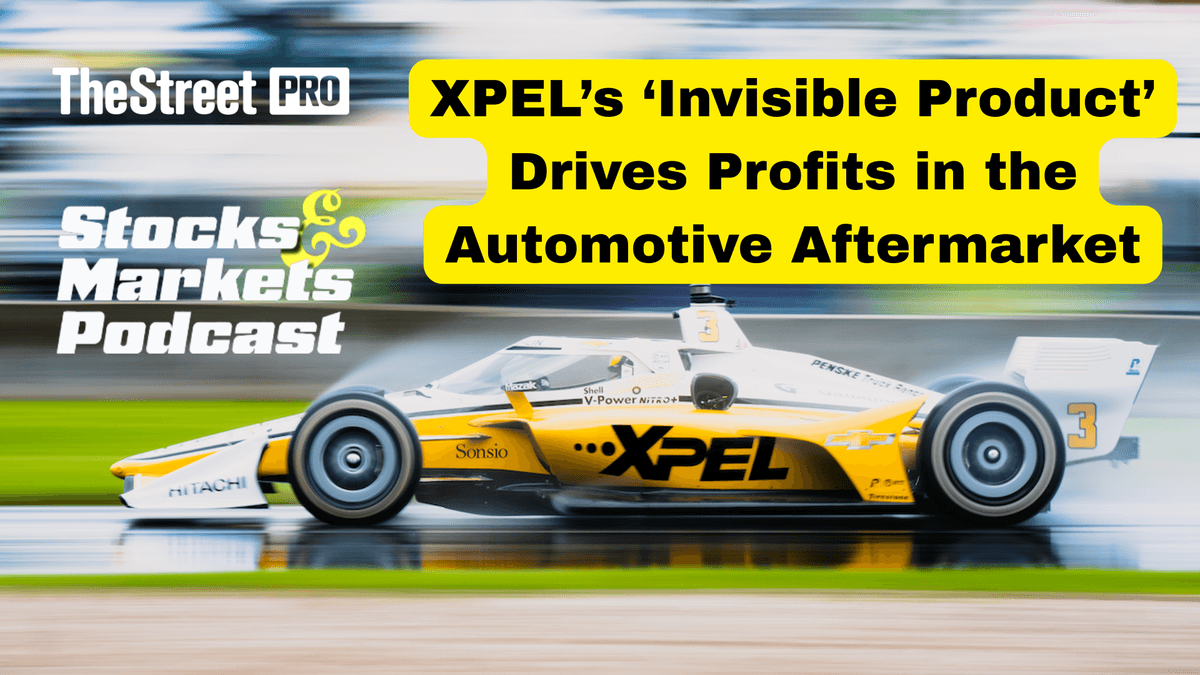
No, I think it’s really great. think, you know, probably we didn’t, we did discuss sort of the brand and our investments in the brand. You mentioned racing, you know, obviously we’ve been present, you know, where the enthusiast market is. you know, racing in IndyCar and a bunch of other series has been an important part. But I think we covered it.
Jason Meshnick (33:52.326)
Awesome. well thank you for your time. And where should people go to learn more about XPEL?
Ryan Pape (33:57.551)
Yeah, xpel.com, X-P-E-L. You can learn about our products and find one of our thousands of independent installers near you wherever you are in the world.
Jason Meshnick (34:08.732)
Yeah, and and that’s great because the name of your company is the same as your ticker symbol.
Ryan Pape (34:12.879)
Yeah, we’ll try to keep things simple where we can.
Jason Meshnick (34:14.6)
Exactly. Keep it yeah, see through. All right. Well thank you very much, Ryan. I really appreciate your time and thank you to everyone for listening to the streets street pros stocks and markets podcast today.
Ryan Pape (34:28.635)
Thanks, Jason.
Final Thoughts
I really enjoyed this conversation. First of all, because I like anything car-related. But more importantly, because Pape understands the business from the ground up. He’s built a business that is pushing into global markets, yet retains a conservative financial structure that will weather economic uncertainty.
And, as a skier who lives in Colorado, I’m especially excited to try their new windshield protection film. That could be a game-changer for people who spend time on winter roads.