Eyeing This Bond ETF Amid Treasury Selloff
As PCE and GDP show inflation easing, a reversal in the bond selloff could be next.
You've reached your free article limit
You've read 0 of 1 free Pro articles.

The selloff in treasuries has been relentless. On Wednesday, the yield on the U.S.Treasury’s 10-year note reached 5.30% (left chart), while the 30-year treasury bond yield touched 5.60% (right chart). It was the first time those figures have been reached since 2002.
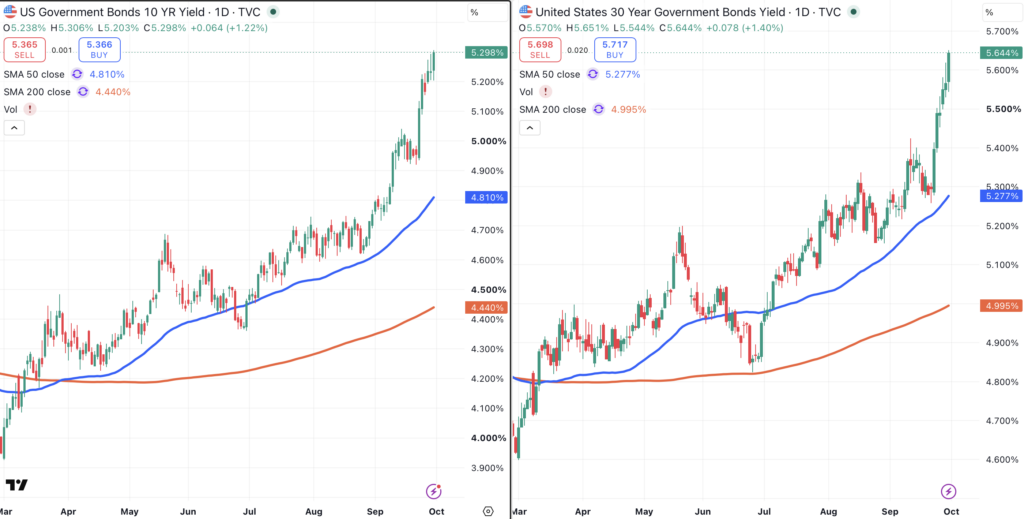
Since there is an inverse relationship between yield and price, this means that the prices of the 10-year note and 30-year bond are collapsing.
Could it be that this huge, rapid move in bond prices is overdone?
GDP and Core PCE
The news on Wednesday morning was promising. While U.S. economic growth was stronger than expected, increasing by 2.2% in the second quarter versus estimates of just 1.5%, two inflation readings came in below expectations.
Core PCE, a statistic that is believed to be closely watched by the U.S. Federal Reserve, showed inflation rising at a 3.4% annual rate. Analysts were expecting a 3.7% increase.
Meanwhile, the GDP price index increased at a 6.1% annual rate. This was lower than analysts’ projections of 6.4%.
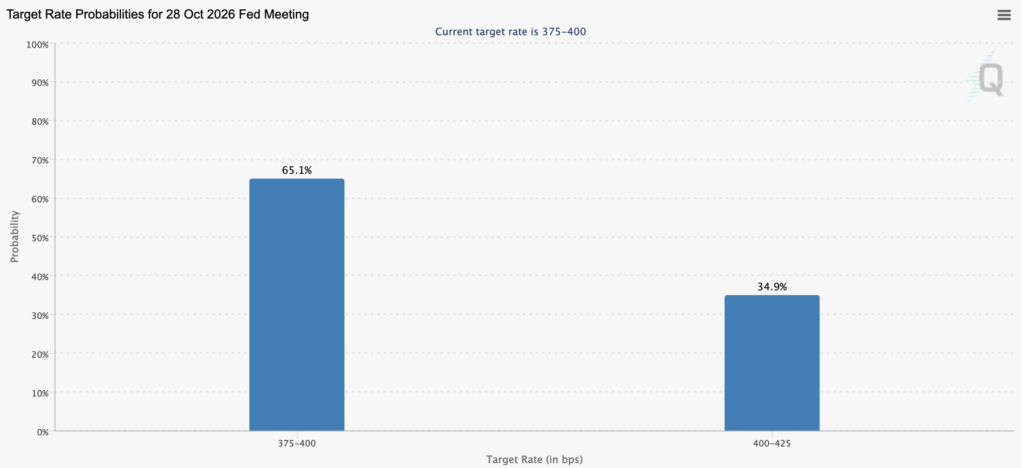
Both figures have traders reconsidering the likelihood of a rate hike at the next FOMC meeting on October 28. The CME’s FedWatch Tool now shows just a 35% chance of a rate increase at that upcoming meeting.
High Yield Bonds
If inflation eases, we could see a reversal in bond prices.
I’ve got my eye on the iShares High Yield Corporate Bond ETF (HYG). This ETF has a 30-day SEC yield of 6.85%, and is down 2.39% over the past month.
When HYG sold off in 2025, it bounced back sharply from the $75 area (point A). Our plan is to ease in with several small descending orders, with larger orders in the $75 vicinity.
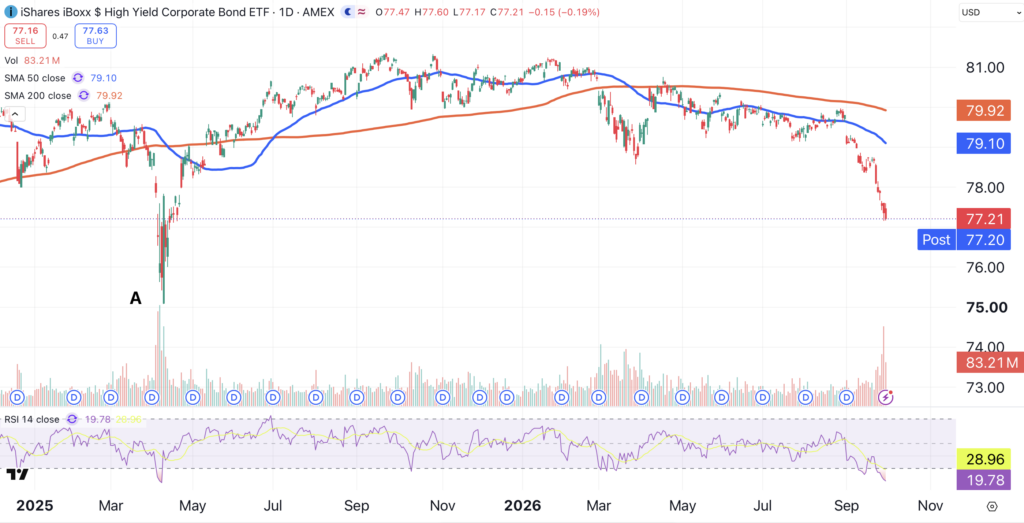
Along with the possibility of appreciation, by acquiring shares at a lower cost basis, we can lock in a higher forward yield.
What if Something Breaks?
You may have heard it said on financial news networks that if the extreme moves in the bond market continue, “something will break.”
What does that mean?
It’s possible that one or more institutions are caught on the wrong side of this rapid move in bonds. If the extreme movement in bond prices continues, losses could mount.
A bank or hedge fund caught on the wrong side of this move could find itself in trouble, as mounting losses could lead to forced liquidation. As we learned in 2008, trouble of this nature can be contagious.
The good news is, there have been no negative rumors about specific banks or institutions of which I’m aware. In 2008, rumors swirled for months that someone was in trouble before it became obvious that the institution in question was Lehman Brothers.
At the time of publication, Ponsi was long HYG.