Despite Legal Battles, Blue Dot Fever, Live Nation Shareholders Have Little to Fear
Charts indicate that fears of a Live Nation breakup are overblown.
You've reached your free article limit
You've read 0 of 1 free Pro articles.

On the company’s Slack app, two Live Nation (LYV) regional ticketing directors were chatting:
“These people are so stupid”
“I have VIP parking up to $250 lol. I almost feel bad taking advantage of them”
“BAHAHAHAHAHA”
The above exchange came to light during one of Live Nation’s recent legal battles.
The Department of Justice Case
Live Nation, which also owns Ticketmaster, the world’s largest ticketing service, was accused by the Department of Justice of engaging in monopolistic promotion and ticketing practices.
The company settled the DoJ case in March, avoiding a breakup. Live Nation agreed to cap fees at company-owned amphitheaters and allow venues to use competing ticketing platforms. The company owns 56 of the 100 top-grossing amphitheaters in the U.S.
Antitrust Violations
In a separate case, brought by over 30 individual U.S. states, a jury found that Live Nation/Ticketmaster violated antitrust laws. Potential remedies, which include breaking up the company and significant financial penalties, will be determined in the penalty phase.
Blue Dot Fever
The concert industry is under close scrutiny after a spate of recent tour cancellations. Post Malone and Jellyroll recently canceled several stadium dates. The Pussycat Dolls, Meghan Trainor and Zayn Malik all canceled their respective U.S. tours. There are rumors of more cancellations on the way.
On the Ticketmaster app, blue dots, representing unsold tickets for upcoming shows, are plainly visible. While a variety of reasons were given for the cancelations, usually health-related, ticket sales for many of these events simply didn’t materialize as expected.
Crisis? What Crisis?
Faced with a potential breakup of the company, and beset by a spate of tour cancellations, you might think that Live Nation shares would be in distress. However, that’s not the case.
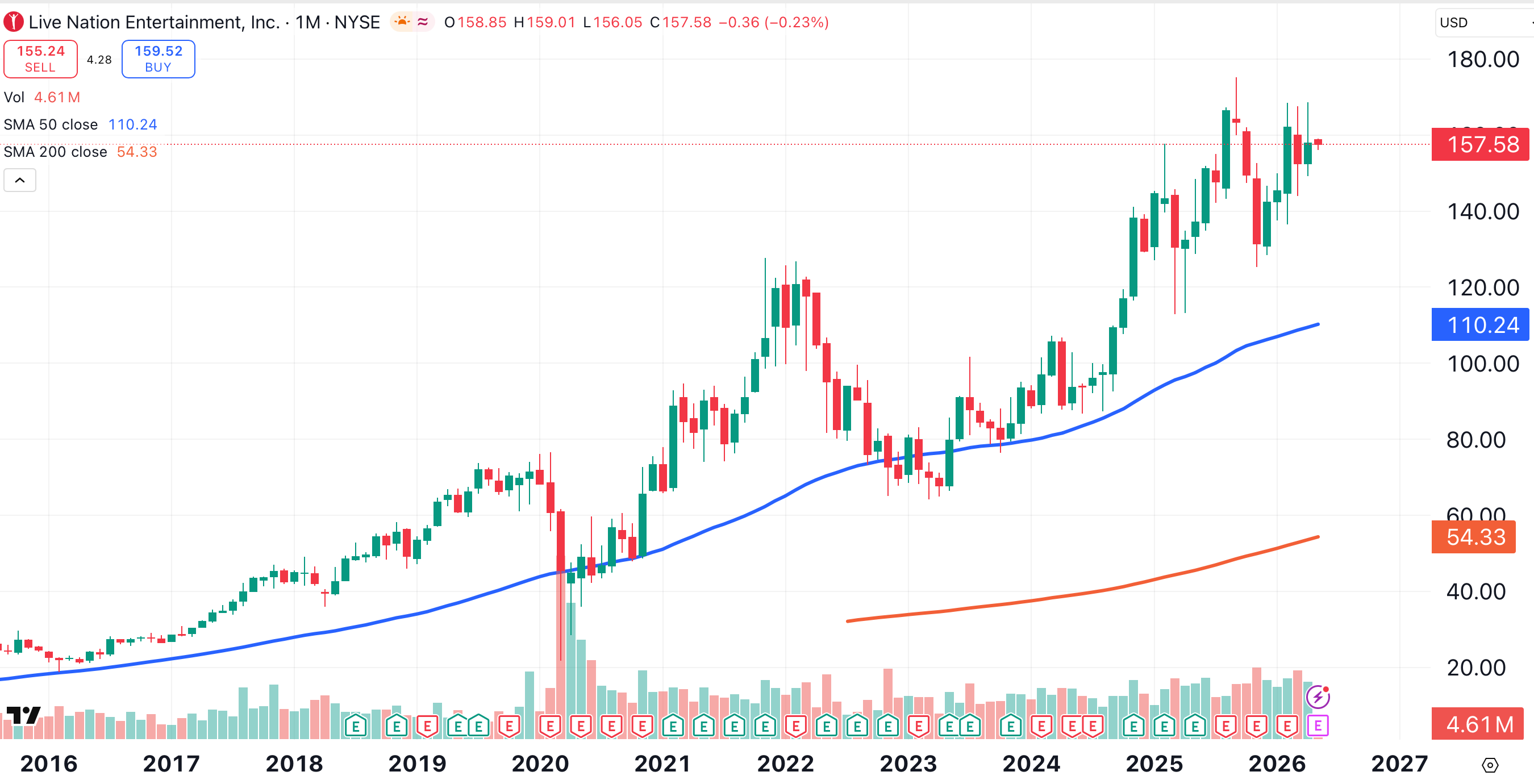
Live Nation shares have gained 8.5% year-to-date, versus the S&P 500’s gain of 5%. The concert promoter’s shares have nearly doubled over the past five years.
Over the past 10 years, Live Nation has been a steady performer, as seen below on the monthly chart.
On the shorter-term daily chart, we see a stock that is consolidating. However, the stock’s bullish trend, represented here by higher lows (HL) and a higher high (HH), remains intact.
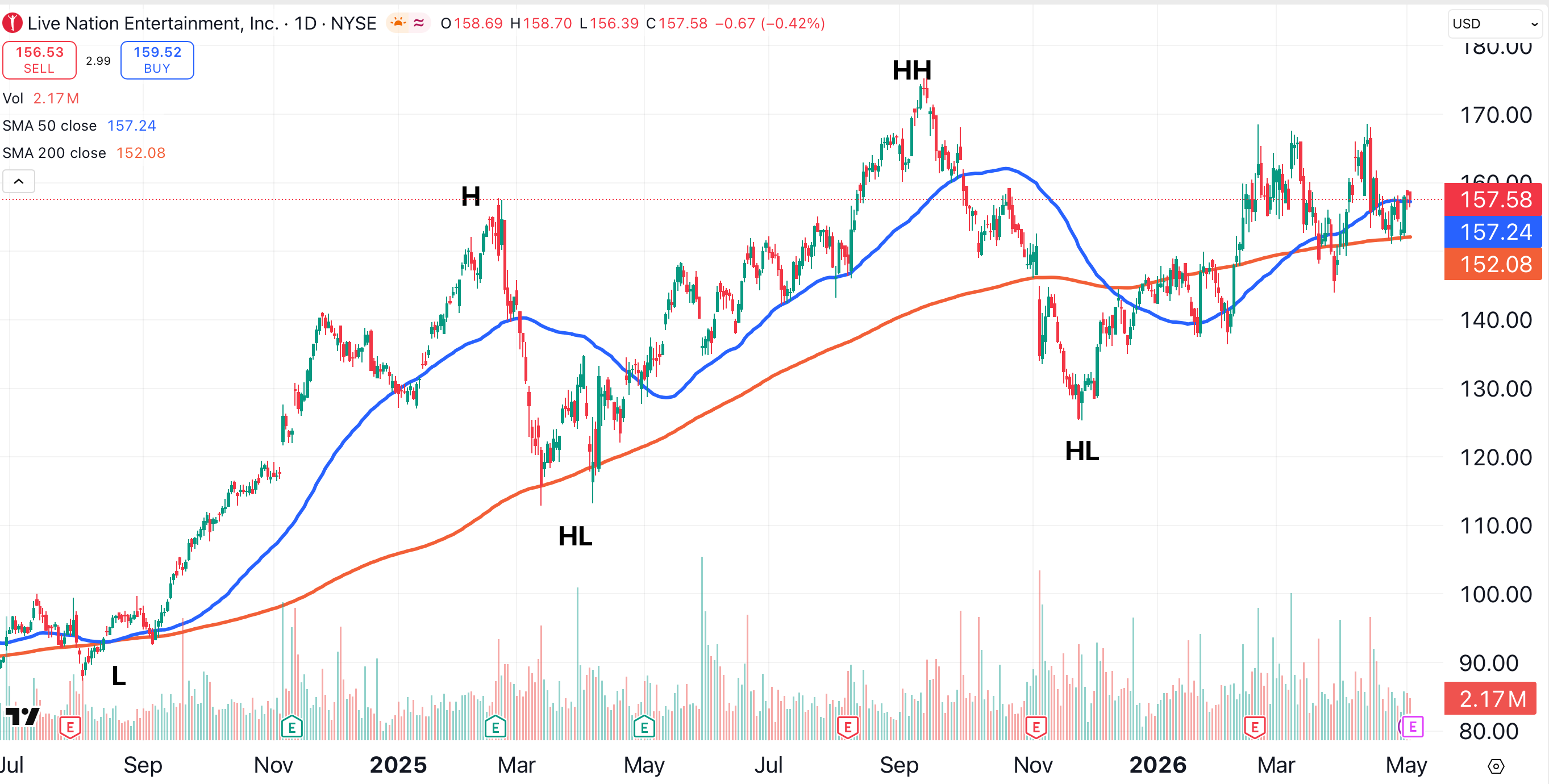
What are the charts telling us? Institutional shareholders aren’t bailing out of Live Nation, which means the company is likely to survive this latest legal challenge.
Stronger Than Ever?
What about tour cancellations? In some ways, business has never been better.
For every cancellation, there’s a newer act selling out stadiums. My teenager turned me on to a band called Sleep Token. All 17 shows on their recent North American stadium tour were sold out.
Priced Out?
Consumers complain about high ticket costs, but in the end, they are paying the price. The following acts are having no trouble selling tickets:
For Bruce Springsteen’s May 5 concert at UBS Arena on Long Island, $502 will get you a first-level, non-resale seat.
Hilary Duff at Madison Square Garden? $548, with very few tickets remaining.
For Karol G at Soldier Field, the best non-resale seat costs over $1,000. Resellers in the same section are asking over $2,000.
Bottom Line
We don’t know what penalties Live Nation will face as a result of its civil trial, but charts are indicating that the company will remain intact. Shareholders are unlikely to be harmed as a result of any legal action against the company.
Related: How U.S. Investors Can Profit After Crazy Day for Japanese Yen
At the time of publication, Ponsi had no positions in any securities mentioned.