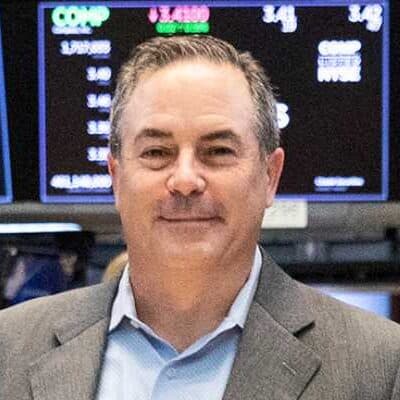
VIDEO: Higher Energy Prices, Consumer Trade-Down and What It Means for the Portfolio
Why we’re focusing on Warsh’s comments and the updated SEP, not today’s expected rate hike.
You've reached your free article limit
You've read 0 of 1 free Pro articles.
The outcome of the latest Fed Day could reshape the market’s near-term direction, but we’re also starting to see S&P 500 targets soften.
Chris Versace discusses the Fed, rising diesel and energy prices, consumers trading down, Costco (COST) and TJX (TJX), August retail sales, and today’s modest Portfolio moves.
At the time of publication, TheStreet Pro Portfolio was long COST and TJX.
Transcript
Hey everybody, Christopher Versace here. It’s Wednesday, September 16, better known as Fed Day to all of those who, as folks like to say, celebrate.
As we’ve been talking with you of late, the market widely expects the Fed to deliver a 25-basis-point rate hike this afternoon, which arguably means it’s more or less going to be priced in as such. What does that mean? It means to us that the comments we’ll get from Fed Chair Walsh — the wording he uses, the tone — as well as what we see in the updated set of economic projections are likely to really shape the market’s expectations and reception. By expectations, I mean how those comments reshape expectations for what’s to come. By reception, I mean how the market reacts upon hearing this.
As we think about it, the market has been ratcheting up expectations for further policy tightening. To the extent that the SEP, which goes out not only for 2026 but for 2027, shows a little more than the market was thinking, odds are the market will react to that in a negative fashion.
However, if Warsh’s comments at the margin are a little more dovish than what we got back in August when he spoke at Jackson Hole, and perhaps the updated SEP only shows one, maybe two, more rate hikes, which the market is kind of leaning toward at this point, the market reception might be a little more favorable.
The bottom line on this is we’re going to have to wait and see what the tone and comments are from Warsh and what the updated SEP brings. Based on that, we can calculate and triangulate any next moves that we might make with the portfolio.
I know some folks going into the report probably want to know: Could we be doing something more after the Fed policy meeting? My response is: Let’s not get ahead of ourselves. Let’s first digest the learnings from the policy statement, from Warsh’s press conference, and from the updated SEP. Let that impact roll through the market, especially if it’s one that pulls the market lower, and then we can plot our next moves from there.
I will say that we did pick up some shares of Axon and Boeing today. You can see those alerts as to why — very company-specific events — and as I spelled out in the trade, they were small bites relative to where we could take the overall position sizes, simply because we need to see more of what I was just talking about and the outcome in the market. We want to leave ourselves some room should the market fall following the Fed’s policy decision and those other factors that will be revealed to us later this afternoon.
As far as where we picked up those shares: Axon at $442.85 and Boeing at $209.60. Those numbers come right off the holdings table. I’m just going out of my way to point these out because I know there were some discrepancies and concerns about the exit price earlier this week with Neo Stellar.
You have to remember that the dollar price used in the trade can vary from where we’re actually executed. So, just a quick reminder: Always check to see where the trades are executed. In this case, for Neo Stellar, I think it was around $8.65, something like that, lower than what we indicated. But that just shows how quickly the market moved that day.
That is that. But I do want to move on and talk about a few other things.
First and foremost, yesterday we did share an analysis of the potential fallout from the rise in diesel prices. I hope you saw that. Last night, though, what did we see? Almost right on top of that discussion, Norfolk Southern said it expects higher fuel prices to create a significant headwind in the third quarter.
The CFO came out to say that higher fuel prices had been expected to peak around May, but the continued increases now represent roughly a 250-basis-point headwind to the company compared with what it saw two months ago.
Almost on top of that, J.B. Hunt’s CFO said at the Goldman Sachs conference that it has seen “some of the most radical and abnormal swings” it has ever experienced in fuel prices over recent months. That led it to warn of an earnings drop between 5% and 10%.
Again, our thinking came ahead of these news items, but they are certainly very confirming for our line of thinking that we laid out in that note yesterday about the impact of higher diesel prices. Odds are these won’t be the only two companies to feel the brunt of this pronounced move, especially on a year-over-year basis in diesel prices, and there will be other shoes to drop.
I also want to say that those same concerns about energy prices are also leading to, arguably, an accelerated pace of consumers trading down.
In this morning’s opening comments, we shared with you that Dollarama, a dollar store up in Canada, increased its outlook and raised its comp-sales guidance because it is seeing an accelerated rate of Canadians trading down, given the impact of inflation.
Also, Dollar General came out and made some very confirming comments about that trade-down. Speaking at a conference yesterday, Dollar General said that when gas prices get anywhere close to $4 and then move above $4 a gallon, its core customer changes their shopping behavior.
What do they do? They stay closer to home. They normally shop more often and buy less on each occasion. And this is the kicker: Management at Dollar General said that’s exactly what its core customer is doing now. Why? Because of the sustained headwinds of inflation.
But that also led Dollar General to say that even upper-middle- to middle-class customers are increasingly acting like lower-income shoppers these days, trading down and looking for ways to extend the disposable shopping dollars that they do have.
From our perspective, that simply reaffirms our stance on Costco and TJX. Granted, they have moved against us, but the data points continue to line up and support our thesis, especially as we head into the holiday shopping season.
Now, as it relates to both Costco, TJX, and some other companies out there, let’s talk a little bit about today’s August retail sales report and what I would say is some potential confusion.
So, what did the August retail sales report have to say? Well, if you look at the headline number, it was up 6% year over year. The retail-only line item that we closely track was also up 6%, 6.0% year over year.
Here’s the thing: Gas station sales rose 21% year over year, largely due to the impact of higher gas prices.
So when we think about Costco and its August comp sales, typically the market tends to focus on the adjusted comp sales, which exclude gas and foreign exchange. But the company also reports unadjusted comp sales. For the month of August, those unadjusted U.S. comp sales were up 9%, way higher than what we saw for the retail-sales figure of 6%.
I’m pointing this out because we do want to have as close to an apples-to-apples comparison — a real yardstick to measure it by — as possible. Typically, as I said, the market tends to focus on the adjusted comp-sales numbers. But again, gas prices are up significantly year over year, so we have to take a better look at those numbers.
Now here’s the thing: If we stick with the findings of the August retail-sales report, which showed overall retail sales — again, including gas prices — rose 5.3% for the three months ending in August, that happens to be the quarter that Costco will report next week.
For that three-month period, we already know that Costco’s unadjusted U.S. comp sales rose 10.3%.
So I’ve got to say, it’s pretty hard to argue that Costco did not take consumer wallet share hand over fist during those three months. And again, given what we’re seeing about the continued impact of inflationary forces accelerating the trade-down in consumers, it’s hard to see Costco not continuing to benefit in the coming months.
Now, I realize that this is likely to prompt a few questions about whether we are eyeing adding maybe more Costco or more TJX to the portfolio as we get closer to the holiday shopping season.
The answer is yes, we are. But again, let’s not get too far ahead of ourselves. We do have the Fed meeting. And let’s also keep in mind, too, as we like to say, the overall market mood.
By that I mean we’re starting to see S&P 500 targets soften. Noted bull Ed Yardeni chopped his year-end 2026 target for the S&P 500 this morning to 7,900 from 8,400. And we are starting to see others soften their outlook for the S&P 500.
Again, as we start to get comments from the likes of Norfolk Southern, J.B. Hunt, and others, odds are there’s going to be more to come on that front.
So we’re going to take our time, especially as some people finally puzzle through the impact of higher energy prices, given the prolonged move higher that we’ve seen for them, as well as other inflationary forces and higher Treasury yields.
We’re going to let that ripple through the economy and let the market adjust its thinking. And that means letting some market watchers revise consensus EPS figures for the S&P 500 for the back half of the year and likely adjust their S&P 500 targets.
Here’s the thing, and you know this: We’ve already raised cash in the portfolio, and we are looking for opportunities to put that cash to work. But we’re going to take our time.
As we do that, we’re going to keep an eye on the S&P 500’s technical setup and get through the market’s assessment of the Fed’s policy meeting today.
Again, things can change, and we want to remain nimble so we can take advantage of opportunities as they come our way.
With that said, we’ll have a lot more coming your way today, especially as we digest first the Fed’s policy statement and then the updated SEP and Warsh’s comments.
Stay tuned. What we learn could either reconfirm our view that we’re going to stay on the sidelines and let the market adjust, or, if things are a little more dovish than expected and the market starts to move, we might have to put some things in motion.
So again, folks, stay tuned. A lot more coming your way.