With the Fed Threatening an AI Implosion, There’s a ‘Red Flag’ Investors Can’t Ignore
Inflation concerns are seeing central banks shift to a tightening stance. Are they indirectly calling the market top?
You've reached your free article limit
You've read 0 of 1 free Pro articles.
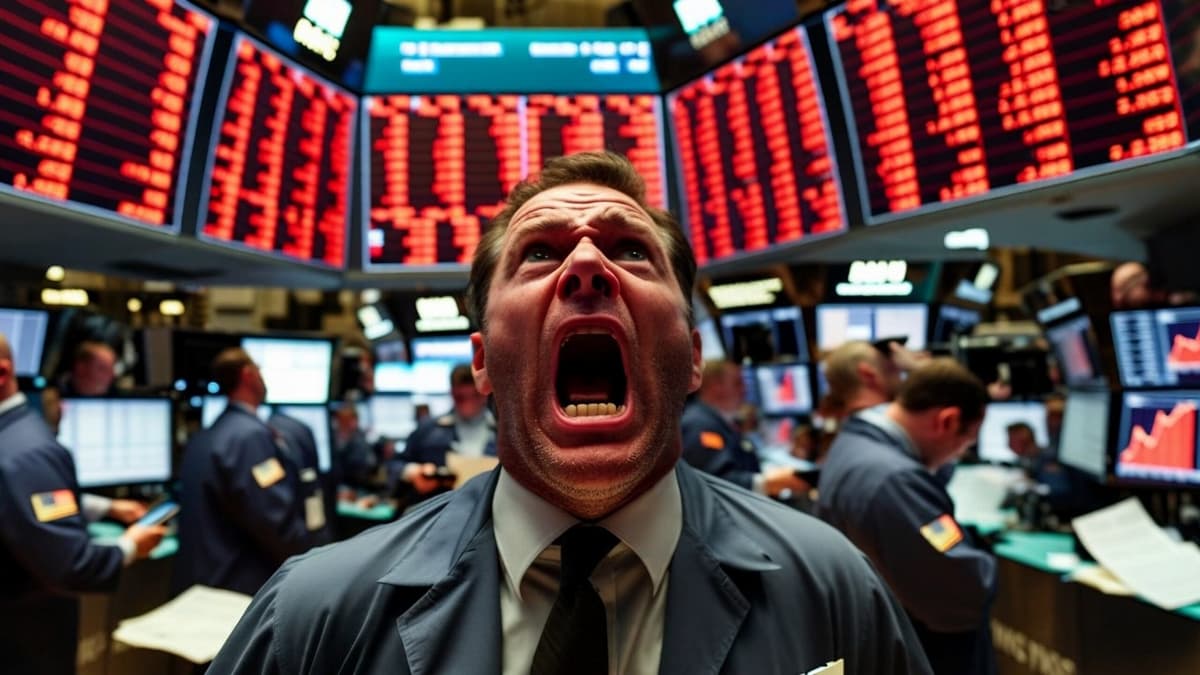
With oil prices back above $105, it’s concern about inflation that’s driving markets ahead of key central-bank meetings next week.
I’ve noted recently that we’re almost certain to get a rate hike from the Bank of Japan (BoJ) at its September 17 to 18 monetary policy meeting. That could cut into the interest-rate differential between Japan, where rates are still very low at 1.0%, and other developed economies.
The Japanese central bank notes that inflation will soon cross back above its 2.0% target level as a fuel subsidy expires. Japanese inflation is a relatively new problem after the better part of three decades of deflation, but had risen above that target for the better part of four years before easing this year.
Odds Back on for Fed Hike?
Yet on Thursday the odds are spiking of a U.S. interest rate rise, too. The U.S. Federal Reserve’s decision next week has been a 50-50 coin toss on prediction markets, but inflation worries have seen the odds spike to a 63% likelihood on Thursday.
U.S. producer prices have come in on Thursday, and they’re coming in hot. The 5.4% increase for August year on year is well up from the 4.8% pace in July.
Higher energy prices, which rose 4.2% month on month as a result of renewed U.S.-Iran hostilities, explain more than 75% of the rise, the U.S. Bureau of Labor Statistics notes in reporting the numbers. The rise in diesel is the most dramatic — spiking 24.1% in the month.
All-Time Record Price for Diesel
That’s backed by fuel-price data from the AAA. Diesel is setting a record high at the pump on Thursday, at $5.98, while regular gas is back above $4, at $4.28 for the last reading. What’s more, record diesel prices will filter through the system, since it’s a “workhorse fuel” propelling the likes of 18-wheeler semi-trailer trucks as well as cargo vessels.
The changing rate considerations are producing shifts in the foreign-exchange markets. The U.S. dollar has slumped to a seventh-month low against the Japanese yen in recent days, falling to ¥152.89 on Tuesday. It’s a long-term trend of yen strengthening that I expect to see continue.
But today sees some U.S. dollar strength based off the increased odds of higher U.S. rates. The yen tilted back to ¥154.55 on Thursday, although it is still well off the exchange rate in July when it came just shy of ¥164, levels last seen 40 years ago.
We’ll be getting U.S. consumer prices on Friday. The concern is that the protracted conflict in the Middle East, with no end in sight, is resulting in inflation that is becoming entrenched rather than transitory.
Too Early on Stronger Yen
I’ve now shifted the cash in my brokerage account from Hong Kong dollars that are pegged to the U.S. dollar into Japanese yen. I think we have seen peak yen weakness pass.
Like me, Jim Walker, the chief economist at Aletheia Capital, also expects the yen to strengthen. But it has taken far longer than expected.
Aletheia first made the call to go long on the yen on May 11, when the currency was trading at ¥157.20 against the U.S. dollar.
“Since inception, the trade hasn’t performed very well,” the Aletheia macro team conceded. “We are nothing if not consistent in our tendency to be early with strategy recommendations (sometimes years).”
The bottom line is that inflation has set in for Japan, and the BoJ is behind the curve in doing anything about it. So, Walker and his team expect the Japanese central bank to shift from a “pedestrian” pace of a 25-basis-point rate rise every six months to moving 25 basis points at every meeting, perhaps with a 50 BPS move thrown in to make a point.
“Once that became accepted wisdom, the yen would strengthen markedly,” the Aletheia team stated in a report to clients.
Still, it is the reversal of the carry trade that sees institutional investors borrow in cheap yen and invest abroad that must reverse if the yen is to find true strength. An accelerated pace of rate hikes by the Japanese central bank, designed to ward off inflationary pressures, would be essential.
The end game is on the horizon, with the twist that it would not require U.S. rate cuts but would stem from stronger momentum at the BoJ.
‘Untenable’ to Call Inflation Transitory
T.S. Lombard also expects yen strength and U.S. dollar weakness. Five years of above-target inflation have made it “untenable” to ignore energy and supply shocks, and persist in the fiction that inflation stems from “transitory” pressures.
“We think the consensus is underestimating the degree of Fed tightening that is coming, particularly once there is sustained reacceleration in employment,” Dario Perkins, Lombard’s managing director for global macro, wrote in a report on Thursday.
For Japan, the actions of the BoJ stem from very positive trends. After all, the country was fighting deflation for virtually three full decades after the 1980s asset bubble bust there.
“There is too much bearishness about Japan,” Perkins explained. “Fundamentally, Japan’s economy is in a good place. The country’s deflation trap has finally been broken.”
Companies being inclined to raise prices slightly and consumers being tolerant of those increases is “benign and healthy,” he added. Chronic yen weakness suggests that the BoJ needs to normalize rates at a faster pace.
Fed Hikes to Burst AI Bubble?
A hawkish Fed could have darker implications. Could Fed tightening cause the AI bubble to burst?
That’s a pointed concern. The Fed has a habit of shifting to a tightening stance at the market top: 1929, 1937, 1968, 1972, 1980, 2000 and 2008.
“The authorities have a nasty habit of marketing the top of asset booms with a hawkish monetary pivot,” Perkins pointed out. It “isn’t a stretch to think that central-bank tightening contributes to the bursting of asset-price bubbles. After all, higher interest rates not only make it costlier to finance the boom; they also reduce aggregate demand, dampening the expected returns on those investments.”
Could the Fed trigger an implosion in AI spending? That would be the real threat to markets, as well as the U.S. dollar. Monetary tightening is therefore a “red flag that investors shouldn’t ignore,” Perkins stated.