The Super-Power of Great Traders: Waiting and Watching
The market does not reward activity. It rewards being right at the moments that matter.
You've reached your free article limit
You've read 0 of 1 free Pro articles.
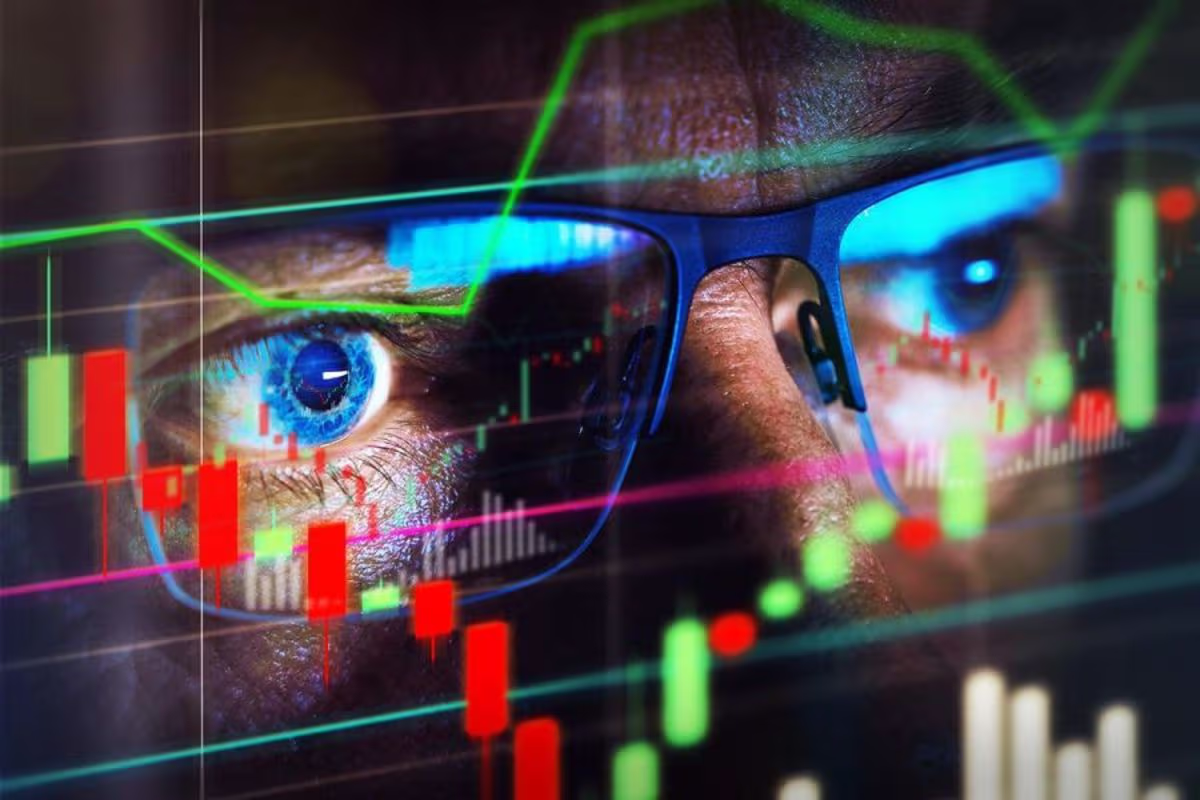
A commonly held image of traders is someone in constant motion. Multiple screens with dozens of charts, a keyboard worn from clicking, and dozens of buy-and-sell orders flying around through the day. The trader is always reacting, always positioning, always doing something. This is an image most people have in their heads and use as a working model for what they should be doing when trading.
The image is mostly wrong. The best traders, who produce superior returns, make their money by quietly waiting most of the time. That patience is interspersed with decisive action in compressed windows. The constant motion is the amateur fantasy. The stillness and calm are the behaviors that set the stage.
Kristjan Kullamägi, who trades under the name Qullamaggie and has built a documented track record of great success in trend trading, puts it this way: “You need to find the scenarios where you can get great risk-reward, and then you just have to sit and wait and do nothing. First, you wait and do nothing, find your setups, and then buy or short them. And then you wait and do nothing, other than maybe scale out and move your stops.”
Six steps and four of them are waiting. That ratio is what we need to contemplate. Three-quarters of the work is patience, and the rest is action. The amateur believes action is the goal. The professional knows that patience is the real work.
Why the Conventional Image Is Wrong
The reason most individual traders think they should be constantly active is that the entire structure of the securities industry tells them they should be.
There is an activity bias in the human brain that rewards action and motion with a small dopamine hit, regardless of whether the behavior is productive. Sitting still feels like nothing is happening, which feels like failure. The brain wants to act, so the trader acts. The market does not reward activity. It rewards being right at the moments that matter. Activity has nothing to do with rightness, but the brain does not know that.
The financial media reinforces the activity image because activity sells subscriptions and clicks. A column that says “do nothing today” does not receive much attention, even if the advice is correct. A column that names 12 stocks moving on 12 different stories attracts attention from readers anxious to make a move.
The media has an incentive to manufacture the appearance of urgency because it creates attention. It also trains readers to feel that they should be acting on something every day. Professional traders read everything and internalize the information for future reference, but act on almost none of it.
The institutional structure of Wall Street directly rewards activity. Brokers make money on trades. Asset managers justify their fees by citing portfolio turnover. The language of the business has an activity bias built into it: “working a position,” “putting capital to work,” “active management.” The vocabulary frames stillness as failure. Traders who win big are the ones who resist the nudges to always be doing something and find a way to sit still while the industry pressures them to move.
Amateur traders embrace constant activity with gusto. They constantly scan charts and read news and social media. They take trades that do not meet their own criteria, because they have to do something. They cut winners early because holding feels passive. They average down on losers because doing something feels better than admitting the trade was wrong. The activity itself becomes the goal, and profits become secondary.
The Trigger Condition
Patience in trading is not passive. It is active and purposeful. The professionals are not sitting on their hands because they are indecisive or confused. They are scanning for the setups that justify aggressive action and waiting for the conditions to align. Most traders rush into a trade once they find something that looks favorable instead of waiting for the conditions to develop that will improve the risk-to-reward ratio.
A proper setup isn’t just a thesis. It must offer great risk-to-reward ratio. Risk is what you lose if the thesis fails. A reward is what you gain if the thesis works. The ratio between them is the only thing that matters. A setup with two-to-one risk-reward may not be worth taking. A setup with ten-to-one is worth a concentrated amount of capital. Patience empowers you to take the great setups by passing on the mediocre ones.
The amateur version of waiting looks the same from the outside but is structurally different. The amateur waits because they are scared. The professional waits because the conditions are not quite right. Both look passive, but one is discipline, and the other is paralysis. The difference shows up in what happens when the setup does arrive. The disciplined trader acts decisively. The paralyzed traders freeze and fail to seize the advantage.
When the trigger for a trade fires, the response has to justify the patience required. Small bets on great setups produce small returns. Big bets on great setups produce great returns. The trader who has waited for the conditions to align has earned the right to act with size and speed. Acting tentatively when the setup arrives is wasting what the patience bought.
The patient trader is not timid. The patient trader is the most aggressive trader at the right moment. Charlie Munger called this combination of patience and decisive action “aggressive patience.” He put it plainly: “The wise ones bet heavily when the world offers them that opportunity. They bet big when they have the odds. And the rest of the time, they don’t.”
Patience and aggression are the same skill applied to different moments rather than two separate skills.
Waiting and boldness are two sides of the same discipline. Most retail investors get both halves wrong. They are constantly active when they should be still and tentative when they should be bold. When you internalize this thinking and behavior, you will possess a trading super-power.
At the time of publication, DePorre had no position in any security mentioned.