RSP vs. SPY: Does Diversification Require Equal Weight?
The equal-weight RSP solves the S&P 500’s concentration problem, but not for free. Which one makes sense for you?
You've reached your free article limit
You've read 0 of 1 free Pro articles.

You’re likely already aware that the S&P 500, represented by ETFs like Vanguard S&P 500 ETF (VOO), iShares Core S&P 500 ETF (IVV), and SPDR S&P 500 ETF Trust (SPY), is basically a concentrated investment in tech right now.
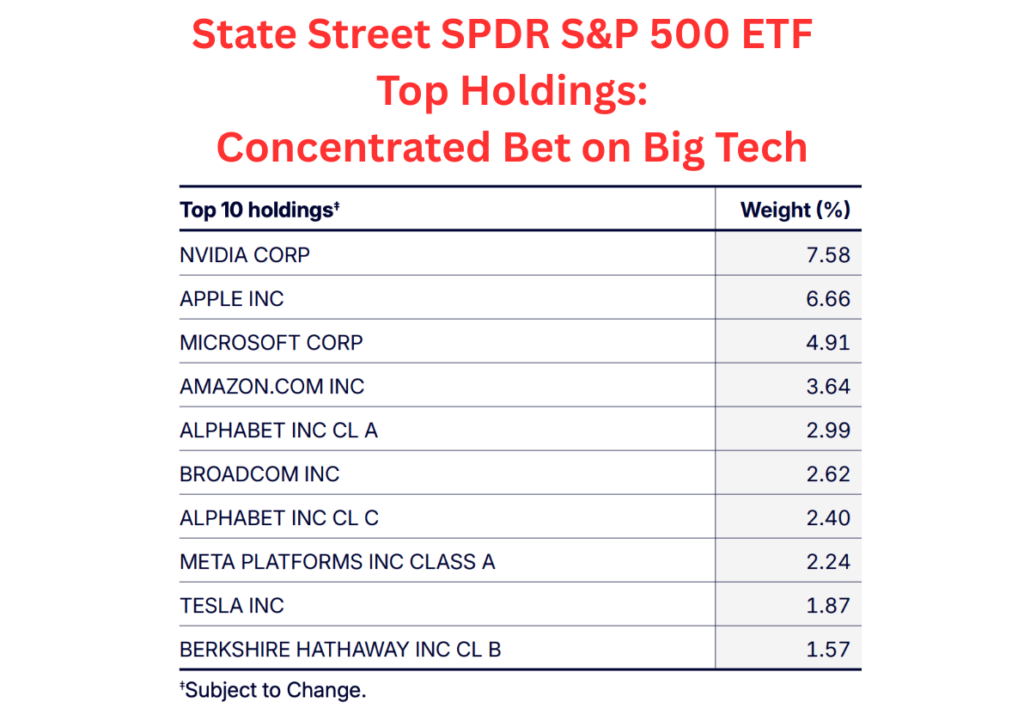
But to improve diversification, while still allowing investors to hold S&P stocks, does equal-weighting make sense?
Market cap-weighting, which was intended as a “neutral” way of determining index composition, has morphed into a very focused bet, rather than the broad exposure the S&P is, in theory, supposed to be.
That’s where an ETF like the Invesco S&P 500 Equal Weight ETF (RSP) comes in.
How RSP Works
RSP is based on the S&P 500 Equal Weight Index, which does exactly what it sounds like. That results in each of the S&P 500 components clocking in at about 0.20% of fund composition. It will get out of whack at times, as stock prices rise and fall, but the result is an ETF that tilts more toward smaller S&P companies.
That tilt is because smaller companies now have greater representation in the index, while larger caps are knocked down to the same 0.20% that every other company is assigned.
Quarterly rebalancing addresses the drift in weightings.
Relative to market-cap indexes like the S&P 500, this approach reduces concentration risk.
For example, as of March 31, the latest update of the ETF’s fact sheet, these were the top 10 weightings in RSP.
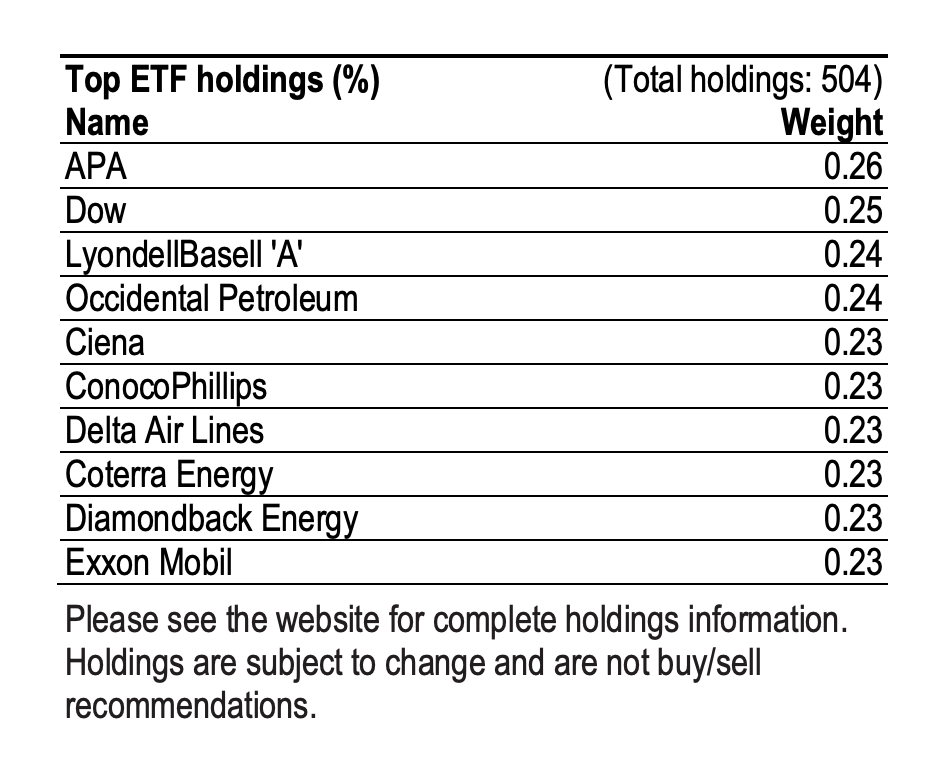
Not exactly the “usual suspects” you find in the market-cap weighted S&P.
How Does Performance Stack Up?
Year-to-date, RSP has returned 12.08% while SPY has returned 11.28%, with the edge going to RSP’s broad sector exposure outside tech, forced by the equal-weighting approach.
Here’s RSP’s sector allocation, side-by-side with SPY’s.
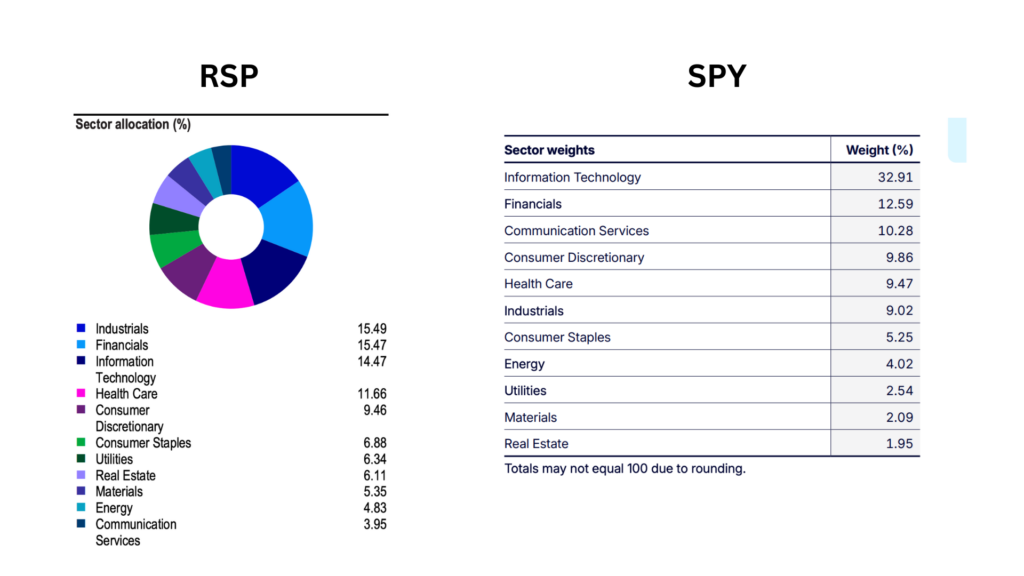
The tradeoff for eking out that extra return is a higher expense ratio, as well as a drag on performance due to more complex rebalancing: RSP’s quarterly rebalancing requires selling the performers and buying the worst. Those trades incur costs, such as bid-ask spreads and market impact of large fund orders. All of that chips away at returns.
SPY’s market-cap weighting means stocks are held at their normal allocations within the ETF, so there’s less trading friction.
The real cost of equal-weighting is the turnover. Aberdeen Investments addressed this problem in a February 2026 article, “Equal Weighting: the antidote to concentration or another risk in disguise?”
However, Aberdeen also named some advantages of equal-weighting.
Here are some of the key points Aberdeen’s researchers identified:
- Equal-weight requires five times more trading.
- Equal-weight significantly boosts exposure to smaller companies with cheaper multiples and greater volatility. That can add risk, but can also boost performance at times.
- Equal-weight outperforms during cycles when smaller companies and value stocks rally.
Which to Own?
The decision isn’t one of those crystal clear choices.
- RSP really does mitigate concentration risk, but its turnover costs are substantial. Whether the benefit justifies the drag depends on the market environment and your tax situation. In taxable accounts, RSP’s quarterly capital gains distributions create tax bills that SPY doesn’t. But in tax-deferred accounts like IRAs, that friction is non-existent.
- SPY’s liquidity and low fees are clear advantages. But you’re also taking on a boatload of concentration risk in mega-caps. Of course, that may not matter as much in a different market environment, but big techs and a handful of other large caps have dominated in recent years.
RSP solves SPY’s concentration problem, but at a price. Higher turnover, higher expenses, and in taxable accounts and annual capital gains taxes all add up.
Whether or not that’s worth it depends on how much concentration risk you can stomach, what kind of market cycles we see and whether your account is taxable or tax-sheltered.
If mega-cap tech dominance worries you and you own a tax-deferred account like an IRA, RSP makes sense.
But if you’re comfortable with market-cap weighting and hold a taxable account, SPY’s simplicity and tax efficiency are tough to beat.
The choice isn’t about which fund is objectively “better;” it’s about which tradeoff fits your situation.