Global Central Banks Turn Hawkish on Inflation
Here’s how central banks around the world are attempting to respond to higher prices.
You've reached your free article limit
You've read 0 of 1 free Pro articles.
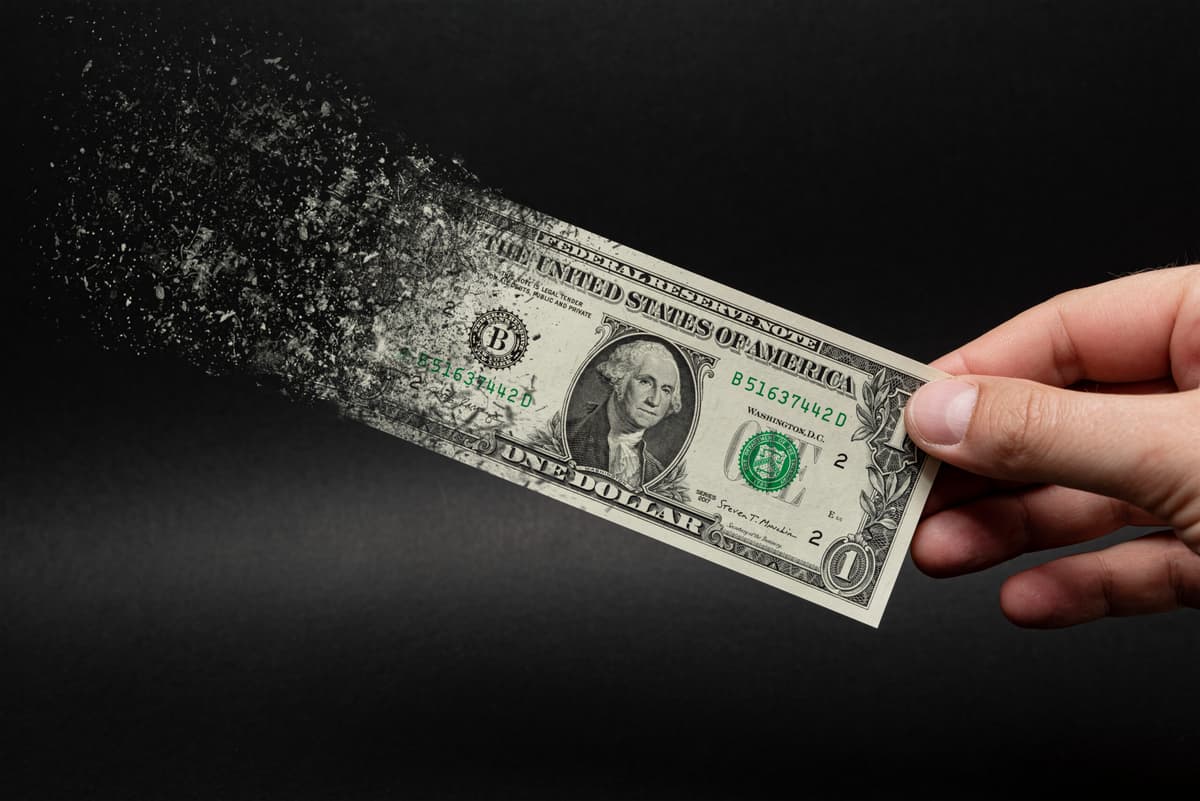
Inflation is rearing its ugly head, both in the United States and abroad, and it’s a topic that central banks are scrambling to address.
It has taken time for the Middle East conflict to feed through to higher prices. But the impact is starting to show up in the numbers for May, pressure that is only going to increase the longer that the Iran war continues, and as nations use up their stored reserves of oil.
Rate Hike Likely in Japan
It is likely that the Bank of Japan will increase rates when it meets next week. In fact, the Nikkei business daily — which often gets leaked corporate and government data as a way to manage the news cycle — is already reporting that the Bank of Japan has decided to lift the key interest rate to 1.0%, up from the current 0.75%, when it meets on June 15 and 16.
It’s a significant change for Japan, which pioneered the use of negative interest rates in 2016. The BOJ shifted out of negative territory in March 2024 which, as I explained at the time, was a positive move but one that introduced the first rate hike from Tokyo in 17 years.
Although Japan’s inflation rate has finally fallen back below the central bank’s 2.0% target this year, producer prices soared 6.3% year on year in May, the fastest increase in three years. That was well above expectations, as a result of higher oil and coal costs, which leapt 13.8%, and chemicals prices, which jumped 13.4%. Japanese manufacturers therefore face higher industrial costs that signal either higher prices or slimmer profit margins.
Taking interest rates to 1.0% would bring them to their highest level since September 1995. The Japanese economy then spent the better part of three decades in the deflation wastelands. So even these small changes by global standards are dramatic inside Japan.
Unscheduled Hike in Jakarta
We’ve today seen a 25 basis-point rate hike in the European Union, with markets pricing in two more “recalibration” interest-rate changes the rest of this year. Eurozone inflation is accelerating to the current 3.2%, well above the 2.0% target, with Eurozone number crunchers pegging it at a full-year 3.0% in their base case, or up to 4.0% in a “severe” scenario.
And there’s been a surprise interest-rate hike in Indonesia, where the central bank called an emergency, unscheduled meeting to raise rates 25 basis points on Tuesday. The goal is to protect the beleaguered rupiah currency. That followed another surprise last month when the monetary board hiked rates by 50 basis points, meaning they now stand at 5.50%.
The rupiah this week set a record low exchange rate of 18,213 to $1. It has been one of the world’s worst-performing currencies, with investor pain doubled down thanks to the 31.9% decline in the Jakarta stock market year to date.
Currencies Feeling U.S. Dollar Heat
Most Asian currencies have come under pressure. Besides the Indonesian rupiah, the Indian rupee is also trading near record lows to the U.S. dollar, touching 96.89 to the greenback last month.
The Thai baht, South Korean won and Japanese yen have all also faced stiff pressure. Central banks in all three nations have waded into the currency markets to catch currency traders off guard and support those currencies, even if such efforts inevitably prove expensive and short-lived in their impacts.
Australia’s central bank has already raised rates three times in 2026 to support the Aussie dollar and combat inflation. At the May meeting, the Reserve Bank of Australia hiked 25 basis points to bring the base rate to 4.35%.
Across the Tasman Strait, the Reserve Bank of New Zealand has kept rates steady this year. But it is indicating that its cutting cycle is over, and a rate increase is imminent, potentially in July, or at its September meeting.
South Korea Shifts to Hawkish Stance
South Korea’s central bank likewise kept rates unchanged at the end of May, but has shifted stance to a hawkish posture. Two of the seven members advocated an increase in rates now, with the Bank of Korea already hiking its inflation forecast for 2026 to 2.7%, up from 2.2% before the Iran war began.
Most forecasts therefore project that Korean rates will rise to 3.0% by the end of 2026, up from 2.5% now. Oxford University-educated economist Shin Hyun-song is new in the role of central bank governor in South Korea, and an expert in “global games,” a form of game theory where players get incomplete but potentially correlated information on the state of the world.
It’s appropriate training. He must contend with a stock market that is running rampant, with retail investors leaping into single-stock leveraged exchange-traded funds as “FOMO” trades. The benchmark Kospi index has more than tripled since the start of 2025, a world-leading performance that has seen the Korean stock market eclipse the markets in the United Kingdom and India in size.
Energy Costs Undermine Trump’s Promise to Cut Prices
Despite being an energy exporter, the United States is, of course, far from immune. So the pressure is mounting on new U.S. Federal Reserve Chairman Kevin Warsh, installed as a dove likely to decrease borrowing costs, to make a rate hike his first move.
U.S. inflation is of course now running at a 4.2% annual rate, as of the May data released on Wednesday, the first time in three years that the number has risen above 4.0%. High energy prices are largely to blame.
U.S. President Donald Trump claimed “the numbers were great,” despite his campaign-trail pledge to end the “inflation nightmare” and bring prices down very quickly. “I love the inflation,” he said.
Trump vowed to slash energy and electricity prices by half within 12 to 18 months at an August 2024 rally in North Carolina. “You just watch, they’ll come down, and they’ll come down fast.”
Instead, inflation has risen every month bar two of this second Trump term, and is accelerating particularly quickly in 2026 thanks to the Trump-induced conflict in the Middle East. Energy bills for U.S. households have risen around 12% since Trump took office in January 2025.
So even under Warsh, the next move is likely to be a 25 basis-point increase in U.S. rates, an increase on the current 3.50% to 3.75% band that’s likely to come in the December meeting or early in 2027.
Raising Inflation Forecasts in China
Nomura is even on Thursday raising its forecast for inflation in China, where deflation has recently been more of a problem. The fear was that China could slip into similar territory as post-bubble Japan, with demographic pressure weighting down an aging population and slowing economy.
Given a 3.9% increase in the hard numbers for China’s producer prices for May, the investment bank forecasts that Chinese manufacturing prices will rise 2.5% in 2026, up from the previous 1.0% forecast, and consumer prices will rise 0.9%, up from 0.5%.
“Although Beijing might feel a sense of relief from the end of deflation, it may not take much comfort, as China is a net importer of chips and the world’s largest importer of energy,” Nomura’s China economics team wrote in a note to clients.
Higher oil prices directly hike manufacturing costs, while higher chip prices are being passed through in the form of higher consumer prices for electronics products, especially smartphones and computers.
While the numbers are nowhere near the inflation impact felt in the West, any increase in consumer prices in China is compounded by the ongoing meltdown in property prices. Household wealth is decreasing for property owners at the same time that the price of daily goods is going up.
There has been sharp divergence among Asian stock markets in 2026. Markets are flat in mainland China, but down 5.4% in Hong Kong, where most international investors get their China exposure.
Korea’s world-leading market is up 84.2% year to date on the back of semiconductor stocks, which have also driven Taiwan’s benchmark up 47.0% so far in 2026. Japan’s Nikkei 225 is also sitting on a hefty advance of 27.6%.
But those currency woes have compounded sharp declines in stocks in India (down 13.4%) and Indonesia (down 31.9%). Still, last year’s laggard in Asia, the Thai market, down 10.0% last year, has rallied 24.8% year to date after February elections removed political uncertainty and international investment flows returned.
Investors much watch as central banks change stance, potentially impacting the high-growth tech stocks that have driven Asia’s gains. There’s no sign of any change in direction for the moribund Indian and Indonesian markets. But Thailand at least acts as an example for how political changes at home can remove an overhang and prompt a rally.