We Don't Think Gold Is Bull Trapping This Time
This feels like a 'fifth time is the charm' scenario.
You've reached your free article limit
You've read 0 of 1 free Pro articles.
Precious metals habitually spend years in a trading range only to forge large and explosive rallies when market participants least expect it. As a result, sidelined traders wishing they were in the market are susceptible to FOMO buying, forcing prices to levels that previously seemed out of reach. We believe gold is finally really to make such a move. While the world has been focused on Bitcoin and Nvidia NVDA stock, gold has reached a fresh all-time high!
Gold has attempted to break above $2,100 on four occasions since 2020; the current rally will be the fifth and appears successful.
The first two occurred two years apart and were met with sharp selling that took prices into the $1,700 area, but the third and fourth came with less intense corrections. This feels like a "fifth time is the charm" scenario. If so, we see almost no technical resistance overhead until we get into the $2,600 price range.
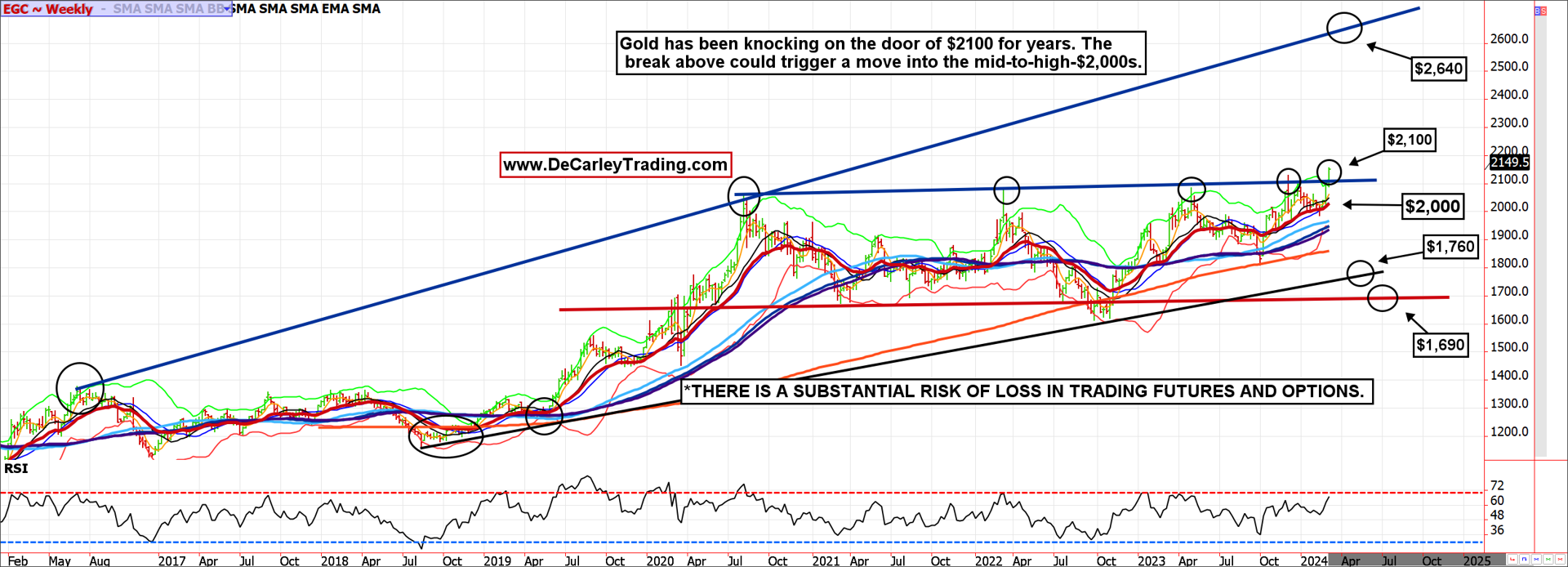
Investors and speculators alike have been perplexed by the inability of gold to make progress. Historical inflation, war in Europe and the Middle East, uncertainty, and other seemingly bullish narratives brought gold prices back to the 2011 highs and enabled the market to maintain the gains. Still, four years of sideways trading took its toll on the confidence of even the most convicted gold bugs.
Nevertheless, it appears the market has finally been able to break out for no particular reason other than to catch up with the narratives that price action has been shrugging off for years.
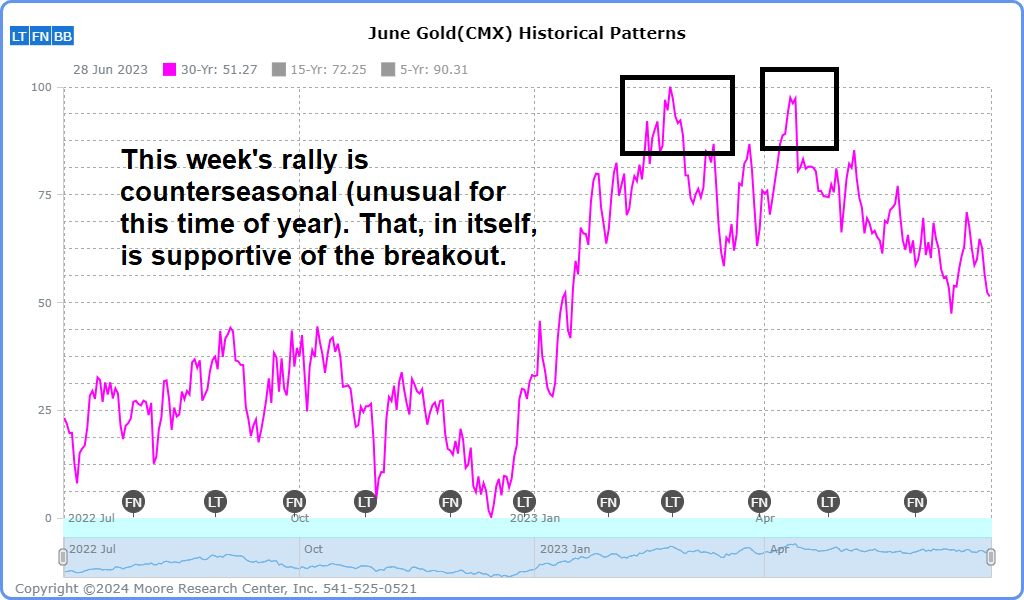
Seasonality isn't overly bullish. In fact, the most common pattern is a February high, followed by March weakness, then an April high, followed by summer weakness. Yet, this week's rally contradicts seasonal expectations, and counter-seasonal moves tend to be quite dramatic.
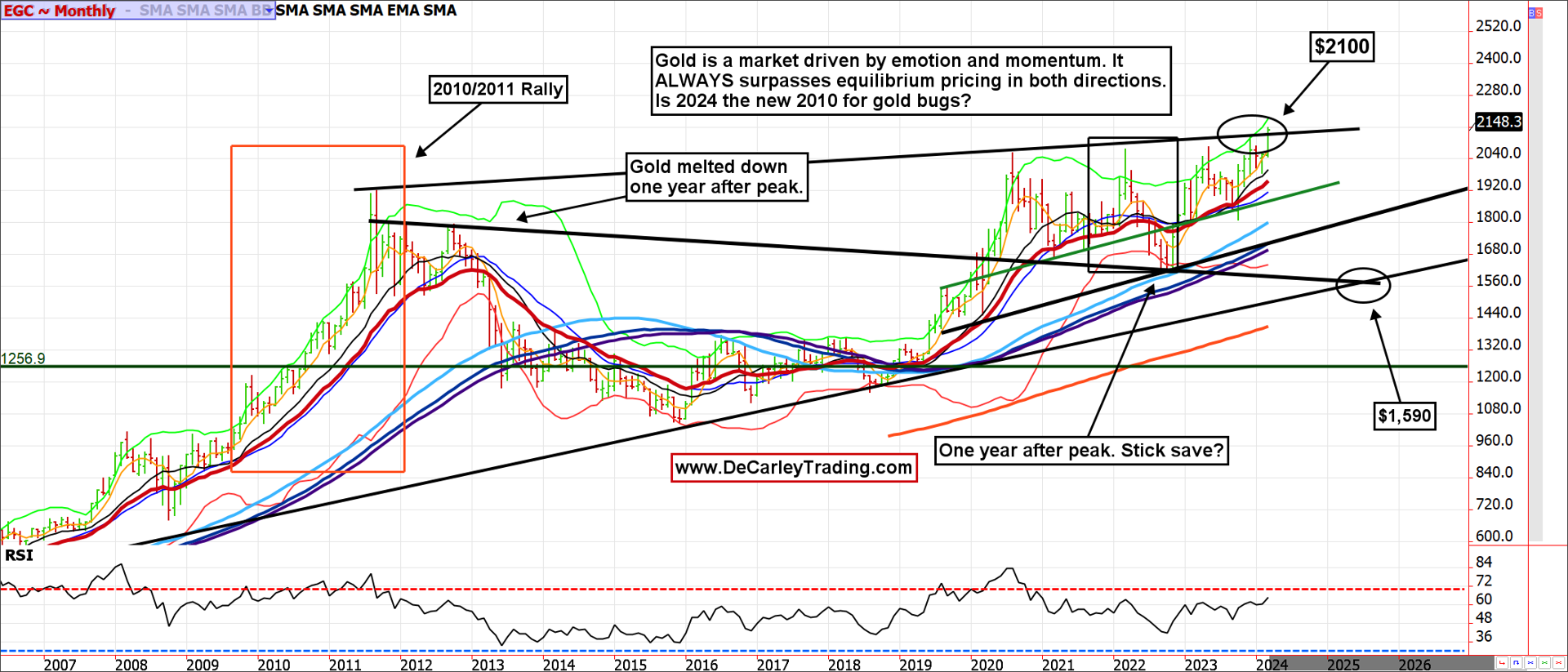
Further, today's circumstances have a lot of similarities to the 2010 gold rally in which there was a late 2009 rally, followed by a shallow correction in January/February before a massive breakout to new all-time highs ($1250). The buying finally exhausted itself in August of 2011, just under $2,000 per ounce. If you are doing the math, that is a roughly $700 run or a 56% increase in gold price. This perspective is important because, with this historical example in mind, $2,600 in gold in 2024 shouldn't seem extreme.
Gold isn't for everyone. It doesn't pay interest and can go years or even decades without progress. Yet, it occasionally presents opportunities for those with conviction and patience. This might be one of those years. Further, it can be a good portfolio diversifier; gold generally correlates little to other asset classes in the long run.