Daily Diary

Doug KassDoug Kass
DATE:

Shorted Apple

* As I suggested I would yesterday…

From Comments Section:

Dougie Kass

Shorted APPL $329 coincident with the EPS release

BY DOUG KASS · Jul 29, 2026, 7:30 AM EDT   

Time to Short Apple?

The shares of Apple (AAPL) keep going higher because they are NOT spending on AI.  

All the money has to go somewhere, so instead of taking it out of the market, they put it into Apple — in the great rotation that has highlighted trading in the last few weeks.

Apple recently had a poor quarter and its shares sold off on the basis of its fundamentals — but it’s now going straight up just due to flows. 

Apple’s top and bottom-line growth since 2000 is uninspiring as it is basically a giant company that has not innovated anything for about the last 10-15 years since Steve Jobs died and has conspicuously slowing growth.

Apple is a large cash-generating machine that has lived off of taking price up for its products, buybacks and passive money flows into their stock (because it is such a big index component). 

Now it is trading at 40x and at its all-time high — as it has a love fest with momentum-based investors. 

This speaks volumes about what the equity markets have become and how things are valued.    

I don’t typically short value but I am considering an AAPL short.

(I hope Warren Buffett reads this!)

Position: Short AAPL (S)

BY Doug Kass · Jul 30, 2026, 5:00 PM EDT

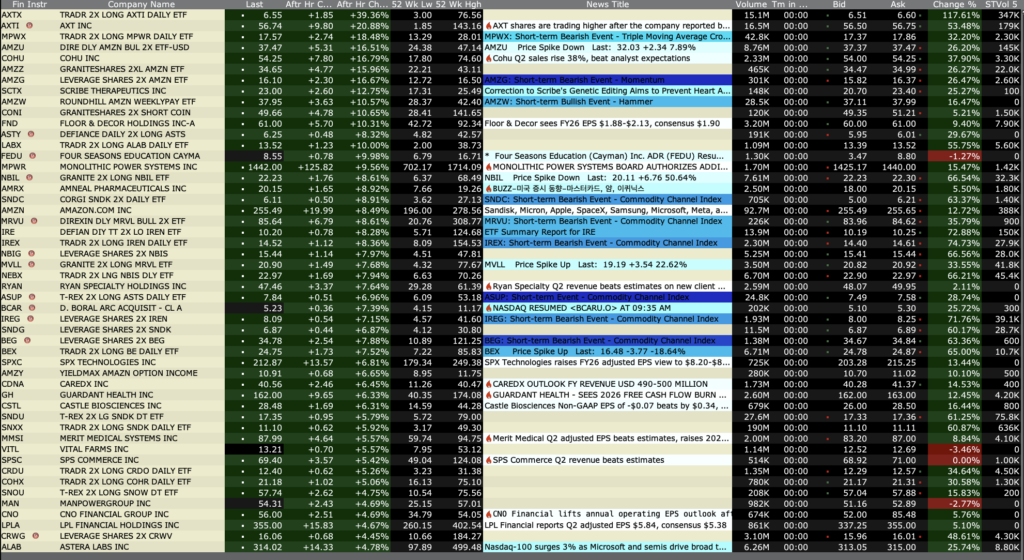
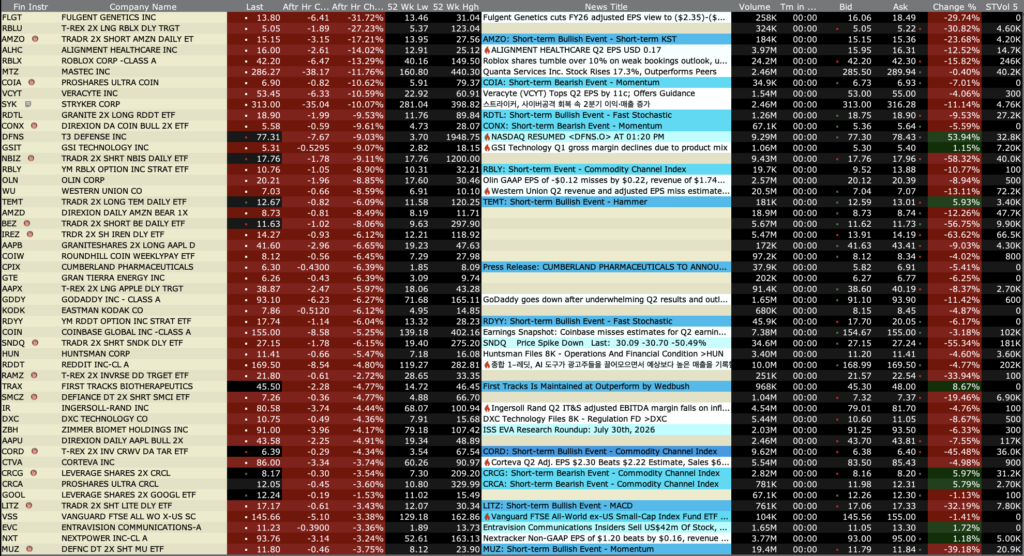
Thursday’s After-Hours Advancers and Decliners

As of 4:32 PM (post-Apple earnings release):

After-Hours % Advancers

After-Hours % Decliners

Position: None

BY Doug Kass · Jul 30, 2026, 4:40 PM EDT

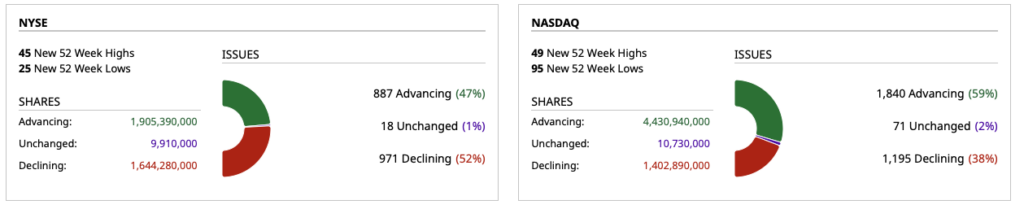
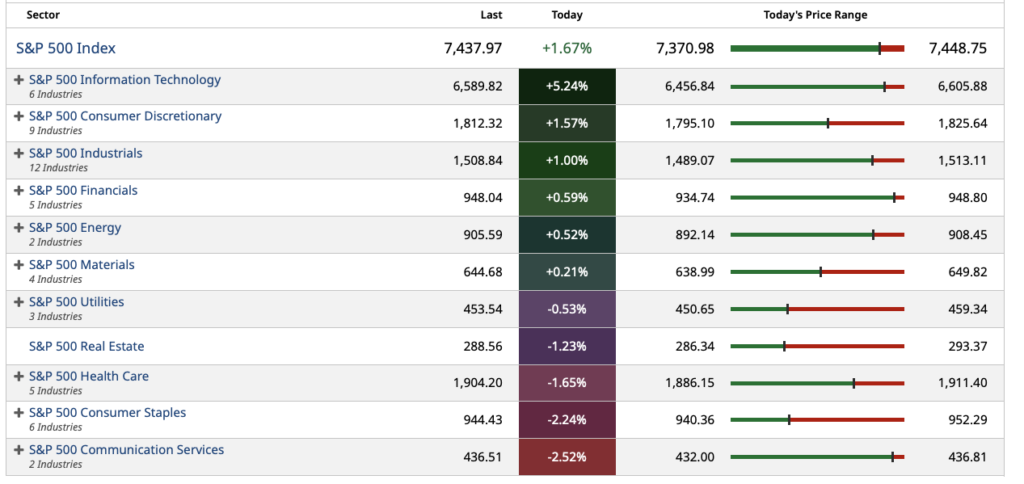
Thursday’s Closing Market Stats

Closing Volume

– NYSE volume 18% above its one-month average
– NASDAQ volume 11% above its one-month average  
– VIX index: down 17.28% to 17.09

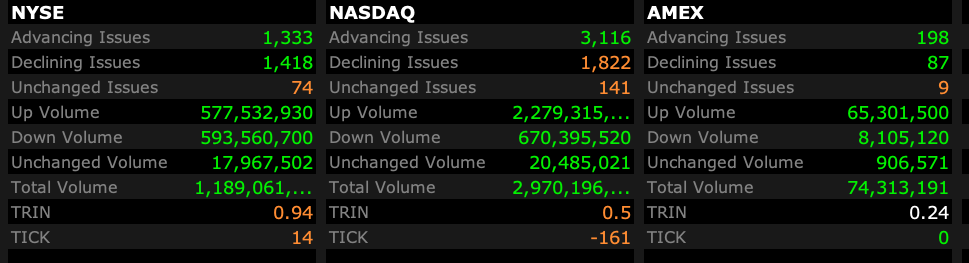
Breadth

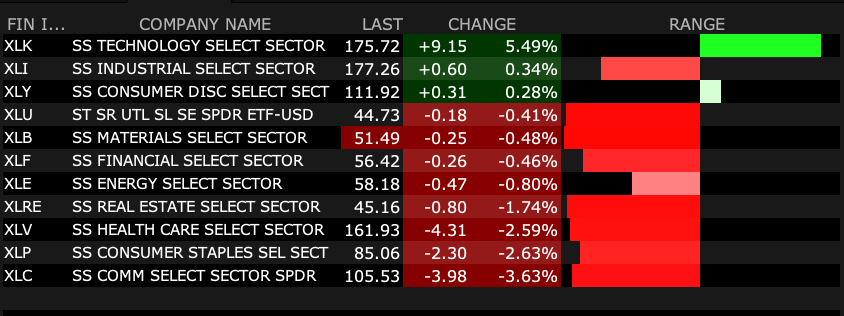
S&P 500 Sectors

% Movers

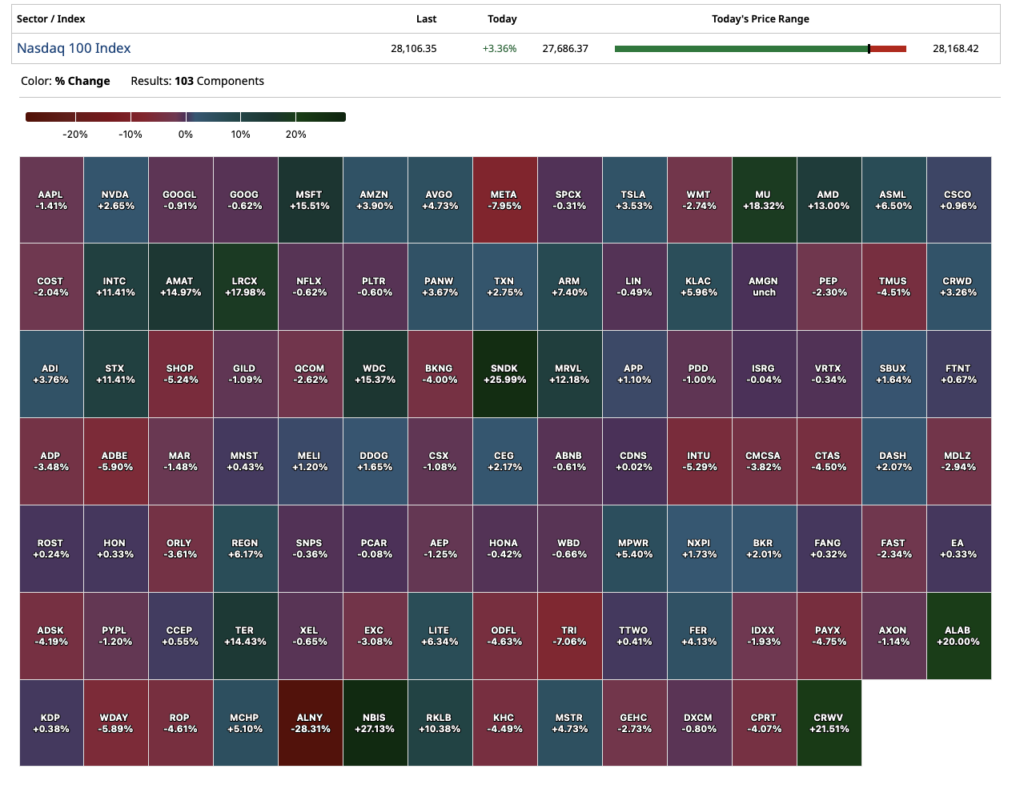
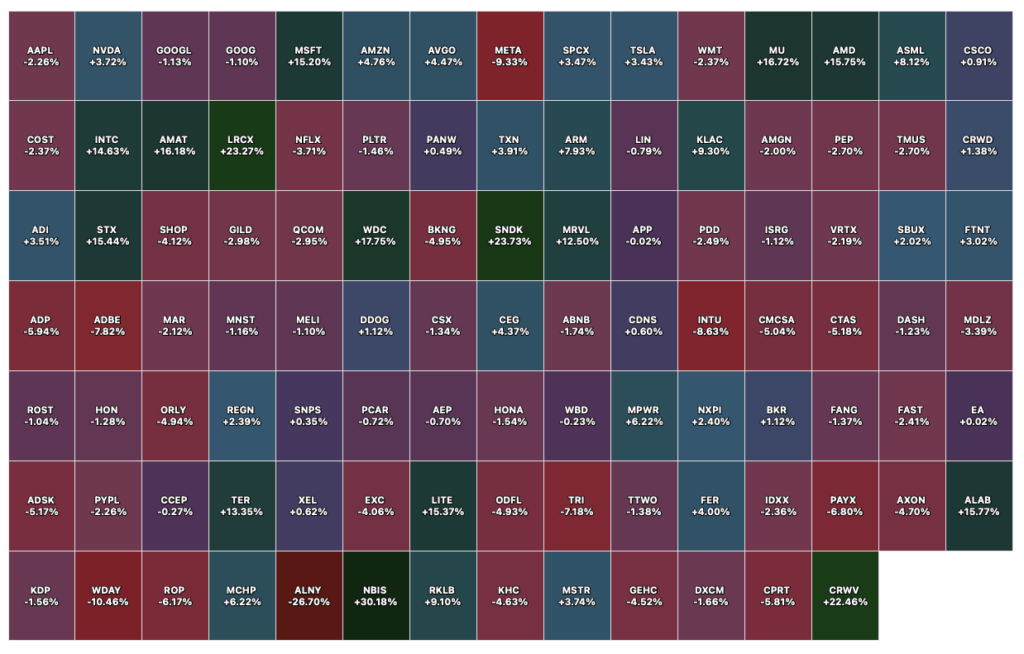
Nasdaq 100 Heat Map

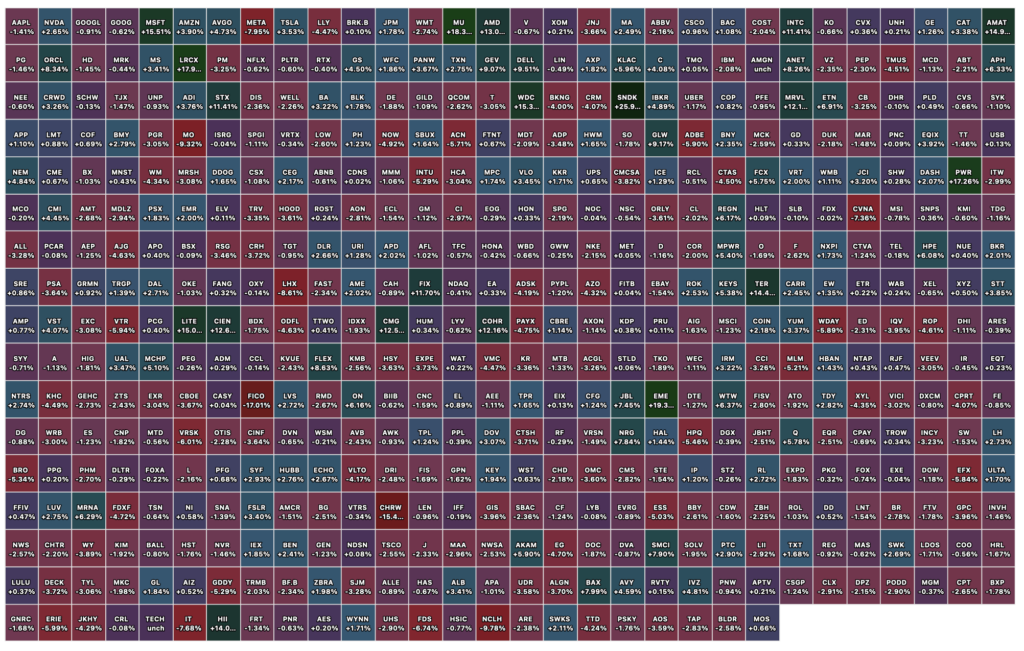
Closing S&P 500 Heat Map

Position: None

BY Doug Kass · Jul 30, 2026, 4:28 PM EDT

Just One Last Trade

“Just one last thing.”

– Lt. Columbo

I have re-shorted the indices:

* SPY $743.20
* QQQ $686.12

Position: Short SPY (VS), QQQ (VS) 

BY Doug Kass · Jul 30, 2026, 4:22 PM EDT

Family First, Earnings Second

I won’t be around for the earnings releases after the close as I have to leave early for a family event.

Thanks for reading my Diary today.

Enjoy the evening.

Be safe.

Position: None 

BY Doug Kass · Jul 30, 2026, 3:45 PM EDT

The Gospel According to Vitaliy

Position: None

BY Doug Kass · Jul 30, 2026, 3:01 PM EDT

Market Musings

I am not optimistic that this is the start of a bull market leg.

At the core of my concern is that interest rates will be “higher for longer.”

Interest fates are at the core of every market valuation equation. 

When rates rise, the present value of stocks declines.

The yield on the long bond is now at 5.21% — that’s the highest yield in 19 years. 

The risk free rate is also at the core of the equity risk premium (which is shrinking further).

The implosion of the $45 billion hedge fund (Situational Awareness) may be the tip of the iceberg — as I noted in today’s opening missive that discusses leverage in our markets and other market structure risks. 

I am not yet short but if the advance continues I will be.

Position: None

BY Doug Kass · Jul 30, 2026, 2:46 PM EDT

Speaking Truth to Power

* Hear no evil speak no evil see no evil…

There was a lot of fanfare and no serious questions to Jersey Mike’s Subs (JMKE) CEO this morning on CNBC.

But not a word that JMKE’s stock price immediately sold below the IPO price of $23 — currently at $22/share.

Position: None

BY Doug Kass · Jul 30, 2026, 2:00 PM EDT

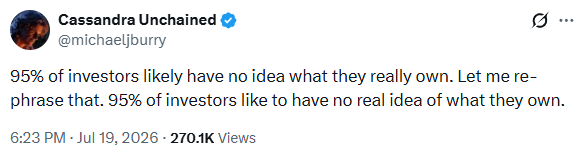
My Tweet of the Day (Part Deux)

Position: None

BY Doug Kass · Jul 30, 2026, 1:42 PM EDT

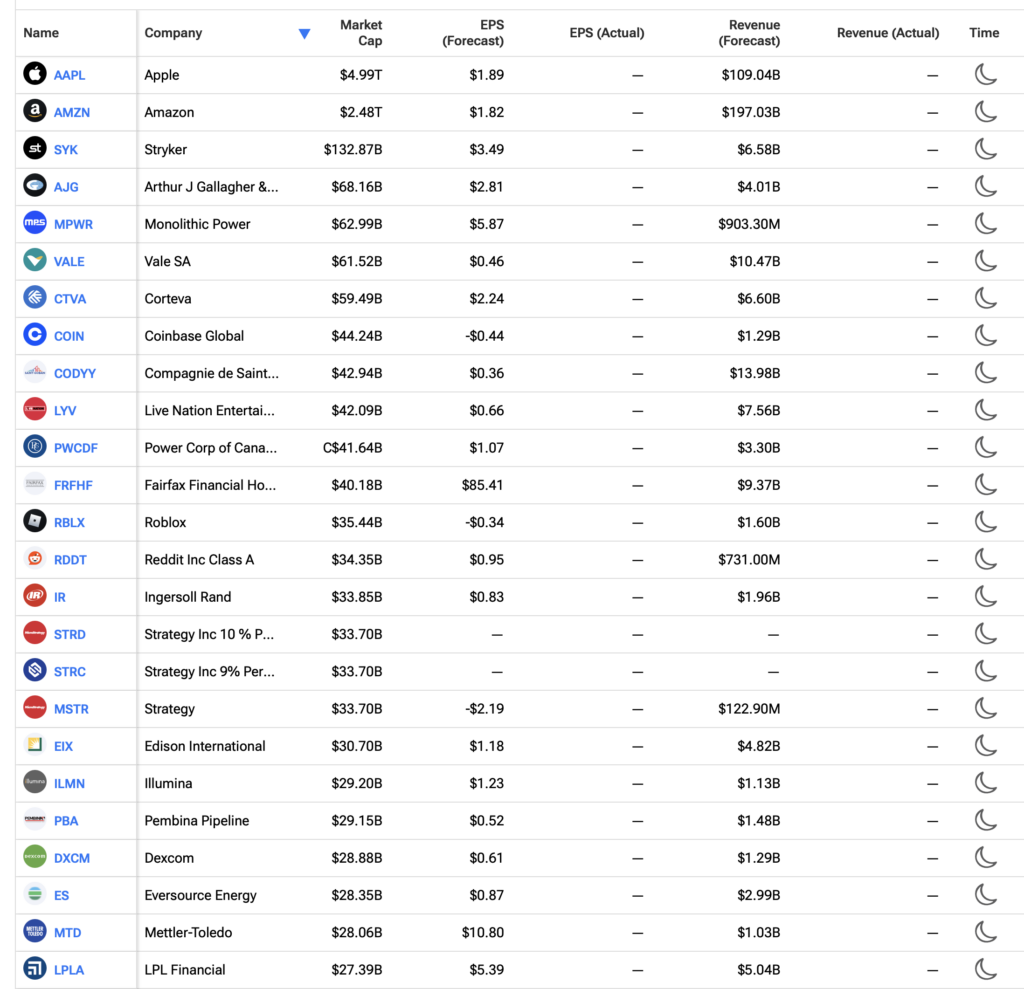
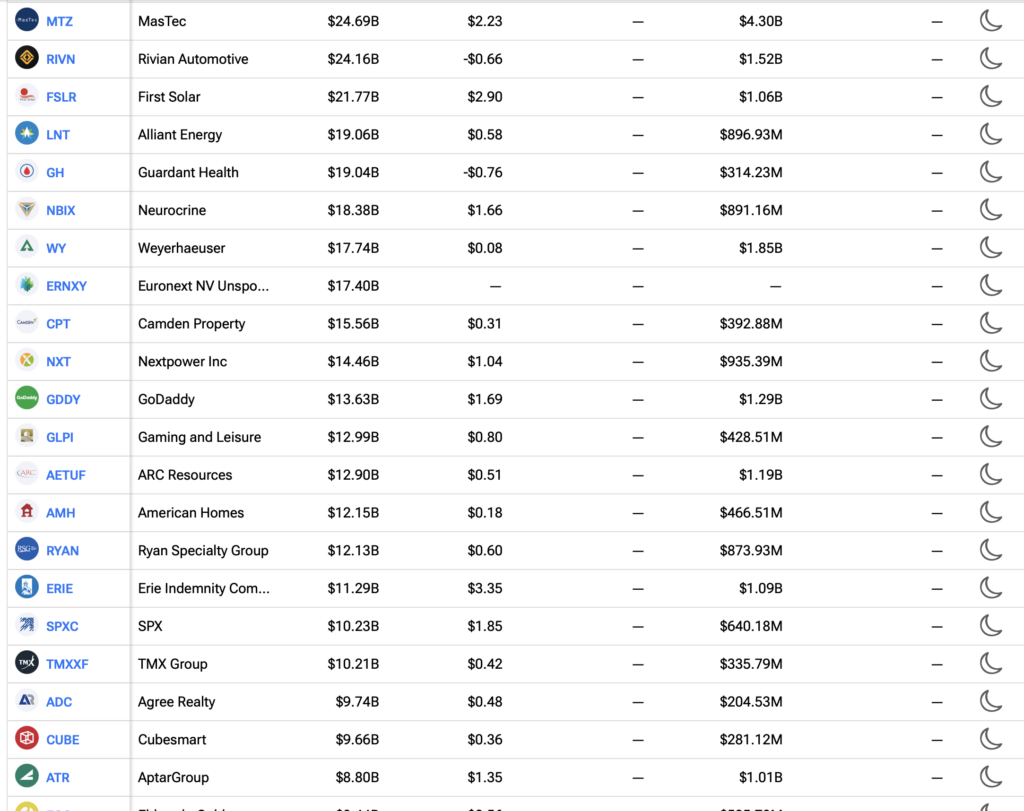
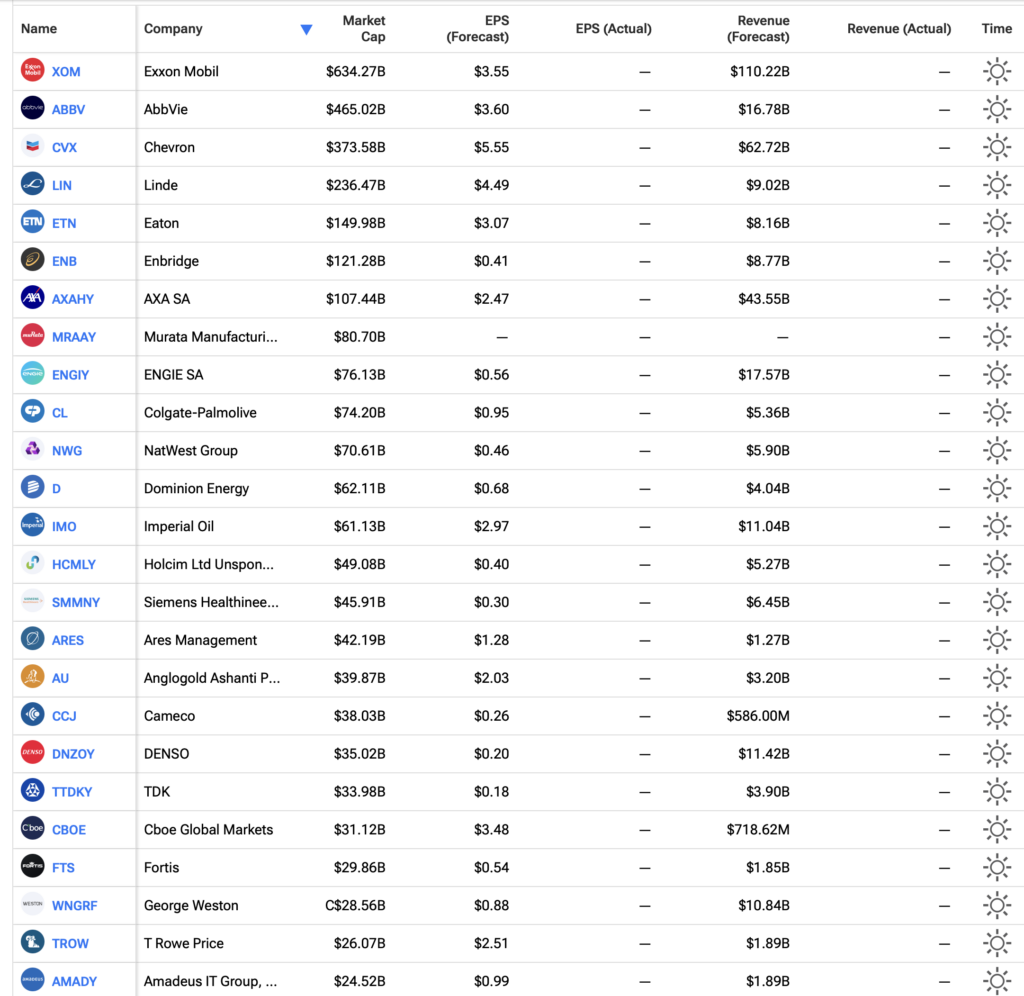
Earnings Calendar for After Thursday’s Close and Before Friday’s Open

EARNINGS CALENDAR  AFTER THE CLOSE THURSDAY, JULY 30

EARNINGS CALENDAR BEFORE THE OPEN FRIDAY, JULY 31

Position: None

BY Doug Kass · Jul 30, 2026, 1:05 PM EDT

The Situation (Part Deux)

Position: None

BY Doug Kass · Jul 30, 2026, 12:35 PM EDT

The Situation

Position: None

BY Doug Kass · Jul 30, 2026, 12:28 PM EDT

Boockvar on the BoJ and Yen

From Peter Boockvar:

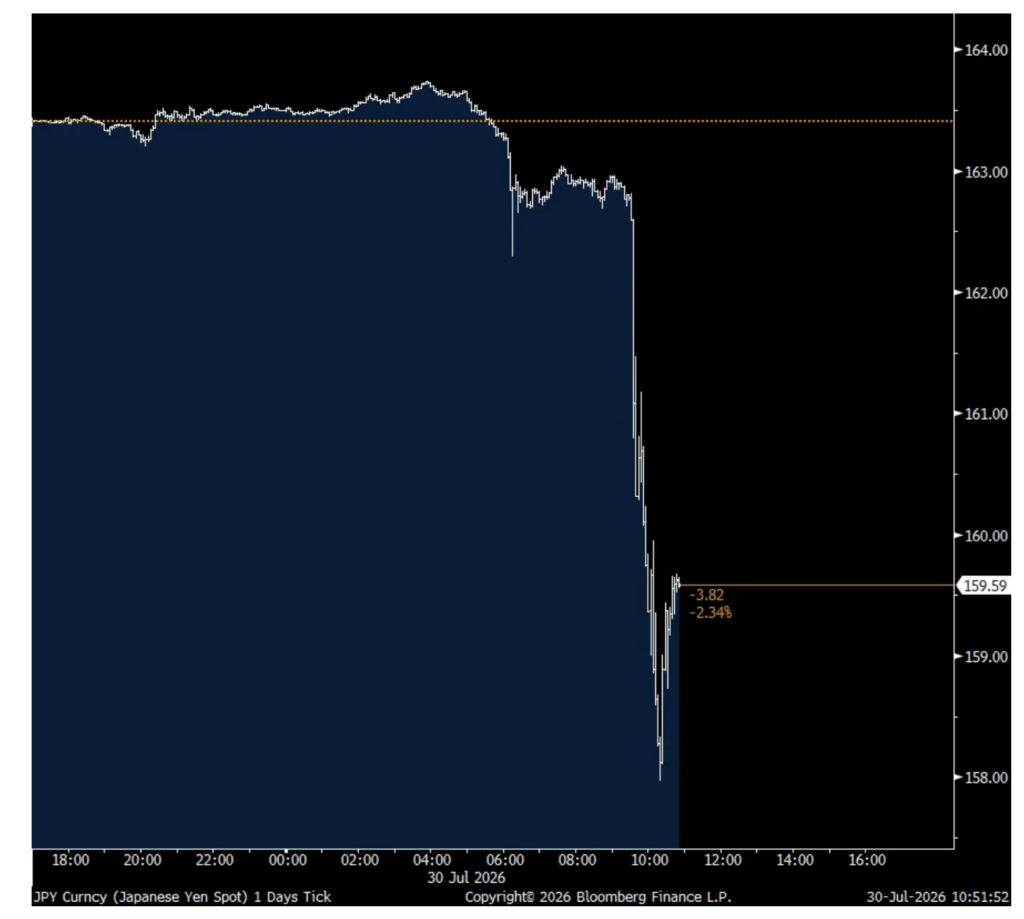
Big move

Ahead of the BoJ meeting tonight where no policy change is expected, the yen beginning at 9:30am est today has had a big rally of 2.3% (a bit off the highs of the move). Intervention is the obvious speculation but we have to wonder if the BoJ is going to give us a surprise rate hike and the possibility leaked out to markets.

Yen intraday move

Position: None

BY Doug Kass · Jul 30, 2026, 12:15 PM EDT

My Tweet of the Day

Position: Long stocks mentioned in tweet.

BY Doug Kass · Jul 30, 2026, 12:05 PM EDT

Late Morning Market Charts

Positions: None.

BY Doug Kass · Jul 30, 2026, 11:45 AM EDT

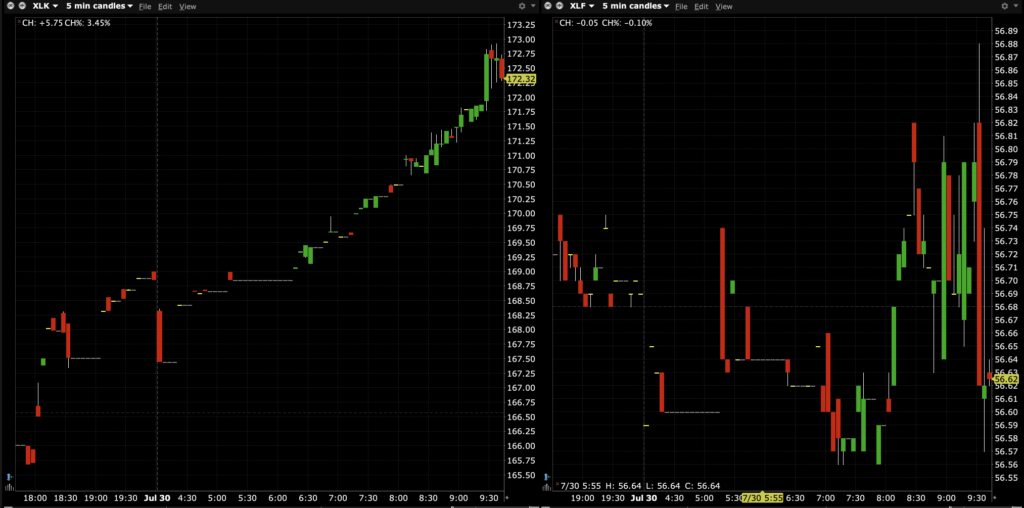
Tech (XLK) Vs. Financials (XLF)

From 9:40 a.m. ET

Positions: None.

BY Doug Kass · Jul 30, 2026, 11:35 AM EDT

Adding to Pepsi Long

I’m adding to PepsiCo (PEP) at $139.81.

Position: Long PEP (S)

BY Doug Kass · Jul 30, 2026, 11:30 AM EDT

Boockvar on Bank of England Rates, Savings

The following is from Peter Boockvar:

BoE scores it 6-3 no hike/Savings rate at 18 yr low ex Covid/Claims benign/GDP

As fully expected, the BoE voted to keep its base rate unchanged at 3.75% but three members voted to hike by 25 bps. This is the key for what happens from here and we/they watch to see how it plays out, and I believe the same can be said for the Federal Reserve. “The risk of material second-round effects in price and wage-setting, against which policy needs to lean, is greater the longer higher energy prices persist. There is little evidence so far to suggest such effects, and there have continued to be clear signs of underlying disinflation in recent data.”

And, “The Committee judges that the risks to the inflation outlook are tilted to the upside relative to the central projection in the July Monetary Policy Report, but there remains scope for the outlook to change materially as events in the Middle East unfold.”

Following the US 2 yr yield drop yesterday and with no surprise in today’s statement with six still not wanting to hike, the 2 yr gilt yield is down by 8 bps to 4.37%. The 10 yr is lower by 3 bps to exactly 5%. The pound is little changed.

To the just released economic data.

Headline PCE in June fell one tenth m/o/m as expected but off a .5% rise in May (revised up by one tenth). The core rate was higher by one tenth vs .3% in May and that was one tenth under the estimate. The y/o/y figures were as expected due to rounding with a headline increase of 3.7% and core rate of 3.3% vs 4.1% and 3.4% in the month before.

The reversal lower in energy prices of 5.9% after the spike over the prior four months is why the headline print was negative. Goods prices were higher by 3.7% y/o/y and at the same pace with services.

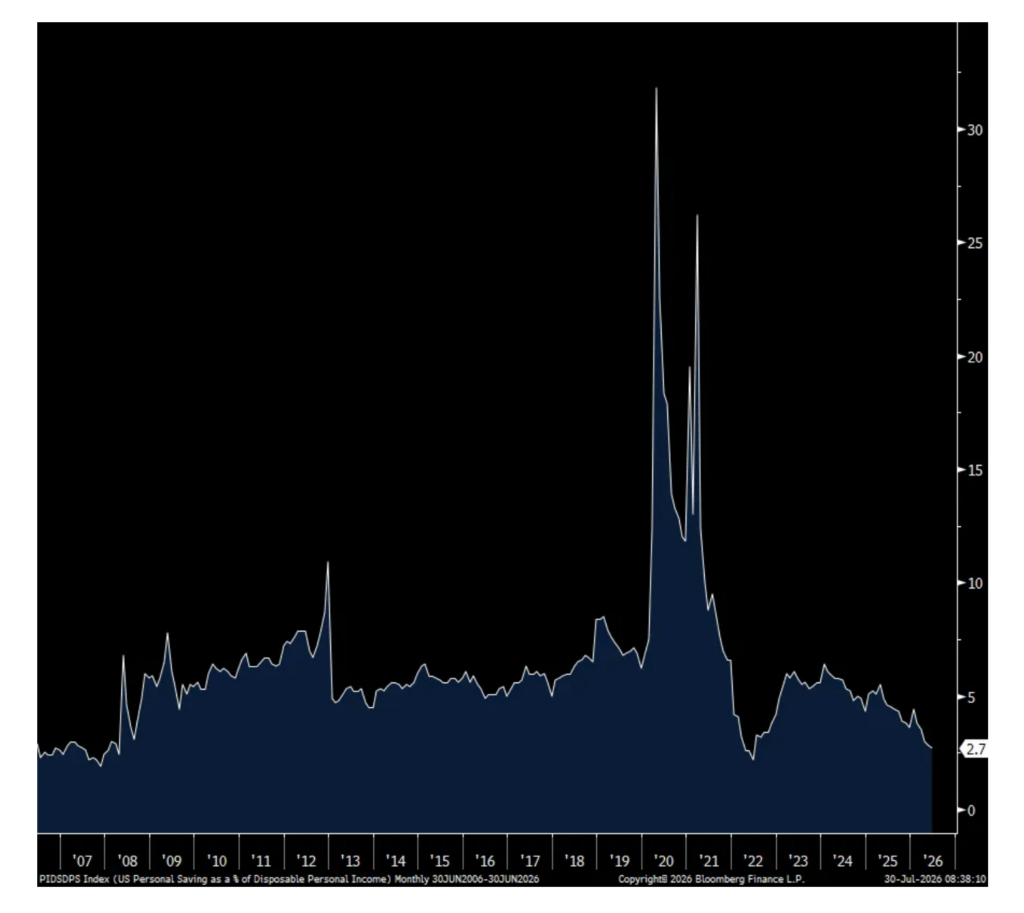
The income and spending data were about as forecasted when we include the May revisions. As income and spending both rose about to the same extent, the savings rate was little changed at 2.7% vs 2.8% in the month before but that is the lowest since June 2022 and April 2008 before then. On one hand, a higher wealth effect lessens the need to save for some but on the other, lower income households have a tough time saving anything.

Savings Rate

Initial jobless claims remained very low at 197k after last week’s big drop to 188k. The estimate was 200k and the 4 week average falls to 203k from 208k. Continuing claims were little changed at 1.782mm.

The bottom line remains the same with a modest pace of firing’s as measured here and with an improved pace of hiring compared to last year.

Finally, Q2 GDP grew 1.5%, weaker than the estimate of 2% and brings the first half year growth average at 1.8%. The major factor here was the 6.2% jump in the price deflator, well above the estimate of 4% with higher energy prices likely a key factor and subtracts from the REAL growth rate. Combining the two puts nominal GDP growth at 7.7% vs the forecast of 6%.

Personal spending surprised to the upside with 3.2% growth vs the estimate of 2.3% with strength in spending on goods and overall adding 212 bps to growth with half from goods and the other half from services. Trade was the drag subtracting 100 bps. So was the drop in inventories by 67 bps. Government spending took off 14 bps because of a drop in non-defense federal government spending.

The spend on data centers was obvious as spending on equipment added 80 bps to growth and IP spend contributed 48 bps. Residential real estate became a net positive after many quarters of negative.

Bottom line, as said the huge jump in inflation was why the REAL growth rate was below expectations. Smoothing it all out, US GDP growth is around 2% which it was in 2025 too with a big chunk being driven by data center construction and upper income consumer spending.

All of the above is not really market moving, including PCE because it’s both old news with the subsequent rise in energy prices but also we’ve already seen almost all of the inputs. Long end yields are still up on the day while the 2 yr is little changed.

Positions: None.

BY Doug Kass · Jul 30, 2026, 11:15 AM EDT

Things That Make Me Say Hmmm…

Positions: None.

BY Doug Kass · Jul 30, 2026, 11:05 AM EDT

Boockvar on Warsh, Earnings

The following is from Peter Boockvar:

Stop always staring at me/Amazingly good earnings intel/Europe

‘Stop always staring at me’ is essentially what Kevin Warsh said again to the markets and over the past six weeks, the markets took heed. I’ll repeat what I said yesterday: ‘understandably a lot of angst over what the Fed would do today but the bond market has already tightened policy for them whether one thought they would move today or not.’ I loved his line yesterday, “Play the ball, not the referee” and a reason why he’s saying it is because his crystal ball is not any clearer than the markets and he wants to end the Fed playing god over the level of interest rates.

What complicates the job of Warsh & Co though is the near 6% budget deficit as a percent of GDP as it is both fiscal driven inflationary that he has no control over and if I’m right that debts and deficits now matter, long end rates are going to reflect that.

Now what will happen by year end I believe, if inflation is still in the range of 3-4%, which I think to be the case, they will hike rates at some point in the coming meetings “as delivering price stability” is the appropriate key message Warsh keeps sending. And if they don’t, the bond market will continue to do it for them.

Ahead of the June PCE, thus old news with the moves in oil prices since and after we’ve already seen CPI and PPI, I want to make a quick comment here on the changes being made to the calculation to PCE as of the August print which will be seen in September. The BLS is tweaking how they calculate portfolio management fees, software and legal services, which I have no problem with. What I do have a problem with is they are not changing how they calculate healthcare which is the BIGGEST component of PCE by far. As it currently calculates what 3rd parties pay for healthcare as opposed to consumers, it mostly captures Medicare and Medicaid reimbursements which are artificially set below market. That would be real change to the PCE measurement because it suppresses this inflation metric.

Flooded with earnings and I’ll try to be as succinct as possible with the direction of business the best for those touching the data center construction.

From Microsoft, lifting pre-market:

“Microsoft Cloud surpassed $214 billion, up 27% and Azure surpassed $100 billion, up 41%.”

“Company gross margin percentage was 67%, down y/o/y, driven by sales mix shift to Azure as well as continued investments in AI infrastructure and growing product usage, partially offset by ongoing efficiency gains, particularly in Azure and M365 Commercial cloud.”

In cloud, “Customer demand continues to exceed available capacity. Revenue growth was ahead of expectations driven by efficiency gains across our CPU and GPU fleet as well as process improvements to enable earlier delivery of new capacity. That additional in-quarter capacity for Azure was quickly monetized.”

Unlike the massive $99 billion ‘other income’ gain seen from Alphabet/Google, Microsoft’s was $2.8 billion, “When adjusted for the impact of our investments in OpenAI” and it was “driven by the gain on investment in Anthropic.”

“Capital expenditures were $41 billion including the impact from higher component pricing as noted in our guide. Roughly two-thirds of our CapEx was for short lived assets, primarily CPUs and GPUs as customers increasingly build solutions that leverage both AI and non-AI infrastructure. The remaining spend was for long lived assets.”

Guiding to the next quarter, “We expect CapEx spend will be over $50 billion.”

I’ll add this, in terms of expected free cash flow for Microsoft, for their current 6/27 fiscal year it’s estimated by the Street to be $28.4 billion vs $67 billion for 6/26 fiscal year.

From Meta, down pre-market as still robust revenue growth (up 28%), though with more muted guidance, is again offset by the massive spending concerns:

“The global average price per ad increased 12% y/o/y, driven by ad performance gains, improvements in macro conditions relative to Q2 of last year (which included ‘Liberation Day), and currency tailwinds.”

“Capital expenditures, including principal payments on finance leases, were $31.1 billion, driven by investments in servers, data centers, and network infrastructure…We anticipate 2026 capital expenditures, including principal payments on finance leases, to be in the range of $130 billion to $145 billion, narrowed from our prior outlook of $125 billion to $145 billion.” There was no specific guidance as to what it might be in 2027.

To quantify, at the mid-point of that guide, that is 54% of 2026 expected revenue vs 27% in 2022 before the spend ramp started. Their free cash flow is expected to go from $46 billion in 2026 to an estimated -$1.2 billion in 2026.

And this is one of the reasons why Mark Zuckerberg is spending all this money as he doesn’t think GenAI will just be an enhanced search tool and it won’t be just for coders and software developers:

“one of the bets here that we’re making is that we think that consumer personal agents is going to end up being an extremely important and massive market. I think that it’s extremely unlikely if you look out five years from now, for example, that whatever period of time you want, that you don’t have billions of people with a personal agent that understands your goals and that is just working on your behalf 24/7 to achieve your goals in whatever the domain is that you care about, whether it’s helping you with your health or your hobbies or your personal finances or your productivity in running your home better or improving and enhancing your relationships, helping with your career.”

From Proctor & Gamble, down 2% yesterday:

“We managed through a very volatile environment and delivered organic sales, core EPS and cash return to shareowners within our initial guidance ranges…We also saw improvement in market share in the second half despite some softening in underlying market growth as inflation increased.” And “results were impacted by trade dynamics in the US and the spike in input costs.”

“As we enter fiscal ’27, we continue to expect the environment around us to remain volatile and challenging from cost to currencies to consumer competitor, retailer and geopolitical dynamics.”

“On the consumer, I can’t point or we can’t point to gas as a specific impact. I think it’s a general impact where you see the consumers that are well off continue to behave as they behaved before with larger pack sizes to find value. The more pressured consumer that will be more impacted by gas prices or incremental $100 of gas cost per week. They continue to look for smaller pack sizes. They continue to be very affected by promotion patterns. So none of that has changed.”

From Starbucks and trading higher pre-market as comps exceeded expectations and they raised guidance:

“North America continues to lead our performance in the quarter…Sales growth in Q3 was broad based across generations and income groups, and across both Starbucks rewards members and non-members, even with the continued pressure on US consumer sentiment. Marketing innovation helped drive that resilience.”

US comps were up 7.9%, “led by transactions up 4.2%, and average ticket up 3.6%…Pricing contributed less than a point of ticket growth in the quarter.”

“International company operated comp sales grew 5.7%, driven by continued strength in Japan and the UK.”

From Chipotle, also up pre-market with slightly better comps:

Comps grew 2.2%, “including a transaction comp of 1%.”

“We were pleased to see this momentum carry into early July, though trends have been softer in recent weeks, amid heightened consumer caution around the broader restaurant industry.”

“On pricing, the impact in Q2 was around 1.6% and we anticipate it will increase to the mid 2% range in Q3. For the full year, we expect to land near the high end of the 1% to 2% range we communicated earlier this year.”

From MGM Resorts, in the process of maybe getting bought by Barry Diller:

“Revenue for Las Vegas was bolstered by a solid underlying base of group and convention business at MGM Resorts and aided by strong attendance at events around town ranging from BTS and UFC to a deep playoff running at the Stanley Cup by our very own Vegas Golden Knights.”

With their convention business, “We drove demand from a diverse customer mix that included technology and hospitality corporate groups as well as top B2B trade shows and professional association meetings, leading to the highest 2nd quarter convention ADR and catering and banquet revenue in our history.”

To the two lane economy, “I think we continue to see really strong strength in the luxury segment. As we’ve noted, the lower ends of the segment, particularly Luxor and Excalibur, those do remain challenged, but we’ve been deploying offers such as the all-inclusive. We’ve seen a positive reaction to that.” They are also seeing “real health in the Group segment.”

“At MGM China, we continued to outperform the market in the 2nd quarter, while maintaining solid market share of 16.4%, a sequential increase of a full percentage point. While the World Cup temporarily impacted June volumes in Macau, this was a transitory event rather than a secular shift. Our confidence is reinforced by the immediate and encouraging rebound in volumes observed post-tournament throughout the month of July.”

From Old Dominion Freight Line, down 1.5%:

“The domestic economic environment remains relatively stable and we are encouraged by the continued improvement in demand that began late last year.”

From Vulcan Materials, also down 1.5%:

“Shipments increased 1% compared to the prior year and varied widely across geographies depending upon weather conditions. Aggregates freight adjusted selling prices moved higher both sequentially and y/o/y. On a mix adjusted basis, average selling prices in the quarter improved 5% compared to the prior year with improvements widespread across geographies.”

“We still expect strong public activity in our markets and improving private large project opportunities to drive y/o/y shipments growth in 2026…With the August recess upon us, as expected, there will likely be a continuing resolution to fund federal highway spending while Congress completes this work.”

“On the private side, large project opportunities continue to drive non-residential activity, particularly data centers.”

“Residential construction continues to struggle due to the ongoing lack of affordability.”

From Masco, which fell 11% yesterday as sales missed the estimate:

“Looking at our North American plumbing performance in the first half of the year, sales increased low single digits.”

“Our strong PRO paint performance continues, with sales increasing mid single digits in the quarter. DIY paint sales decreased high single digits in the second quarter, reflecting ongoing weakness in the DIY paint market” among other things.

From Eagle Materials, down 5% yesterday:

“On the heavy side, our cement and aggregate volumes continue to be supported by elevated infrastructure spending driven by federal IIJA bill and elevated state budgets.”

“Similarly, our customers across all of our regions are seeing growth in data center construction. We are still quantifying the impact on our volumes of rapid data center growth. What we do know is our customers are seeing an increased number of projects, building footprint sizes, and visibility from project announcement to actual construction. They are also seeing this growth spill over into other categories such as utilities, warehousing, and community build out.”

From ADP talking about the AI influence or not on the jobs market and who rallied 3.5%:

“While some job displacement can occur during times of transition, our data shows that AI is not eliminating jobs at scale. Instead, it’s reshaping how work gets done, what roles look like, and how teams are organized.”

From Stanley Black & Decker, down 1.2%:

Revenue was up 3%, “slightly ahead of our expectations, driven primarily by volume strength in the US across both retail and commercial & industrial channels within tools & outdoor.”

“we maintain our view that the new Section 301 tariffs, including those implemented just last week, are likely to be introduced during the next few months at the same level as the old IEEPA tariffs, which means our underlying run rate tariff costs are expected to return back to the prior IEEPA levels within a few months.”

They did get some IEEPA refunds but “This temporary tariff tailwind, however, is still being offset by persistent inflationary pressures from battery metals, tungsten, oil and oil derivatives…Given inflationary pressures remain persistent, it appears more likely than not a price increase will be necessary by 2027.”

I’ll finish with some data out of Europe. France’s economy grew by .2% q/o/q or .7% y/o/y about as expected. Spain’s economy was up by .7% q/o/q and 2.7% y/o/y, above expectations.

For the Eurozone as a whole, growth was .4% q/o/q, twice the estimate and up 1% y/o/y. That is something Europe needs to improve but could have said that for a long time now.

Spain’s July CPI fell one tenth m/o/m but off a .6% gain in June and up 3.8% y/o/y.

The Economic Confidence index for the region in July was 96.9, up from 95.4 in June with gains in both services and manufacturing. Retail and consumer confidence both rose but weakened for construction.

Positions: None.

BY Doug Kass · Jul 30, 2026, 10:55 AM EDT

Things I Did Today

Here are today’s things:

* I sold out the following longs:

(AMZN) $236.89

(GOOGL) $330.07

(MSFT) $450.31

(SNDK) $1156

* Added to (MSOS)  $4.04, (TRLV) $8.02 and (GTBIF) $6.92

Positions: Long MSOS VVL TRLV S GTBIF S

BY Doug Kass · Jul 30, 2026, 10:35 AM EDT

Out of Tech Longs

I am out of longs in SNDK (SNDK), AMZN (AMZN), GOOGL (GOOGL) and MSFT (MSFT).

Positions: None.
BY Doug Kass · Jul 30, 2026, 10:30 AM EDT

Out of SanDisk

I sold out my trading long rental of SanDisk (SNDK) for a small profit (I had averaged down, as posted) at $1155.07.

Positions: None.
BY Doug Kass · Jul 30, 2026, 10:25 AM EDT

Wednesday Came Close to the Sort of Debilitating ‘Flash Crash’ and Market Structure Event I’ve Been Warning About

Surprise #4: Market structure, so positive an influence in 2023-25 begins to weigh on equities after a clear change in market momentum leads to a deleveraging in the leveraged, passive and quantitative equity fund worlds

With so many positioned on the same side of the (bullish) boat, retail investors begin to liquidate from equity funds – reversing the experience of the last few years. The movie of the last decade (of inflows) goes into reverse in 2026 – its October 1987 (portfolio insurance was to blame) all over again. More than one quarter of the listed ETFs close during the year due to “indifference”.

–  Kass Diary, 10 Surprises for 2026 

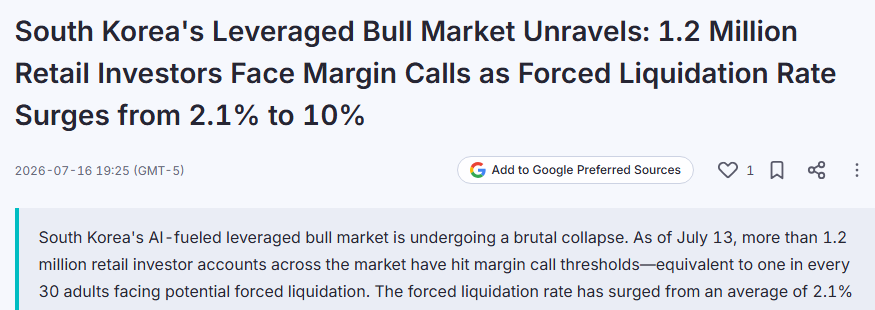
I remain concerned about market structure risk and the leverage and gamification that exists in today’s capital markets: 

“The violence of the market’s rotation is not a good thing.

It is only a matter of time before we see a (leveraged) hedge fund blow up. 

I believe it might be presaging a market structure “event” — such as a flash crash (at some point).”

– Kass Diary July 15 Abby Normal… Another Market Structure Warning

From late June:


An Adverse Market (Structure) Event Is Growing More Likely

yone who has observed the market’s spectacular intraday volatility and outsized daily swings over the last several weeks should realize that something is amiss — the market is not behaving normally, it seems destabilized.

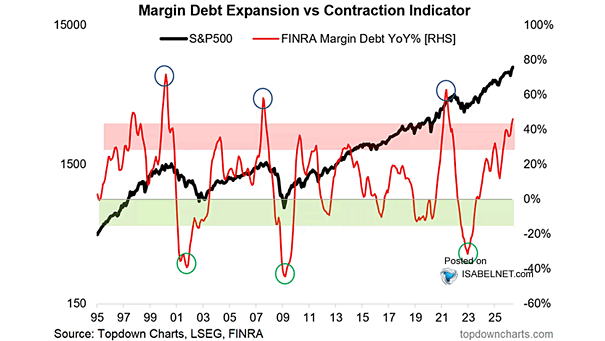
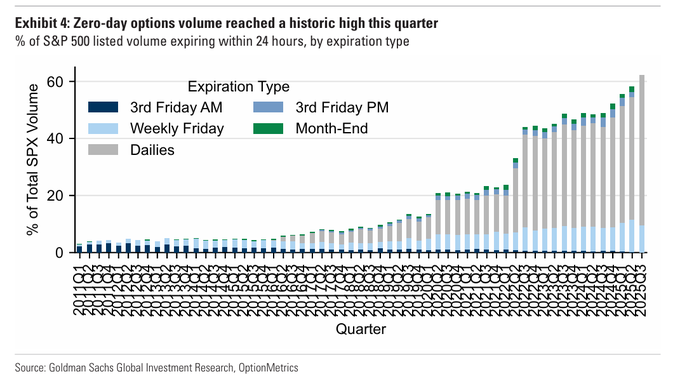
* The proliferation, popularity and acceptance of leverage products and portfolio concentration in quantitative strategies, margin debt, the options market and leveraged ETFs argue in favor of rising odds of another October 1987 (“Black Monday”) or a 2018 “Volmageddon” (or Vix Bloodbath) event.  

* As noted in my Diary over the last few months, the market has grown casino-like in which gambling has been encouraged and traders have adopted the mindset of race-track bettors. 

* Price discovery has become distorted and compromised as an increased number of market participants worship at the price of momentum (and not value) — in this backdrop YOLO (“you only live once”) investing and FOMO (“fear of missing out”) are conspicuous (and potentially toxic) conditions.

But as night follows day and at a date uncertain, the market will discover that momentum is a two-way street that travels faster and more persistently on the downside than it does on the upside.   

* In summary, changes in market structure that are implicitly celebrated in rising markets pose an unfathomable risk on the downside.

instability
Shutterstock

“Whenever you find yourself on the side of the majority, it is time to pause and reflect.

– Mark Twain

The current speculative and levered conditions in the market remind me of the investment backdrop that immediately preceded the dramatic market declines of Black Monday (October 1987) and Volmageddon.

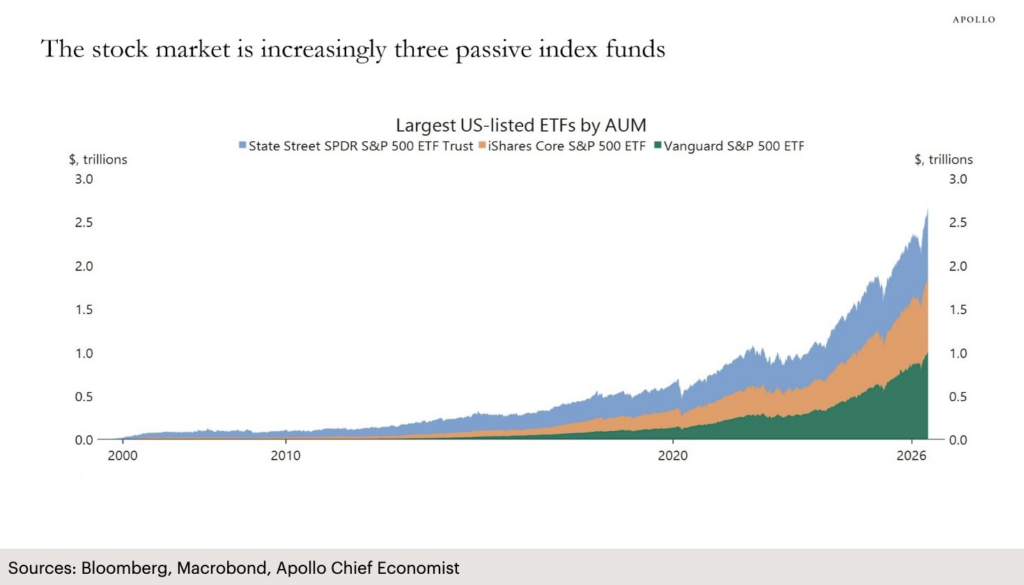
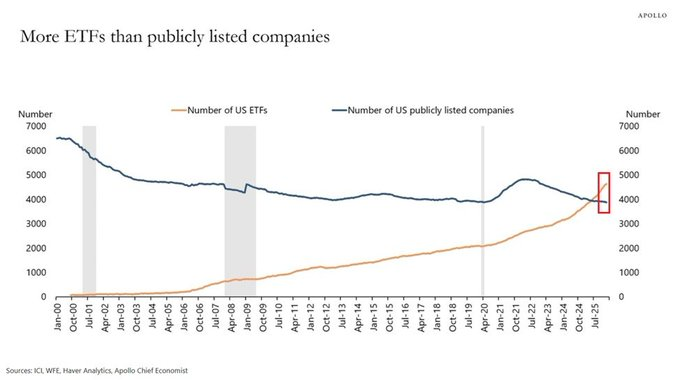
Never have passive funds and levered quantitative strategies been so dominant, leveraged ETFs so popular (total listed ETFs now surpass the number of listed individual equities), margin debt so high and options markets been so time compressed (with 0DTE options representing 2/3 of total options trading):

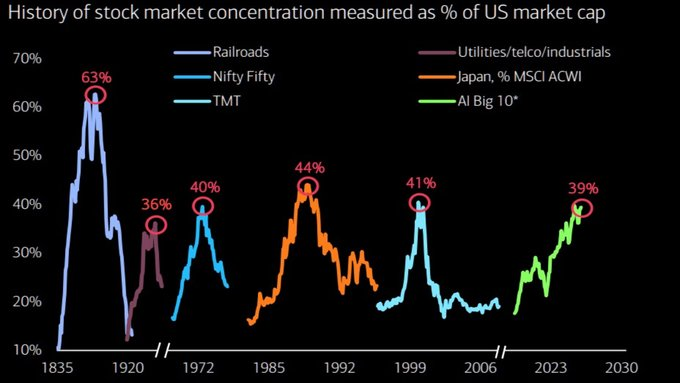
Market concentration is at an extreme:

I can see several catalysts that could hasten an abrupt market dive or flash crash, including (but not restricted to) a marked acceleration in the rate of inflation, an unexpected geopolitical event, an abrupt rise in interest rates, evidence that the massive AI capital spending boom will not deliver adequate returns on investment, a negative fundamental development in semis/memory, a swift drop in the price of bitcoin, an accounting scandal (which often occur at the end of a benign market cycle), a failed Treasury auction, or a Gammageddon, among other factors. 

However, in all likelihood it will be an event that no one is predicting and no one is prepared for.

Back in late 2024 I cautioned about and delved into the unexpected and leveraged corners of speculation (reposted here in its entirety):

——–

A Cause for Concern: The Unexpected and Leveraged Corners of Speculation

* The entirety of the recent four-week market advance has been based on an expansion in price earnings multiples.

* As narratives multiply and fear/doubt disappear, guards and disciplines are dropped with many asset classes at all-time highs.

* But as asset prices rise, diligence and the assessment of reward vs. risk should take on greater irrelevance – unfortunately just the opposite is occurring.

* And so should the concept of “a margin of safety” be evermore embraced – as it is an essential and integral ingredient to investing over a “market cycle.”

* Expect the unexpected…in the corners of leverage and those that are endorsing the narrative of a “new paradigm” (of higher valuations).

“What the wise man does in the beginning, the fool does in the end.”

– Warren Buffett 

“A bull market is like sex, it feels best just before it ends.”

– Barton Biggs

Over history, market inflection points and economic dislocations often come from places not anticipated. Indeed, the most important turning points in markets (and in life) often come at the most unexpected times and in the most unexpected ways. In particular, leverage, as proven by history, is often uncovered in unexpected places. Think about the collapse of a generally unknown currency, the Thai Bhat that gripped Asia in 1997 and then spread to other countries (with a ripple effect), raising fears of a financial contagion and a worldwide economic meltdown. Or the failure of the highly leveraged (and formerly successful) Long Term Capital hedge fund (managed by several Nobel Prize winners in economics) in the following year — which was, in part precipitated by the Russian Debt crisis in 1998 and required a multi billion dollar bailout by 14 banks (orchestrated by The New York Federal Reserve). But the best example of hidden leverage (where no one was looking) was seen in The Great Financial Crisis of 2007-09 when one overleveraged segment, real estate, proved to be the Achilles Heel for the global economy. 

Indeed, what started out as what many believed to be only a few California mortgages under water, multiplied geometrically and almost bankrupted our worldwide financial system — as the layers of leverage were swiftly uncovered and spread rapidly. This morning’s market commentary will highlight several significant market (and economic) risks that are not regularly discussed. 

The “failure” or combustion of any of these factors could have a most adverse impact on equities and on the domestic economy.

* The U.S. economy has never been more levered to the U.S. stock market. Indeed, one can argue that — with household ownership of equities at an all-time high, with a chorus of “its different this time” and with dreams of a new investing paradigm (of higher valuations) dominating the narrative. As discussed below, it is almost as if the domestic economy is being collateralized by a foundation asset, equities. 

From Tom Dyson: 

The US stock market is such a foundational asset. You could say, the US stock market has become the collateral that backs the world economy, and all its debt. As long as the stock market keeps rising, everything’ll be okay. But as soon as it turns down, things will start breaking. Employment, real estate values, consumption, trade… and even the government’s finances. It’s the wealth effect, when the stock market is such an important store of wealth. They all rely on a strong stock market to function. The fact that the world’s prosperity has one single point of failure – even as it rises day after day – should terrify you. The market’s function should be to allocate scarce capital efficiently… not collateralise the entire system. In effect, it’s become too big to fail, which is an acute fragility for our capitalist system. As allocators of capital ourselves, how should we approach our investment discipline in a market where expectations (and stock market values) are literally “off the charts”? The bears say “every other time this has happened, there’s been a big wreck.” The bulls say “this time is different, and besides, the trend is your friend and getting the timing wrong is the same as being wrong. “What do you do? Neither position is falsifiable. Which means there is no way to figure out the correct answer with logic… or research… or data. So it comes down to philosophy. Are you a contrarian? Or are you a trend-follower?… The global debt stock surged by over $12 trillion in the first three quarters of 2024 to a record high of nearly $323 trillion. It’s a huge wealth bubble and when it pops, $400 trillion or $500 trillion of (mostly) paper claims ($323 trillion in debt plus whatever owners’ equity the system has) will rush for the exits and seek safety. And policy makers won’t be able to stop it.

* Elon Musk’s health and business/innovative successes are critical to a continuation of economic growth and stock market gains. Musk’s broad reach — on the road, under ground, in space, over the internet, in defense, in artificial intelligence — has now advanced into Washington, and in the formulation and implementation of policy. To have one person so immersed and involved in all these critical areas could pose broad risks — in many ways.

* An extremely leveraged cryptocurrency market represents potential systemic risks. It is my view that cryptocurrency is “the mother of all bubbles” perpetuated by a number of factors (including the rejection of fiat money) and developing digital narratives — many of which have a weak foundation of logic. The absurd notion that the limiting of supply of bitcoin is as stupid as it is damning — as there is no limit to the supply of other cryptocurrencies. To this observer, the sheet market size of bitcoin and other cryptocurrencies is a manifestation of the risks. 

See: Crypto Market Cap Charts | CoinGecko

And, as I have written, MicroStrategy (MSTR) (with its “math” in expressing the case of buying $1 bills for $3 and MSTR’s multiple derivative plays), is the standard bearer of the digital speculation today. See: TheStreet Pro

When the cryptocurrency markets implodes, which is my baseline expectation, the contagion effect will likely be pronounced on all of the capital markets.

Both fiscal and monetary policy – which is needed to secure the foundation of growth — are travesties. Neither political party has been fiscally responsible — the profligate spending over the last few decades continues apace. (I do not, in any way, buy Elon Musk’s objective of cutting $2 trillion from the U.S. budget, as when you go over the numbers only about $1.5 trillion can be cut (and that is if one cut all that was “available” to be cut in total). As well, the Federal Reserve has been guilty of reckless, feckless and fatuous policy in its delayed response to inflation and, then, in effecting a rapid rise in interest rates. I have little confidence in Powell’s Fed steering clear of debris in his remaining time at that institution. Nor am I confident in any Fed chairman that might replace him.

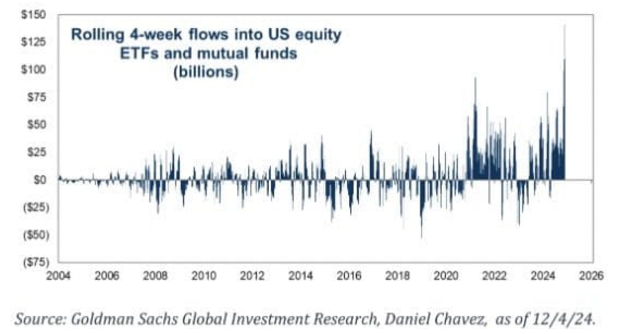
* Changing market structure poses a significant market risk. Passive investing has engulfed the stock market landscape. We are all traders now, on the same side of the boat and worshipping at the altar of price momentum. (See the first bullet point!) Massive inflows into passive strategies and products have been the straw that has stirred the market’s drink:

In part, those inflows, have contributed to a near unprecedented narrowing in the equity risk premium (to 20-year lows) while the risk to earnings growth are at 20-year highs:

I can guarantee you (and history has proven) that these inflows — as well as FOMO and the animal spirits — will not be permanent conditions.

Bottom Line

“We must stop regarding unpleasant or unexpected things as interruptions of real life. The truth is that interruptions are real life.”

– C.S. Lewis

The history of speculation is that it resides in areas that are rationalized (with broadening acceptance of a new paradigm).

It is also the condition of history that it is fueled by leverage and lasts longer than most expect. But excesses are never permanent. They become ever more dangerous when markets are consumed with optimism, are no longer fearful and are levered up.

Position: None

BY Doug Kass · Jul 30, 2026, 9:20 AM EDT

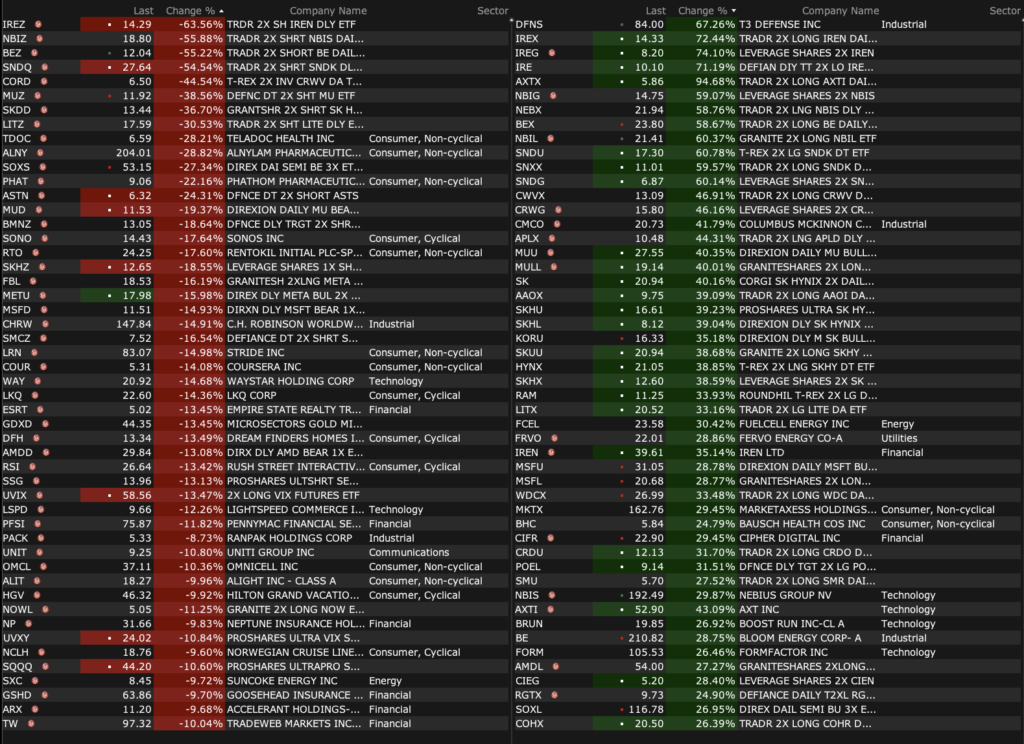
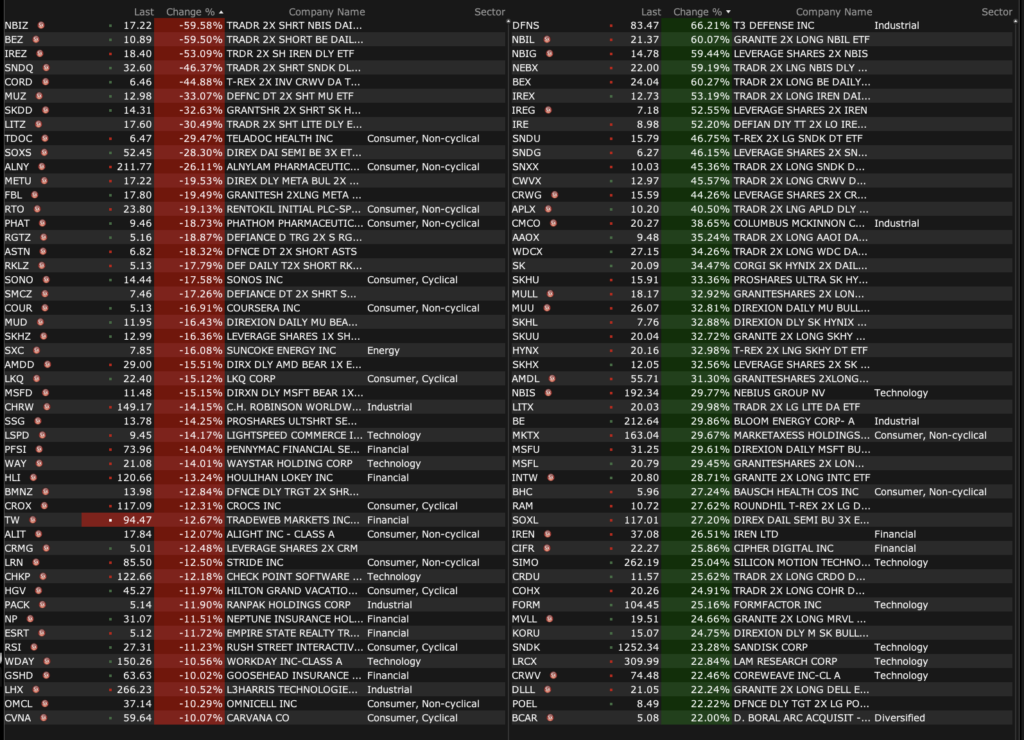
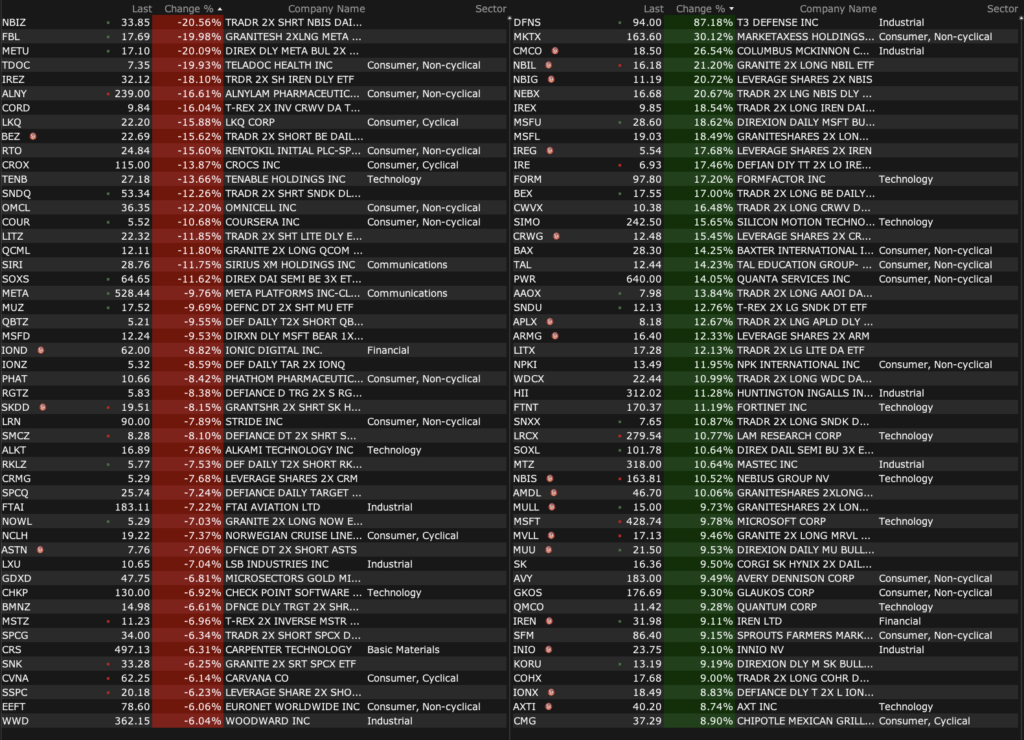
Upside, Downside Movers in the Morning

Upside:

-MKTX +30% (to be acquired by ICE at $167/shr cash; earnings)
-XRX +26% (earnings, guidance)
-CORT +19% (earnings, guidance)
-PRCH +17% (earnings, guidance)
-BAX +15% (earnings, guidance)
-EME +14% (earnings, guidance)
-PWR +13% (earnings, guidance) 
-FTNT +11% (earnings, guidance)
-HII +11% (earnings, guidance) 
-LRCX +11% (earnings, guidance)
-NBIS +11% (momentum)
-SMTI +10% (MIMEDX acquiring regenerative medicine company Sanara MedTech in cash and stock deal valued at $35/shr with enterprise value $350M)
-MSFT +9.8% (earnings, guidance)
-AVY +9.3% (earnings, guidance)
-BE +8.4% (multiple broker upgrades)
-CMG +8.2% (earnings, guidance)
-CORZ +7.1% (hearing KBW upgrades)
-ARM +6.7% (earnings, guidance)
-SBUX +5.3% (earnings, guidance)
-CNK +4.7% (earnings, color)
-FIVN +4.2% (to replace TWO in the S&P SmallCap 600 Index, effective Aug 3rd)
-INTC +4.2% (momentum)
-RAL +3.9% (earnings, guidance)
-FLS +3.7% (earnings, guidance)
-RKLB +3.4% (signs deal for 3 dedicated Electron launches with iQPS)

Downside:

-CAPR -55% (FDA advisory committee votes against efficacy evidence of Deramiocel for CM in DMD patients)
-TDOC -21% (earnings, guidance)
-LKQ -14% (earnings, guidance)
-CROX -13% (earnings, guidance)
-SIRI -12% (earnings, guidance)
-META -9.8% (earnings, guidance)
-CVNA -7.5% (earnings, guidance)
-NCLH -7.3% (earnings, guidance)
-AGCO -6.1% (earnings, guidance)
-LHX -5.4% (earnings, guidance)
-CI -4.2% (earnings, guidance)
-H -3.8% (earnings, guidance)
-MO -3.4% (earnings, guidance)
-QCOM -2.9% (earnings, guidance)

Positions: None.
BY Doug Kass · Jul 30, 2026, 9:06 AM EDT

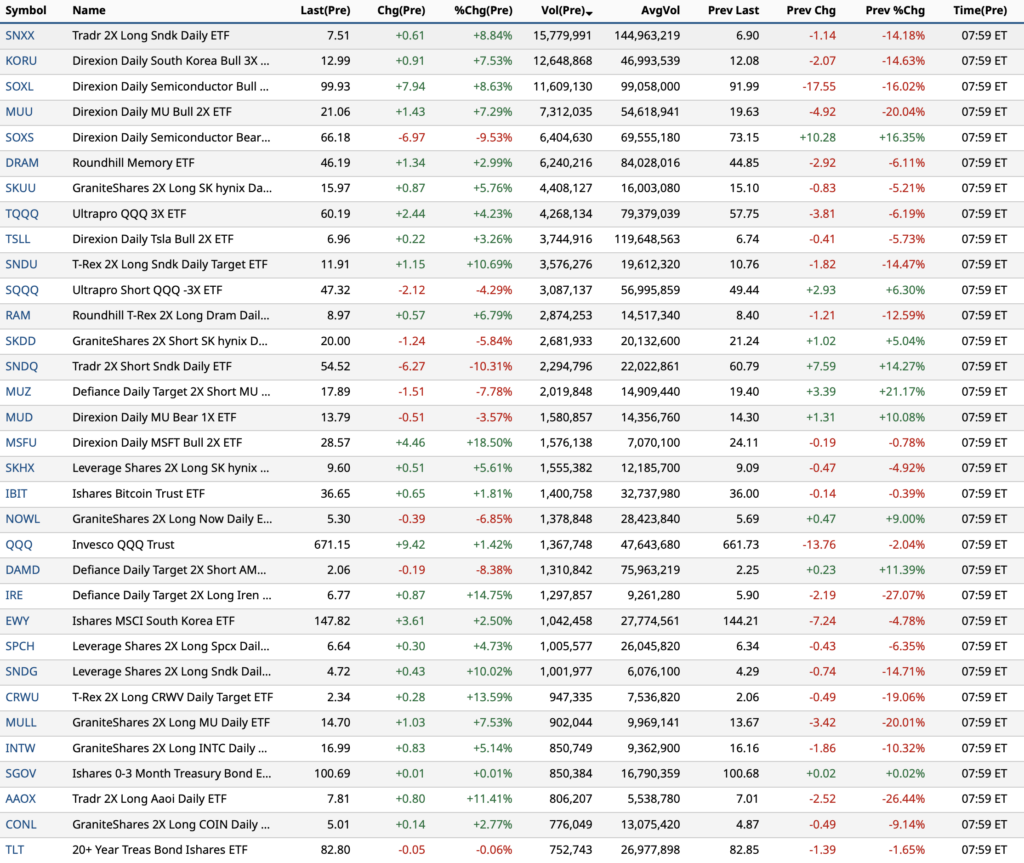
ETF Action in the A.M.

Positions: None.
BY Doug Kass · Jul 30, 2026, 8:45 AM EDT

Charting the Morning Percent Movers

Positions: None.
BY Doug Kass · Jul 30, 2026, 8:30 AM EDT

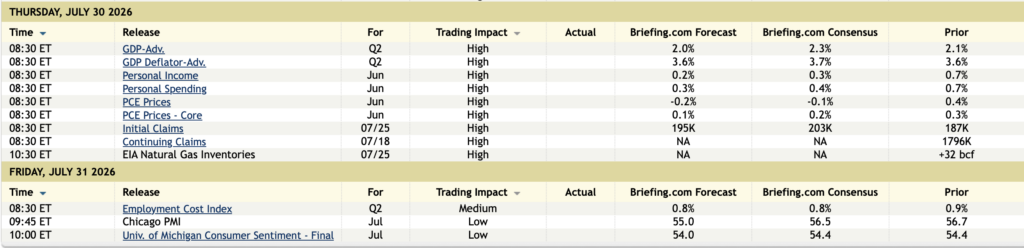
Treasury Auctions, Economic Calendar

Treasury Auctions

11:00 a.m.: Treasury announces a 3 and 6 month Bill Auction and a 6 and 52 Week Bill Auction;

11:30 a.m.; Treasury hosts a $110B 4 and a $100B 8 Week Bill Auction

Economic Calendar

Positions: None.
BY Doug Kass · Jul 30, 2026, 8:18 AM EDT

Tweet of the Day

Position: None

BY Doug Kass · Jul 30, 2026, 7:59 AM EDT

The Equity Risk Premium Shrinks Further

* After Kevin Warsh’s “wishy washy” comments…

After the new Fed head delivered a mixed message and refused to indicate where the Federal Reserve is headed with regard to interest-rate policy (despite his message that he has no tolerance for high inflation), we saw the biggest steepening of the Treasury yield curve in three decades (driving short-term interest rates lower and the yield on long bonds much higher). 

My fear of “interest rates for longer” — at the foundation of my ursine market view — was underscored. 

A higher risk free rate of return (on Treasury notes) means that the present value of equities is diminished, limiting the upside in stocks (and contrary to the optimistic consensus of Wall Street analysts).

Though they likely won’t…. investment strategists should now be lowering their year end S&P targets.

Position: None 

BY Doug Kass · Jul 30, 2026, 7:20 AM EDT

On Microsoft…

I am long MSFT but the quality of the earnings report had much to be desired:

Position: Long MSFT (S)

BY Doug Kass · Jul 30, 2026, 6:15 AM EDT

Mixed Results Last Night

Microsoft (MSFT) was a pleasant surprise with growth at Azure accelerating.

Mets (META) not so much.

We remain long MSFT, Amazon (AMZN) and Alphabet (GOOGL) in the Mag 7.

More later…

Position: Long MSFT (S), AMZN (S), GOOGL (S)

BY Doug Kass · Jul 30, 2026, 6:05 AM EDT

Kevin Warsh Is a B.S. Artist

He whiffed at his first appearance…. overrated?

From Greg Ip:

More:

Position: None

BY Doug Kass · Jul 30, 2026, 5:55 AM EDT

Back Oversold

The S&P Short Range Oscillator moved back into oversold at -1.61% vs. -0.07%.

Position: None

BY Doug Kass · Jul 30, 2026, 5:45 AM EDT