Tokyo's Largest Listing in 6 Years Is an Old Subway Co. You Might Want to Get On
Essentially a 'widows and orphans' stock, Tokyo Metro raced ahead on its first days of trading with hefty domestic demand.
You've reached your free article limit
You've read 0 of 1 free Pro articles.
After the largest initial public offering in Indian history earlier this week, which I covered last time, we welcomed the biggest listing in Japan in six years. And while shares in Hyundai Motor India continue to struggle, down 5.9% after debut, there was a rapturous reception for Tokyo Metro Co. (T:9023), one of two main companies that run the subway system in the Japanese capital.
The shares in Asia’s oldest subway operator priced at ¥1,200 (about $7.90) on debut on Wednesday, the top of their range, but shot up as much as 45.5% by the start of their second day of trade. It’s quite a surprise for what’s essentially a “widows and orphans” stock, not far off a public utility in terms of the predictability of its earnings and dividends.
I don’t know if you’ve been to Tokyo. But the subway system is a challenge to navigate that calls to mind school-day orienteering sessions, confused kids with compasses and paper maps taking readings and bearings, and getting lost. There are two operators, Tokyo Metro and the Toei Subway, the latter owned by the city of Tokyo. But there are also regional rail lines that merge into the system, not to mention a couple of district-specific monorails or light-rail lines. Like stepping out into neon-drenched Shinjuku, there’s a lot to take in.
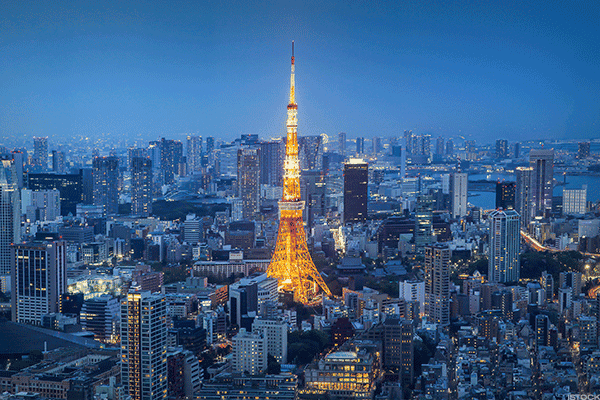
Metro was jointly owned by the national government and the Tokyo government. But the central government is selling half its 53.4% holding to pay back debt incurred in reconstruction efforts after the dreadful 2011 earthquake, tsunami and nuclear disaster in northeast Japan. The city of Tokyo is also opting to sell half its 46.6% share of the company.
The subway operator is raising the equivalent of $2.3 billion by selling shares to the public. This is the largest listing in Japan since the 2018 market debut of mobile-phone company Softbank Corp. SOBKY (T:9434). That listing, worth the equivalent of $23.5 billion, remains the largest in Japanese market history. The Softbank Group SFTBY (T:9984) telecom subsidiary had a tougher start to trade, declining 14.5% on the first day, as I outlined at the time.
The one-day pop in Tokyo Metro is due to hefty demand, especially from retail investors. The offering was oversubscribed by a magnitude of 15 times, according to the underwriters. But equally, the investment bankers underpriced the shares, leaving a ton of yen on the table for the metro operator.
It’s a defensive, dividend-heavy stock but clearly should have been priced around ¥1,600, or $10.52. Since the first day, it’s unsurprisingly corrected slightly to end the week at ¥1,609 per share, still up 34.1% from the list price.
One asset manager says the price could rise as high as ¥2,000 (about $13.16 at today's exchange rate) or 13%, if the retail demand is sustained in the aftermarket. Tokyo Metro is forecasting a 13% rise in net profit this fiscal year, which runs through March 2025 in Japan.
Tokyo Metro is forecasting a dividend payout of ¥40 per share this fiscal year, or a 3.3% yield off the offer price. Adding to the stock’s popularity with the mythical “Mr. and Mrs. Watanabe” retail investors, the company is offering free subway passes alongside the dividend, based on how many shares they own, as well as free fried-chicken toppings at subway ramen restaurants, free entry to the Tokyo Metro Museum, and free weekday admission to the company’s golf driving range.
The company dates to 1920, and began running Asia’s first subway line at the end of 1927. Ridership currently sits at 6.8 million passengers per day, close to double the number of people on the subway in New York City.
While a subway system is going to find it hard to increase fares or domestic ridership all that much, the weak yen has brought an influx of tourists to Japan, particularly from China and other Asian nations. It is forecasting an 18% increase in operating profit for the transportation business. Like most subway operators in Asia, Tokyo Metro also develops real estate around its stations, and manages the retail operations at the stations.
The upside is going to be limited, given the nature of the company’s main business. But Tokyo Metro is a solid defensive stock that offers Asian exposure in a developed market. I’m confident that corporate governance is pretty solid, particularly since “Japan Inc.” has been under pressure to improve outside stewardship on the board, as well as shareholder protections and returns.
Developed markets don’t get much more developed than Japan. The equity markets in India and Japan have been the star performers in Asia in recent years, but are virtual polar opposites.
I cautioned in my last column that single-stock risk is typically too high in India, one of Asia’s murkier markets in terms of transparency, for overseas investors to stomach. Rather than scouring reports from half-way round the world, it’s far simpler to buy an exchange-traded fund offering India exposure, preferably based off a “smart” index that targets healthier companies, while offering diversification.
I don't have the same concern about single-stock risk in Japan. Though international investors account for two-thirds of Tokyo daily trading at last count, Tokyo Metro will mainly appeal to Japanese domestic investors. But it would make a reasonable offshore defensive play for international investors, with a business intricately linked to the Japanese capital, which isn’t suffering any of the demographic change that’s laying waste to small Japanese towns.
Plus, maybe you’re in the market for some free ramen toppings and a couple of free rides around the Tokyo network …