This Brand Is Knocking Nike’s Socks Off
Despite a gain of 508% in five years, this hot stock is flying under the market's radar.
You've reached your free article limit
You've read 0 of 1 free Pro articles.
Thursday was a huge day for the markets, as stocks continued to shake off their worst day in nearly two years. The S&P 500 gained 2.3% as investors recovered from last week’s disappointing jobs report.
The July jobs report, along with word that legendary investor Warren Buffet sold a significant portion of his position in Apple AAPL during the second quarter, helped send markets tumbling, starting late last week.
Nike NKE gained 2.16%, underperforming the broader market. Shareholders of the Beaverton, Oregon-based athletic shoe and apparel maker are getting used to underperformance, as the stock has lost over 30% of its value this year.
Over the past five years, during which the S&P 500 gained over 81%, Nike shareholders lost a cumulative 9.7%.
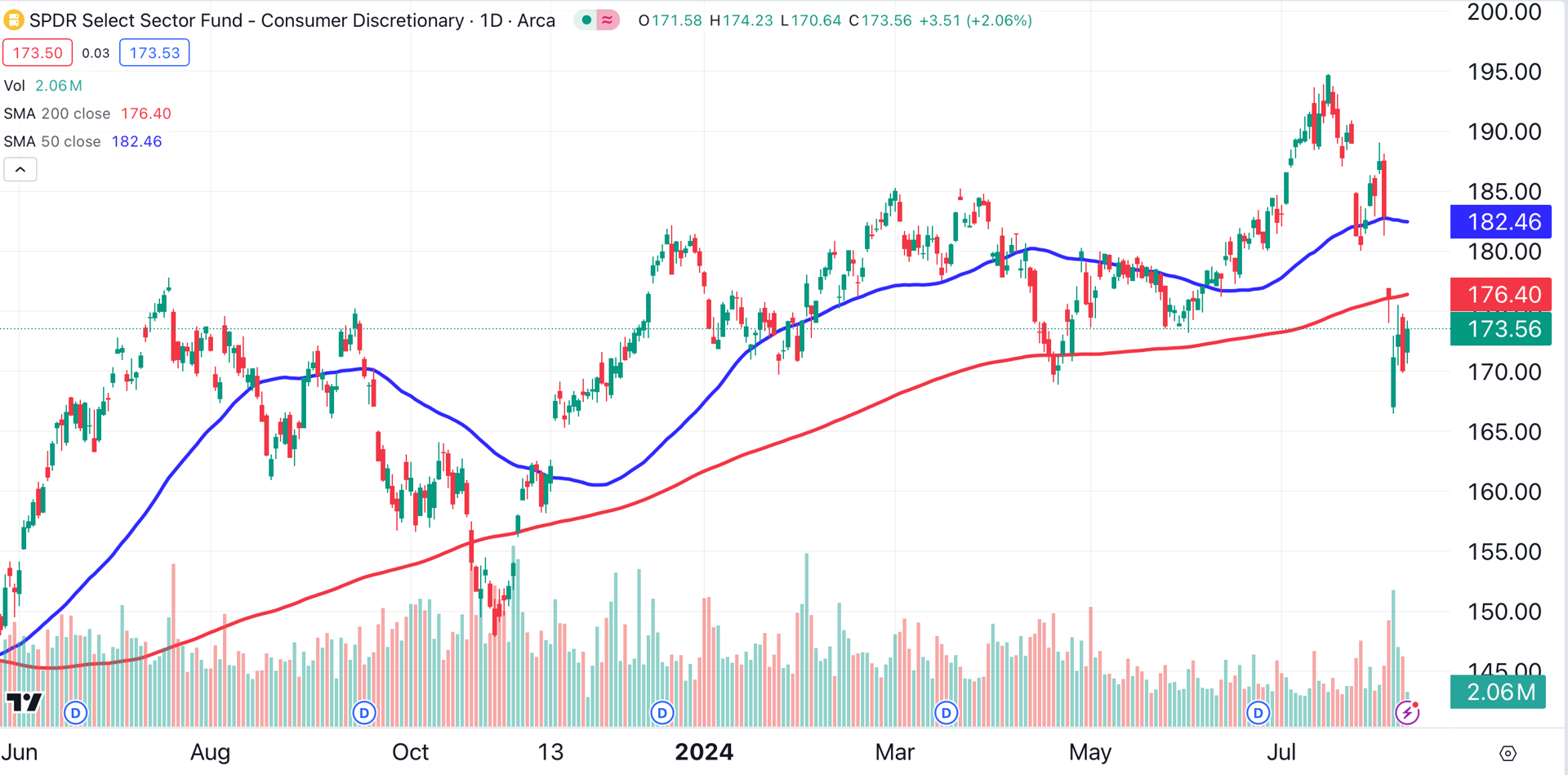
What’s gone wrong at Nike? For one thing, its products fall into the consumer discretionary category. That entire sector, represented below by the SPDR Consumer Discretionary ETF XLY has tanked, as consumers struggle to make ends meet.
XLY has fallen below its 50-day (blue) and 200-day (red) moving averages, a fate that the S&P 500 and the Nasdaq 100 have avoided. Nike’s sector is weaker than the overall market.
Conversely, the consumer staples sector, represented below by the SPDR Consumer Staples ETF XLP, is stronger than the overall market. XLP remains above both its 50-day and 200-day moving averages — something the S&P 500 and Nasdaq 100 have failed to do.
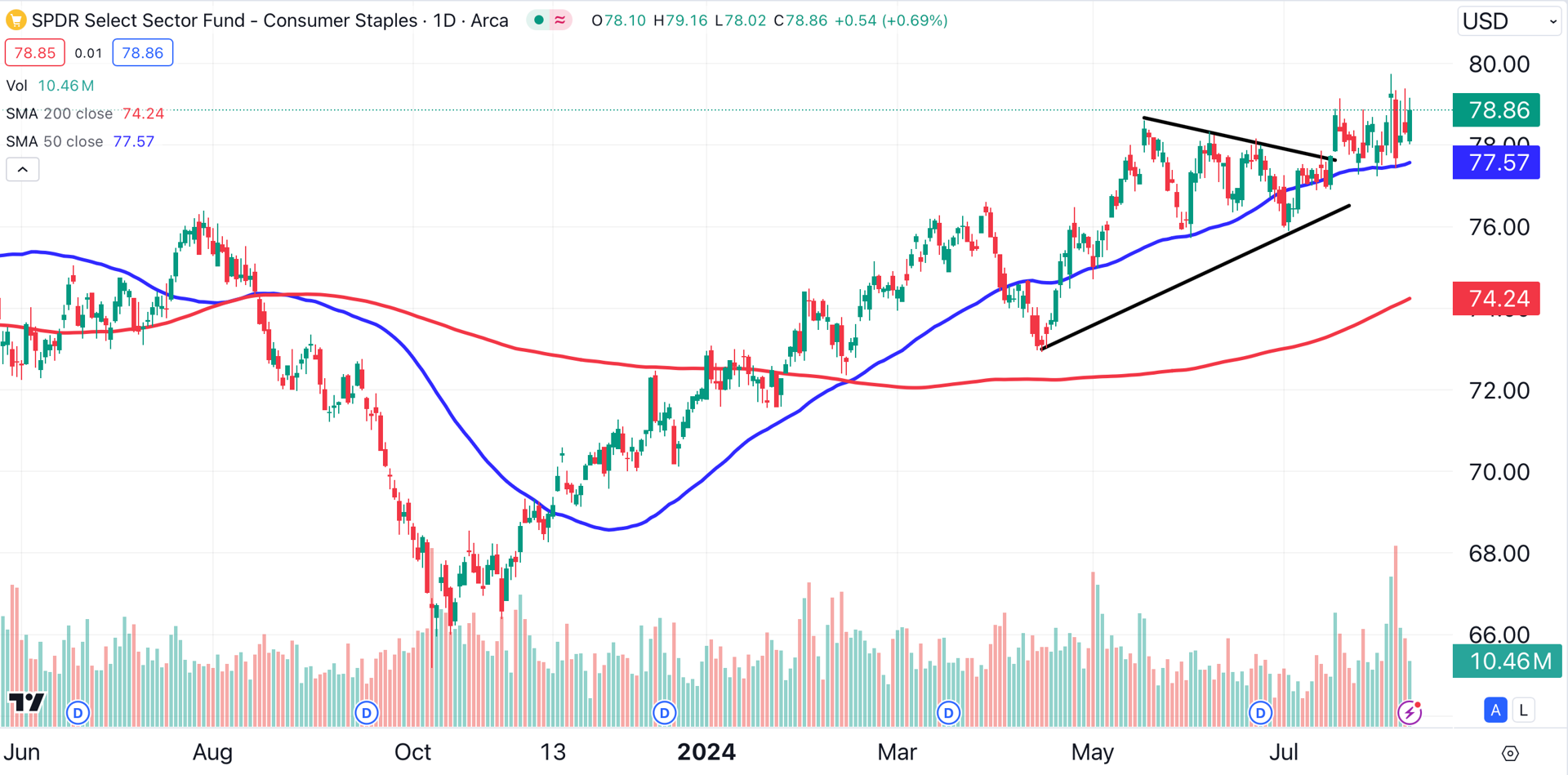
This is exactly the type of market action you’d expect as the economy slows. Consumers will continue to buy staples, such as food and personal grooming products, regardless of weakness in the overall economy.
However, they might choose not to buy discretionary products, like the newest smartphone, an $8 cup of coffee, or the most recent shoe style.
Another reason for Nike’s decline is the rise of its competitors. Shares of Decker Outdoors DECK, manufacturer of the popular HOKA brand of sneakers, have gained 508% over the past five years.
While Decker Outdoors shareholders have been big winners, the stock has fallen off recently, as we can see on the five-year chart below. Deckers is subject to the same issues that plague Nike.
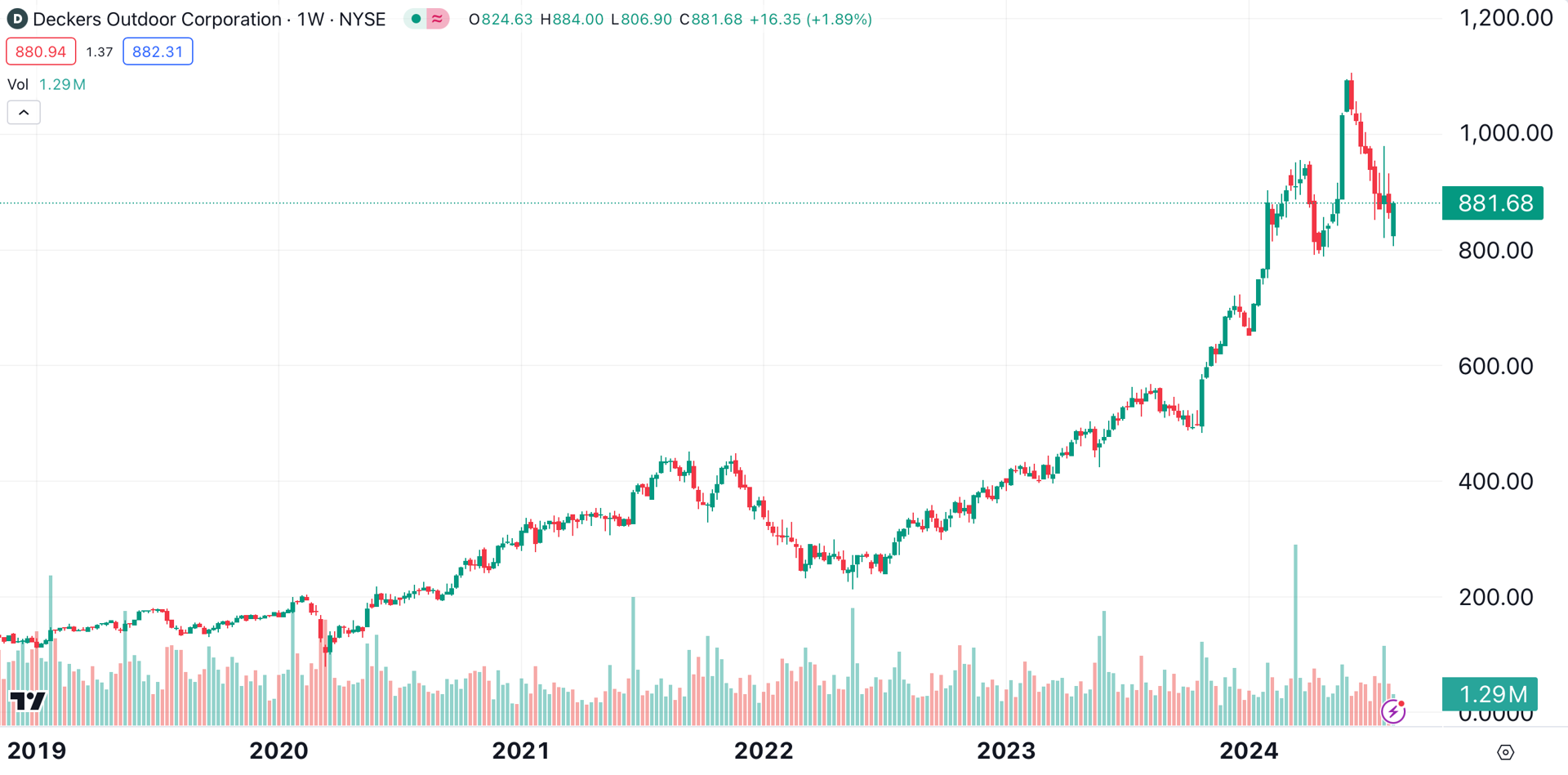
So far, the Goleta, California-based company is weathering the storm. DECK gained 4.82% on Thursday, beating both Nike and the broader market. The stock is up by 31% year-to-date.
I’m not going to buy Decker Outdoors right now. I’m not interested in the consumer discretionary sector at the moment, but that time will come. When it does, I’ll be a buyer of DECK.
It might be difficult for some of us to think of Nike as past its prime, but that may be the case. I don’t know much about fashion — I never found it interesting — but I do know that tastes are fickle.
Generally, kids don’t like to dress like their parents and grandparents. To them, Nike shoes and gear may be the equivalent of wingtips and a fedora. If that turns out to be the case, shares of Nike could continue to underperform for years to come.
At the time of publication, Ponsi was long AAPL.