New eBay Trade Idea With 141% Profit Potential After $56 Billion GameStop Update
Here's how I would play the news that the meme-stock favorite is trying to acquire the online collectibles marketplace.
You've reached your free article limit
You've read 0 of 1 free Pro articles.
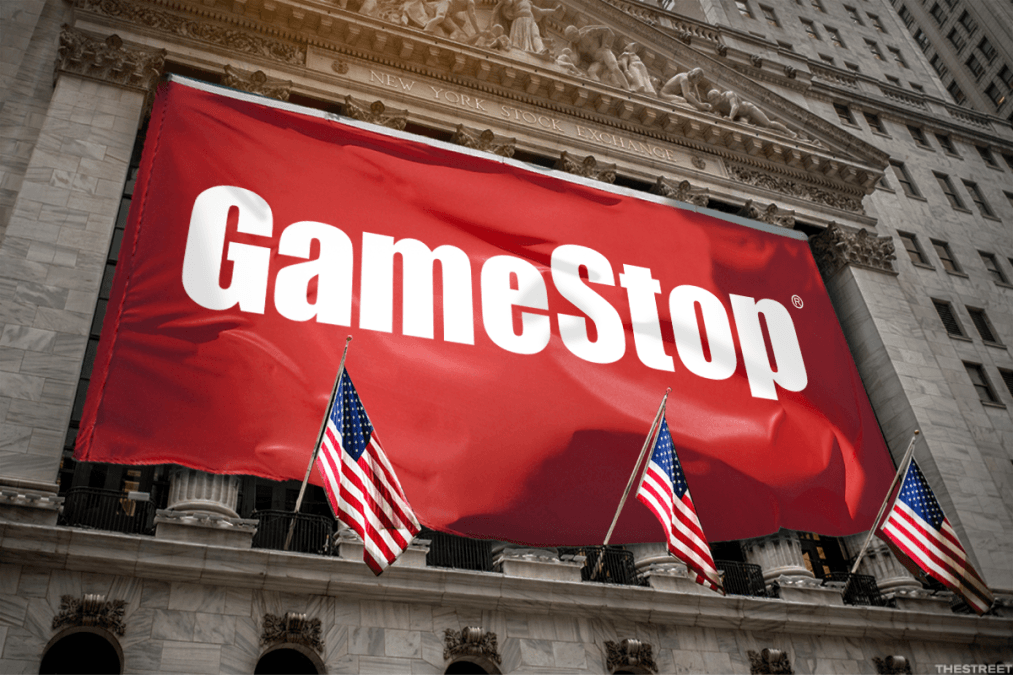
The news appeared to come out of left field. The Wall Street Journal reported that GameStop (GME) CEO Ryan Cohen told the paper on Sunday that his firm had built up a 5% stake in eBay (EBAY) and had made an unsolicited, non-binding $125 per share bid for the online marketplace operator.
That would amount to a roughly $56 billion offer for the company that would be more or less evenly split between cash and equity. Cohen told the Journal, "EBay should be worth — and will be worth — a lot more money. I'm thinking about turning eBay into something worth hundreds of billions of dollars."
For those about to ask, EBAY closed on Friday at $104.07 with a $46.21 billion market cap. The shares have traded with a $110 handle ahead of the opening bell on Monday morning, up 6.4% from that Friday close, not the 20.1% premium that Cohen's bid implies. Clearly, investors have their doubts.
Conversely, GME is trading more than 5% lower early Monday. Cohen told the Journal that GameStop has a commitment letter from TD Bank (TD) to provide up to $20 billion in debt financing in order to make a potential deal happen. Currently, GameStop has no short-term debt on the books, longer-term debt of more than $4 billion and a cash position of more than $9 billion.
The Nitty Gritty
On Monday morning, eBay responded, announcing that there had been no discussions between the two firms ahead of this proposal and that the firm's board of directors and financial advisers would review the idea. Ebay stated that this review will "focus on the value to be delivered to eBay shareholders, including the value of the GameStop stock consideration and the ability of GameStop to deliver a binding, actionable proposal."
In defense of his position, Cohen has said that, should eBay not receive this offer well, that he was prepared to take his offer, by proxy to eBay shareholders. Cohen believes that putting the two firms under one umbrella would likely create opportunities to reduce costs and improve profitability. These two companies do have some overlap, especially in the areas of selling collectables and trading cards to the public.
In Cohen's plan, he would ultimately serve as chief executive of the combined company should the deal close. He would ask for no salary and only be paid or compensated based upon the firm's performance. Separately, the Journal is reporting that Cohen stands to make as much as $35 billion in stock awards if the market cap of GameStop reaches $100 billion. As mentioned above, eBay as of Friday night, was a $46 billion company. GameStop, on Friday night, was almost a $12 billion company.
How to Play This Game
These are my opinions. I don't want to buy EBAY around $110 just in case the deal falls apart. Even selling covered calls with a $125 strike price would only know maybe $2 off of net basis.
I don't think that GME is a buy here, (it may be a short) ahead of any postnatal deal, even with a decent balance sheet. I see the only effective way to play this game from a risk averse perspective would be through an EBAY bull call spread. Keep in mind that EBAY's annual meeting will be held on June 25. That will matter if there is to be a proxy fight.
Here's an idea, in minimal lots:
- Purchase one July 17 EBAY $110 call for about $6.20
- Sell (write) one July 17 EBAY $125 call for roughly $1.80.
Net Debit: $4.40
Note: This trader would be risking $4.40 to try to win back up to $15.00 in July for a max profit of $10.60 (+141%). Should EBAY trade below $110 at expiration, the options will expire worthless and the trader would be out the net debit. That's the entire risk present in this spread.
Related: How U.S. Investors Can Profit After Crazy Day for Japanese Yen
At the time of publication, Guilfoyle had no positions in any securities mentioned.