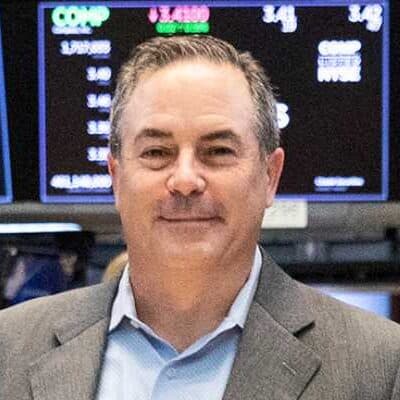
VIDEO: Why We Could Still See 2 Rate Hikes This Year
Plus, inflation pressures, small caps and key levels for the indexes.
You've reached your free article limit
You've read 0 of 1 free Pro articles.
TheStreet Pro contributor Bob Lang joins Chris Versace to discuss the market’s mindset and current technical setup, including key levels he’s watching for the S&P 500, the Nasdaq Composite and the Russell 2000. They also talk on sectors that Lang is warming up on, AI and data center capital spending levels and why Lang thinks we could see two rate hikes in 2026.
Lang also previews what he’ll be focusing on as the earnings season heats up even further next week, and what he looks for when assessing a positive test for technical support.
More Pro Portfolio
- Trimming One Holding, Adding to Another as We Boost Our Rating
- We’re Tracking 23 Signals Across 10 Portfolio Investing Strategies
- Weekly Roundup: Chip Rout Tests the Market, but Here’s How We Aim to Capitalize
Transcript
Hey everybody, Christopher Versace here. It is Thursday, July 23rd. And sad to say, my friends, another difficult day for the stock market. But as you can see, we have a good friend in us who’s joining us today, Bob Lang. We’re gonna talk with Bob about, a number of different things, tapping what he sees from the technical front on the market. We’ll talk about some of the fundamental things that I’m seeing and we’ll put it all together for you as the pace of earnings heats up, as we wait for the flash July PMI report tomorrow. And of course, we continue to monitor the developments in the Middle East that appear to be rekindling not only inflation pressures, but also market concerns about where interest rates may be going.
Bob, thank you so much for joining me, my friend. You know, I always enjoy our conversations. I especially enjoy our conversations on camera that we can share with folks. But you know, you and I know that we talk usually several times a week, so this is nothing new for us.
Bob
Good to see you Chris. Boy, I sure wish we could have been doing this on a day when the markets were up, but you know it is what it is and you know markets are trending and in a certain direction long term but in in the short term we have a little bit of volatility here right now and a lot of uncertainty and hopefully some of those clouds will be cleared up in the coming days and when we can just worry about earnings and that sort of thing.
Chris
You mean worry about the usual things. I’ll counter a little bit of what you just said, right? I agree with you that, you know, volatility has certainly kicked up. There’s a lot going on in the market, as I kind of alluded to, but we both know too, Bob, that, you know, at certain times volatility can be your friend if you’re prepared. So with that, let let’s break down what’s going on and see if we can potentially pick some spots where it would make some sense to be prepared.
I want to start off with the SP 500. Obviously, it is down today, but you know, you always do a nice analysis of the technicals on the SP 500, sharing that with Street Pro members and portfolio followers on Monday. When you did the chart on Monday this week, you said the following, and I just want to get it right. What you said was the indicators got a bit weaker this past week as money flow went down and the MACD is close to a bearish crossover move, in your words, which could be monumental.
And as I look at the S P 500 chart here today, just on a simple moving average, we’ve moved below the 50-day moving average. so as you answer that question, what has changed in the last couple of days? Please tell us what you’re looking for later today, tomorrow, and other areas of potential downside.
Bob
Well, I see that the on the weekly chart, the S P five hundred is still trading in a range, believe it or not. And it’s just literally just the bottom of the range. And 7400 is probably about the low of close to the low of today. And if we close above seventy four hundred on the SP five hundred, then that might qualify as a good test. We certainly need another up day to qualify that as a as a good interim bottom.
But being tomorrow is Friday. Friday is not often days when you put a low in and so that that’s always something on people’s minds. And then of course you mentioned that the Iran war still seems to be rekindled again and some of the hostilities that are that are out there might cause some people to take some chips off the table tomorrow on Friday into the weekend and waiting until waiting until Monday to expand their risk. But I think as of right now, I think we’re still we’re still at the bottom of the range, Chris. I know it doesn’t feel really good, especially today being down more than one percent on the SP five hundred. I think one thing that we have to be concerned about here, Chris, is watching the Nasdaq. The NASDAQ has been the weak index out of all the four of the indices that we follow the Dow, the Russell, the SP five hundred and now the Nasdaq. So the NASDAQ has been the weakest of them all.
And it’s been acting like an anchor pulling down the rest of the markets for the most part. Interestingly enough, Chris, you would think that volatility in the NASDAQ and the S&P 500 would be skyrocketing. It hasn’t been that that that big at all. Which tells you what? Tells you the trend of the market has been down, but the movements have just been direct. They haven’t been there hasn’t been huge movements at all.
When volatility rises, Chris, we see that the markets go up and down in a much bigger range than what we’re used to. Maybe this is normal. This is abnormal. This is abnormally high. We haven’t had any of that going on right now. We when the markets go down, they’ve just been going straight down and buyers haven’t been stepping in there to pick up the pieces. We’ve had dip buyers come in in the past and do that, but we just haven’t had that lately. And you know, until we see the markets trip and spill a little bit further, I think we’re gonna have that continued lower volatility with the markets coming down.
Chris
So it’s interesting that you call out volatility because before we were chatting, I took a look at the fear and greed index, which is just another indicator to watch. And we’re stuck in fear. We were in fear last week, we were in fear yesterday, we’re in fear today, but it’s not moving yet to extreme fear. So I have to kind of wonder, is the market becoming a little complacent here as the pace of earnings picks up? Or is there a catalyst you think that could kind of push us lower?
Bob
Can can I tell you what I think that fear is, Chris, that you’re ta you’re speaking about? I think and you’re and you’re correct. That is a fear of missing out. It’s FOMO. I think people are worried and nervous about missing out on some upside after the markets come down. Because I think certainly over the past year and a half, since April, since you know, Liberation Day, I think people have been conditioned to believe that okay, when the market comes down, it’s going to come back sharply in the other direction.
I think we’ve had at least a dozen or more instances of that happening. And people have been left on this on the sidelines saying, hey, don’t forget about me. I want to get in the I want to get in there to as well too. And the markets just kind of move on, move to the upside you know, with some announcement. And you know, we talked before the before we started here about any taco announcements or something like that.
Those sort of things have been triggers to get the markets moving back in the other direction. But you know, and people have missed those opportunities so many times that that people are fearful now. They’re saying, you know what, I don’t care. If even if I have to lose money in the short term, I’m gonna make money in the long term because I know that there’s gonna be a big reversal out there. And I honestly, that’s a terrible way to invest or trade, but you know, most people are thinking that way right now. So I think that that’s the fear that you’re talking about.
Chris
It’s one thing to focus on the fundamentals, the technicals, you know, between the two of us. I also layer in, as you know, thematics, but I think you can’t downplay understanding the market sentiment, the market mood, because that can help you kind of interpret how developments might be received and what that potential impact is on the market. Not always easy to read. You really gotta keep your finger to the pulse of what’s kind of happening, but as I think about that now, right?
The renewed tension in the Middle East, oil prices, we’ve kind of alluded to it, but you know, moving higher. And if you look at them now, take a look at Brent over 100. It’s closer to that 112, 113, 114 it hit than the bottom it had almost a month ago. Gas prices are moving higher. And you know, I think that those rekindled inflation tailwinds are really creeping up in the market.
And remember too that we probably haven’t seen the full impact of price increases that companies put into play earlier this year when we were seeing the beginnings of rekindled inflation. So I get a little concerned about expectations for the back half of the year. And I know the Fed is in a quiet period, so as we get that Flash PMI report, you know, we’re gonna have to do a little more, you know, digging into it than perhaps usual. But what do you think, you know, in terms of the number of rate hikes we’re likely to get between now and say the end of the year, now in the first quarter? Do you think Warsh and Crew have to go hard to get back to two percent?
Bob
Yeah, and I think we’re gonna we’re gonna we’re gonna have two rate hikes in twenty twenty six. we have four more meetings left. July, September five more meetings, July, September, October, November and December. So I think there’s going to be a good chance and maybe November’s off the table. I could be wrong there. So four more meetings left. And you know, I think they’re gonna use this next meeting to set up their move to push rate hikes through and I think they’re gonna use Jackson Hole as also another closer setup. That is a meeting that they have conference that they have in August, late August.
Kevin Warsh as usually the chair of the Federal Reserve makes a keynote speech speak as keynote speaker there along with mid the euro head of the euro and then also Japan and maybe a couple of other large central banks. So I think they’re gonna use that as grounds for setting the table for the next move in monetary policy. And I think we’ve heard in from enough of the other Fed governors on the on the board, all the voting members as well too, that they have already positioned themselves and ready for a rate hike. Fed funds futures are already pointing in that direction too, Chris.
We have about a it’s only about it’s about a thirty eight percent chance of a rate hike next week at the July meeting. But if you go out to October, it’s about a seventy-eight to eighty percent chance of a rate hike by that meeting. So, you know, it could be it could be coming rather soon. But the nice thing is that the market is getting is prepared for it, at least the Fed Funds futures market and the bond market.
Chris
That’s what the market expects today, but we know that these perceptions can change sometimes very quickly. You know, for example, if we happen to see, you know, I don’t want to introduce introduce my favorite word here, Bob, but I have to. Hopium, because we know the market tends to be addicted to hopium. if we see signs that perhaps a real round of peace talks is emerging, that the MOU is back in play, and that, once again we could look forward to oil prices falling, petrochemical prices falling. It is possible that those rising expectations, you know, for one, maybe two, maybe two, more likely to get one, but maybe two, could start to fall. And that could reinvigorate the market as well, no?
Bob
I think we really have to be in a prove it to me mode here. I think you really have to
Chris
What are you what are you saying that we’ve been head faked too many times?
Bob
Yes, yeah, I agree with that. And you know, there’s only so many times you can you can be f faked out. I mean look, just three weeks ago, Chris, we saw crude oil at about sixty six, sixty-seven dollars a barrel, down sharply, down forty percent from the highs that we had just in this in the spring. That was a huge move down. Yet they they’re right back up again and here we are back in the in the nineties in in in WTI crude.
So I think that we have to pay attention to the markets and not necessarily the rhetoric of what’s what what’s being said about how things are gonna be settled. You know, you don’t settle wars with verbal abuse or verbal talk about you know we’re gonna do this to your country or what have you.
So I think that the markets are gonna tell us a lot more, give us much better information about where things are at. And right now the markets are telling you that supply issue supplies are a problem right now. Demand is still good and very robust for oil products and energy and gas and electricity, but right now I think the supply issues are a real problem.
Chris
You mentioned the strength of the economy being, probably better than people were thinking. And I just listened to the comments, last night from CSX, this morning from Union Pacific. You know, rail traffic is strong, tr truck capacity is tight. That truck tight excuse me, truck tight truck capacity is obviously good for the portfolio’s position in Paccar. When we hear things like this, you and I have talked in the past about the importance of following rail traffic, track truck traffic, truck tonnage.
These are nice indicators that say the economy, or at least certain parts of the economy, are picking up, whether it’s reshoring. we know that, you know, semiconductor capacity is making its way to the United States. AI and data center construction, power construction, you know, obviously we’re benefiting from all of that with our position in United Rentals, it’s doing very well today.
Are there other areas of the market, Bob, that might be benefiting from that you’re starting to warm up to from a technical perspective?
Bob
From a technical perspective, you know, I think that you know, these industrials, especially the defense names, are starting to look a little bit more favorable to me and obviously the connection there is more spending by the government on weapons and planes and helicopters and ships and that sort of stuff. So replenishing some of those weapons that were had been used over the past three, four months in in this Iran war.
We saw that this morning with some real strong numbers and guidance from Lockheed Martin, which is up probably close to thirteen, fourteen percent today. It’s lifted a lot of these other companies in that in that group. Northrop Grumman, General Dynamics, Raytheon, RTX came out with really strong numbers as well too. So I think this is a group that we have to really start paying attention to.
Chris
Hang on, hang on, hang on. You mentioned four names just then, right? Lockheed Martin, Northrop, RTX, General Dynamics. Among the four, is there a Bob favorite or one that you’re, you know, a little more excited about than the other?
Bob
RTX has always my been my favorite. It’s been one of the names I’ve had name I’ve owned for quite a long time since before they spun off Otis and Carrier. So I’m a big fan of RTX. Next in line would probably be general dynamics, favorable to that one, obviously, because they they’re the chart is a is a standout on the chart and broke out to a new all time high today, Chris. They’re also in San Diego, which you know of course you when I went to school there.
Chris
What about this you can’t fall in love with stocks? Come on. Just because it’s from San Diego where you used to reside.
Bob
You know, I mean, you know, Qualcomm’s out there, Chris, so you know, you have to you know we used to like that one, for a while.
Chris
Yes, used to, but the but the pain in the smartphone market and you know from the memory issues, the pressure on the PC market, I think is gonna be a real twist in its transition. And I think the market is overbuying its how quickly it can ramp into the data center market. But that’s a total aside. Sorry about that.
Bob (16:21.961)
I agree, but anyway, I think that this this defense group is something we really have to pay attention to. curiously though, and I did a I did a chart today on July twenty third on Palantir and no some people have looped in Palantir not as kind of like a hybrid defense technology name, but this stock has not kept pace with some of the other names that are in the in in that group. And I’m kind of curious as to wondering why that is, but you know, maybe we’ll learn a little bit more when they report earn earnings in a couple of weeks too.
Chris
I think I think it’s been unfairly lumped in with some of the and I gotta choose my words carefully here, legacy software companies. you know, you saw the pre-announcement by IBM, right? You can take a look at, , some of the orders and other things that are happening with other software companies. And I think it’s being unfairly tagged with disruption and competition concerns. I talked about this on Tuesday when I was on with our mutual friend, Mr. Charles Payne, over on the Fox Business Network.
He asked me the question: you know, what’s going on with software stocks? They can’t seem to catch a break. And, you know, it it’s the disruption to the traditional software as a software as a service seat business model in terms of how much they might actually need as these AI tools ramp. But the other, too, is, you are seeing ChatGPT and Anthropic move more directly into the enterprise. That’s a little bit worrisome for those businesses that are so heavily influenced by corporate spending. To your point, you because you brought Palantir up, there is a significant piece of its business that’s tied into you know, military and government contracts.
Bob
That’s right. That’s right. And I think that they’re gonna get their share, they’re gonna get their business. I think they’re very favorable software platform for the government and they’ve had no problems securing some good long term contracts over the years and I think that the eventually the market is gonna wake up to that story and hopefully you know, provide it with a with a good move. But I the stock’s been off forty percent since November, so it’s been pretty painful move, eventually it’s gonna be a good value stock for somebody.
Chris
I still think the right way to look at that is, you know, on a PE to growth basis. You I I’ve written about this. And I just think as we continue to watch AI adoption rising and usage expanding, I think we can look forward to multiple years of earnings growth. And when you look at, you know, not only Palantir, but you could do Broadcom, you could do Marvell, you could do NVIDIA. And if you look at on that peg basis, they’re all trading below a peg multiple of one, right?
Bob
Very cheap.
Chris
Yeah, yeah, yeah. I think it’s to your point earlier, you were talking about how we’re kind of going through a tough slug. I think it’s here too. I think we’ve got to keep our eye focused on what’s happening. So long as we continue to see rising adoption for AI, and spending going up – capex like Google and Tesla did – I think we’re gonna see others do it. As we go through this period, people will come around and take a look at where is the value to be had, and I think we’re sitting pretty for that with some of these names in the portfolio.
Bob
Chris, I have a question for you, if you don’t mind indulging me.
You just mentioned about how Alphabet came out and increased their CapEx spending with their report after their earnings. And we also did notice that they meta did the same thing after their earnings report in April. They all did. But those two particular companies isolating those two got severely punished by the by the markets. Microsoft did a little bit as well too…
Chris
They all did after the first quarter, right? Yeah.
Bob
… actually little bit more, but those two in particular got punished hard. So my question for you is there a limit to what these companies, these hyperscalers can spend to and allow the markets to give them a pass? I think Google Alphabet had negative free cash flow this this past quarter they all announced an eighty billion dollar authorization to sell shares. They only sold half of it when they from what they announced about a month and a half ago. So they still have another authorization to sell another forty billion dollars worth of stock to fund their AI purchases and initiatives. So is there a limit, Chris, to where the market’s gonna say, hey, slow down. You know what? We’re not gonna we’re not gonna take this anymore and you’re gonna have to back away a bit.
Chris
My perspective was that I would have been pleasantly pleased to see Google this week not say anything new about its capital spending, just reiterate its existing capital spending level. I think that would have been met with some relief in the short term. And my thinking on that is we already know that their capital spending level is going to go higher next year. They telegraphed that all the way back in April when they reported the first quarter.
My thinking on this is really there’s no need to rush it unless you absolutely have to. And I think when we saw the growth rate in Google Cloud, which also, by the way, Bob showed a step up in margins on a sequential basis, it tells you that they are starting to really monetize that backlog that they have for AI and data center. You look at, you know, Gemini with 950 million monthly users now, right? It’s starting to catch. But I do think you’re right.
I do think that to the extent that they want to continue to upsize their spending, the market will simply say, you’re gonna pause and slow down until we see more proof of this, and they can limit them by just what you said, right? They have a forty billion dollar remaining that they can go to the market with to the extent that the terms are not you know, attractive, to the extent that the deal is not fully subscribed, that would be an indicator that the market is saying, slow down, buddy, show us more.
Bob
I think I heard you say this, Chris, on with our good friend Josh Lipton the other day. I heard that.
Chris
That is correct. I did make that point and I continue to stand by it. The hard part here is that it would be a mistake to focus in on any one hyperscaler or neo cloud that’s trying to raise capital. I think you have to look at them in aggregate and say, at what point has the market had enough? Meta was out there doing a deal. Amazon did a deal, Google did a deal, right? and there’s other capital raises going on, not just those three or those big four hyperscalers, but for others. So I wouldn’t be surprised if the market starts to push it back. Candidly, that’s probably not a bad thing. A little bit of discipline would be good.
And again, to the extent that the next couple days when Microsoft, Meta, and Amazon report, if we see more of what we saw with Google Cloud, and by that I mean strong revenue growth, margins improving, I think the market will feel a little bit better. But you really hit that point about negative free cash flow, that’s really gonna weigh on these stocks until that uptick in the business improves at a faster pace.
Bob
Well, we know the king of negative free cash flow for years and years has always been Amazon, right? And certainly before AWS was prominent, right?
Chris Versace (24:39.508)
That’s really kind of an interesting because it was always viewed that Amazon would sell off as they continue to ratchet up their capital spending, the stock would hit a certain point, and then people would show up and be like, Amazon’s investing for the long haul. Not too dissimilar from what we’re seeing here now, if you really stop and think about it.
I think we’ve got to, and we have tried to do our best with the with the Portfolio on this, be mindful of what’s unfolding, understand, as I said earlier, the market mood, the market sentiment, and really pick our spots. We’re not ones to chase names. If anything, we really prefer to use pullbacks in the market or extreme pullbacks in an individual stock to put incremental capital to work, and that has served us well. I think we’ll stick to that as we go forward.
Bob
I agree with that.
Chris
Excellent. let me ask you about a company that is reporting tomorrow, Bob. That is American Express. I like I have liked this for a couple different reasons. I a lot of people see it as a proxy for you know, the K-shaped economy where, you know, people are still able to be to spend. I think that’s true. To me, the bigger driver is this platinum card refresh and the refresh for other cards.
I say that because to me, the very the most important line item in the PL tomorrow will be card fee revenue and the drivers behind that, which are the number of cards in force and the average fee per card, both of which should be increasing because of that platinum card refresh and the refresh from other cards. But from your perspective, I know you took you were talking about Amex earlier in the week. What do you think? What do you see?
Bob
I agree with you, Chris. we so I Jim Cramer and I profiled American Express along with MasterCard and Visa on the off the chart segment on Tuesday, the twenty first of July. So..
Chris
I’m sorry, what program was that on?
Bob
Mad Money.
Chris Versace (26:51.91)
Right, right. Mad Money. I forgot about that.
Bob
Off the Charts on Mad Money. So we talked about American Express as being you know a little bit different than the other two cards, visa or master card. Obviously, only about ten percent of the of the share of the credit market for American Express, but they charge higher fees and their shoppers tend to buy more.
Obviously there’s no credit risk there because you gotta pay your card off at the end of the month for most of the cards. So like platinum you’re talking about. So you know, the stock was on the move, wasn’t quite as in good of shape on in chart wise than a Visa or MasterCard. It was my third choice, but still one of my top choices here for credit cards. I didn’t wasn’t really into Capital One, you know who owns Discover now.
That’s more of a bank slash credit card company, whereas these are just pure play credit card companies. But I do like the fact that you know now American Express came back and tested this two hundred day moving average here today and bounced off of it on a on a tough tape trading day for the markets for the bulls but you know I agree with you I think that there’s gonna be a good opportunity for this for the stock to go higher, especially since the they say American Express is much more tied into the travel business and consumer and corporate travel than Visa or MasterCard.
And we’ve seen some good strong numbers, especially from Delta and American Airlines this morning were some strong numbers. I think w where they were having trouble and difficulty in those companies, Chris, was with the higher fuel costs. But I think that you know they said that corporate travel was up more than double digits. That was American Airlines. We heard United Airlines say the same thing about a week and a half ago. So I think that as that’s concerned, that’s a healthy part of the American Express business. And I think that it’s gonna continue to roll on as long as the consumer is spending and we saw that with retail sales happening with those numbers last week when they were reported for June. So I don’t see any slowdown there.
Chris
You mentioned that Amex shares have tested the 200 day moving average, but as I quickly look at the chart, it’s done that a few times over in the last few weeks. Does that does that give you a little more confidence and comfort as it tests that level again?
Bob
It’s a little floor there, a little support area where the stock should be holding. I’m gonna feel a lot better when the stock is above the recent resistance at about three-sixty-two to three sixty five. When we get above that level, Chris, I’m gonna feel real confident that we can get a move back up to those old all time highs. Call it about four hundred or so, three eighty five to four hundred. I do think that testing that lower level is good support. If it breaks below there for some bad news on the earnings report, everything’s off the table, but I do think that this recent pullback is gonna be a good opportunity for people to get on board.
Chris
We’ve been talking about you know larger cap stocks, you know, for the for the most of this conversation, between comments about the market, the S&P 500, the Nasdaq and all that. But I before we get out of here, I want to touch on this, the portfolio doesn’t really play in small cap land, we have our position in Neo-Stellar, but that’s a very specific opportunity that we’re trying to capture. But given our conversation about renewed inflation pressures, what the Fed could potentially do in the back half of the year with interest rates. What’s your thinking on the Russell 2000, which up until recently has been a pretty strong performer?
Bob
Well, and today, for instance, the July twenty-third, we see the Russell gap down and is now pushing against the fifty day moving average. And we haven’t seen it testing that fifty day moving average since it broke out in early April. So this is a first-time test over here. So we could get a little bit of a bounce back in the coming days, but I think that testing that fifty day moving average is important. and if we break below there, there’s probably only a good reason for it and it’s because interest rates are high.
We know that that small cap stocks abhor higher interest rates. it’s like kryptonite for Superman. And we don’t small cap stocks tend to do very poorly when rates are rising because it increases the cost of doing business for them and borrowing costs and so forth. We see the 10-year pushing up near to four point seven percent. It broke it this morning. I think it’s coming back down a little bit. But if we get a continued rise in that tenure, it’s gonna put pressure on the rest of the market, especially the Fed, to raise interest rates to accommodate the rest of the rest of the market here. And then when that happens, we see small cap stocks doing rather poorly.
Small cap stocks, the Russell 2000 was one of the best performing groups, the best performing group in the first quarter of 2026, and it’s now the worst performing group right now as interest rates are going higher. And so there’s no surprise that they’re performing poorly. But if you know we’ve got a lot of banks in there and we have home builders, we have material names, we have retail, we have restaurants. Now we do have oil names and gold. Gold’s been pretty weak and a lot of gold miners in the in the Russell 2000 as well too.
So as long as that support holds there, Chris, at the fifty day moving average, I think it’s fine. I think there’ll be some dip buyers coming in there. But if it doesn’t hold, you got a lot further down to go.
Chris
So I’m going to ask you this next question, Bob, and it’s something that we’ve talked about in the past, but for folks that may not have heard you explain it, I think it’s important given what you just mentioned about testing support. Correct me if I’m wrong here, but when you think about this, let’s say that a stock or a market index passes below the 50 day moving average. That’s not enough for you.
You need to see what happens within the next day or so and where it closes. If it closes on that second day below the support level, that raises a flag for you. But if it rebounds to land above that technical level, that’s a positive test. Am I getting that correct?
Bob
That’s right. That’s right. And so we you know, I like to there are a couple of chart patterns that I tend to rely on very regularly. And one of them is a re they’re both reversal patterns. One of them is called a morning star. And a morning star pattern is generally a three-candle candlestick pattern or three period pattern that the morning star says, okay, you’ve got a big down day, and then you’ve got another down day, but then it’s it finishes what’s called a doji, which means a day of indecision. That means it’s a day where people have sold as much as they possibly could and they quote unquote get out of the trade or get out of the market and we bounce right back up again. And then the third day would be a move upwards. I like to see a fourth day, which would be a confirmation day of that update.
So it’s a down day, a doji, and then a an up day, and then a second up day in a row. If we see that pattern, Chris, it really doesn’t much matter where it occurs or when it occurs, if it occurs at the fifty day moving average, or if it occurs somewhere in the middle of that and the one hundred day moving average or what have you, if we get that three day pattern working, a four day pattern for me, then you’ve got something to work with to move to the upside.
Now the opposite is the evening star, which is when you have an up day and then you’ve got a what’s called a shooting star to the to the upside and it comes back down and creates a doji and then you’ve got a down day and then a follow through day to the downside. We’ve had a few of those happen over the past several days and which has been pretty bearish for the market. It’s a pretty reliable pattern but you know if you’re if you’re looking to be bearish look for more of those things to occur.
Chris
All right, Bob. before we wrap it up, absolute last question. You mentioned earlier that you know the market tends not to put in a bottom on a Friday. My question though is, as you look to next week, is there any one thing that you’ll be focused on?
Bob
Been watching in volatility in the in the in the NASDAQ. The volatility index that you would think would be for the NASDAQ’s called the VIX in the VXN, you’d think it would be really high right now, but it’s not. again, it tells us that the market has been one direction for the past three and a half weeks since the start of July. It’s been one direction and the direction has been down. So we haven’t been moving up and down, we haven’t had some dip buyers coming in.
We have had terrible breath most days. We’ve had a very high readings in the put call ratio. And the and what is that and but with the markets even going up on those days with the put call ratio than this. So people have been buying protection but still buying stocks at the same time. So eventually something’s gotta give there and I think that pretty much those hedges being put on there are there for a reason to hedge against some potential volatility. Maybe we’re gonna be getting that coming into the end of July.
Chris
All right, all right. So Bob, you’ll have chart of the week in the weekly roundup tomorrow, Friday. On Monday, you’ll have another look at the S P 500, updating, you know, for what’s happened between now and then. any other appearances or you know, anything else bubbling on the horizon that folks should check out?
Bob
Well, I’m not sure if anybody’s been watching CNBC lately. I’ve been on a couple of times this week and got Market Navigator coming on here today July twenty third, after about two thirty in the afternoon Eastern time. and next couple of weeks and nothing really cooking right now, but I think next week we might be seeing I think both of us may be asked to do some commentary on some of the big earnings coming out. So hopefully we’ll get something lined up next couple weeks.
Chris
You’re forcing me to tip my hand and say that I’ll be on the Schwab Network on Monday. But more about that later. Bob, always great talking with you. And I and again, I really appreciate your time today. And hopefully we can continue to have these on-camera chats on a regular basis. I think everybody enjoys it. I know I do and I find your comments super informative, super helpful.
Bob
Thanks, Chris. Great to be with you. Great to share the information with everybody.
Chris
All right, folks. Thanks for tuning in.