Takeaways From the June Flash PMI Report
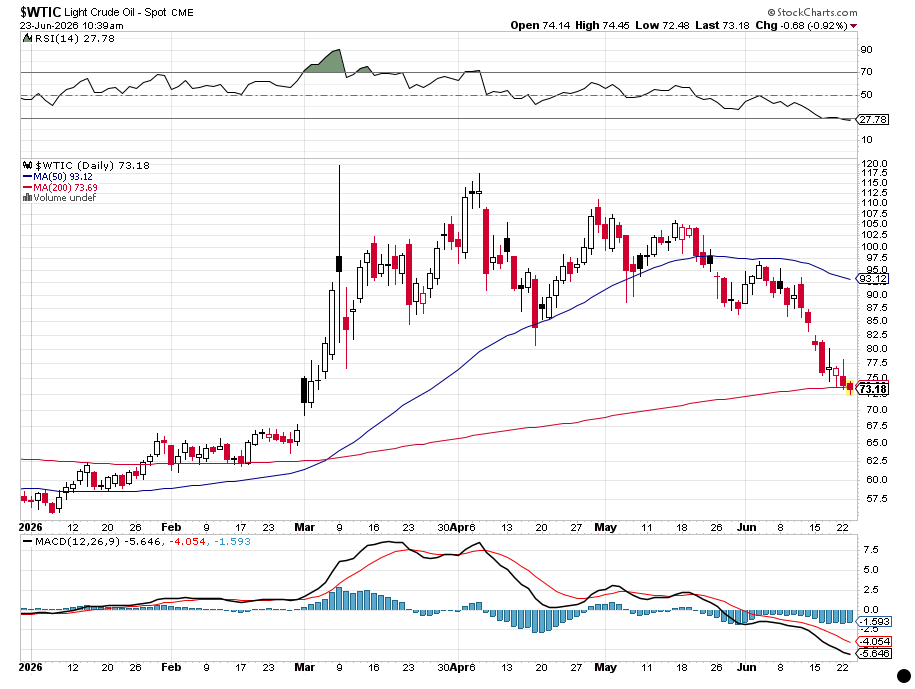
Let’s look through the data with an eye toward the continued fall in energy prices.
You've reached your free article limit
You've read 0 of 1 free Pro articles.
Following our comments this morning about S&P Global’s Flash June findings on inflation in the eurozone, let’s walk through the Flash June PMI report for the U.S.
The nutshell takeaway is that supply-chain delays increased, but input price inflation, while still high, dipped compared to May and shows signs of further cooling given the fall in energy prices. However, output prices continued inch up, most likely as company pricing action rolled through the data. The arguable good news is the root causes behind those data points should ease further in the coming months.
Preliminary job creation findings for the U.S., however, were not encouraging, especially in the manufacturing sector. Our thinking is the concerns we voiced over the last few months regarding company margins and rising input prices are the likely cause. We’ll also look to triangulate jobs figures, in part because S&P Global’s May Flash PMI found employment fell in May, but per the Bureau of Labor Statistics found 172,000 jobs created in May. With that in mind, we’ll continue to monitor U.S.-Iran peace talks and their implications.
We understand there are shortcomings in several data sources given current methodologies, and we agree with Fed Chair Kevin Warsh about the need for better data. Until that time, however, we’ll interpret the data available. With that in mind, we look forward to ISM’s job creation findings as well as those in the June Employment Report and ADP’s June Employment Change report out in the next eight trading days.
As price pressures improve further, supply-chain pressures ease, economic uncertainty fades, and sentiment improves, we’ll look to see if job creation captured by S&P Global methodologies rebounds.
Now let’s review the findings from S&P Global’s Flash June PMI report:
Supply Chains
Supply chain delays grew more widespread in June. Supplier delivery times lengthened on average to the greatest extent since August 2022, commonly linked to shipping disruptions due to the war in the Middle East as well as tariffs.
Prices
Average input prices meanwhile rose sharply, the rate of inflation dipping from May but nonetheless the third-highest recorded since the start of 2023. Although manufacturing input cost inflation moderated from May’s recent peak, it was the second-highest for almost four years. Services input cost inflation meanwhile edged up to a six-month high.
Average prices charged for goods and services rose at a pace unchanged on that seen in May, which had been the highest since July 2025. Cooler, but still elevated, goods price inflation was accompanied by an increase in service sector selling price inflation to an 11-month high.
Employment
Employment fell for a second month running in June, and for the third time in the past four months, as companies commonly continued to focus on cost reduction amid high input prices and concerns over the outlook. While only a modest drop in services jobs was reported, manufacturing headcounts were cut at the fastest rate since the COVID-19 lockdowns of early 2020.
Sentiment
Companies’ expectations for output in the year ahead improved in June to the brightest since February, lifting in both manufacturing and services. Improved outlooks were partly linked to hopes of an easing of war-related disruptions and price pressures.
More Pro Portfolio:
- We’re Unwinding Our Hedging Positions, Adding to Two Others
- Tracking 21 Signals Across 10 of Our Investing Themes
- Weekly Roundup: Peace Deal, Warsh Arrives, and the Portfolio Moves Ahead
At the time of publication, TheStreet Pro Portfolio had no positions in any securities mentioned.