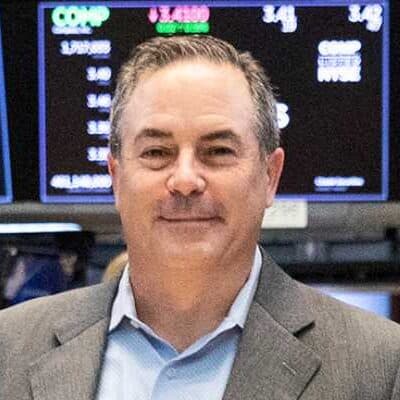
Stocks & Markets Podcast: Catching Up With Neostellar Capital CEO Mark Klein
The current AI market, private capital raises and valuations, and why portfolio discipline is critical.
You've reached your free article limit
You've read 0 of 1 free Pro articles.
Chris Versace sits down with Mark Klein, CEO of TheStreet Pro Portfolio holding Neostellar Capital (NSLR). The two talk about the current market environment and what’s happened in the AI space, with Klein explaining why Neostellar is taking a more cautious approach when it comes to putting fresh capital to work even though private capital raises continue.
As part of that conversation, we get Klein’s thoughts on recent high-profile IPOs breaking below their offering prices and what that means for the IPO market in the very near-term. Klein also discusses likely Neostellar portfolio monetization that could happen in the coming months and explains the decisions behind the changes that led to the company becoming Neostellar Capital.
Transcript
Chris Versace: Hey folks, Chris Versace here, and this is the Stocks & Markets Podcast at TheStreet Pro, where we talk about, you guessed it, what’s going on in the market — talking with CEOs and other thought leaders, gathering their insights and perspectives as we manage the Pro Portfolio. Today I’m very happy to have a repeat guest, so to speak. That is Mark Klein, CEO of the company formerly known as Suro Capital, now known as Neostellar, ticker symbol NSLR, which trades on the Nasdaq. Mark, thank you so much for joining me today.
Mark Klein: Chris, thank you very much for having me. I greatly appreciate it.
Chris Versace: Now, Mark, folks at the Pro Portfolio are very familiar with the move from Suro Capital to Neostellar, the companies you guys are invested in, and what the strategy is. But because we’re talking on the podcast, which goes out to a wider audience, give the elevator pitch, if you will, for what you guys are trying to do — and doing very well, I might add — over at Neostellar.
Mark Klein: Thank you, Chris. Well, Neostellar — and as you said, formerly Suro Capital Management — has been public for fifteen years. Our mission was to create access for individuals and institutions to own private companies before they become public. At the time we started, there were only twenty companies worth over a billion dollars that were private. Now there are over fifteen hundred companies like that. So we believe we provide a great access point for people who want to own companies earlier in their life cycle, as opposed to when they go public — like SpaceX at over a trillion dollars.
Chris Versace: So when we first took a look at Suro Capital, I think it was a conversation we had — I believe on a podcast or a video we were doing for the Pro Portfolio. We were talking about various things, and I think I mentioned at the time that in another product we actually owned the company in an earlier iteration. I was always attracted to the opportunity to use you guys as a play, as you just reminded us, for private companies. But I think what re-injected our interest in that initial conversation was what was happening in AI. You guys are positioned for that on several fronts — directly with your position in OpenAI, but also indirectly with other positions like TensorWave and a few others. What are you seeing, or what are you making of what’s kind of unfolding now in AI? There are a lot of questions. A lot of high-profile stocks have come in, yet we continue to see rising capex levels, we continue to see AI adoption increasing, and the number of applications and usage expanding. How do you tie all this together?
Mark Klein: Great question. Well, just to go back a little bit — as you mentioned, after ChatGPT came out, we started looking at how AI would impact existing investments or future investments. We ultimately came to the conclusion that that’s an interesting thing to think about, but the more important question is how to capitalize on it.
Chris Versace: Mm-hmm.
Mark Klein: So during that period of time, which was in 2024, we invested most of our available cash into AI and AI infrastructure companies — whether it was OpenAI at a $157 billion post-money valuation, Vast at a $9 billion valuation, or CoreWeave at under a $20 billion valuation — because we felt those were going to be the beginning of what ended up occurring. Fortunately, that’s been pretty accurate, and all of those companies have done extraordinarily well. The AI picture continues to evolve — AI isn’t just an asset class, it’s pervasive through everything right now. It’s driving all the way from — you hear a lot about the data centers and the chip companies — and it goes into energy, and it keeps going all the way down the path. We’ve continued to layer in other investments that we believe are benefited by this huge, almost a tsunami, that’s building behind us. When you look at it — we’ve spent a little bit of time just looking at what’s going on right now — every day you pick up the paper and there’s a different narrative. For a while, the narrative would be: ‘AI is really great, you’ve got to own it — how do you own it?’ Then, ‘My goodness, is there circularity to the investment in all these different companies? NVIDIA’s investing in all of them, and that doesn’t make sense — we’re spending too much money.’ Then, ‘We’re not spending enough money.’ The narrative sort of fits the stock price, if you will. If you look at what’s been in the news almost daily, it’s what’s going on in the chip companies — my goodness, the NASDAQ
Chris Versace: Mm-hmm.
Mark Klein: — being beat up, the rotation out of that, that’s fine. But you have chip companies that are up between 200% and 1,000% over the last twelve months. So the fact that they’re down 15%, 18%, even 25% — sure, that’s uncomfortable, but it’s a massive move up, and there’s going to be some correction and rebalancing over time, if nothing else. I don’t think that changes the big story that’s really out there, and just the powerful nature of what’s going on in AI. So it’s natural to have these sort of pullbacks. The narrative immediately goes back to, ‘Does AI work? Is it productive?’ when three weeks ago it was, ‘We’ve got to spend more, we’ve got to spend more, we’ve got to spend more.’ So the narrative tends to trail the stock price movements as opposed to being in front of them.
Chris Versace: Interesting. So the way you’re framing it, if the demand opportunity remains robust and favorable — whatever you want to call it — there are times when valuation expectations get reset or rethought. Two questions: do you think that’s really what’s happening here? And how do you guys at Neostellar think about valuation when you’re sizing up the opportunities you’re reviewing? Because, to some extent, public securities are fairly liquid — private investments, not so much.
Mark Klein: Agreed. Look, markets, as you well know, tend to overshoot in both directions. What’s going on — and has been going on — in AI or AI-related names in the public markets is huge momentum. Buying brings in buying, and selling brings in selling, and those valuations find a level, and they are what they are. What we’ve seen in the private markets
Chris Versace: Correct.
Mark Klein: — and I think you and I have talked about this, I’ve talked about it on earnings calls — is the acceleration of value and the cadence of capital raising is at a level we’ve not seen in the past. You have companies that are raising money two, three, four, five times in a year and are up five to ten times from where they were at the beginning of the year. That was obviously unsustainable, and I think it’s still out there, though hopefully it’s tempered a bit. From our point of view, we made a couple of decisions coming into this year. We didn’t want 2026 to be the vintage of Neostellar. We didn’t want to take all of our remaining capital and put it into an environment that is somewhat stretched. We made a similar decision in 2021, and we felt this was a time to be deliberate about deploying capital. We’re in the business of managing a portfolio, but doing it in an intelligent fashion. Our best example of that is TensorWave. In the case of TensorWave, the story is really good — AMD is their partner, AMD made an investment and led their round, and they’re going to be the AMD Neocloud for…
Chris Versace: Mm-hmm.
Mark Klein: Yeah. We made a $20 million commitment into TensorWave, but we staged it — $5 million went in at first, and if they met certain milestones, the rest of the money would come in; if they didn’t meet those milestones, it wouldn’t come in. So we structured it in a way that if it was working, great — and by the time we deployed all our capital, we knew they were on a trajectory to do much better. We weren’t overpaying for it. So we’re trying to find ways to get access in this environment with a bit more structure, as opposed to the last round being $3 billion, then $8 billion, then $15 billion — ‘okay, we’re in that round because it’s going to be $30 billion in three months.’ That’s a strategy, but over time it tends not to be the best strategy going forward.
Chris Versace: Right. So what I’m hearing from you is that your team, just like my team, given the environment, is being increasingly selective, and you might be a little more patient in deploying capital — which I think makes sense. But there’s some chatter this morning on one of the financial news networks — I won’t mention which one — where one of the commentators speculated that we could start to see down rounds for private companies. Do you see that on the horizon? Because that strikes me as a little shocking.
Mark Klein: For the companies that are working — the ones people want to invest in — we’re not seeing anywhere close to that. In the private markets, we’re seeing companies trading privately at values above their last round. The companies that are struggling may have a harder time raising capital, but they’ve been having a harder time raising capital for a while now. It’s a very tight group of companies that are raising a disproportionate amount of capital in the private markets right now, and a lot of the other companies are struggling or can’t raise money at all. So would that lead to down rounds in the future? Yeah, maybe — but we’re not seeing anything like that right now.
Chris Versace: Okay. And if we look back at 2025, I think there was a close affinity between Suro — now Neostellar — and OpenAI. Understandable, given all the headlines around that. But I think what a lot of people fail to realize, unless they roll up their sleeves, is that it’s no longer your largest position. You’ve made other investments, and I suspect that sometime in the second half of the year we could actually see OpenAI move down the leaderboard to number three or number four. Is that possible?
Mark Klein: Yeah. When we made our investment in OpenAI at a $157 billion valuation — as opposed to the $882 billion valuation, or wherever they are right now — we made the second-largest investment our firm has ever made in anything, at $17.5 million. Obviously that’s done really well and has been one of our top holdings. CoreWeave was there too; we’ve sold down a bunch of our CoreWeave over time. Whoop, where we made an $11 million investment, has done extraordinarily well and is at the top of our leaderboard — it’s up about 13x from where we paid for it. But TensorWave, at a $20 million investment, is the second-largest investment we’ve ever made, and I suspect that will continue to climb up our board. Vast, which was last valued at $30 billion, I suspect will have another move upward, which will probably move it up our board too. But candidly, Chris, I hope OpenAI stays up there, and I hope when they go public it goes north of a trillion dollars — which would be another big step up for us.
Chris Versace: Agreed, agreed. You mentioned CoreWeave — based on the last public filings, it looked like you still held a bit. We’ll leave that alone. But you have one or two other opportunities to monetize positions in the second half of the year, right? I think you have a little bit of GrabAGun left — pew, pew, pew, pew, if I can have some fun with that — and then Lime went public as well. So there are some monetization opportunities coming, correct?
Mark Klein: Right.
Mark Klein: Sure. I think we would expect to be out of both GrabAGun and Lime by year-end. Lime went public a few weeks ago; it’s actually trading pretty well. Their lockup ends at the end of October or sometime in November, and we’d anticipate monetizing that by year-end. That’s correct.
Chris Versace: Okay, so as we monetize those, there are a few other things worth noting. One is that you have notes due at the end of the year, right? And as part of this move to Neostellar and external management, which we’ll talk about in a second, Magnetar — your partner — is also making an investment of around $20 million into the new company. Let’s kind of shake and bake all that. Your cash position came down a bit during the second quarter — we saw that — but you’ve got some monetization and some capital coming in. So what’s the pecking order, Mark? Is it new investments first, then paying down the notes, then dividends? Or is there some other order?
Mark Klein: Well, Chris, first of all, we’re in the portfolio management business, right? So we look at our portfolio daily and weekly, and we re-underwrite it as often as we can, and make a determination: is what we own what we want to own? If we don’t want to own it, is there an opportunity to monetize it, either in the public markets or the private markets? We weigh that and look at it closely. Then, on the deployment side, we look at the opportunity set that’s available — what’s out there, are there good opportunities at the right prices, is that something we should be doing? With our stock now at a discount, should we think about reducing our share count? Is that a better use of capital than what’s out there? We’ve done a lot of buybacks over the years; we haven’t in a while because there have been pretty exciting things to deploy capital into. We still believe that, but it’s certainly an option. We do have notes outstanding at the end of the year, so we have to look at our cash position and how best to manage that. And we anticipate that if we have net realized gains by year-end, we’ll make a distribution — we made a couple of distributions last year. So that’s a lot of what we spend our time doing: portfolio management, liquidity management, and figuring out how best to deploy capital. It’s something we spend a lot of time trying to sort through.
Chris Versace: And the Magnetar cash — do you have that yet?
Mark Klein: Magnetar’s cash is in the bank — we filed an 8-K about a week or so ago on that. They invested their $20 million; we can talk about that partnership in a moment, but that added to our bank account. And as you said, we have certain public monetizations we can pursue. There are also things we’ve done in the past that we can do now — looking at some of our positions and asking, is there a private market for them, and is that a better use of our capital than exiting into other positions?
Chris Versace: All right, let me pick on that for a second, Mark, because I think most people tend to think that if one of their positions goes public, that’s a monetization event to look forward to down the line. But you also said that now is the time to be selective and prudent — whatever words you want to use. So it kind of begs the question: if we’re looking at your portfolio snapshot at the end of the second quarter, Whoop was extremely large. I mean, good problem to have, don’t get me wrong. But from our perspective, when we manage the Pro Portfolio, there are certain tolerances we have where we’ll say, ‘Wow, this is an outsized position — we might need to do something here to lock in some gains and be prudent.’ Is that something you guys would entertain at the right price and the right opportunity?
Mark Klein: Absolutely, and we’ve done it in the past. We’re a victim of our own success with Whoop — it’s a high-quality problem to have, but it is a large part of our portfolio. There’s a lot of activity around Whoop. They just raised $575 million, which is an awful lot of money. Their closest competitor, Aura, has filed to go public — they filed over two months ago, and I believe their intent is to go public right around the beginning to middle of September. So there will be a lot of chatter about the health and tracking industry as we move through August and into September. I think Whoop stacks up at the top of the pile right now, so there is interest in our Whoop position. It is disproportionately large, and as you said, you need to be prudent about your portfolio — even if you hold what might be the world’s greatest investment, if it’s disproportionate, it’s disproportionate. So if the opportunity were to arise at the right price, we would certainly give active consideration to reducing our Whoop position.
Chris Versace: Right.
Chris Versace: All right, so you just mentioned Aura’s timing is mid-September. I want to get your take on the current tone of the IPO market, because we’ve seen SpaceX, Cerebras, and even SK Hynix, with its U.S. listing, break below their IPO price. At the same time, we talked about a recalibration of valuation expectations. Do you think we see a bit of a summer lull in August for the IPO market, and do you think it comes back in September?
Mark Klein: Yeah, I think prior to the SpaceX IPO, there was clearly real enthusiasm — not just an IPO parade, but maybe even a stampede of companies coming out. SpaceX, for the first day and a half or two days, whatever it was, was really exciting. The retracement in SpaceX, breaking below its IPO price,
Chris Versace: Mm-hmm.
Mark Klein: probably — I mean, almost definitely — put a damper on the enthusiasm. Typically, August isn’t a particularly big month for the capital markets or the IPO market anyway. With all the volatility that’s now been introduced to the market — whether it’s that or some of the things occurring in other technology names — there may be a sense of, ‘Okay, let everybody go enjoy the rest of their summer, and let’s come back and talk about it in September.’ Facts and circumstances on the ground seem to be moving pretty quickly, but I would still anticipate a pretty good IPO market in the last quarter of this year.
Chris Versace: Okay, great. Let’s pivot now and talk about Suro to Neostellar. We know you moved from an internally managed company to an externally managed one. Practically speaking, for shareholders of the stock, what does that really mean?
Mark Klein: So I’ll take a step back and explain why, and then we’ll talk about what it means. We’ve been fortunate — we were the first ones to do what we’re doing, and we’ve done a pretty good job of it. We’re at somewhere just south of half a billion dollars in assets under management, and we’ve moved it pretty well and distributed a good amount to our investors. But our industry is changing.
Chris Versace: Sure. Yeah. Yeah.
Mark Klein: The size of capital raises is much larger, and the value of these companies is much larger. Being able to deploy more capital, or add more value to portfolio companies, matters in this environment. Secondly, for our shareholders — we have a really nice company. The stock, with the exception of maybe the recent pullback, has done extraordinarily well over the last eighteen months or two years. But how do we continue to enhance shareholder value? How do we allow the stock to trade better, to have more institutional ownership and following? It all comes down to size and scale mattering and broadening what we’re doing in a way that really adds value for our shareholders. So we made a decision — we’ve known the Magnetar team for a long time. We invested with them in CoreWeave, we invested with them in TensorWave. Their deal flow is amazing.
Chris Versace: Mm-hmm.
Mark Klein: They’re roughly 250 people, give or take. They have $18 billion under management, offices in Europe, Asia, and the U.S., and a big presence in the venture community. We made a decision that being together with them would be better than being separate. It elevates us to a different level than any of the other folks doing what we do — the other funds that have emerged over the last twelve months. We have more size, more scale, more sourcing, and more institutional capabilities. That’s why we did it. For us, it was a big decision, but we came to the conclusion that we’d be a better investment vehicle for investors teamed up with the Magnetar team than separate. That’s why I did it. As far as internal versus external management goes, we took it to our shareholders and put it to a vote. Over 90% of our shareholders who voted approved it — a high approval rating — because it makes sense on a nuts-and-bolts cost basis. The cost structure will be very similar on an ongoing basis externally as it was internally. Rather than being incented through stock incentive programs, we do have a carried interest, but it doesn’t apply to our entire existing portfolio. So the $150 to $200 million of unrealized gains all goes to our shareholders — we have no interest in that. Where we’ll start to have a carried interest is in new investments we make, whenever they’re monetized. So we won’t have a carried interest until somewhere around 2028. So this is hugely cost-beneficial for our shareholders. And, as you know, we all have egos where we want to have them, but we have a better team now than we had before — and we had a pretty darn good team already. So that’s why we did it.
Chris Versace: Yeah — having sat in, you were nice enough at one point to let me sit in on one of your Monday meetings, and it was very impressive, to say the least. And that was before this move. So I’m with you in thinking that one and one is three here — I think that’s great. Let me ask, though, because you did mention expenses, and I know when you reported your preliminary take
Mark Klein: Thank you.
Mark Klein: Thank you.
Chris Versace: for the second quarter, I think some people were a little surprised by the step-down in net asset value per share compared to the end of the first quarter. There were obviously some things in there related to the transition to the external manager, and some expenses tied to that. It sounds like — and I want to be clear, I don’t want to read into your words — but it sounds like those are more one-time items, not recurring higher expenses going forward.
Mark Klein: They’re definitely one-time items. There were accelerations of certain expenses that otherwise would have been amortized over time, and they all got accelerated once we changed from internal to external management — we had to accelerate all those expenses into Q2. Those were one-time.
Chris Versace: Okay, great. And it sounds like, if you’re leveraging Magnetar, there doesn’t necessarily need to be a larger — or dramatically larger — Neostellar team, correct?
Mark Klein: That’s correct. I’ve been in this business for forty years, and I’ve been doing this specifically for fifteen. We have the best team — my team is really good, they’re super smart, and they’re right in the flow of everything. So I don’t anticipate building out a significantly larger team at all. Given what we have in place, and what we’re leveraging with the Magnetar venture team more broadly, I think we’re in a pretty good place right now.
Chris Versace: So not to put words in your mouth, Mark, but it sounds like business as usual.
Mark Klein: Yeah — business as usual, plus. We’re doing what we were doing, but I think we’re doing it better, and we’re doing it with an expanded team. But everything else is business as usual — the folks who were making the decisions three weeks ago are still making the decisions now, which makes sense for us.
Chris Versace: Excellent, excellent. Agreed. And, I’ve referred to it a couple of times — you guys typically put out an early portfolio update ahead of the full quarterly earnings review. Any thinking on when we might see that full report?
Mark Klein: We typically report in the second week of the month, so that would be next week.
Chris Versace: Okay, we’ll check the calendar for that, and then—
Mark Klein: I think that’s about right. We’ll announce it — I mean, one thing, and Chris, you know this—
Chris Versace: All right.
Mark Klein: We’re extremely communicative with our investors. We do pre-releases, so you get eight looks at our NAV over the course of the year, which is different from almost anyone else who does this. We try to be very responsive to our shareholders. We don’t like surprises, and I know our shareholders don’t either. So we make sure we announce things ahead of time, so people know to be ready when we do announce them. And if there are other things that need to be announced on a non-normal cadence, we’d do that too.
Chris Versace: Mm-hmm.
Chris Versace: Correct.
Mark Klein: That as well.
Chris Versace: Awesome, awesome. All right, we’ll look forward to that date. Mark, you’ve been super generous with your time. Before we wrap up, any last thoughts — anything we should have talked about that we didn’t?
Mark Klein: Well, look, Chris, first of all, I really appreciate it. As I’ve said to you before, it’s really fun to be doing what we’re doing right now. This is the most exciting time I’ve seen in investing in as long as I’ve been doing it. The rate of change, and what’s going on in the world, is fascinating. To have the opportunity to be in the middle of it, to invest in it, to learn from it, and to participate in it, is fabulous. So I just want to thank you again for your time and for your support.
Chris Versace: Absolutely — but unfortunately, Mark, your comment there just triggered another thought, so I have to get one more in. There was a point in time, and I think you alluded to it, when — as Suro — you guys stopped investing and were sitting on your cash. Just remind us what triggered that, and what would put you back in that frame of mind today?
Mark Klein: Well, I’ve said this a couple of times, and I apologize — I’ve been around for forty years in this business, so I’m old, what can I tell you? But the rubber band stretches, and sometimes it gets too stretched. Nobody rings the bell at the bottom, and nobody rings the bell at the top. But you do get a sense when things are getting a bit frothy — that maybe you should be a bit more patient, or not deploying capital as rapidly.
Chris Versace: Yes, you did.
Mark Klein: We really felt, going through 2021 — and this feels a lot like that — that maybe things were getting a little ahead of themselves, so we pulled in the reins a bit. It’s not that we’re not deploying capital, but we’re deploying it slower than we did in the past, because we’re always trying to be prudent, but when
Chris Versace: Mm-hmm.
Mark Klein: you’ve seen this expansion in valuations and this acceleration of capital raising, you just have to recognize it’s okay not to deploy capital at the same pace as when valuations were a little different.
Chris Versace: I take that to heart. And if you’ve followed what we’re doing, that’s pretty much what we’re doing as well. I’ll also say that we’re looking at areas outside of tech — our last few investments in the portfolio have been aerospace, industrials, and a few other areas. But that’s a story for another time. Mark, thank you so much. And folks, keep your eyes out — Neostellar, as Mark said, should be reporting shortly, and we’ll keep you posted on that date. That’s our Stocks and Markets Podcast for this time. We’ll be back with a fresh episode before you know it.
More Pro Portfolio:
- Exiting This Healthcare Name Amid Surge
- 29 Signals We’re Tracking Across 11 Portfolio Strategies
- Weekly Roundup: When Earnings, Rates, and Oil Collide
At the time of publication, TheStreet Pro was long NSLR.