Xi Holds Court With U.S. CEOs at Tense Time in Election Year
U.S. corporate leaders got an audience with the 'emperor for life,' but there remains little to inspire international investors into Chinese equities.
You've reached your free article limit
You've read 0 of 1 free Pro articles.
U.S. CEOs delayed their departure from Beijing to meet a “top Chinese leader,” and were rewarded with an audience with the pinnacle of power in the capital, President Xi Jinping. Quite why Xi’s name wasn’t on the invite is a bit of a mystery, but it also shows how things get done here in China.
The meeting turned into a great photo opportunity for Xi, who positioned himself front and center at the top table, the CEOs lined up at flanking tables to either side. It looks as if America’s corporate leaders have come for an audience with the man jokingly dubbed the “emperor for life,” now Xi has removed term limits on his power.
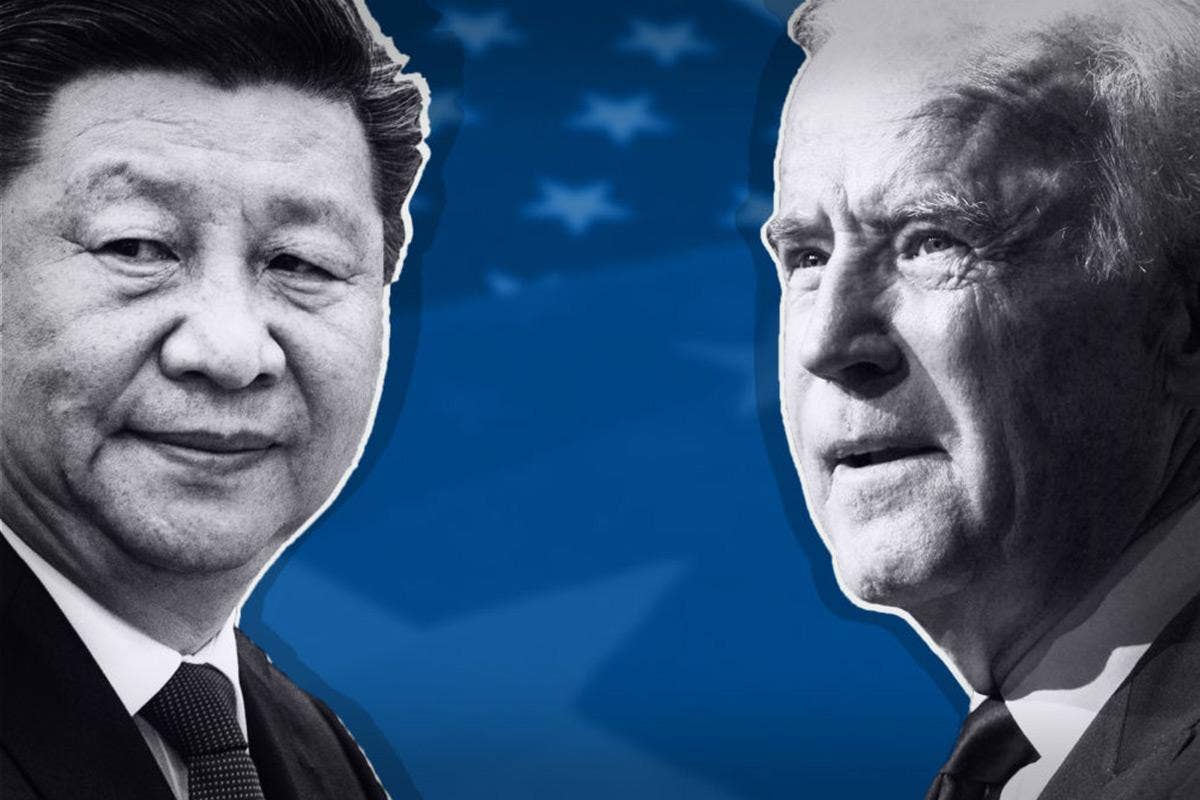
So this will have gone down very well for the domestic Chinese audience. Notably, the names and titles of the executives in attendance appeared only in Chinese on the nameplates in front of them, whereas Chinese officials were identified in English. This was a diplomatic event, notable in that only the heads of American businesses were invited, in this U.S. election year.
The gathering included Blackstone BX chief Stephen Schwarzman, Bloomberg chairman and former Bank of England governor Mark Carney, Broadcom AVGO CEO Hock Tan, Even Greenberg from Chubb CB, Corning GLW CEO Wendell Weeks, Raj Subramaniam from FedEx FDX, Invesco IVZ head Andrew Schlossberg, Bill Hornbuckle from MGM Resorts International MGM, and Qualcomm QCOM CEO Cristiano Amon.
Misstep may "easily lead to a freefall"
There’s the full official group photo of the gathering in the Great Hall of the People here, as well as a few candid shots. Greenberg is also the chair of the National Committee on U.S.-China Relations, and career diplomats such as Craig Allen, now president of the U.S.-China Business Council, also stand among the assembled ranks.
Xi told those in attendance that China’s economy has not peaked, and is “sound and sustainable,” while welcoming inbound investment. There’s plenty of room for peaceful growth and win-win results, he said, so long as both sides respect each other. “As the Chinese saying goes, doing good is as hard as an uphill climb, while a misstep may easily lead to a freefall,” Xi noted.
This gathering is the counterpart to a dinner that Xi held in San Francisco last November, on the sidelines of the APEC summit. Xi did not travel outside China during the pandemic, so Wednesday’s meeting is a rare opportunity. It comes just after the China Development Forum on Sunday and Monday, which brought many of the CEOs to Beijing.
But are these platitudes going to do anything to turn around foreign direct investment (FDI) into China, which sank 8% last year to a 30-year low?
While diplomatic relations between the United States and China have thawed a little, and U.S. Treasury Secretary Janet Yellen is due to travel to China next month, this remains a very tricky period, leading up to the U.S. presidential election later this year. Candidates are already talking tough on China in their bid to woo votes.
There were no specifics from Xi or at the forum as to how China intends to stimulate the Chinese economy or improve the environment for multinationals operating in China. Foreign companies often operate at a disadvantage inside China, and struggle to repatriate profits when made.
Xi’s warm welcome flies in the face of his recent calls for China to become more self-sufficient in terms of technology, and to prioritize the “internal circulation” of the domestic economy rather than the “external circulation” of international investment and exports. It’s a philosophical update from the words of former Chinese leader Deng Xiaoping, who championed the “great international circulation” of opening up China’s economy.
China files WTO complaint over U.S. EV subsidies
China is hardly alone in protecting its domestic industries. China in fact this week filed a complaint with the World Trade Organization over U.S. subsidies on electric vehicles, which offer tax credits of up to US$7,500 per vehicle if critical parts and battery components were not made by Chinese, Russian, North Korean or Iranian companies. China is a major battery producer and also now the world’s largest producer and exporter of EVs.
Essentially, any foreign company operates within China within the limits that the Chinese Communist Party officials allow. Unlike Western nations where rules are promulgated for public discussion, the rules in China change overnight – and much like the invite to meet with Xi, the true meaning may not be explicitly stated.
China did move last Friday to relax rules on cross-border data sharing that multinationals say are overly vague. But the definition of state secrets is very broad, as the recent detention inside China of employees working for foreign consulting companies shows.
Yellen said on Wednesday that she intends to raise the issue of overcapacity in solar panels and EVs when she visits China, to discuss whether they are “flooding the market with cheap goods.” The focus from Chinese officials speaking at the Beijing forum appeared to concentrate on spurring manufacturing as a means of helping the economy to recover.
Chinese markets have shown signs of life in 2024, after three years in the red. The CSI 300 index of the largest listings in Shanghai and Shenzhen is up 4.0% year-to-date, and has advanced 10.7% since the start of last month. But that still leaves Chinese shares 39.4% below their levels of early 2021, when the market ran ahead of the prolonged end to the pandemic in China. They’re at levels similar to those set in the previous market spike, back in 2015.
Xi views both the Chinese Communist Party government sector and state-owned enterprises in a better light than private industry, having launched a sustained campaign to bring Big Tech to heel. His campaign to rein in property prices and reduce overleverage has resulted in a pronounced downturn.
Chinese officials have not proposed any substantive measures to turn the property market or the stock markets around. They are keen to court international investors once again in their bid to achieve growth of “around 5%” this year. But, while the American CEOs who met with Xi all hope their businesses within China stand to benefit, there’s no clear reason why international investors should respond.