Why Your Portfolio Feels Weird Right Now
Even if you're diversified, the balance may seem 'off.' Here's what's going on.
You've reached your free article limit
You've read 0 of 1 free Pro articles.

Earlier this year, there were weeks when both the S&P 500 and core bond funds declined at the same time. That’s not exactly something investors expect from a “balanced” portfolio, although it’s become common in inflation-driven markets.
At the same time, bond yields remained relatively high, which should be good news for income investors. That combination — falling stock prices alongside higher bond yields — can make portfolios feel confusing or even broken.
It’s not just you: Portfolios do feel broken right now. Let’s dig into that idea.
The Environment Changed (Not Your Portfolio)
For most of the past 25 years, investors got used to stocks and bonds moving in opposite directions; when one broad asset class fell, the other cushioned the blow.
But here’s the wrinkle: That relationship was never guaranteed. It was a product of a specific economic era.
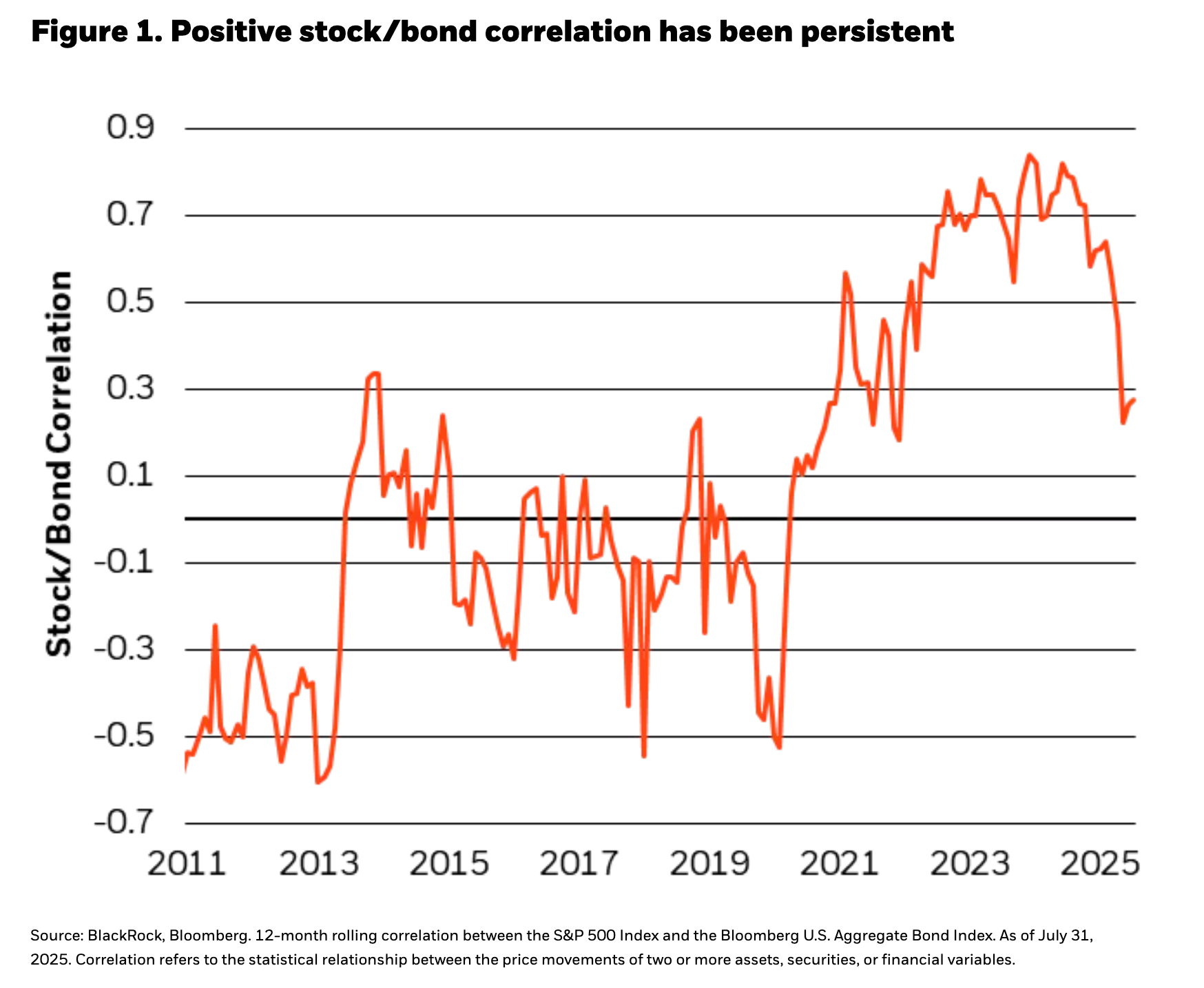
This chart from BlackRock (BLK) tells the story of stock-and-bond correlation. When the line is above zero, stocks and bonds are falling together. That’s why your "balanced" portfolio hasn't felt balanced lately.
BlackRock
The good news: That line has been dropping sharply, meaning bonds are starting to work as a cushion again.
Higher interest rates are responsible for the behaviors we’re seeing across various asset classes.
- Stocks and bonds are both reacting to rate expectations.
- Inflation and policy uncertainty are big factors.
- We’re seeing more frequent short-term alignment between asset classes.
An April 15 report from brokerage Fidelity found that elevated interest rates may continue driving volatility in equity and fixed-income markets.
According to that report, the bull market that began in the fourth quarter of 2022 is still intact.
Fidelity analysts wrote, “A bull market refers to an extended period of rising stock prices, usually supported by economic fundamentals and expanding corporate profits. In the current situation, the market is seeing resilient earnings, elevated investment spending (i.e., CapEx), and historically strong profit margins sustain upward momentum in stock prices.”
Diversification Still Works, But It Doesn’t Feel Like It
I know, I know. Diversification. It’s not exciting. It doesn’t involve the thrill of buying SanDisk (SNDK) and watching it fly.
But to reliably forecast your retirement withdrawals, income and taxes, single stocks don’t hold a candle to a balanced portfolio.
Overall, a diversification strategy reduces long-term risk, but you’ll almost certainly feel some short-term discomfort, especially if you like to follow the market regularly.
The first quarter of this year offers a perfect real-life illustration of why things in investor-land feel so askew.
The Iran war of choice and the near-total shutdown of the Strait of Hormuz sent oil prices from about $67 a barrel in late February to the current level of about $105. That single geopolitical event reshuffled the entire asset class leaderboard. Investors who weren't diversified either got very lucky or got a smackdown.
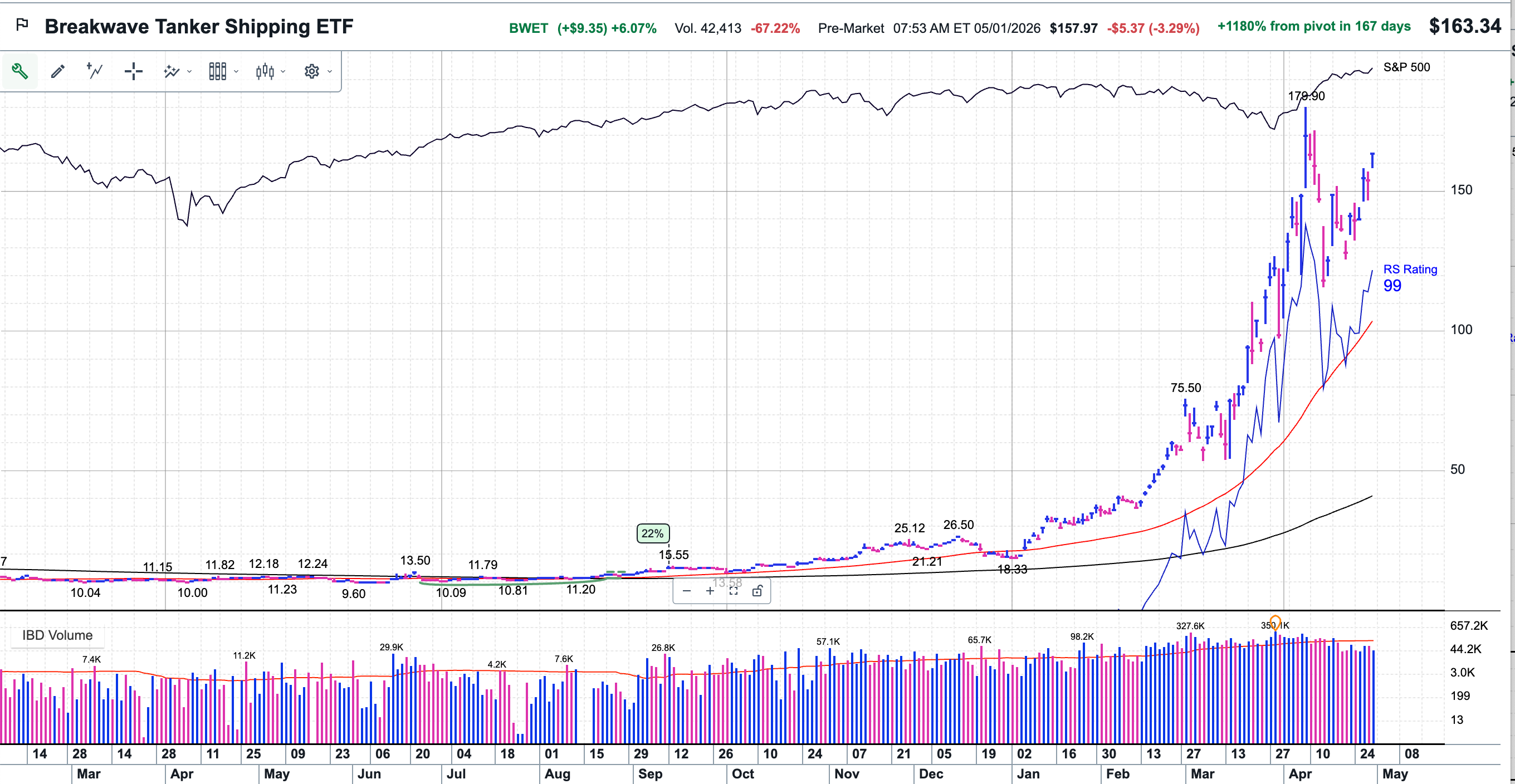
The winners nobody saw coming: The Breakwave Tanker Shipping ETF (BWET) surged 411%, and the iShares S&P GSCI Commodity-Indexed Trust (GSG) gained about 40%, with both riding the oil price shock.
The Energy Select Sector SPDR ETF (XLE) is up 16.85% in the past three months, and is the top-performing sector ETF year-to-date.
MarketSurge
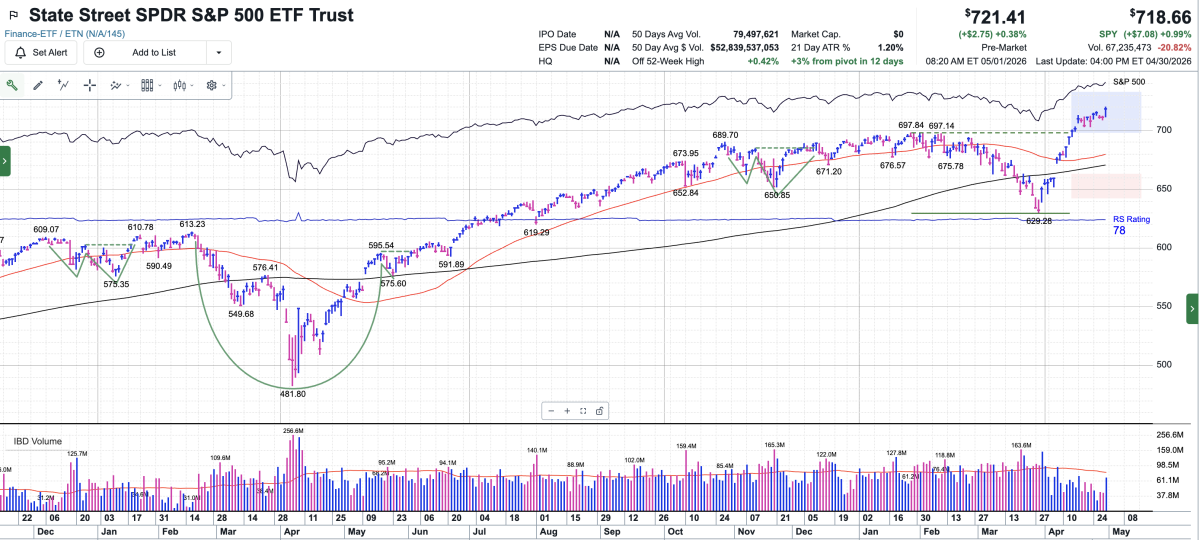
The losers that looked safe: Meanwhile broad U.S. equity funds were on the struggle bus. The S&P 500 dropped about 4.4% in the first quarter alone. Because so many look to this index as the benchmark for broader market performance, a downturn makes investors uneasy.
MarketSurge
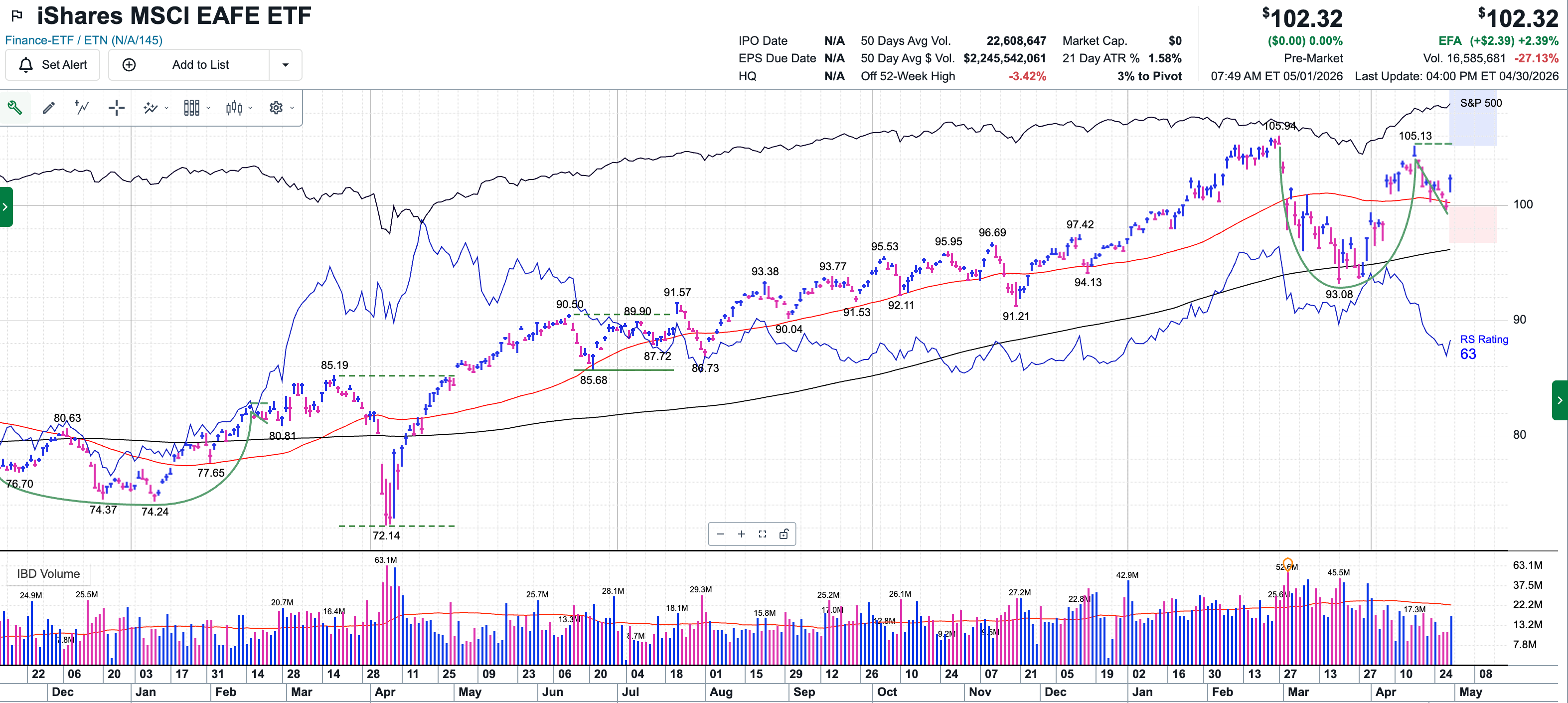
The diversification payoff: While the widely-watched S&P 500 skidded, the iShares MSCI EAFE ETF (EFA) , which tracks international developed markets outside the U.S. and Canada, returned 1.57% in the past three months.
MarketSurge
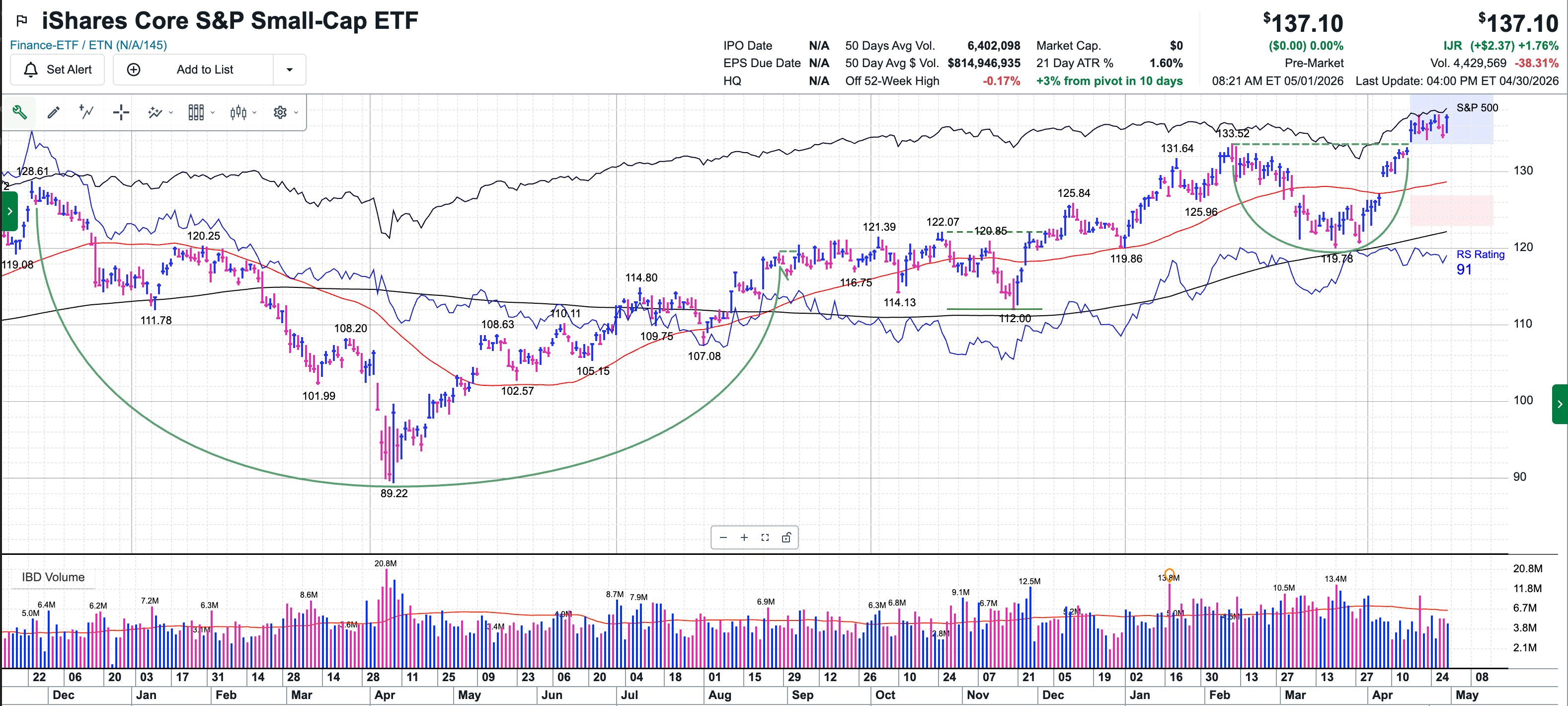
Meanwhile, the iShares Core S&P Small-Cap ETF (IJR) returned 8.10% on a three-month basis. Interest rates, valuations and rotation away from AI-driven mega-techs is contributing to the outperformance.
MarketSurge
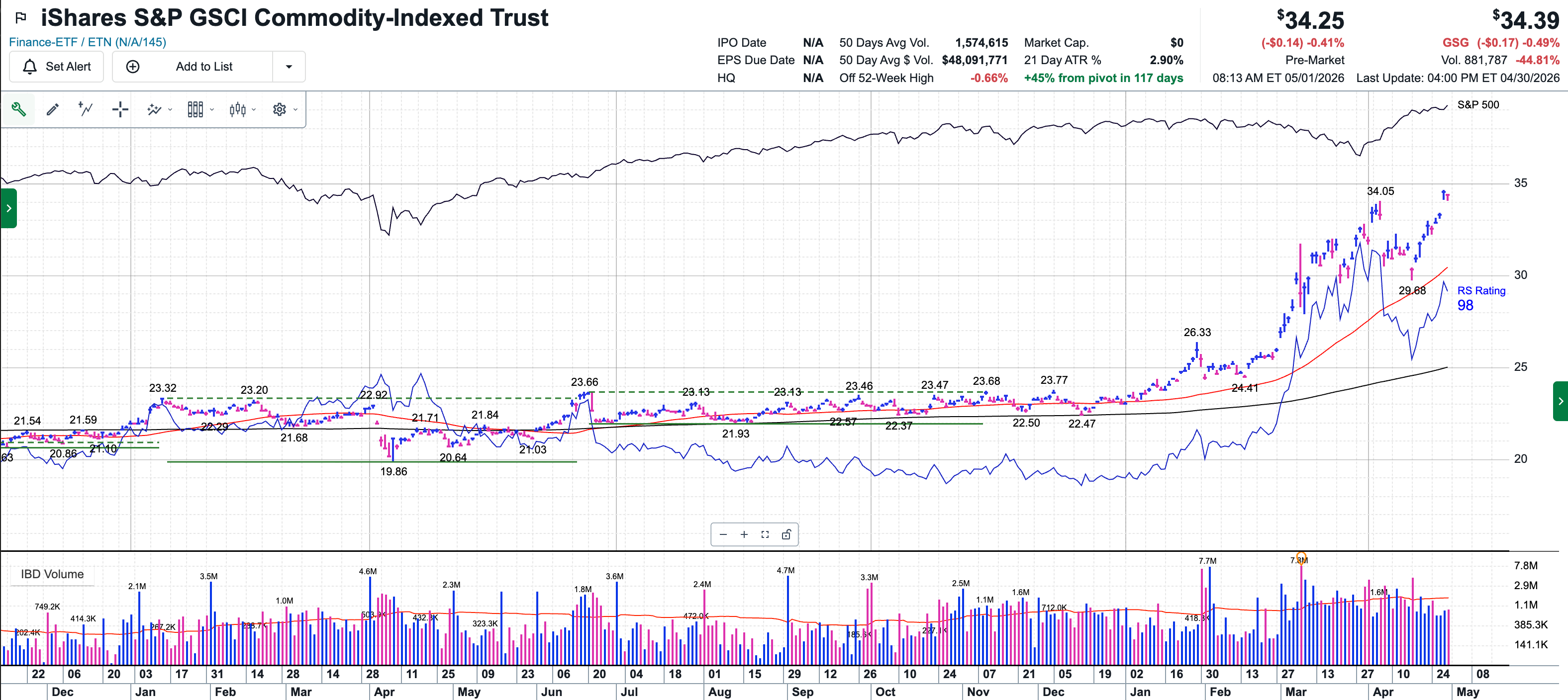
Finally, and most dramatically, the iShares S&P GSCI Commodity-Indexed Trust (GSG) leapt 34.97%. Beyond the surge in energy, this ETF’s performance was boosted by record highs in metals and a recovery in the agricultural sector.
MarketSurge
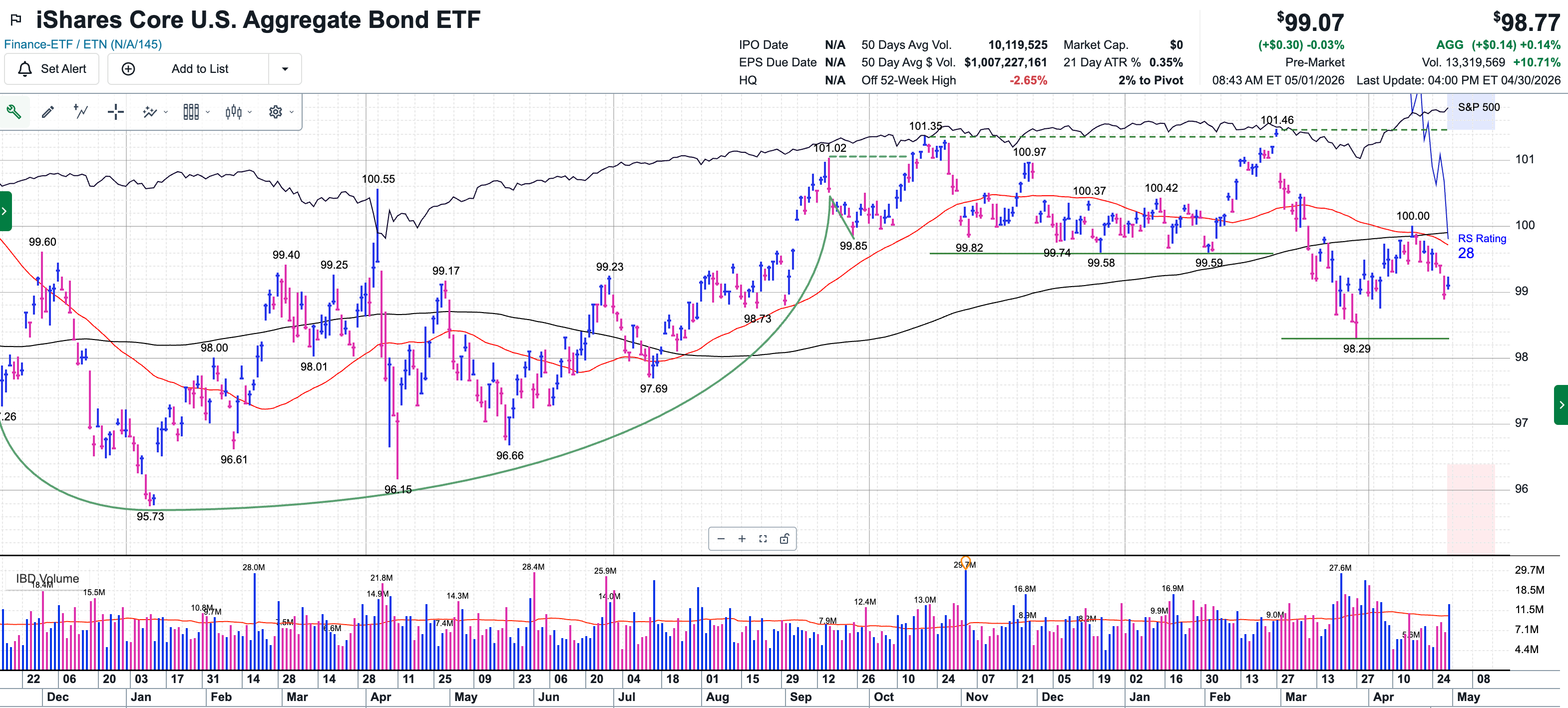
The gut-punch for bond investors who really, truly thought they were being prudent: Bonds were supposed to be the safe haven, but they barely broke even. The iShares Core U.S. Aggregate Bond ETF (AGG) is down less than 1% in the past three months. After inflation, bond investors actually lost purchasing power while sitting out a stock market recovery.
MarketSurge
All of this explains why even diversified investors may be questioning their strategies. There are some real reasons for this.
- Investors expect one part of the portfolio to offset another.
- In reality, correlations shift, and that’s normal.
- Investors should expect short periods of “everything moving together.”
The Real Issue Is Expectations
You may want to see nice, smooth performance, but markets don’t work that way. Regardless of what self-inflicted nonsense governments impose on the world and the markets,
- A “balanced” portfolio can still feel volatile.
- Your expectations don’t always match market experience.
- Discomfort doesn’t equal poor portfolio construction.
Don’t judge your portfolio based on a few uncomfortable months. I’m not saying this is easy; plenty of investors want to think participation in the markets is a purely logical exercise, but that notion always makes me laugh. Ignoring your emotional responses to market movements will only exacerbate the feeling that your portfolio is somehow off.
Instead, focus on the tried-and-true factors:
- Time horizon
- Risk tolerance
- Income needs
If your portfolio feels unusual right now, it may not be broken. It may just be reflecting a market environment that looks different than it did a few months ago.
Related: The Investment Game Is Changing — And Old Rules Are Starting to Fade Away