Why China Targeted Nvidia (and What Investors Should Expect)
China has launched a monopolies investigation into a Nvidia acquisition that could get nasty if the U.S.-China trade war intensifies. So, what’s the likely outcome?
You've reached your free article limit
You've read 0 of 1 free Pro articles.
There was a flurry of market activity at the start of the week when it became clear that the Chinese government is investigating Nvidia NVDA. Then silence.
So what’s the upshot? How should investors respond?
Although in the West, China was initially “reported” to be scrutinizing the chipmaker, we have confirmation of the inquiry from state-owned news service Xinhua. Its terse statement says only that the monopolies regulator, the State Administration for Market Regulation (SAMR), has launched an anti-monopoly investigation into Nvidia’s acquisition of Mellanox Technologies “in accordance with the law.”
Even sitting here in Hong Kong, I find this wording funny. Thank goodness they’re not investigating outside the law! But it’s common in China. Particularly when there might be some suspicion this is a political move. Which it is.
We even have state mouthpiece the Global Times trotting out an expert to tell us this is all “in accordance with laws and regulations,” and “does not target any specific enterprise.” Which is preposterous considering the investigation targets a very specific company, but China doesn’t want to break any World Trade Organization rules.
As my colleague Stephen Guilfoyle noted when the news broke, these are issues that weren’t on the radar for investors. They came out of the blue. So what’s going on?
Of course, we should view the whole episode via the lens of heightened U.S.-China tensions. First, the Biden administration pushed for a diplomatic blockade limiting the supply of high-end chips to China. Then, Trump was elected for 2.0, pledging massive blanket tariffs on Chinese goods.
So China is responding with an opening gambit in a game of political chess. And by targeting Nvidia, it’s threatening the stock-market king.
Why this deal?
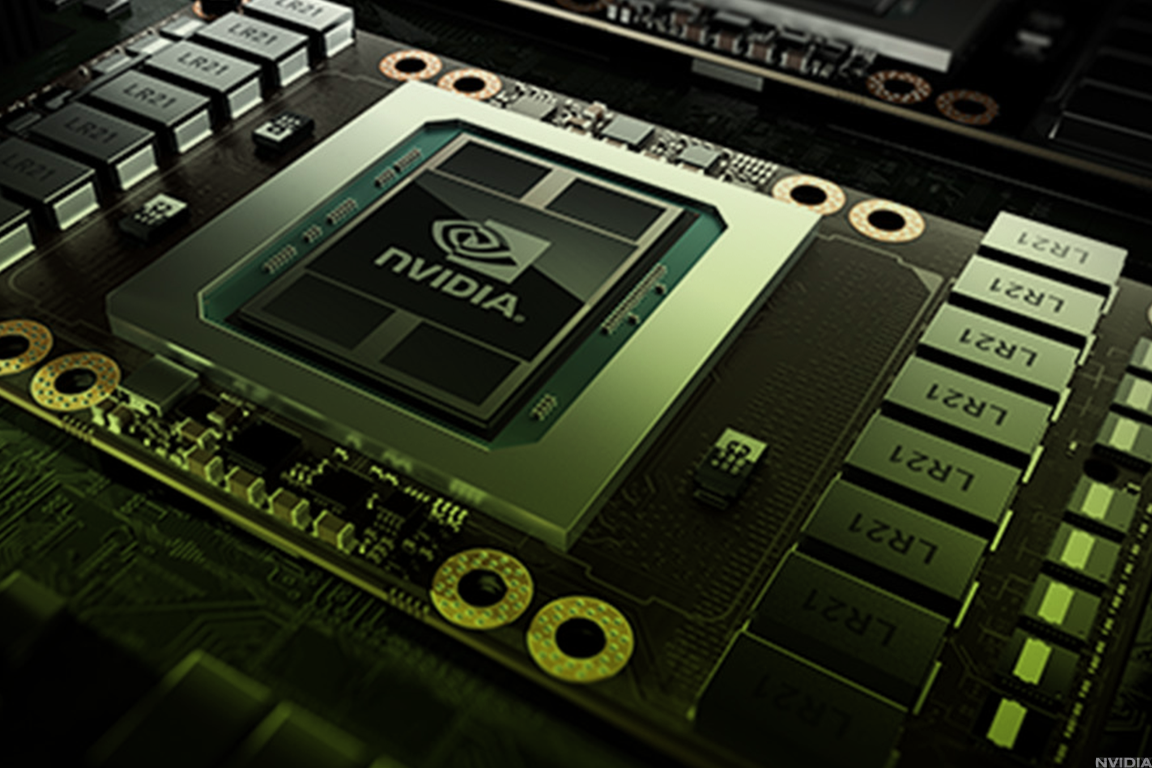
Mellanox Technologies was an Israeli-founded designer of computer-network integrated circuits and switches used in cloud computing and data centers, a company that Nvidia bought in 2020. Because Nasdaq-listed Mellanox had moved its headquarters to San Jose and also had operations in China and Europe, the deal required U.S., E.U. and Chinese approval. China was the last to clear the acquisition in April 2020 before it closed later that month.
You’d think the Chinese approval would be a formality, since this was essentially an acquisition between two companies based elsewhere, with limited operations in China. But you may recall that a $44 billion attempt from Qualcomm QCOM to buy the Dutch chipmaker NXP Semiconductors NXPI fell apart in 2018 when China failed to approve the buyout in time. With China accounting for two-thirds of NXP’s sales, the same anti-monopolies watchdog SAMR simply didn’t respond before the deadline for the deal to close, forcing Qualcomm to walk away.
The Qualcomm-NXP deal was inked the month before Donald Trump was elected the first time around. After taking office, Trump lifted a ban on U.S. chipmakers dealing with the Chinese telecom ZTE ZTCOY (HK:0763), a move that it was hoped would ease Qualcomm’s acquisition. No such luck.
Now we have a similar sort of situation with Trump heading into office a second time. Trump campaigned on a blanket 60% tariff on Chinese goods, which would be highly disruptive, but after the election has already walked that back to a more-manageable “additional 10%.” Any extra trade tax will be inflationary, and paid by U.S. companies and their customers. But 10% may go ahead.
There’s no doubt in my mind that this investigation into Nvidia is cropping up now because the Beijing leadership wants a negotiating chip, given Trump’s apparent desire to use tariffs on Chinese goods as a bargaining tactic. It seems highly likely to me that Trump is angling for another trade deal with China, building on the “Phase One” deal of his first term.
You may recall that China also launched an investigation into Micron Technology MU in April 2023. As I explained at the time, that was initiated by the Chinese Office of Cybersecurity Review. Micron shares sold off almost 10% in response, with around 15% of sales coming from China, including from a semiconductor testing facility in Xian.
A month later China said Micron had failed the review, as I noted, due to “severe cybersecurity problems.” Chinese companies are now barred from buying Micron chips for critical-information infrastructure. Micron warned that about half its sales from China-based companies would be affected, a “low-double-digit” percentage hit to total sales.
With the Nvidia investigation, the monopolies watchdog cleared the Mellanox deal with certain restrictions, the full text of which is here. SAMR was concerned that Nvidia claimed 90-95% of the global market for GPU accelerator processors, and Mellanox had 55-60% of the global market for dedicated network interconnection equipment, which links servers with a network.
China cleared the deal on seven conditions, two of them confidential. The others stipulated that the combined entity would: not force the bundling of products in China; supply equipment to Chinese customers on a “fair, reasonable and non-discriminatory basis;” ensure Nvidia GPUs and Mellanox networking devices work with third-party products; maintain Mellanox open-source software; and protect the data of third-party manufacturers. Six years after the agreement, Nvidia could apply to lift the conditions.
I would wager that Chinese regulators are scrutinizing heavily whether Nvidia continues to serve Chinese customers on a “non-discriminatory basis.” I’d doubt that Nvidia has been overly keen on maintaining any sort of open-source policy, either, but the company may get a pass on that front if Mellanox software no longer exists, since the company was swallowed whole by Nvidia.
If it is found to be discriminating against Chinese customers, Nvidia will find itself caught in the battle between Chinese and U.S. politicians.
On the one hand, U.S. restrictions prevent it from selling its best chips into China.
On the other hand, China is going to say that puts Chinese customers on an uneven playing field.
Nvidia can’t win. But then again, since its chips are so essential, it can’t exactly lose, either. A fine and potentially some kind of deal on what chips can be sold in China might be the outcome. We actually saw Alibaba Group Holding BABA (HK:9988) shares rise when it received a record $2.8 billion fine (translated into U.S. currency) in China, because at least the issue was settled.
The nuclear option would be for Nvidia to stop supplying Chinese customers at all. That’s an outcome that, more than likely, no one wants to see.
Nvidia shares have drifted lower this week, down 5.2% from last Friday’s close. That doesn’t put that much of a dent in the stock’s 180.0% runup this year. But it does indicate that investors are concerned.
As they should be. Nvidia gets around 10% of sales from customers based in China. That business has already been disrupted by the three rounds of controls on U.S. semiconductor exports to Chinese companies.
The latest salvo came last week, as I outlined at the time, a sustained effort from the Biden administration to curb the supply of the highest-end chips to China. There’s an ever-expanding roster of Chinese companies on the “entity list,” requiring special permissions if a U.S. counterpart wants to do business with them.
China’s commerce ministry already reacted by issuing new export curbs on “dual-use” products, potentially for military use, that include gallium, germanium, antimony and superhard materials. The Chinese government has also limited the sales to the United States and Europe of key components used to build drones.
The trenches are being dug for an intensified trade war, in other words. The risk is that Nvidia, the one company specifically targeted by China so far, could suffer disproportionately.
Chinese investigations take place behind the scenes, and the results sometimes aren’t announced at all. It’s on the company to send out feelers to the right Chinese officials to make sure they’re satisfying demands.
Nvidia’s case appears less serious than that of Micron for a few reasons. Top of mind is that Micron has a major facility in China, in Xian, where it’s been testing chips since 2007, and makes some memory chips. It’s expanding that facility this year, bringing headcount in China to 4,800 if the expansion starts production as intended in 2025.
But Nvidia does warn of the potential disruption. “Our competitive position has been harmed,” it admits in its last annual report, thanks to the U.S. government export controls. It could be excluded from “all or part of the China market,” as well as other markets faced with U.S. export action such as the Middle East.
Remember that Mellanox acquisition? Well, that’s left Nvidia with Israeli operations, too. So there’s other geopolitical risk of retaliation in the form of export controls there, too.
Nvidia did note in its last annual report that Chinese regulators had “inquired” about its business operations in China, and whether it is fulfilling commitments made when it bought Mellanox. It warned that “various penalties or restrictions” could hurt Nvidia’s ability to do business in China.
Besides the United States, Nvidia’s data centers are mainly in China, India, Israel and Taiwan. Given the apparent need to “wall off” supply to China, it would be wise to expand outside China as much as possible.
For China, Nvidia’s data-center sales to the country have dipped from 19% of sales in fiscal 2023 to 14% for fiscal 2024. In Q4 of that latest fiscal year, China sales fell to a “mid-single digit percentage” thanks to U.S. export controls, and it doesn’t see that situation changing heading into 2025.
Nvidia does have the advantage of controlling what’s essentially a monopoly on top-flight graphic processor units used to train Artificial Intelligence models. Chinese customers such as Baidu and unlisted TikTok parent ByteDance continue to use Nvidia processors even if they don’t put out peak performance. Its competitive position means it can find other customers outside China – but does mean it attracts scrutiny from antimonopoly regulators wherever it sells its wares.
Both the U.S Department of Justice and EU regulators are reportedly looking into whether Nvidia is deliberately making it hard for customers to switch to other suppliers, while punishing clients that don’t use its AI chips. Like Microsoft MSFT and Google parent Alphabet GOOGL, antitrust investigations are a byproduct of outstanding success.
There’s heat, which Nvidia will be hiring lobbyists to handle. Fortunately for the company, it makes a product that’s currently essential. We must watch where China heads with the investigation, but I would expect a fine, and some kind of agreement on chip supply to China, to be the final outcome. Like Alibaba, we may see a stock bounce once that’s done.
At the time of publication, Alex Frew McMillan was long NVDA.