What Investors Can Expect From Trump's Trip to China
Here’s what to expect when the U.S. president meets his Chinese counterpart for a Beijing summit.
You've reached your free article limit
You've read 0 of 1 free Pro articles.
U.S. President Donald Trump heads to China later this week at a time of tumult, largely of his own making.
Trump is due to visit Beijing in the second half of this week, from May 13 to 15, arriving Wednesday night in good time for a summit with Chinese President Xi Jinping on Thursday, as well as a tour of the Temple of Heaven, and a state banquet that night.
The leaders of the world’s two largest economies are then scheduled to have tea and a working lunch on Friday, before Trump leaves Beijing on Friday afternoon.
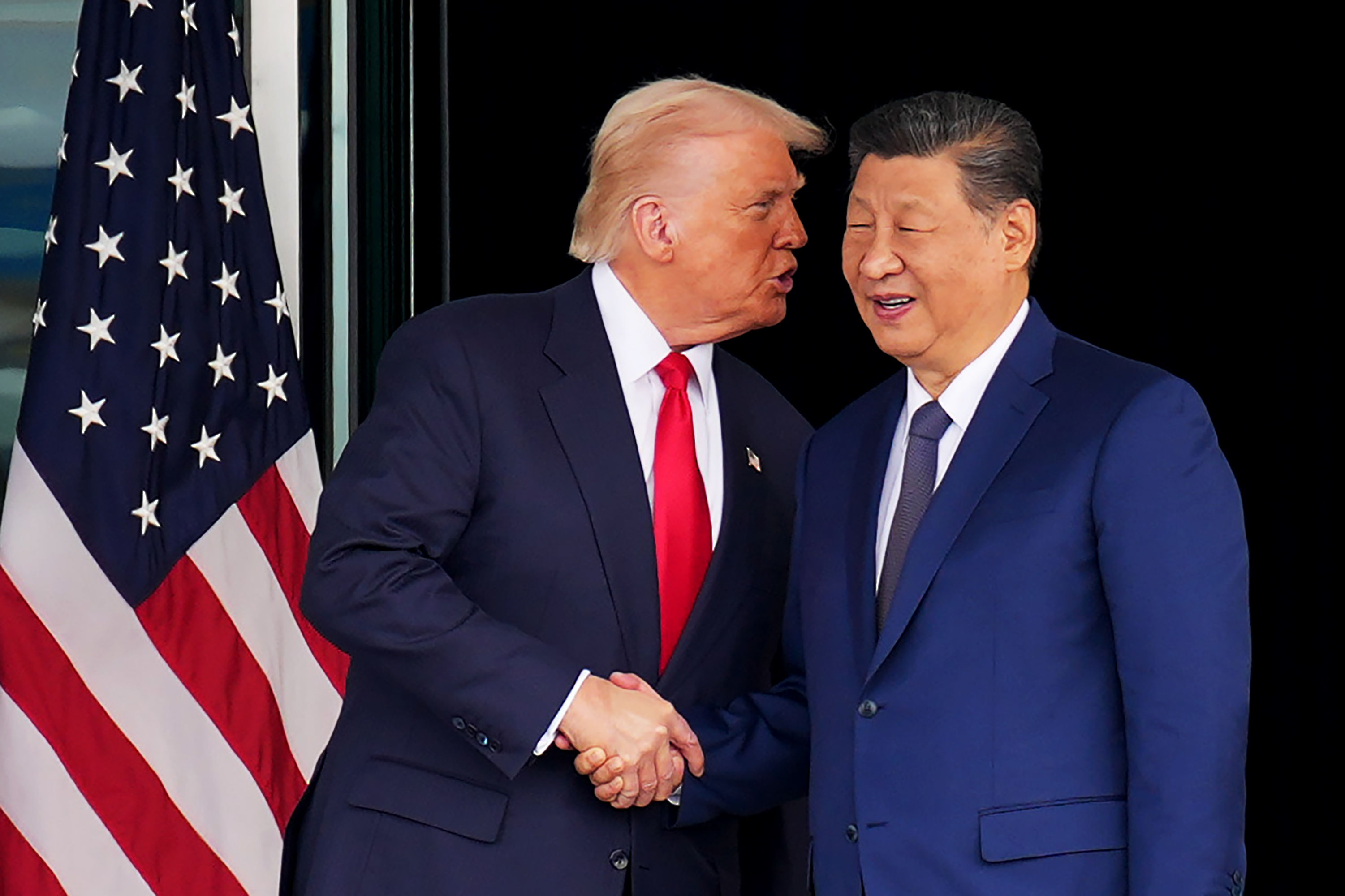
This is if everything goes as planned. Trump was originally due to travel to China in April, but deferred the trip by a month due to the conflict in the Middle East.
Although there’s no official itinerary from the White House, Trump is at least talking this trip up, suggesting there will be no cancellation this time.
“I look very much forward to spending time with President Xi in what will be, I am sure, a Monumental Event,” he stated on social media.
Claiming the Iran Conflict Over
I had made the case that Trump set himself a deadline to wrap up U.S. attacks on Iran by the time he meets with Xi. That in part explains Secretary of State Marco Rubio’s declaration last week that Operation Epic Fury is “concluded,” and the April 30 statement to congress that the operation has been “terminated.”
That came even though Trump himself has given conflicting statements, that the operation is at an end only if Iran “agrees to give what has been agreed to.” He has also threatened bombing at a “much higher level and intensity than it was before” if Iran does not agree a deal.
Still, we can expect Trump to make the case that the operation is over, and has been a great success ahead of his Beijing visit. He’ll want to say the situation is settled.
China has called for a ceasefire and the reopening of the Strait of Hormuz. It had been buying more than 80% of Iran’s oil, and wants those shipments to resume. China is in a unique position as an Iran ally that maintains solid diplomatic relations with Washington.
Seeking Favors From Beijing
Iran’s foreign minister visited Beijing last week. While Pakistan has been the site of peace talks, it’s only China that can compel any kind of action from Tehran. Trump is likely to thank Xi for China’s behind-the-scenes pressure to bring Iran to the negotiating table. Still, the U.S. president is in the unusual position of requiring a favor from Xi, who can bolster China’s international reputation as a steady global partner while also playing to a domestic audience that will see Trump and Xi treating each other as equals.
It’s interesting that China’s Ministry of Commerce at the start of May issued a blocking order instructing Chinese companies to ignore U.S. sanctions on Iran. The sanctions “shall not be recognized, enforced or complied with,” the order stated — a surprisingly frank instruction that Chinese banks, refiners, traders and the like should continue to deal with Iran, in fact making it illegal not to do so. In China, such policy changes are often issued without public comment, communicated to companies behind the scenes.
A Change in Stance on Taiwan?
China, naturally, will expect something in return for a commitment to help Trump with Iran. Will that be a statement on Taiwan? I certainly hope not, but can foresee Trump “clarifying” the U.S. stance.
The language now states that the United States “does not support” Taiwan independence, but Beijing may push for a change that Washington “opposes” independence. Xi will certainly want to shift the United States from its stance of “strategic ambiguity” and even the promise, made by former U.S. president Joe Biden, to come to Taiwan’s aid should China attack.
The United States does have a legal requirement, struck in 1979, to supply defensive arms to Taiwan. Congress in December approved an $11 billion arms deal with the self-governed island, although the state department has reportedly stalled any weapons supply ahead of this Trump-Xi summit.
Continued Truce on Tariffs
Surprisingly, tariffs are not the hot topic that they might have been. Trump’s strategy is in tatters due to U.S. court rulings that his tariffs are illegal. China’s extra trade duty rose, in theory, as high as 145% before a truce last October. Now, the U.S. Supreme Court has defined the initial tariffs as illegal extra taxes, and the federal Court of International Trade also states that a successor worldwide 10% duty is also illegal.
Still, China may look for a statement extending the trade truce on tariffs. Trump has little to lose in agreeing. China may also request that the United States drop its “Section 301” probe into trade with China. That was launched in March, and could result in separate import taxes.
Trump will almost certainly want to advance the “Phase One” trade deal agreed in January 2020. China, with Covid-19 already bubbling in the background, largely did not fulfill the terms of the bargain. At this stage, it is unlikely we will see any Phase Two agreement, but Trump will surely champion trade progress and a flurry of deals for the U.S. CEOs by his side.
Corporate Chiefs by Trump’s Side
The leaders of Apple (AAPL) , Exxon Mobil (XOM) , Boeing (BA) , Tesla (TSLA) , Micron Technology (MU) , Meta Platforms (META) and Qualcomm (QCOM) , businesses with significant China operations or sales, are among the executives scheduled to accompany Trump on this trip. There will also be a focus on finance with the leaders of BlackRock (BLK) , Citigroup (C) , Goldman Sachs (GS) and Visa (V) due to attend.
Besides deals involving those companies, the U.S. side may hope to strike a further commitment to continue to supply rare earths. These materials, key to powering most modern technology, are effectively China’s form of the Strait of Hormuz, a supply it can constrain if relations turn bad.
I would expect statements to examine the impact of artificial intelligence, and to cooperate on issues surrounding technology and intellectual property. Most of the language will be fluffy and set the stage for further talks. I don’t expect many formal announcements outside corporate deals.
Further Xi-Trump Meetings Likely This Year
This is Trump’s second state visit to China, his last coming in November 2017, after Xi visited Trump at his Mar-a-Lago resort that April. Trump left Beijing touting $250 billion in “business deals,” although some had been previously agreed.
Trump dubbed Xi “a very special man,” and played very nice with Xi back then, with official Chinese news service Xinhua stating that Trump agreed to adhere to a “one China” policy that rules out official recognition of Taiwan. By the time of that 2020 trade deal, Trump was saying that he and Xi “love each other.” Expect more flattery.
There will be at least two other opportunities for Xi and Trump to meet in person toward the end of this year.
China is hosting the APEC summit this year in Shenzhen from November 18 to 19, although it remains to be seen if Trump, who has a spotty attendance record at such events, makes the trip.
Then the United States hosts the G20 summit from December 14 to 15 in Doral, Florida, although it remains to be seen if Xi attends. China has so far rebuffed questions about whether Xi will make the Florida trip, even though Trump said on social media that he will host Xi and his wife in Washington later this year.
Related: AI Is Booming — But the Consumer Is Struggling
At the time of publication, McMillan was long AAPL.