U.S. Should Follow ECB Rate Decision After Growth Warning
Outdated models are underestimating growth, and strong growth will continue to push inflation higher.
You've reached your free article limit
You've read 0 of 1 free Pro articles.

Did the OECD just throw some cold water on this red hot market rally?
The Organisation for Economic Cooperation and Development warned on Wednesday that global economic growth is slowing. The Paris, France-based organization sees worldwide economic growth falling from 3.4% in 2025 to 2.8% in 2026.
My initial reaction to that news was a shrug. The OECD has never influenced my investment decisions in a material way. However, it seems the OECD’s projections had an effect on Wednesday’s market action.
Someone’s Paying Attention
When you take a closer look at Wednesday’s market action, some of the leading names were defensive stocks. These are the types of stocks you expect to outperform during a downturn, because certain products are in demand in any economic environment.
Walmart (WMT) shares jumped by over 3%. Target (TGT), Coca-Cola (KO), PepsiCo (PEP), Procter & Gamble (PG) and Altria Group (MO) all showed modest gains in a down market.
Leading the G7
While the OECD sees a 0.6% decline in global growth, it only projects a 0.1% drop in annual U.S. GDP growth, from 2.1% in 2025 to 2.0% in 2026.
That 2% annual growth projection is the strongest among the G7 nations. Canada comes in at a distant second with a 1.2% annual growth estimate. The rest of the OECD’s G7 projections are below 1%.
Inflation Still Isn’t Transitory
Unfortunately, U.S. CPI inflation is growing at a 3.8% annual rate, nearly double the OECD’s estimated growth rate.
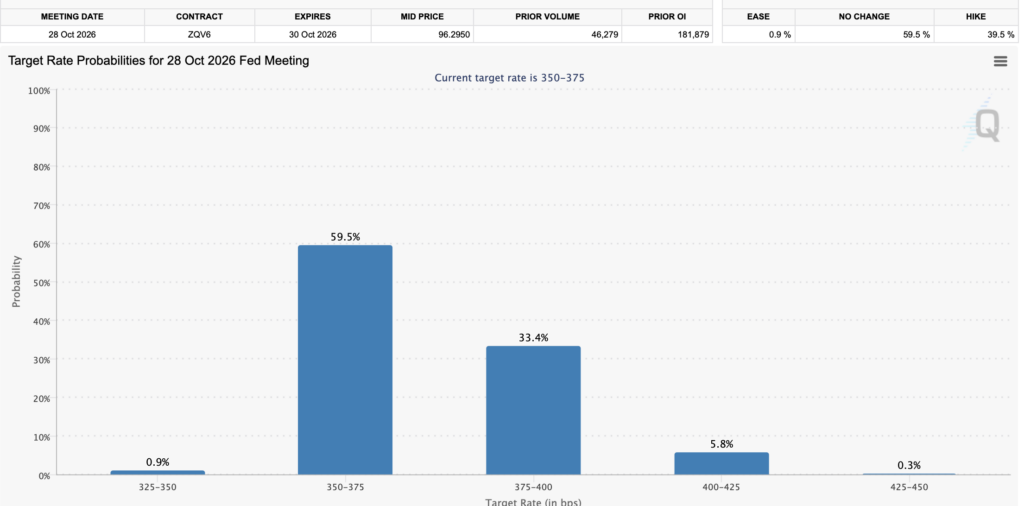
According to the CME’s FedWatch Tool, there is a 25% chance of a 25 basis-point increase in the Fed funds rate by September, and a 33% chance of a hike by October.
This puts the U.S. behind the curve when it comes to inflation.
Why is inflation so persistent? Because the U.S. economy is likely stronger than we believe.
Are Estimates Too Low?
What if the OECD growth estimate for the U.S. is too low? I believe that’s a strong possibility.
Traditional economic models could underestimate the fact that the link between job creation and economic growth has changed.
It’ll take time for economic models to adjust to this reality. Ultimately, job creation is less critical to economic growth than it was in the past. In the future, it should be even less important.
This is just one example of how economic models can become outdated. Change is accelerating, and economic models can easily fall behind.
Europe Trending Lower
Would you raise interest rates if your growth rate was slowing and expected to fall below 1%? Probably not, because slowing growth would help solve your inflation problem.
That’s exactly the situation the European Central Bank is in now, yet it’s expected to raise rates.
For Europe in 2026, the OECD has the following growth projections:
United Kingdom: 0.9%
Germany: 0.7%
France: 0.7%
Italy: 0.5%
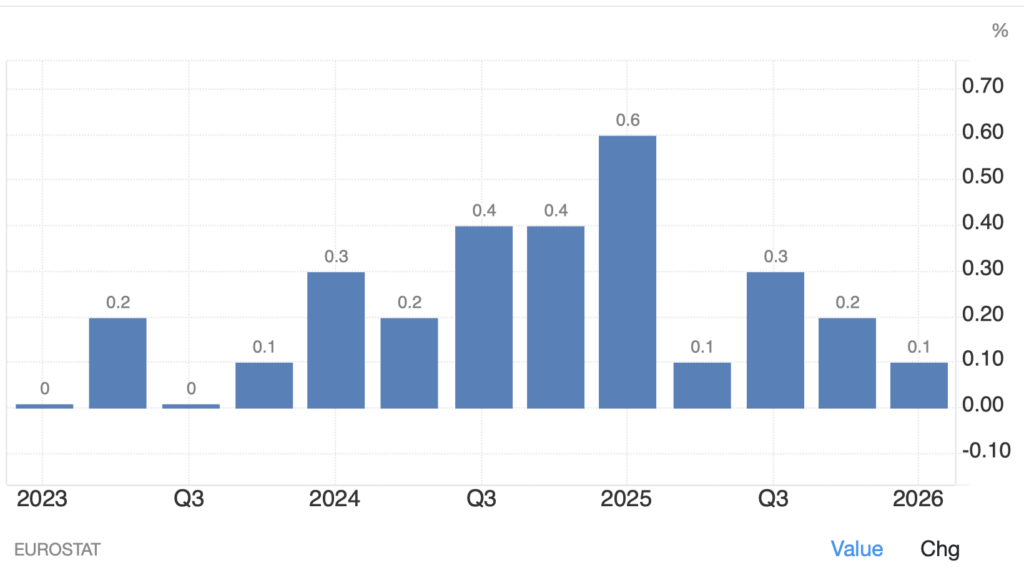
The OECD projections seem to confirm European growth trends. The Euro area GDP quarterly growth rate slowed to 0.1% during the first quarter of this year, while the OECD sees annual growth slowing to 0.8% for the full year.
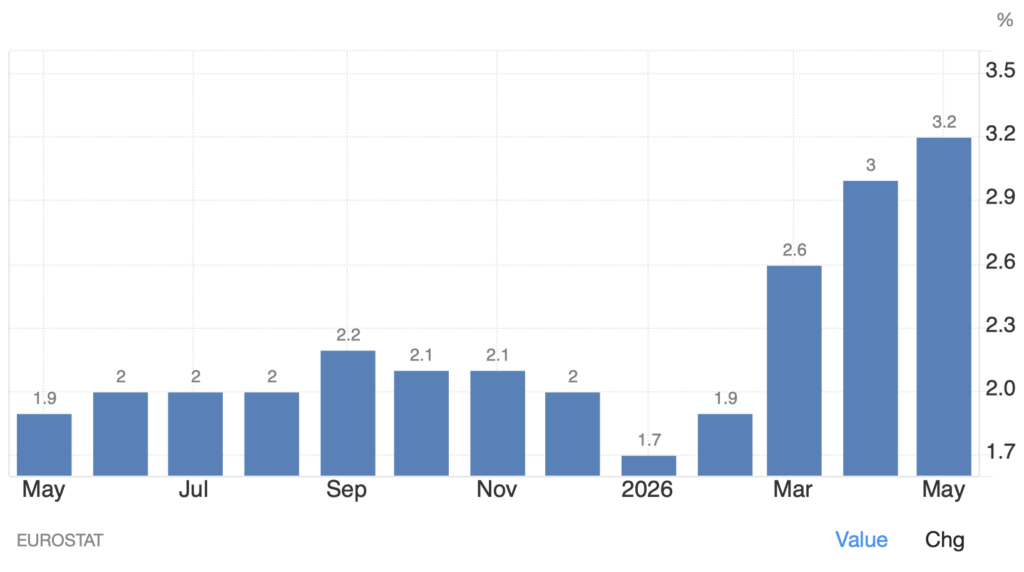
Despite weakness in economic growth, the European Central Bank is anticipated to raise its main interest rate next week. In the month of May, consumer prices jumped at a 3.2% annual rate, the fourth consecutive monthly increase.
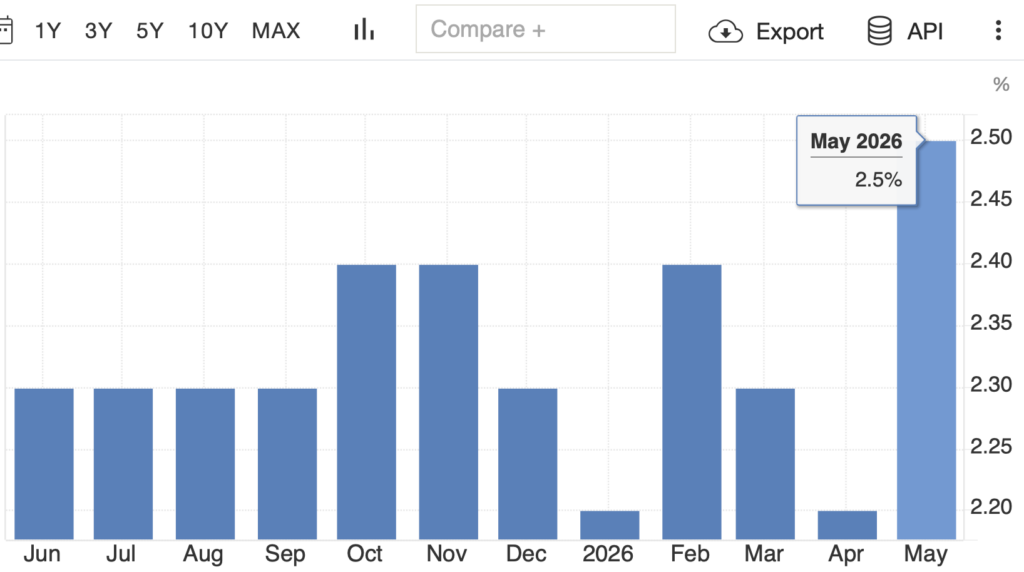
Core inflation also jumped, to 2.5%.
Why is inflation in Europe so strong, if economic growth is weak?
I think the ECB believes its economies are stronger than the OECD projections. By raising rates, the ECB is demonstrating it is more concerned about inflation than growth.
Eventually, the U.S. will come to the same conclusion.
Bottom Line
Both growth and inflation are likely stronger than we currently believe.
The U.S. economy is stronger than those of its G7 peers, and possibly stronger than projected, due to changing realities and lagging economic models.
It’s telling that despite relative weakness compared to the U.S., the European Central Bank is about to raise its key interest rate. I believe the U.S. should follow suit. Outdated models are underestimating growth, and strong growth will continue to push inflation higher.
At the time of publication, Ponsi had no positions in any securities mentioned.