TSMC Ties With Nvidia, Apple to Grow as U.S.-China Chip War Intensifies
Chinese tech stocks dipped after the latest U.S. curbs on high-end chips, a move that should guide the stance of the Trump administration.
You've reached your free article limit
You've read 0 of 1 free Pro articles.
The United States has launched a new salvo in the current presidential administration’s targeted attack aimed at curbing China’s access to high-end semiconductors.
The U.S. is adding 140 new companies to the “entity list” of sanctioned companies that are off-limits to U.S. businesses without a special exemption. There are also 14 modifications to companies that are already on the list.
The U.S. Commerce Department announcement also restricts trade in 24 types of chipmaking equipment and three software tools, as well as new “red-flag guidance” to help with compliance and avoid chips making their way into China via third parties.
Semiconductor production-equipment maker Naura Technology Group (SZ:002371), one of the companies added to that “entity list,” fell 3.9% in Shenzhen on Tuesday, as investors had their first opportunity to respond to the new restrictions.
Another chip-equipment maker, Piotech (SH:688072), fell 4.1% in Shanghai, as it and unlisted fellow chip-component supplier SiCarrier, full name Shenzhen Xinkailai Technology, were also added to the list.
Shares in China’s largest chipmaker, SMIC (HK:0981), dipped 1.5% in Hong Kong today, although the company was already on the entity list. Likewise, the second-largest chipmaker Hua Hong Semiconductor (HK:1347) fell a similar amount, ending the day down 1.2%, on a generally positive day’s trade in Asia.
The broader Hong Kong market moved higher, with the Hang Seng index up 1.0% on Tuesday. Mainland markets were more mixed, with the CSI 300 finishing up a slim 0.1%.
China’s Ministry of Commerce countered on Tuesday with a move to restrict “dual-use items” related to gallium, germanium, antimony and superhard materials. In principle, the export of such materials “is not to be permitted,” state-owned news service Xinhua reports, effective immediately.
China is responding in kind, using the same kind of language that the U.S. Commerce Department’s Bureau of Industry & Security deploys. Both sides say they aim to cut off “dual use” parts that could make their way into weapons of mass destruction, or threaten national security.
We've seen a hardening of stance on where these companies are listed, too. SMIC used to have a Wall Street ticker but delisted from the New York Stock Exchange voluntarily in 2019. Buffeted by geopolitical tensions, it's unlikely we'll see such companies listed on Wall Street again.
There’s been a lot of focus on the blanket tariffs that president elect Donald Trump plans to use. I noted in my last column that such tariffs would be inflationary, very hard to implement and ultimately paid by U.S. consumers. They’re highly disruptive, and a bad idea.
These targeted restrictions under the current administration have a purpose — restricting China’s access to high-end technology used for military purposes or to hamper human rights — and a narrow focus. They make better sense.
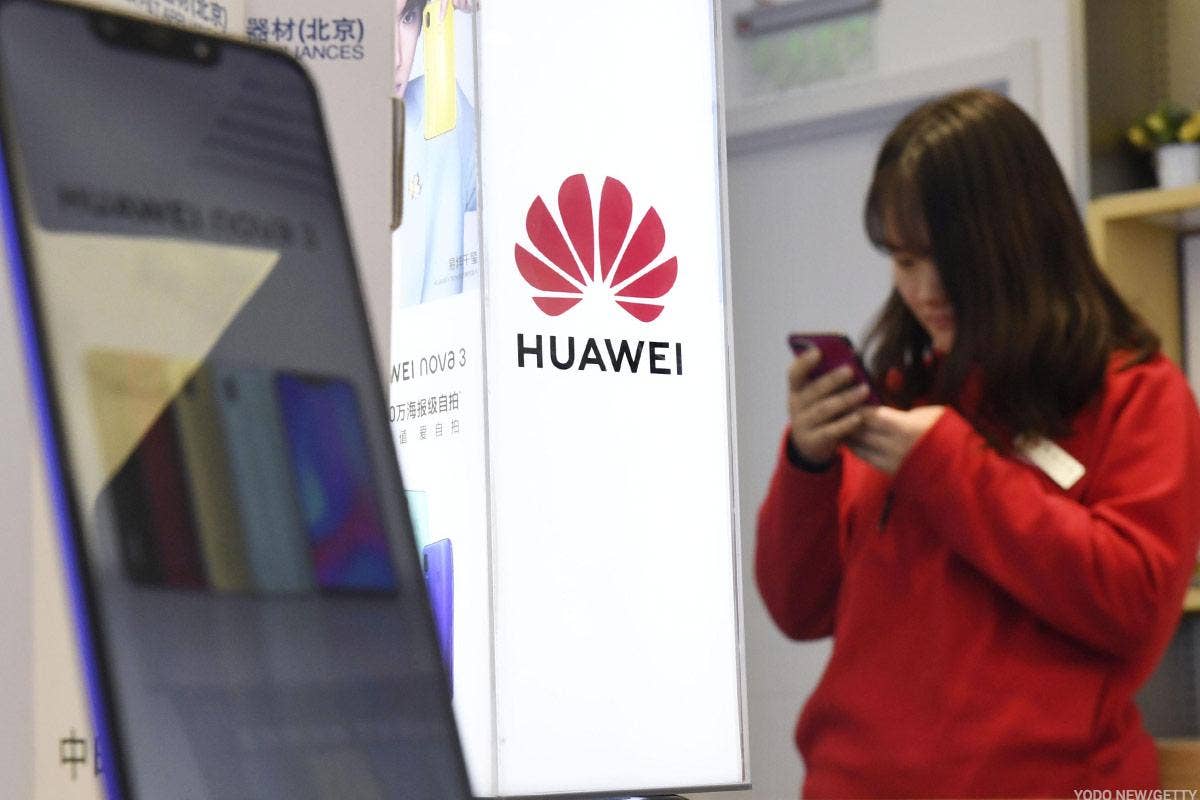
They are far from perfect. Taiwan Semiconductor Manufacturing Co. (TSMC) TSM (TW:2330) says it has found its high-end chips where they don’t belong — in products made by sanctioned Chinese mobile-phone maker Huawei, for instance.
It’s likely that the chips were routed to China via third parties. TSMC, the world’s largest chip foundry, suspended the supply of its artificial intelligence chips to all Chinese customers pending a review.
TSMC was my stock of the year for 2024. And what a stock it’s been. It’s up 77.9% to date this year in Taipei trade after today’s 1.9% move higher. Its China business has been lagging, with revenue last year falling to 12% of sales, down from 20% in 2019. But TSMC has been diversifying production away from its reliance on Taiwan and into Japan, Germany, and of course, the United States, with total investment of $65 billion announced to make three chip “fabs” in Phoenix.
This is “friendshoring” at its most-effective. It will also bring TSMC closer to key customers such as Nvidia NVDA and Apple AAPL, with the chip foundry able to produce chips as slim as 3 nanometers and ultimately 2 nm, production due to come online in 2028.
Dutch company ASML Holding ASML, which makes chipmaking equipment, says it is “assessing the potential implications of the new regulations.” But it says it isn’t adjusting its 2025 forecasts, with around 20% of net sales from China.
“Long-term, our scenarios for demand in the semiconductor industry are not expected to be impacted by the new regulations, as these scenarios are based on the global demand for wafers rather than on any specific geographic split,” the company stated.
It seems the market agrees, with ASML shares moving 1.6% higher today. The Dutch company has had a far bumpier year than TSMC, though, leaving it barely changed, up 1.4% year to date, having come off its July highs by one-third. Weak orders caused the pullback as foundry and memory customers tempered their most-exuberant expectations over artificial intelligence.
It’s highly likely that Trump’s bluster over tariffs is merely his opening stance in a negotiation over trade. Last time he was in office, he pushed for a trade deal with China that essentially requires closer ties between the U.S. and China economies, not greater distance.
We’ll see where he heads once in office this time. The timbre has changed in Washington, where there’s greater bipartisan agreement to “get tough on China.” I’m not so sure we’ll see any phase two of the phase one trade deal with China agreed during the last Trump presidency.
It is likely that the next administration will keep these new restrictions in place. Let’s hope any future trade curbs and tariffs on Chinese goods are equally targeted, in a way that advances U.S. interests but doesn’t unnecessarily punish U.S. importers or consumers.
At the time of publication, McMillan had no positions in any securities mentioned.