Recapping and Replaying TheStreet Pro's Live Quarterly Meeting
Notes and a video recording from TheStreet Pro's Live Quarterly Meeting: Finding the Post Election Winners and Losers.
You've reached your free article limit
You've read 0 of 1 free Pro articles.
On October 30, we held our second Live Quarterly Meeting. With the election next week, investors are on the edge of their seats, and our theme was finding the post-election winners and losers.
The transcript will be ready in the coming days, but I wanted to share my notes and summary of the call while they’re still fresh.
Please comment below and let me know if you have additional questions. I’m happy to share them with our panelists and get answers for you.
Panelists
Doug Kass is a world-renowned hedge fund manager and President of Seabreeze Partners Management Inc. Doug has been with TheStreet for 28 years, during which time he’s written around 120 million words! I don’t doubt this because he writes over 20 pieces each day on Doug’s Daily Diary. He is known for his time-tested analytical skills and ability to look past the current noise and herd mentality.
Carley Garner is a futures and options broker with DeCarley Trading who writes about futures markets for TheStreet Pro. She’s not afraid to be a contrarian, as you’ll see below and her writing on TheStreet Pro focuses on her most high-conviction ideas. She’s authored several books, including “Trading Commodity Options with Creativity."
Stephen “Sarge” Guilfoyle traded on the NYSE floor for over 30 years and has also served as a Chief Market Economist. He believes in removing emotion from the decision-making process and puts his trust in data. Sarge’s daily Market Recon column is a must-read, as are his excellent stock picks that include big winners like Palantir and Rocket Lab.
Watch a Replay of the Quarterly Meeting Right Here
Notes From Our Discussion:
With Halloween just a day away, we started off with a seasonal question:
Trick-or-treaters will be visiting your house dressed as either a scary or hopeful market indicator. What indicators are they dressed up as?
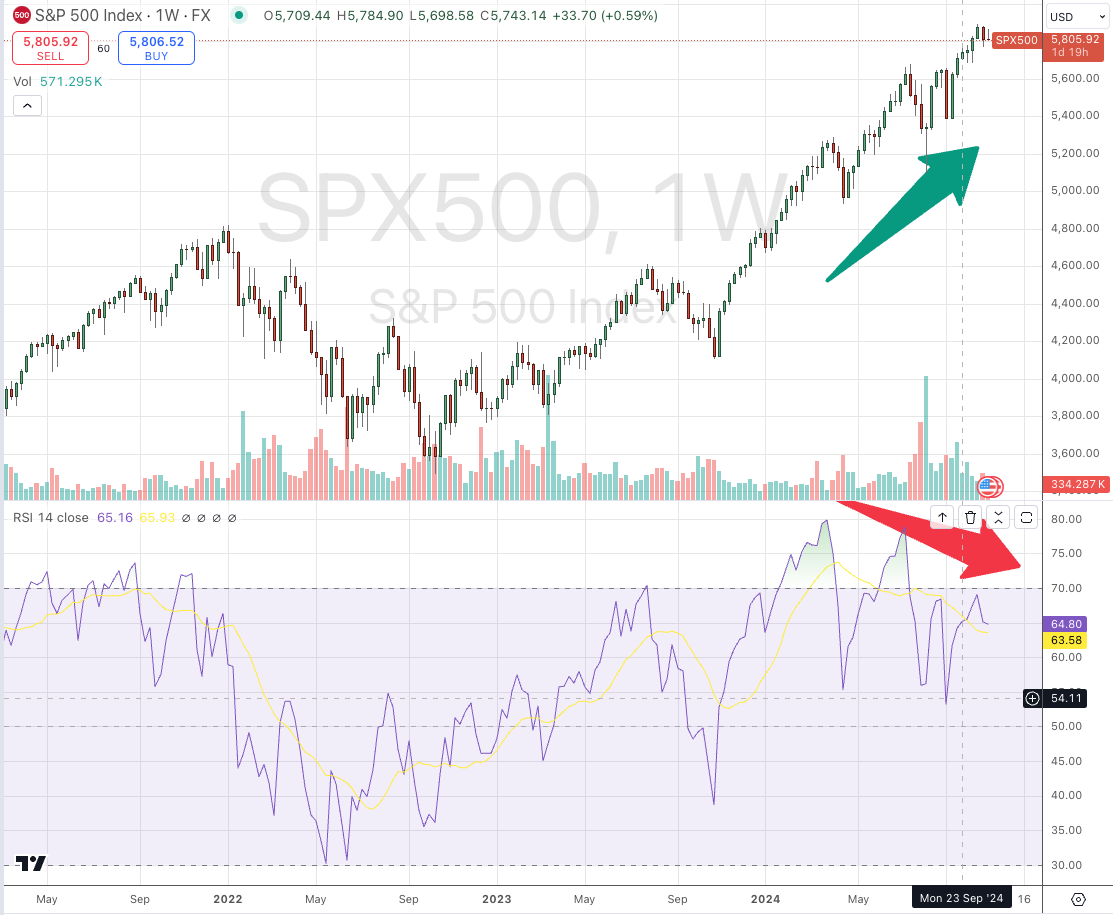
Carley's trick-or-treater would be dressed as the RSI, or Relative Strength Index, tuned to show a longer-term view, weekly or monthly, of the S&P’s momentum. Right now, the RSI would be scary. She’s seeing bearish divergences as momentum slows while the market continues to make new highs. It’s not a sell signal, but something to watch.
Doug’s scary creature and happy creature are also the same! This person is a plunger! Put another way, the plunger represents the market’s plumbing or structure. So, what’s keeping Doug up at night? It’s those passive strategies that result in high momentum strategies working so well. And why is this creature happy, too? Simply because the “plunger” hasn’t yet been needed to get us out of a jam. The market has continued to hum along.
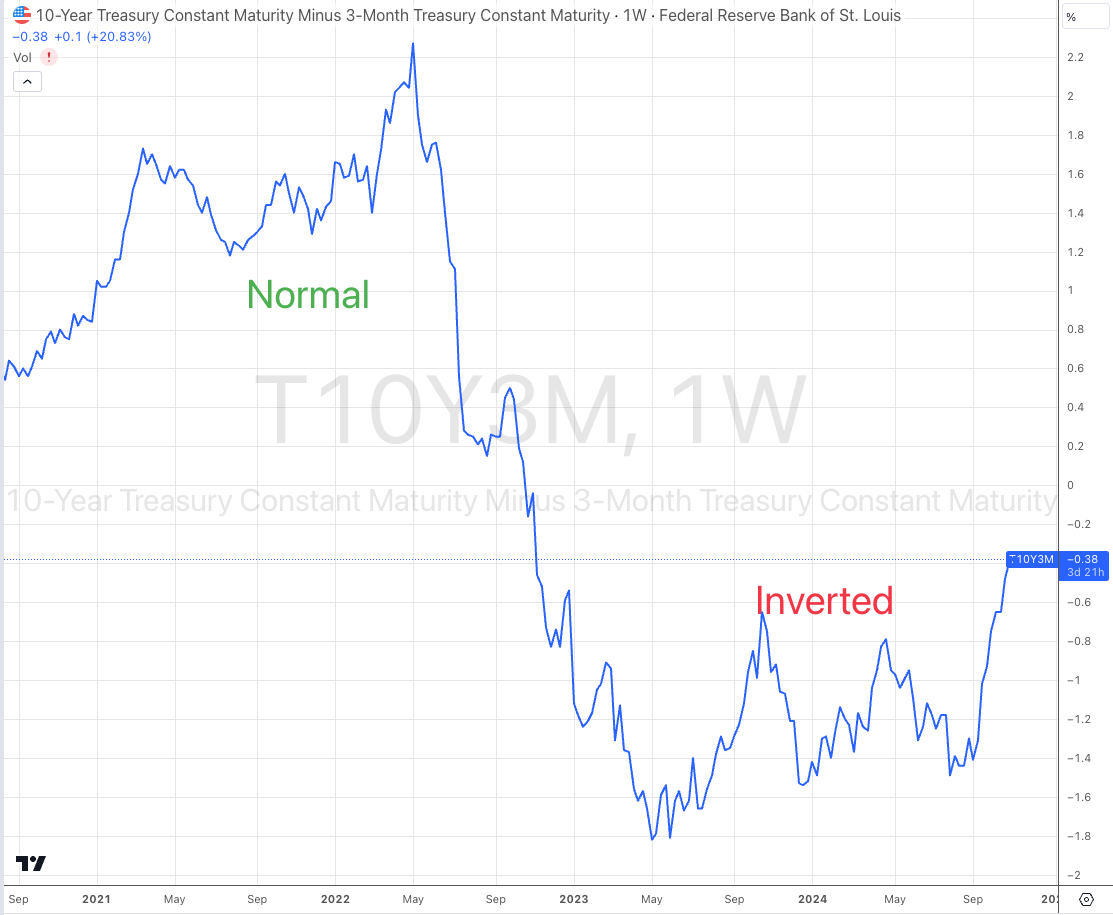
For Sarge, it’s the U.S. Treasury Yield Curve that has him shivering behind his bowl of candy. He worries that high yields could upend stocks by drawing investors out of stocks and into bonds. Plus, it’s a simple indicator that shows how the rest of the world feels about the US economy.
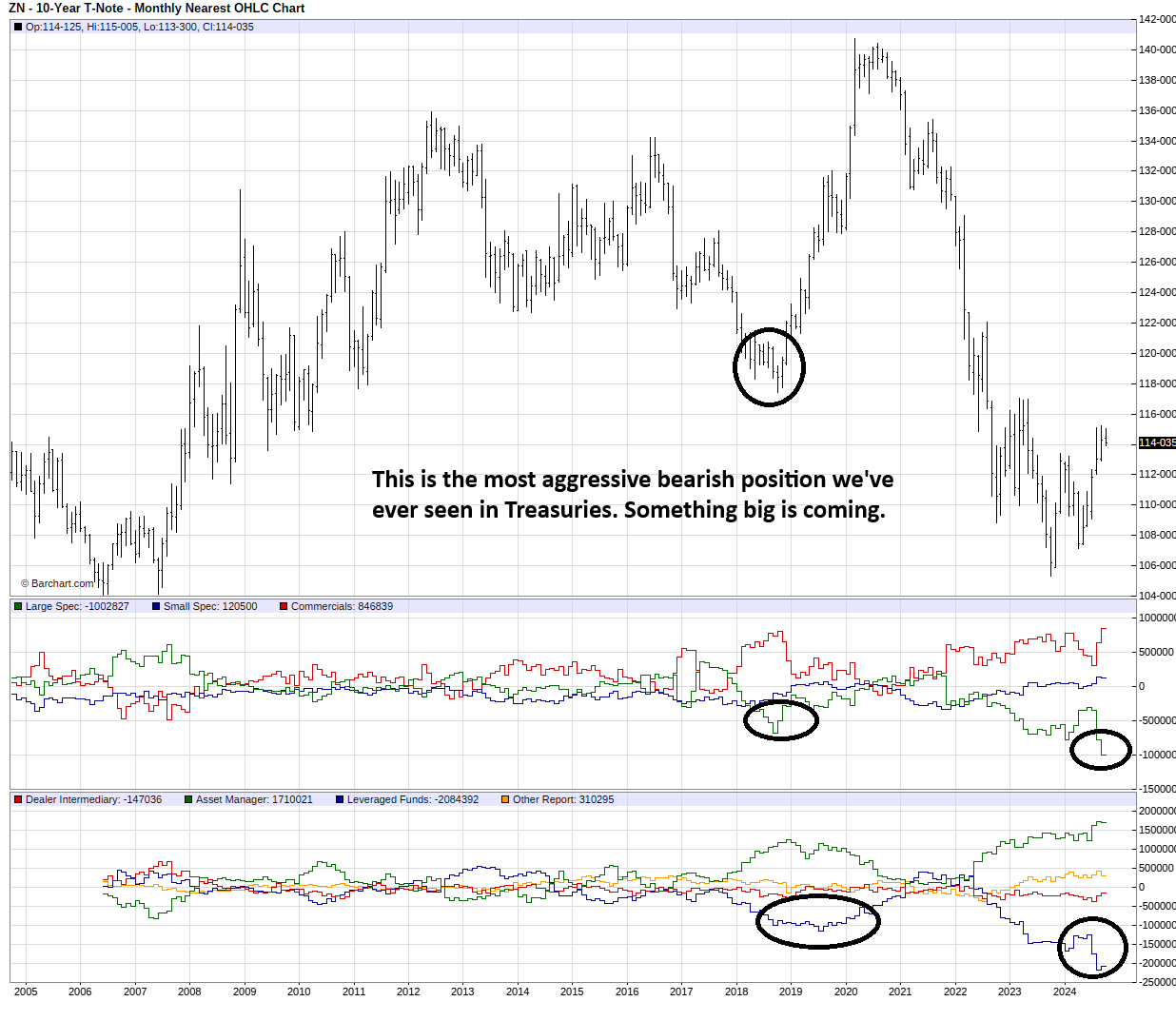
Carley is massively overweight Treasuries due mainly to her analysis of COT data, which shows the largest net shorts by traders on the 10y. A short squeeze would see treasury prices skyrocket. Similarly, S&P futures show the largest net long position.
She calls U.S. Treasuries the nicest fixer-upper on an awful block and says that there's no alternative to Treasuries from a risk:reward perspective.
Sarge suggest the iShares 7-10 Year ETF IEF as a way to play bonds, in case what Carley is suggesting comes to fruition.
Doug mentioned that Stanley Druckenmiller and Lee Cooperman are both massively short Treasuries.
Thoughts on the Election
And then, we got to the Election. Based on Carley’s article about the Trump Trade being a crowded trade.
So, what’ll happen after the election?
Carley says that the long stocks, short bonds is the crowded trade. But this time, if Trump wins, it won’t be the type of surprise we saw in 2016. More of a buy the rumor, sell the fact, and this trade will unwind.
Doug looks at investing and the election as a complicated thing. It depends on Congress, too.
Sarge suggested that if Harris wins, the assumption is that taxes will rise and it will increase the profit taking and tax-loss harvesting season into the new year. But if Trump wins, it may be harder to sustain the level of foreign participation in our bond market.
And, since we were discussing the economy and the election, we tackled the question, does the president matter (purely from an economic standpoint)?
Carley says that in normal times, the president doesn’t really matter (again, purely speaking economically). The market usually does what it will do and generally rallies after the election. But this time is different! One outcome is largely priced in. Everybody’s on one side of the boat, and regardless of who steps into office, the risk/reward is in favor of this being a high-risk time.
Doug’s base case is a Harris win and a divided Congress, which will have low impact on the economy. Same with a Trump win and a divided Congress. It’s really the S&P’s EPS that we will have to watch, because the two candidates have diametrically opposed plans.
Sarge sees a Harris win (with a Democrat sweep) offering a higher chance for reckless spending. That might help the economy but would come with higher inflation. A Trump win could actually come with fiscal responsibility, but the potential for a slower economy.
The Economy and Slugflation
What is Slugflation and are we experiencing it?
This is one of Doug’s favorite terms and he defines it as sluggish economic growth combined with prickly inflation for three to five years. And this is at the core of Doug’s investment thesis because it’ll impact corporate earnings.
Sarge pointed out that this is happening right now; S&P earnings growth has been declining this year from earlier expectations.
Carley suggests looking at the commodities markets, like copper, as a view into the future. Copper is declining, indicating declining growth.
The U.S. Dollar and its place as the world's reserve currency
Next, we discussed the dollar.
Carley feels that the Dollar index (DXY) can continue to rally, all the way to 1.07 from its current level of 1.04. And a higher dollar is often bad for stocks. Plus, the dollar hasn’t really recovered from Covid. There’s a ton of stimulus still sloshing around.
Sarge feels that the USD remains the world’s reserve currency until someone like the BRICs creates a currency backed by something like gold. Crypto could work if it had something backing it.
While we're talking USD, it would be a shame not to mention the yellow metal
Carley has been bearish on gold, so we revisited the trade she mentioned in this article.
Her feeling is that gold often tops out around this time of year. She wouldn’t be a buyer here, with the long side being crowded and overbought, with bearish seasonality and overdone sentiment. Gold corrections can be nasty and long.
And yes, we even talked stocks
Everyone knows that the market is overvalued. But we decided to discuss the Equity Risk Premium and what is says about forward returns. Doug wrote in great detail about this here.
According to Doug, the core of the market is interest rates and earnings and the equity risk premium is the combination of those two factors. Right now, the ERP is telling us that forward returns are substandard, even close to 0. But this isn’t a timing tool.
And this quote from Dougie is a gem: "Investment malpractice is not assessing reward versus risk."
People talk about money on the sidelines being a possible tailwind for stocks.
Dougie and Sarge disagree. They say that money on the sidelines is BS. What matters is cash relative to amount of money in stocks and right now, it's not that high.
The questions isn’t how much cash is on the sidelines, the question should be, how much impact will the enormous buybacks have on the market in the next 5 years? Per Dougie, only $50B has been committed to equity funds in the last 5 years, whereas $4.5T corporate buybacks over last five years.
As the meeting wound down, we decided that it was time to talk about the Fed.
Sarge believes that the Fed was too aggressive in lowering 50bps.
Doug, on the other hand believes that the Fed is "a feckless, fatuous bunch of turds" whose policy has been wrongfooted in both directions.
So, where’s the bull? Where should you put your money for the next three to six months?
Carley wants to avoid crowded trades. She says that you should be where nobody else wants to be. In other words, Treasuries and commodities like grains.
Dougie says that in a momentum based market like this, stick with the momentum. In other words, Mag 7, like Alphabet GOOGL, Amazon AMZN, Apple AAPL, Meta META, Microsoft MSFT, Nvidia NVDA, and Tesla TSLA. But manage risk.
Sarge is building a portfolio for his kids and grandkids. It includes, Palantir PLTR, SOFI Technologies SOFI, and Rocket Lab RKLB. Plus defense companies, AI and cybersecurity.
A huge thank you to our members.
We hope you enjoyed this discussion as much as we did. Please leave your comments below and let us know what you think and whether you have additional questions for our panelists.