Japan Set for Expensive Battle to Defend Yen
Officials won’t confirm the market talk, but it’s extremely likely the Japanese government intervened to push the yen back below ¥160 to the U.S. dollar.
You've reached your free article limit
You've read 0 of 1 free Pro articles.
The Japanese yen is the top focus in Asia, after it briefly touched ¥160 to the U.S. dollar this week, a level not seen since April 1990, only to rapidly strengthen.
Did the Japanese authorities intervene to prop up what has been the world’s worst-performing major currency to date this year? It certainly looks like it. For maximum impact, they made their move when Japanese markets were closed for a holiday. That fits the pattern.
The yen has lost 11.2% year-to-date, the worst showing among Group of 10 nation currencies. As recently as January 2021, it was near ¥100, at ¥102 and change, a shocking 55.2% decline since then.
The prompt for this week’s move was the decision by the central Bank of Japan to leave interest rates alone at its policy meeting last Friday, sustaining short-term rates that are just above 0.0%. That then caused the yen to bump up to ¥160.17 in Asian trade on Monday.
Then over the next few hours, it suddenly strengthened, gaining 3.6% in a spurt to leave it as low as ¥154.40 vs the dollar, a similar level where it stood before the BOJ’s decision. Traders say that they believe the Japanese government intervened.
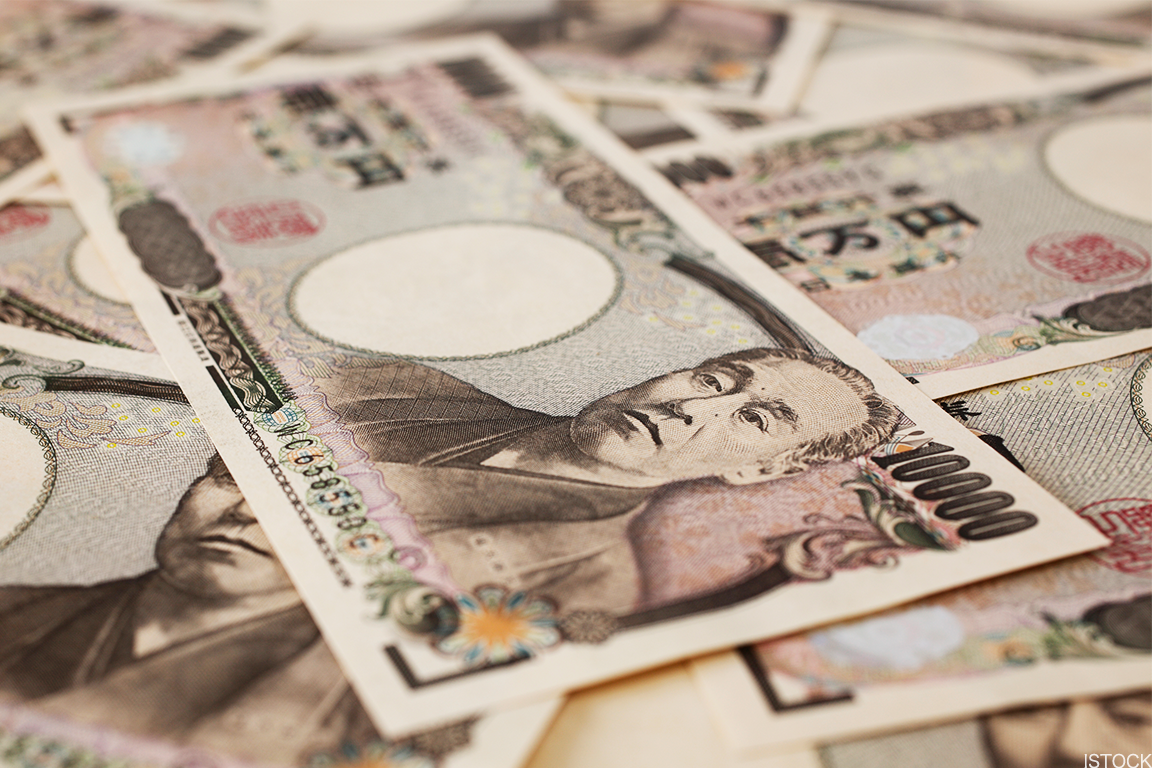
On Tuesday, the currency has stabilized and is trading in a tight range, splitting the difference, at ¥156.87 at the time of writing.
Yen traders have been jumpy because Japanese authorities have been attempting to verbally guide the market, without success. Each barrier from ¥140 to ¥150 and now ¥155 to ¥160 has passed, appearing to be a line in the sand, only to be washed away.
Officially, Japan’s finance ministry is not confirming that it stepped in. Masato Kanda, dubbed the country’s top “currency diplomat” as Japan’s vice minister of finance for international affairs, says only that officials are willing to work around the clock to deal with foreign-exchange matters. The Japanese Ministry of Finance is in charge of FX policy.
“We are ready 24 hours so whether it’s London, New York or Wellington, it doesn’t make a difference,” he told reporters. He declined to say whether the finance ministry had intervened. But to pick a moment where markets were in a lull is par for the course for the finance ministry, which often chooses to step in at moments when traders may be caught off guard. A lunch break, or a holiday, for instance.
Trading in Asia was lighter than normal on Monday because financial markets were closed in Japan for the Showa Day holiday, in honor of the late emperor Hirohito’s birthday. Friday is also a holiday in Japan, Constitution Day. So some folks take the whole week off.
Elsewhere in Asia, most markets will be shuttered on Wednesday for Labour Day – although not in Japan. No rest for weary currency traders!
Defending a currency is an expensive, losing battle. You are literally “fighting the Fed.” The biggest issue is that the U.S. dollar is incredibly strong against virtually all currencies globally, and the timing and scope of any interest-rate cuts that might weaken the greenback keep being pushed back.
That leaves a major differential between U.S. monetary policy and the incredibly low interest rates at work in Japan. Japan has finally exited an era of deflation but wants to see inflation of around 2% set in, for good. It is in a polar opposite position to the U.S. Federal Reserve, which is still fretting that inflation is too high, down from a recent high of 9.1% in June 2022, granted, but having risen to 3.5% for March. That leaves it above long-term averages, and the Fed’s 2% target rate.
It has created a compelling carry trade for global institutions. They can borrow in low-cost yen and invest the proceeds in higher-yielding currencies like the U.S. dollar. That exacerbates the gap between the two currencies.
Besides trader gossip, The Wall Street Journal also reported that Japan intervened. The finance ministry will eventually publish the results of its operations at the end of next month. Meanwhile, the accountants will get out their forensics tools to scour the Bank of Japan’s forecast tonight for its current-account balance as of May 1. If that shows a sizable drop compared with estimates, it would indicate the Japanese government bought the yen.
Kanda says current currency moves are “speculative, rapid and abnormal,” and can’t be ignored. He added that moves by speculators would affect the day-to-day lives of ordinary citizens.
“Higher prices of import goods are said to be affecting the most-vulnerable people, and could be a drag on Japan’s momentum to raise actual wages,” Kanda said, according to Reuters. “The government would need to respond to such moves.”
While the Japanese central bank and government would like to see prices increase and inflation attain that 2% level, they have said such moves should only happen if they are accompanied by wage gains and increases in real take-home pay.
The Bank of Japan did in March end its period of negative interest rates, as I explained at the time, with its first rate hike since 2007. But its move to inch into positive territory disappointed traders, who hoped there would be further rate increases, so the very slightly higher short-term rate of 0.0% to 0.1% only led to renewed yen selling.
Unless Japanese rates rise and U.S. rates fall, the Japanese government can only step in to shock markets from a one-direction trade. They can impact the scope and size of moves but not the direction.
“The BOJ’s monetary-policy divergence with the U.S. is weakening the yen remarkably,” Krishna Bhimavarapu, the Asia Pacific economist at State Street Global Advisors says. “Still, most of the weakness is perhaps due to paring back rate-cut expectations in the U.S., which makes the Fed’s meeting this week crucial for the yen.”
The U.S. Fed is unlikely to give Tokyo much joy at its meeting Tuesday and Wednesday. State Street expects Japan to slowly raise rates, to 0.75% by 2025. Meantime, we can expect increased noise from Japanese officials, and quiet moves to put money where their mouth is, to defend the ¥160 mark. We appear to have reached the limits of their patience.