Is It the Best or Worst of Times for Chinese Stocks?
Mainland markets have seen their heaviest selling since early 2020, just after their biggest bull run since 2008. Where do they head now?
You've reached your free article limit
You've read 0 of 1 free Pro articles.
It’s a relatively quiet day for Chinese markets, with just the 1.1% move higher for the CSI 300 index Thursday. But that’s after the Shanghai and Shenzhen markets suffered their worst selling in over four years on Wednesday.
The CSI 300, which tracks the 300-largest companies in Shanghai and Shenzhen, closed Wednesday on a 7.1% plunge, its worst showing since February 2020, when markets were correcting from the initial optimism that Covid-19 was under control.
What is going on? Just last week, I was writing about their best day since Lehman Brothers days, since September 2008. That’s after they leapt 8.5% at the start of last week, panic buying ahead of the “golden week” holiday.
Mainland investors only returned to their screens on Tuesday, with mainland markets shuttered for the week from China’s National Day on October 1.
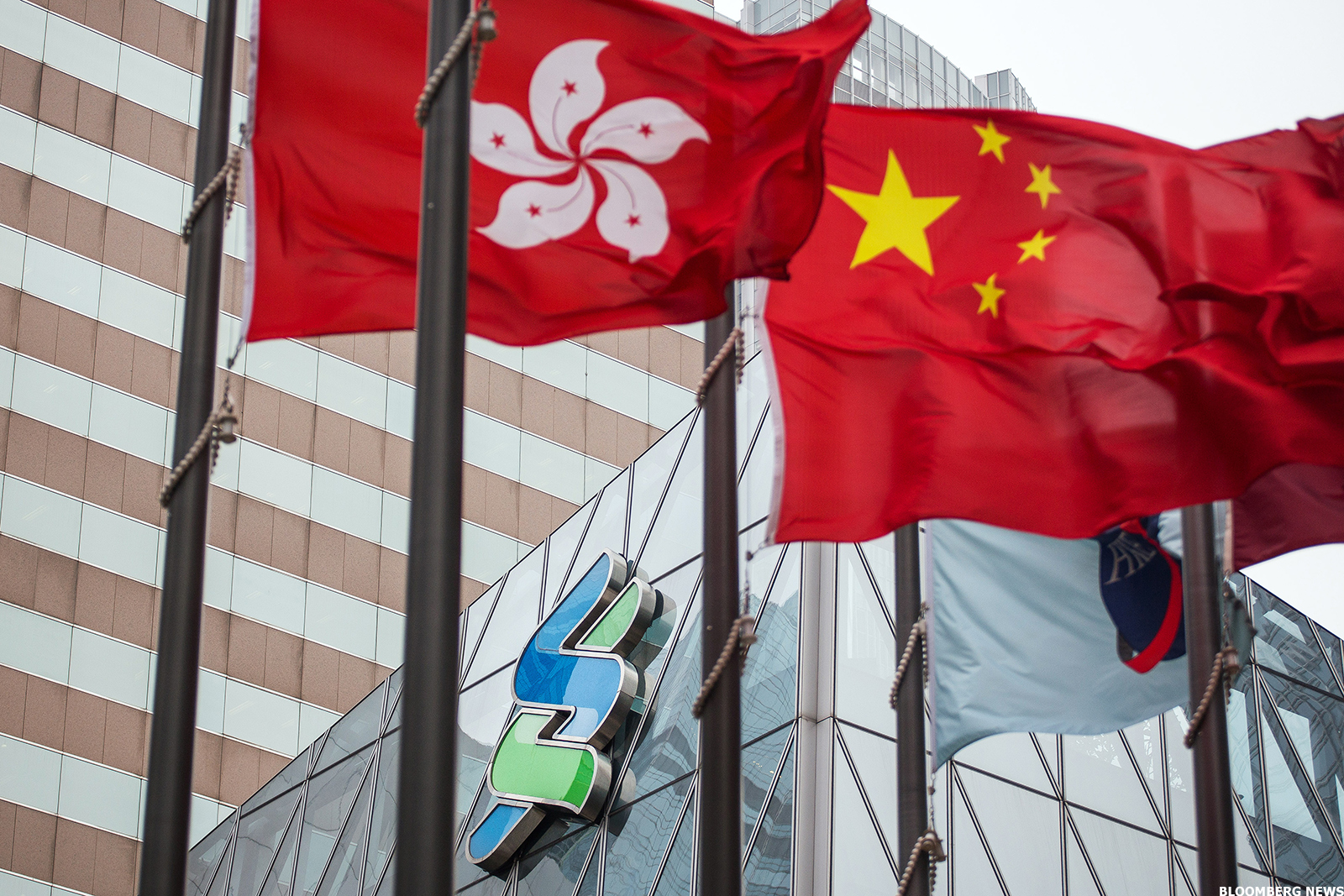
The movements of mainland Chinese markets ram home just how volatile they can be, trading on sentiment and and momentum. Good luck looking to fundamentals to get a sense of where they might head.
Chinese stocks are not beyond running up by 60% or more in a single year. They’ve done it before. But we’ve been getting ahead of ourselves expecting that to happen now.
Unfortunately, it is official pronouncements, or the lack of them, that make or break a day. And the Chinese Communist Party has both raised and dashed the hopes of Chinese investors, hence the massive moves up and down.
All is far from lost. Since the stimulus talk started on September 24, the CSI 300 is up by 24.4%. Those are gains that would leave you very happy indeed — were it not for the fact that Chinese markets have frequently been the world’s worst performers for the last 3-½ years.
I advised caution when Beijing fired the first shot in this war to boost the economy. Its initial efforts were not the “big bazooka” and involved a scattergun approach, cutting bank reserve requirements, easing mortgage rates, reducing the downpayments on homes.
The changes amounted to tinkering with the rules. The Beijing authorities frequently make the mistake, understandable in their command economy, that simply changing the rules will somehow create growth and stir the world’s second-largest economy from its slumber. But change the rules all you want, you’re still playing the same game.
A day later, it seemed we would get real stimulus, as I explained in a follow-up column. A meeting of China’s cabinet pledged fiscal expenditures, an opening up of the state coffers, and sufficient spending to restore consumer and business confidence, and achieve the relatively modest target of growth of “around 5.0%” for this year. It appeared to indicate a sense of urgency.
And since then? Nothing. No details on what this spending will entail. No actual spending. Just more sweet talk and blandishments that the central government will do what it takes.
Investors are losing faith, again, that they can, or will. The cabinet’s information office has now set us a new deadline, stating that Chinese Finance Minister Lan Fo’an will give a briefing at 10 a.m. Beijing time on Saturday to actually introduce measures to strengthen fiscal policy and shore up growth.
Will he? We will have to wait and see. Until this coming weekend, I’d be hesitant to take strong positions either way.
The central People’s Bank of China did on Thursday announce that it will set up a swap facility worth C¥500 billion (US$71 billion) for the “healthy and stable development of the capital market.”
Brokerages, mutual funds and insurance companies will be able to use their assets as collateral to buy government bonds and central-bank bills. That’s designed to enhance liquidity, with the central bank able to expand its scope if need be.
This is more monetary-policy tinkering, though. We need the bazooka to be taken out of the armory.
Morgan Stanley MS and HSBC Holdings HSBC have both said they anticipate fiscal spending of C¥2 trillion in stimulus. Citigroup C has pegged the expected amount at C¥3 trillion.
Until we get those specifics, Chinese stocks will continue to lose their way.
The Hong Kong market, which is closed Friday for the Chung Yeung Festival holiday, enjoyed a better day on Thursday than their mainland counterparts. The Hang Seng advanced 3.8% for the day but will only now be back in action on Monday, after the finance minister’s briefing.
Larger Chinese consumer plays tended to fare well. Brewery China Resources Beer CRHKY (HK:0291) is the consummate China spending stock, and added 10.4% Thursday. But like sentiment, it is yo-yo’ing, and is little changed from the start of this month.
Carmaker Geely Auto GELYY (HK:0175), up 9.3%, and online travel site Trip.com TCOM (HK:9961), up 8.5%, also advanced Thursday but are similarly bouncing around to leave them little changed in October.
It is much easier and safer to play Chinese markets either in Hong Kong or via the Wall Street listings of Chinese companies. Mainland investors have few investment options, and with the property market moribund, are desperate to see a run in Shanghai and Shenzhen.
But the action of the last 10 days demonstrates the fragility of their faith in the momentum. We will see this weekend, it appears, if they will buy once again back into the prospect that Chinese stocks are, really and truly, on their way back.