Is This Beijing's Big 'Stimulus' Bazooka?
Hong Kong and Chinese stocks, the world’s worst performers last year, desperately need help. Is it at hand?
You've reached your free article limit
You've read 0 of 1 free Pro articles.
Is this, finally, the big Beijing bazooka?
Chinese shares are roaring ahead today after the Beijing authorities introduced a string of stimulus measures. It’s the latest in a long line of steps that tweaked around the edges of policy without really doing anything to stop the onward descent of the property market. The real-estate tailspin has taken consumer and business confidence with it, as low as you can go.
The market reaction today suggests that “This time it’s different.” Is it?
Chinese stocks have been a serial disappointment for 3-½ years, with both the walled-off mainland exchanges and the easier-to-access Hong Kong market caught in a downward spiral since the start of 2021. They were the world’s worst performers in 2023, with the Hang Seng down 13.8% and the CSI 300 off 11.1%, even as the MSCI World added 24.4%.
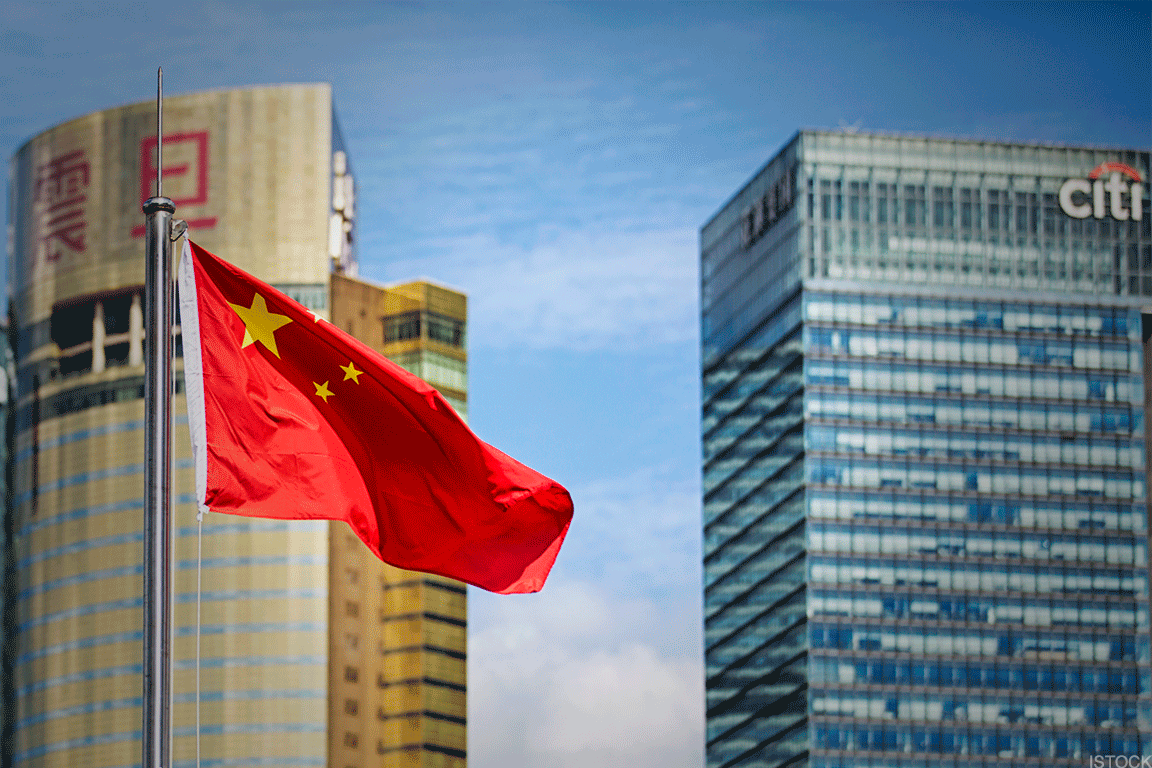
Today, Hong Kong’s benchmark Hang Seng Index rallied 4.1%, while the mainland’s CSI 300 index of the largest listings in Shanghai and Shenzhen added 4.3%. That’s the strongest showing for Hong Kong stocks in 18 months.
I highlighted Hong Kong stocks as the major beneficiary in Asia of the U.S. interest-rate cut last week. That’s because Hong Kong “imports” U.S. rates because the Hong Kong dollar has a firm peg to its U.S. counterpart. The Hang Seng is up 7.6% since the U.S. Federal Reserve decision, and should gradually move higher.
The Hang Seng Tech Index posted even stronger gains today, up 5.9%. Plays on the mainland economy were particularly strong, with e-commerce site JD.com JD (HK:9618) up 10.2% and rival Alibaba Group Holding BABA (HK:9988) up 6.1%.
Chinese electric-vehicle makers also roared ahead, despite word that the Biden administration plans to ban Chinese and Russian software from piloting vehicles in the United States. They’ll be looking for stronger sales in their home markets, driving gains in Nio NIO (HK:9866), which led the tech index with an 11.1% gain, and Li Auto LI (HK:2015), up 10.1%.
I should note I hold small positions in Li Auto, rival Xpeng XPEV (HK:9868) and Warren Buffett-backed BYD BYDDY (HK:1211). I’ve sold out of Nio, which appears to be losing ground to its peers.
It’s been frustrating, sitting here in Hong Kong, to see a series of false dawns for Chinese stocks. Every policy tweak was met with a small rally, then stocks headed south once more since the measures didn’t go far enough.
Chinese President Xi Jinping has been encouraging the Chinese Communist Party (CCP) to ensure that the country hits its growth target of “around 5%” for this year. But Xi has trivialized the private sector and augmented the powers of the central government while missing the main point: private companies employ the vast majority of Chinese people, and account for most of its economic output.
State-owned enterprises muddy the waters a little, many of them listed on the stock exchange but under government control. But the CCP itself doesn’t generate the output that has built China into the world’s second-largest economy. It takes economic “rent” in the form of permits and fees, but is the director of the economic train, not the train itself.
It is the CCP that has provoked this economic decline. The descent for Chinese stocks began soon after Beijing introduced in August 2020 its policy of the “three red lines,” restrictions on credit and borrowing for property developers that forced a rapid deleveraging in the sector. With homebuyers no longer willing to put down deposits on off-plan apartments that might never end up getting built, the lack of faith resulted in a string of defaults and bankruptcies.
The property market is both the most-important private-sector industry in China, accounting for as much as 20% of economic activity by the IMF’s count, and the No. 1 investment for anyone with a little spare cash on hand. So it has caused what economists euphemistically call a “negative wealth effect” – let’s simply call it a poverty effect – to see it so constrained.
So what have the authorities announced today? The State Council announced the measures, which come from the central People’s Bank of China, the stock watchdog China Securities Regulatory Commission (CSRC), and the banking regulator, the National Financial Regulatory Administration (NFRA).
The measures include a 50-basis-point cut in banking reserve requirements, a 20 basis-point cut in the short-term policy interest rate, a 50-basis-point cut to existing mortgage loans, and a 10-basis-point reduction in the downpayment on second homes.
The central bank is also announcing at least the equivalent of $71 billion in liquidity support for the stock market, allowing companies to use their own equities and stock-market holdings to swap for highly liquid assets such as treasury bonds.
The CSRC says it will soon unveil measures to encourage mergers and acquisitions, and pledged to improve its market oversight. The banking watchdog is adding Tier 1 capital to six commercial banks, presumably the “Big Six” Chinese state-owned banks.
Not everyone is convinced.
“While these measures will boost confidence to some extent, we do not believe these monetary and financial policies alone are enough to arrest the worsening economic slowdown,” Nomura’s China economics team writes in a note to clients. “We believe fiscal stimulus should take the front seat,” but advise caution as to any potential scope.
Essentially, these are monetary-policy tweaks and changes to market rules. I’ve been jokingly waiting for Chinese authorities to outlaw the ability to sell stocks, in a misguided bid to ensure markets only head higher. But changing the rules isn’t what the Chinese economy needs. It needs a confidence-boosting injection of hard cash.
Direct fiscal stimulus is something that Beijing has desperately avoided. Past bailouts from Beijing have unloaded the fiscal bazooka, only to blow up a credit bubble as easy credit washed through the system, and speculators drove housing prices higher.
China fought an extremely expensive and ultimately futile battle to eliminate Covid-19. The fact that the property market has ground to a halt has further hurt the finances of many local governments in China, which previously relied on land sales for the lion’s share of their budgets.
Nomura notes that local governments have in some instances shifted to “grabbing hands,” further eroding consumer and business confidence. The sustained housing crisis is worsened by elevated geopolitical tensions, with Western powers pressuring China to curb its support for Russia, which it supports indirectly in its invasion of Ukraine.
This time it would be different if Beijing did offer direct support for the housing market.
“Beijing could provide direct funding to stabilize the property market, as the housing crisis is the root cause of these shocks,” Nomura chief China economist Ting Lu and his team note. It could also transfer more money to local governments to ease their fiscal burden, while looking for long-term solutions.
'Beijing could provide direct funding to stabilize the property market, as the housing crisis is the root cause of these shocks.'
- Nomura chief China economist Ting Lu
“While buying time and targeting a soft landing, China could streamline its fiscal system, link its transfers to local growth, limit the size of local governments and instill confidence by promoting the rule of law,” they conclude.
China has other problems on its hands. Beijing has approved a plan to raise the retirement age, an unpopular move that will phase in gradually from the start of next year. This first change to retirement since the 1950s is also a necessary move to adjust some of the world’s lowest retirement requirements as China ages.
The current retirement age for women in blue-collar jobs will rise from 50 to 55, while female white-collar workers will see the age shift from 55 to 58. For men, the retirement age will rise from 60 in increments up to 63 by 2040.
So these policy tweaks play out against demographic changes that pessimists warn may see China “grow old before it grows rich.”
Investors should exercise caution and watch for further signs of stimulus and economic stability before buying into this rally. Chinese stocks can run and run once they start moving but today’s performance may, on reflection, be yet another false dawn if the property downturn doesn’t correct.
This isn’t the big Chinese bazooka, not yet. It’s another volley of regulatory measures that tweak the rules while not changing the game. We should wait and watch to see if there’s a longer-term tail to today’s gains, or if, like other rule changes and policy tweaks, this dawn also fades.
At the time of publication, Alex Frew McMillan held small positions in Li Auto, Xpeng XPEV (HK:9868) and BYD BYDDY (HK:1211).