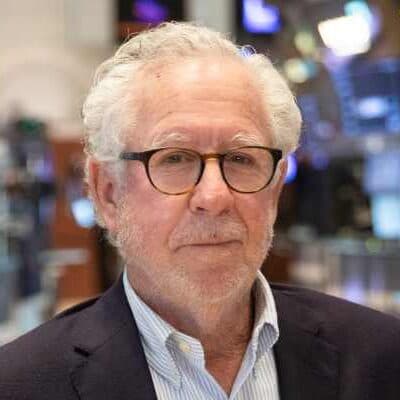
Doug Kass: My 15 Big Surprises for 2025
For my 23rd year of 'Surprises,' a vast array of unexpected political, social, regulatory, economic and market surprises make the list. Let's give them something to talk about!
You've reached your free article limit
You've read 0 of 1 free Pro articles.
This is my 23rd year of Surprise Lists. So, "let's give them something to talk about."
My Surprise List goes to 15 Surprises in 2025, from 10 Surprises in 2024... well, because it's such a surprising year with a vast array of unexpected political, social, regulatory, economic and market surprises on tap!
To begin with — and perhaps the biggest surprise — is that there is unexpected news for "Swifties"! (What is a Swiftie?)
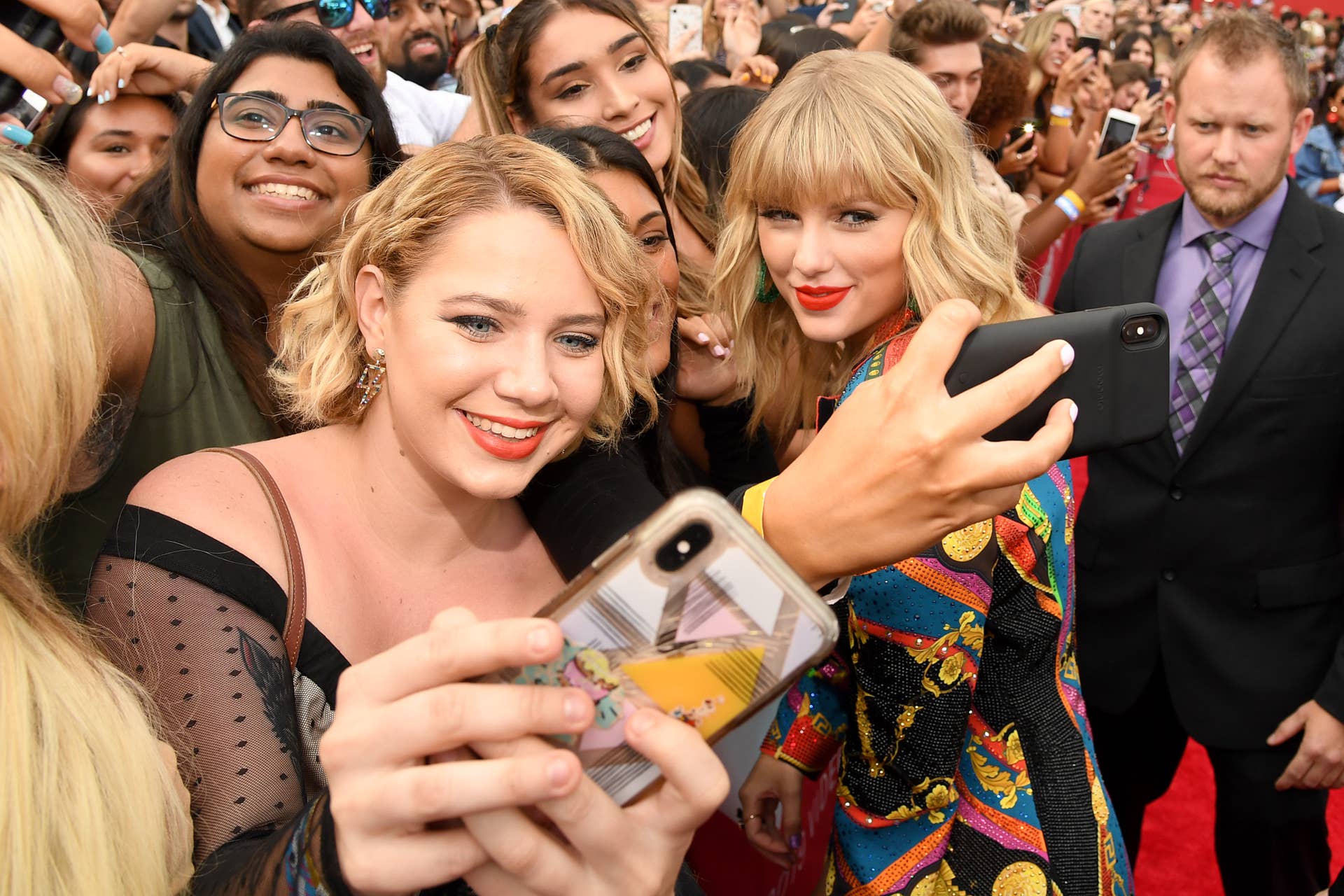
Among the other big surprises in 2025 — a divorced Donald Trump grows more moderate/centrist in policy, Elon Musk is dumped, private equity acquires some of our countries' leading private university football teams, technology eviscerates cryptocurrency values and a natural disaster causes a host of other problems...
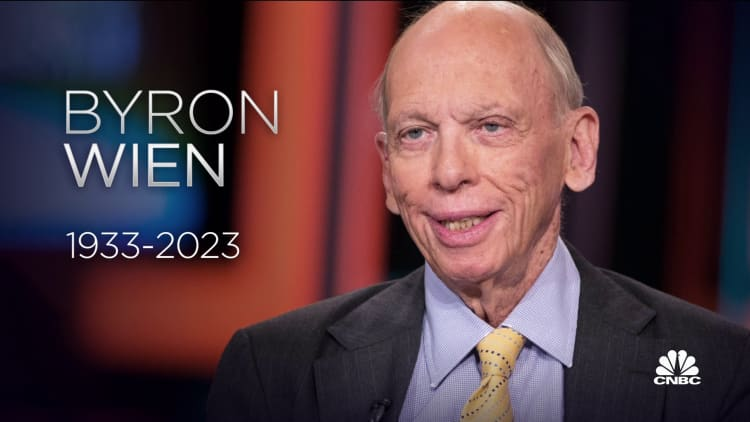
The creator of the annual Surprise List, Byron Wien, remains in my thoughts after his passing a year ago.
One year ago, in preparation for the assembly of last year's Surprise List I paid homage to my dear pal Byron Wien.
(Byron Wien, Wall Street Seer of the Unexpected, Dies at 90 - The New York Times)
Here was my tribute to Byron on TheStreet Pro. May his memory be a blessing.
Without further ado, here are my 15 surprises for 2025:
People are talking, talkin' 'bout people
I hear them whisper you won't believe it
They think we're lovers kept under cover
I'll just ignore it, but they keep sayin' we
Laugh just a little too loud (a little too loud)
Stand just a little too close (too close)
We stare just a little too long
Maybe they're seeing something we don't darling
Let's give 'em something to talk about (something to talk about)
Let's give 'em something to talk about (something to talk about)
Let's give 'em something to talk about
-- Bonnie Raitt - Something To Talk About
Surprise #1: Another attempt on former President Trump's life occurs early in his term.
Was it Iran? Was it the FBI? Was it the CIA, the NSA or just the deep state? No one finds out. The election is a big problem for many powerful vested interests and the swamp doesn't want to let itself get drained. Is the Secret Service even capable of protecting President Trump?
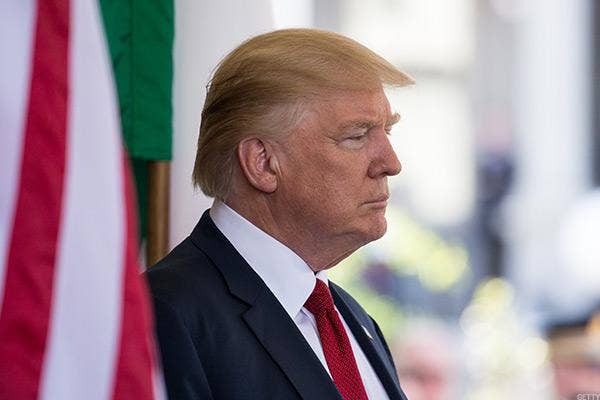
During the early summer, Donald and Melania Trump announce their intention to divorce. It is revealed that a separation agreement was conceived several years ago.
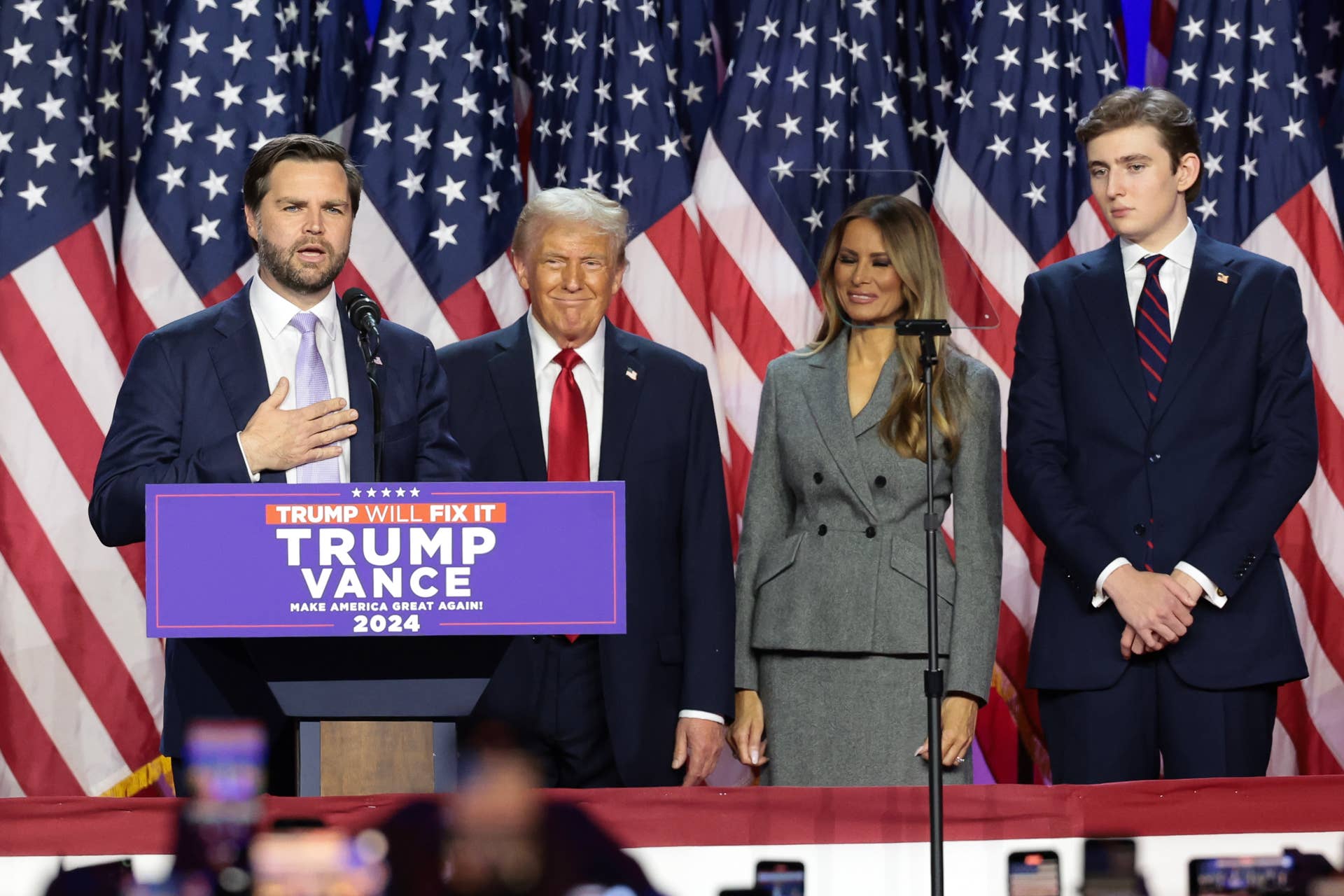
By the end of 2025, it is revealed that President Trump has been having a relationship (with a Democrat!). He publicly declares his desire to get remarried but divorce settlement negotiations with Melania extend and delay the divorce... and his fourth marriage.
Surprise #2: The "other" romance, between Trump/Musk, doesn't make it past Spring 2025.
National protests and demonstrations emerge and demands from a wide array of members of both the Republican and Democratic parties (including conservatives and liberals) call for "ousting" Elon Musk, an unelected official, from playing such a dominant role in the U.S. government.
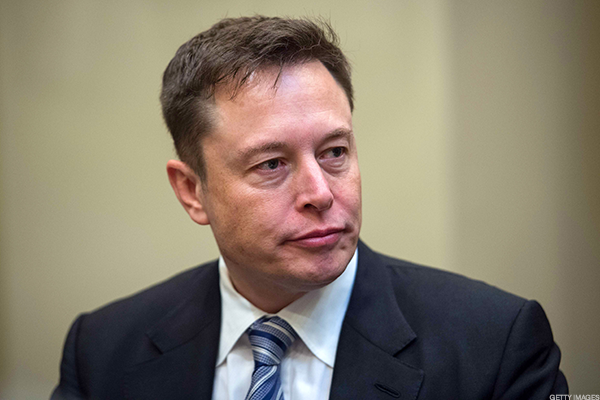
Bernie Sanders, taking the Senate's mantle of opposition to Musk, tweets about Elon Musk's and other billionaires' outsized role in the government:
"The precedent set in the last few months should upset every American who believes in our democratic form of government. In 2024, just 150 billionaire families spent almost $2 billion to purchase political candidates. Since the election in November, Elon Musk, Jeff Bezos and Mark Zuckerberg got $300 billion richer and are now worth $1 trillion combined. It appears that from now on no major legislation can be passed without the approval of Elon Musk, the wealthiest person in our country. That's not Democracy, it's Oligarchy. We must fight for an economy that works for all, not just the few. Elon Musk is an unelected official that is essentially acting a the President of the United States. We must pass legislation that changes this!"
Funded by George Soros, the law firm Boies, Schiller & Flexner launches a suit restricting the role of unelected officials without official positions in the Administration (like Elon Musk and Vivek Ramaswamy). The suit ends up going to the Supreme Court but is unresolved by year-end.
Reading the room (and increasingly uncomfortable with Musk's nororiety), President Trump begins to be openly critical of Musk and finally abandons him entirely.
Musk lashes out and retaliates by forming his own party and has a nervous breakdown.
Separately, Tesla TSLA makes little progress in "full self driving." The U.S. government takes away the $7,500 tax credit, competition from China intensifies, unit sales drop by double digits and Tesla's profits collapse. In addition, an "accounting issue" (related to warranties) is uncovered by a short-oriented research boutique. All these factors cause the shares of TSLA to drop to $100/share.
Elon Musk's non-Tesla investments suffer from reduced U.S. government support.
Musk grows ever more unhinged throughout 2025 — his mother attempts a family intervention.
Surprise #3: The Trump/Vance Administration is far more successful in carrying out its campaign promises than Trump I or really any recent President.
Starting with immigration, the U.S. southern border is simply shutdown at the beginning of his term and at least 2.5 million undocumented people are deported. There is a high-profile crackdown on a few employers. Jobs for the undocumented become harder to secure. Further, the various federal support and benefit programs for the undocumented becomes unavailable. Fewer jobs and benefits and the constant risk of being deported cause an additional 1.5 million people to self-deport.
The economic implications are very inflationary for U.S. wages — contributing to much higher inflation (see below). Certain industries like hotels and restaurants are particularly challenged to retain adequate labor. Low-end retail suffers, as the customers have fled the U.S. and low-end apartments develop vacancies.
President Trump takes back his "Drill, Baby, Drill" campaign promise. U.S. oil production continues to fall as shale basins top out and drillers focus on free cash flow. The price of oil rises to $85/barrel by mid-2025, aiding to inflationary pressures.
Surprise #4: Relating to tariffs, while there are continued threats of robust tariffs directed at specific trading partners — they mostly serve as negotiating positions and do not get implemented.
However, an across-the-board 10% tariff is instituted — further contributing to additional inflationary pressure.
The bond vigilantes come out of hibernation and are ubiquitous next year.
Inflation reaccelerates and rises to above 4% by year-end 2025 (the yield on the 10 year Treasury note exceeds 5.5%) — the Administration considers price controls.
The Federal Reserve pauses in its rate-cutting course and eventually reverses policy and tightens. President Trump attacks the Fed and seeks Jay Powell's resignation. Powell stands firm as Fed Chair. The U.S. economy enters a recession in late 2025/early 2026 following a continued weakening of the economies of the European Union and China.
Surprise #5: Amid weakening domestic economic growth, planned austerity measures (and reduced fiscal spending/support), recommended by DOGE, are unsuccessful and abandoned.
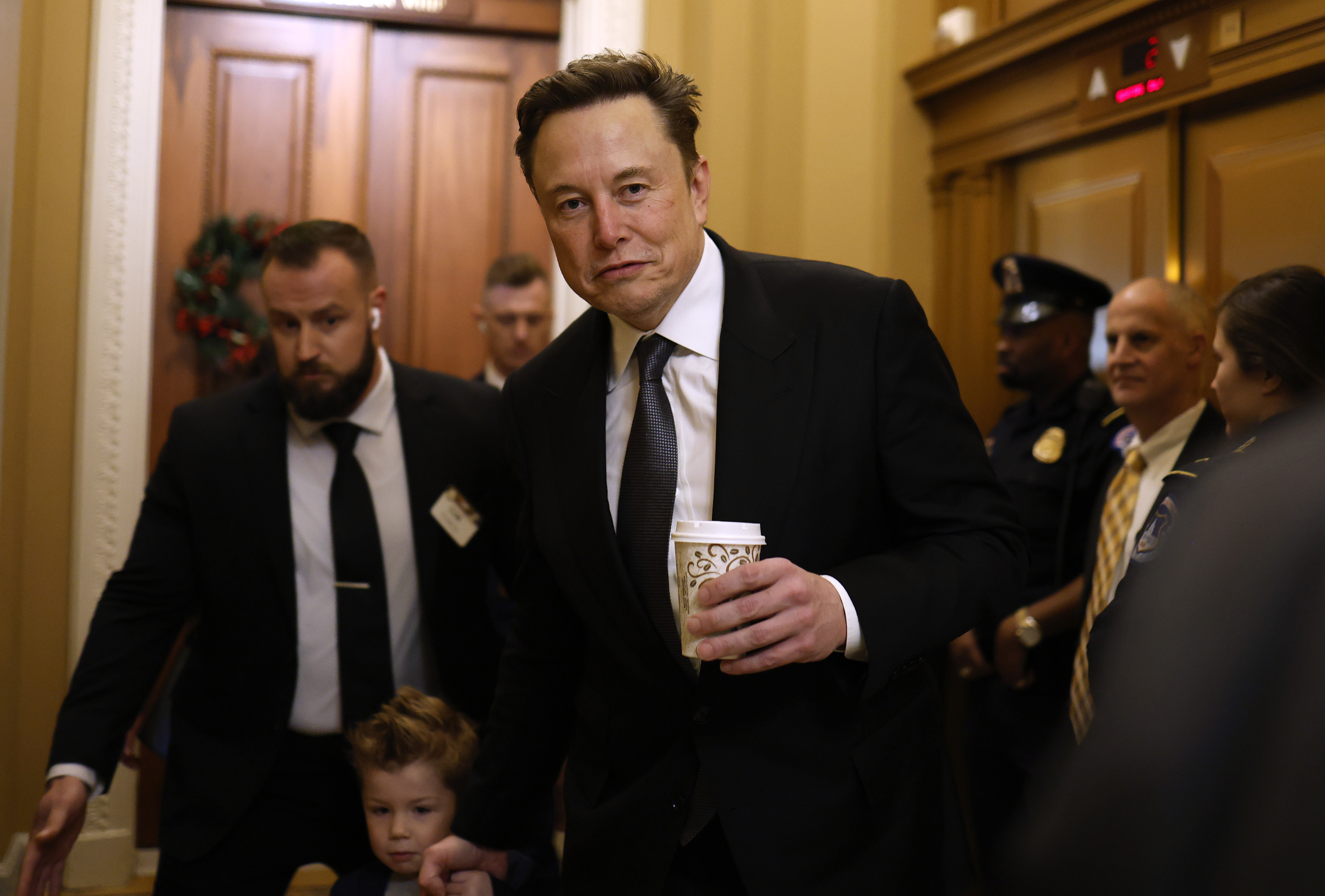
Surprise #6: President Trump grows more moderate in tone and policy — and, surprisingly, moves away from his MAGA base.
In contrast, the Democratic party grows more liberal (with California Governor Gavin Newsom temporarily taking up the party's de facto mantle of leadership). But, with Newsom moving further to the left (and going even softer on crime policies in his state), California's Governor falls in the polls by year-end and is no longer considered a party leader. The Democratic party appears rudderless, without any clear front runner.
This lays the groundwork for more Republican party political wins in 2026.
Former Vice President Kamala Harris leaves the political scene and accepts a professorship at Stanford University's Law School. Late in the year, Harris announces a plan to reenter politics but it is quickly rebuffed by the Democratic National Committee.
Surprise #7: AI related equities are adversely impacted by two factors — the inadequacy of supply of electricity and the absence of a killer app or related income stream:
* With AI data centers so power-intensive and the AI arms race continuing apace — our nation's supplies of electricity prove inadequate. Power outages become common place and consumers' utility bills soar. With the need for the construction of new natural gas-driven power stations natural gas prices double (contributing to further inflationary pressure). A pissed off public demands action. In order to subsidize lower prices for households, large taxes are placed on AI data centers.
* As the year progresses it becomes clear that there is no material killer app or related revenue stream that is derived from the use of Generative AI. Focus shifts from being directed to consumers to helping corporations cut costs. This transition benefits tech integrators and consultants to the detriment of hyperscalers — the latter ultimately recognizes that there is not an adequate revenue stream and scale back their capital outlays and budgets.
Nvidia's NVDA "day in the sun" abruptly ends and the share price falls to between $50-$75 in a matter of days as it grows clear that double and tripling ordering buoyed the company's past reported top and bottom lines. The view that other manufacturers "over earned" produces a contagion and a setting in which large-cap stocks like Microsoft MSFT and other hyperscalers' shares suffer similarly.
Surprise #8: AI headlines are replaced with quantum computing headlines.
Though it is many years away from commercial use, the hype/hope cycle takes on a different subject and character. One of the important impacts will be to eventually hack proof of work cryptocurrencies including bitcoin. In time and if hacked, bitcoin becomes nearly worthless — and bitcoin collapses in price to under $25,000 in the late summer. Most other secondary and tertiary cryptocurrencies fall to zero.
The collapse in cryptocurrency prices causes fear of financial contagion — and equities fall by nearly -7% in one month.
Surprise #9: In 2025 the S&P Index falls by about 15%. The technology-laden Nasdaq drops by over 20%.
But the equal-weighted S&P Index RSP only declines by 5%.
Under the weight of AI disappointment, higher interest rates, rising inflation and lower economic growth — financial and technology stocks are among the largest losers.
The Indexes close at their yearly low on the last day of 2025.
Surprise #10: There is peace throughout the world. The Ukraine war is settled and there is peace in Israel. Israel and Saudi Arabia announce a new (and friendly) accord.

Surprise #11: Climate change strikes the U.S. in a 500-year rain and flooding event.
Inflicting $250 billion-$500 billion in damages (roughly 10-times worse than Hurricane Katrina in 2005), the property and casualty industry is unprepared for such a catastrophic storm. With insufficient reserves and a move to forestall financial contagion, one of the top-10 property and casualty companies is bailed out by the U.S. government.

The multi-year move to move away from globalization and towards reshoring in the U.S. backfires as another natural disaster (Covid being the first in early 2020) wrecks and disrupts supply chains in our country and causes another inflationary spike (already abetted by the wage inflation incurred from the deportation policy of the new Administration).
A dramatic reset higher in natural disaster insurance pricing harms home prices across the country — serving to contain the rise in commodities and finished goods inflation. But with consumers questioning the value of their largest asset (their homes) coupled with a mortgage rate over 8%, consumer confidence collapses.
Surprise #12 Private Equity first acquires college football franchises and then some investors plan to purchase entire private universities.
College football team takeover activity is initiated by Mark Lasry's Avenue Capital Group, which acquires 51% of Notre Dame University's football team for $700 million.
Blackstone purchases a majority interest in the largest and most valuable public sector's football team, The Ohio State University (for $1.5 billion, an offer that the school's trustees deem too large to turn down!), Kohlberg Kravis purchases more than half of (public) University of Alabama's football team for almost $1 billion.
Then, in a shocking move, billionaire investor and Pittsburgh native, David Tepper, acquires all of Carnegie Mellon University for an undisclosed amount.
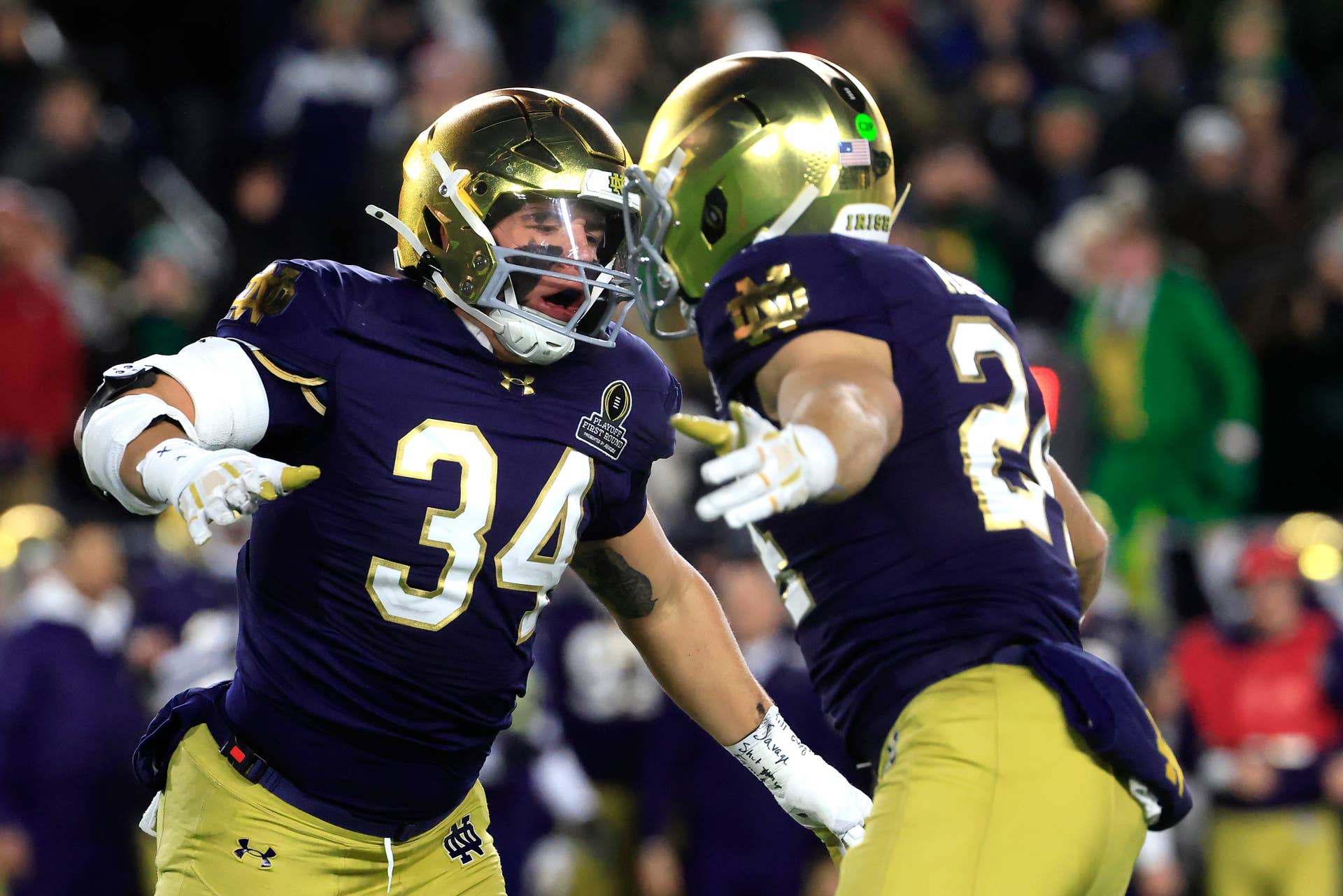
But Wharton alum and Apollo CEO Marc Rowan is rebuffed in his attempt to have Apollo buy The University of Pennsylvania. Apollo settles on the purchase of 51% of Penn's football team for $175 million.
Senator Elizabeth Warren exclaims, "Isn't it enough that our country's billionaires own professional football teams!"
Even President Trump is irate. Soon thereafter, congressional legislation prohibiting the acquisition of any private university is proposed and introduced into law.
Surprise #13: The U.S. government intensifies its anti-trust cases against big tech and initiates legislation aimed to regulate the shadow banking and private equity industries.
The Google case is decided in late 2025 with significantly adverse effects on both Apple AAPL and Google GOOGL — the shares of both plummet.
The Trump Administration, appalled by the audacious acquisitions of some of the leading U.S. universities' football teams (and then by audacious attempts of private equity to acquire entire universities!) reacts by introducing regulatory and imposing strict capital actions against the private equity industry. Blackstone BX, Kohlberg Kravis KKR and Apollo AINV fall under the weight of these efforts.
Surprise #14: Warren Buffett's corporate curtain call is the acquisition of the Boeing Company in 2025 — the largest acquisition in Berkshire Hathaway's history.
Berkshire Hathaway BRK.A BRK.B eliminates its entire stake in Apple AAPL — selling all of its shares by mid-year.
Surprise #15: Surprises in the sports world abound in 2025:
* The LA Dodgers and New York Yankees meet again in the World Series. This time the Yankees sweep the Dodgers.
* Yankee Global Enterprises LLC (which is majority owned by the Steinbrenner family) sells a portion of the New York Yankees to Blackstone.
* Bill Belichick never coaches the University of North Carolina football team as he is offered and accepts a NFL head coaching position.
* Deion Sanders leaves the University of Colorado and, he too, becomes an NFL head coach — replacing Mike McCarthy of the Dallas Cowboys.
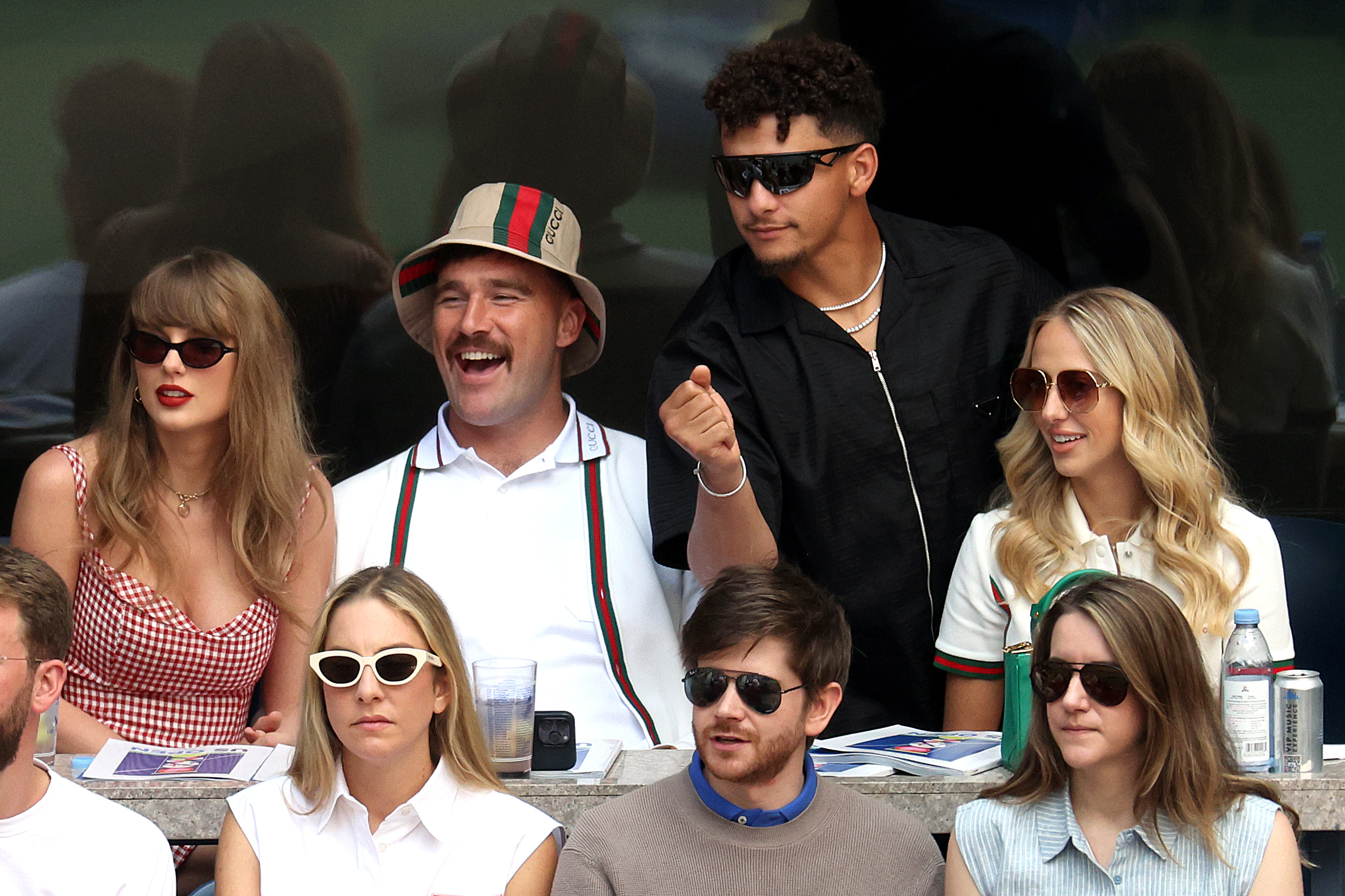
* The heavily favored Super Bowl contender, the Kansas City Chiefs, get blown out in the first round of the NFL Playoffs. Shortly thereafter, similar to the famous 1973 wife swap of New York Yankees pitchers Fritz Peterson and Mike Kekich, Kansas City Chiefs' Patrick Mahomes and Travis Kelce switch partners (Patrick Mahomes marries Taylor Swift and Travis Kelce marries Brittany Mahomes).
This commentary was originally posted Monday, December 23, in Doug's Daily Diary on TheStreet Pro.
At the time of publication, Kass was short AAPL (M) and NVDA (S).