Covered Call ETFs: Smart Income Tool or Overpriced Compromise?
Losing money hurts more than winning feels good, and covered call ETFs are built entirely around that fear. But is the peace of mind they buy worth the price?
You've reached your free article limit
You've read 0 of 1 free Pro articles.

A recent study by researchers at Penn State confirmed that fear of loss carries more weight in people’s decision-making processes than the idea of winning.
Investing is one of the biggest and most obvious areas where this phenomenon shows up.
There are investment products built almost entirely around that notion.
Let’s take the covered call ETF. These funds hold a basket of stocks and sell call options against them, which limits upside above a certain price.
In exchange, the fund collects a premium and pays it out to investors as income. You get paid today, but you can give up substantial upside in big rally.
Examples of those ETFs include:
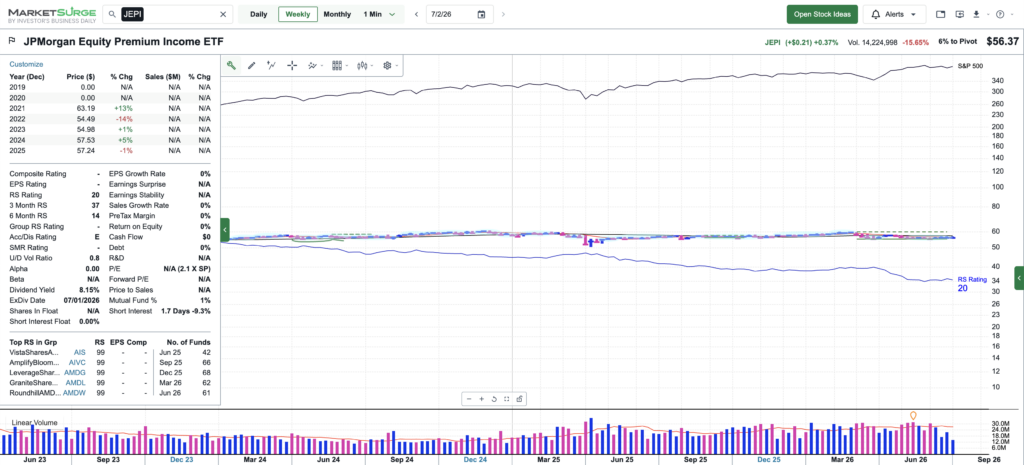
- JPMorgan Equity Premium Income ETF (JEPI): Holds S&P 500 stocks, has moderate volatility and a yield of around 8%.
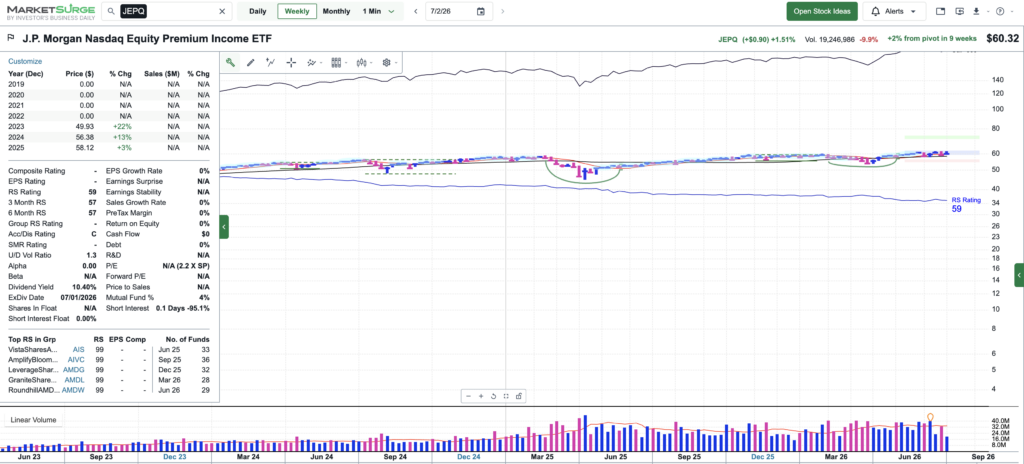
- JPMorgan Nasdaq Equity Premium Income ETF (JEPQ): Holds Nasdaq-100 tech stocks, higher yield of approximately 9% to 11%, but still maintains about three-quarters of the index’s upside.
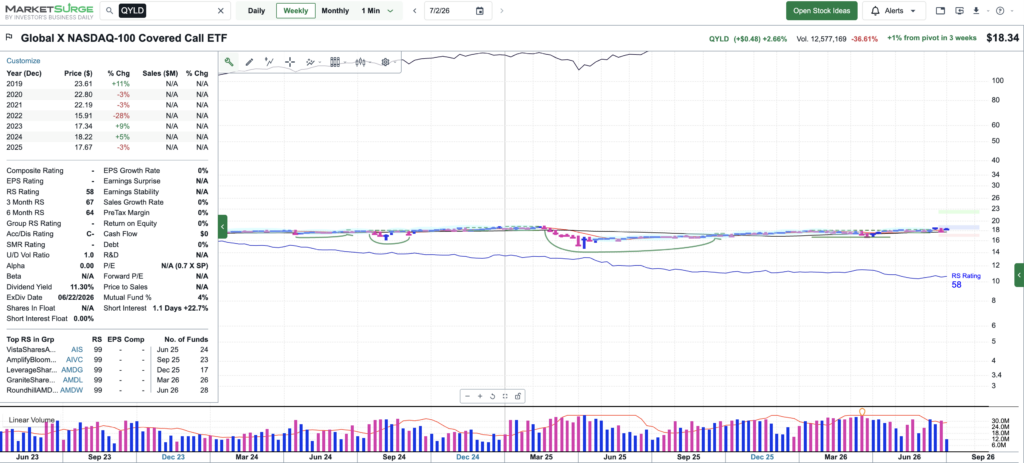
- Global X Nasdaq 100 Covered Call ETF (QYLD): Also tracks the Nasdaq-100, but caps nearly all upside for a higher yield, often around 11% or 12%
If you’re wondering why techs yield more than moderately volatile S&P stocks, it’s because higher volatility means more expensive call options.
Selling those options against volatile tech stocks generates bigger premiums, which is the “yield,” in this case. Not the same as what you might think of in a dividend stock.
Limitations of These ETFs
One group of advisors avoids these funds almost entirely because this method of generating yield is a distraction, since the options income caps the total return.
By that measure, covered call funds have historically lagged plain-vanilla index funds during bull markets.
QYLD offers the clearest example: It’s paid out more than 12% a year since its inception in 2013, but its share price has languished.
QYLD’s own prospectus acknowledges that the strategy has limits, as does any strategy, to be fair.
The fund forfeits gains above a certain price in exchange for collecting option premiums. Global X warns that those premiums “may not be sufficient to offset any losses sustained from the volatility of the underlying stocks over time.”
In regular English, that means that the fund still keeps paying out its monthly “income” on schedule, even when the premiums don’t cover losses in the underlying stocks. When that happens, the payout isn’t profit. It’s just Global X handing investors back their own money.
Why Some Advisors Hate Them
Ben Felix, chief investment officer at PWL Capital and co-host of the “Rational Reminder” podcast, is one of the most vocal critics.
Felix says these strategies are designed to underperform the stocks they hold, which is true. He adds that they actually increase long-term risk, since investors keep most of the downside exposure while giving away the upside. Typically, investors demand greater upside for taking on more risk, but that equation doesn’t apply here.
He and other advisors who dislike these funds also question the wider focus on dividends and yield, saying that investors are better served by investing in undervalued stocks and creating their own income by selling shares when they need to raise cash.
The Case for Covered Call ETFs
Mathematically, what Ben Felix says makes perfect sense.
But there’s a reason to push back for reasons as significant as pure numbers.
Sean Lenehan, a portfolio manager and senior investment advisor with Lenehan Wealth Management Group at TD Wealth in Windsor, Ontario, agrees with Felix’s math but says it clashes with how investors actually behave.
“If everyone were rational, with long-term time horizons, and volatility didn’t bother them, you can make a strong case that covered-call ETFs don’t add value. But clients aren’t robots,” he told the Toronto Globe and Mail in a June 2026 interview.
I’ve used these ETFs in accounts for clients for whom avoiding losses was a far greater concern than big profits. They knew how much income they needed in retirement, and the innards of ETF mechanics, or the “problem” of capping a fund’s upside, weren’t even a distant concern.
That’s not at all irrational for clients in or near retirement, for whom peace of mind is far more valuable than eking out every last dollar of investment return.
What Does the DIY Approach Involve?
Some advisors, including Felix, say avoid these esoteric ETFs and just do it yourself.
Buy a plain-vanilla, inexpensive index fund. Hold it. Then, whenever you need cash, sell off a small slice.
That’s sometimes called a “homemade dividend,” since you’re writing your own paycheck instead of waiting on a fund manager to send one. You’re not asking, “Please sir, may I have some more?”
Here’s why some advisors like this DIY approach:
- You control how much you sell and when, instead of taking whatever the fund happens to pay out.
- In a good year, you can sell less and let your money grow.
- In a bad year, decide whether you want to dial back your income a bit and just sell what you need to pay your bills, nothing extra.
Some advisors take it a step further and lean into value stocks, meaning solid, unglamorous companies trading on the cheap. These have historically done well over long stretches of time and frequently pay dividends.
A Time and Energy Commitment
But be aware: This approach asks a lot of the investor emotionally and intellectually, and it’s time-consuming.
Not only do you or your advisor need to monitor your account extra closely, which is a commitment in and of itself, but watching your account balance drop every time you sell can feel scary, even when the math says everything is hunky dory.
That’s exactly the discomfort covered call ETFs are designed to avoid, since the money just shows up automatically in your account.
For my clients who are comfortable holding these ETFs, the question isn’t which approach is smarter on paper or which makes them feel better about the math. It’s the one they can actually stick with when the market gets choppy or even goes through one of those downright scary cycles. It’s the one that stops them from thinking, “Gee, is now the right time to sell some stocks to raise cash? What’s the market doing today? What will it do tomorrow?”
You get my drift.
Where That Leaves You
Covered call ETFs are a volatility-dampening tool with a real cost, and investors need to understand what they’re giving up.
They make the most sense for retirees prioritizing steady income, capital preservation and not having to check the market constantly.
They make the least sense for younger investors with decades to let the market’s full upside compound.
So pick the one you can actually live with. Again, neither is “wrong.” If watching your account bounce around during a downturn would wreck your sleep, the smaller check every month might be worth the cost. If it wouldn’t, you’re probably paying for peace of mind you don’t need.