Asian Stocks Post Best Week of 2024 as Underlying Drivers Have Changed
It's an Asian "goldilocks" story for now, but movements in the yen are making Japan stocks volatile and these margin traders will be wary.
You've reached your free article limit
You've read 0 of 1 free Pro articles.
Asian stocks have advanced today, posting their best week of this year. Tokyo roared ahead, netting its largest one-week gain in four years. All after a meltdown last week that saw the Nikkei 225 index descend 12.4% in a single day. What a wild couple of weeks.
Are we back where we started?
If you just look at the numbers, yes. Asian stocks as a whole advanced 4.2% this week, in the form of the S&P Pan Asia Broad Market Index. That’s redressed last week’s selling and leaves them at the same levels where they started the month.
The Nikkei, subject to the largest fluctuations, is also effectively back to where the index started August. But I believe some underlying assumptions have changed. I don’t think you can just slap the same Asian trades back into place.
On Friday, Taiwan stocks closed on a 2.1% advance. South Korea, with similar semiconductor drivers to the Taipei market, moved 2.0% ahead. Hong Kong reported that Q2 growth picked up to 3.3%, from 2.7%, in Q1, and the Hang Seng Index ended the day up 1.9%.
All major Asian markets had a decent day. India (up 1.4% in afternoon trade), Australia (up 1.3%) and Singapore (1.0%) have all moved clearly into the green.
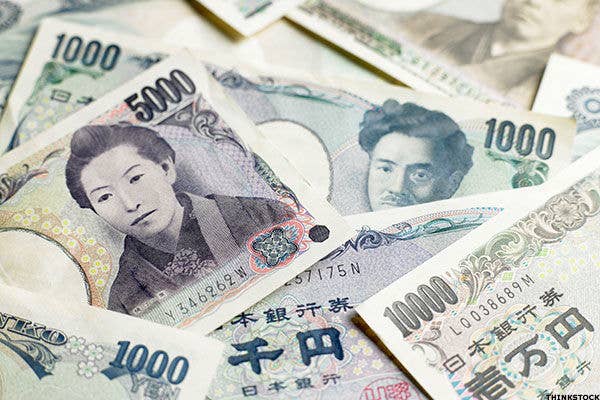
But the biggest gains have again come in Japan. The Nikkei 225, often compared to the Dow Jones Industrial Average, was particularly strong on Friday, up 3.6%, with the broad-market Topix jumping 3.0%. It would be a banner day were it not for what occurred last week.
After today’s action, Tokyo stocks have recaptured all the ground lost Monday last week. On August 5, 2024, the Nikkei sold off a record number of points, ending with a one-day drop of 12.4%. In percentage terms, it was the worst fall since Black Monday in 1987, which had turned to Black and Blue Tuesday by the time traders reacted in Japan to the calamitous 22.6% fall in the Dow.
We’ve received more clues as to why the selloff was so severe in Japan at the start of last week. And the shakeout will mean that some investors are still reeling.
I believe it was the strengthening Japanese yen that got the ball rolling. On August 5, 2024, the yen suddenly shifted from ¥146 to the U.S. dollar to just below ¥142. It intensified the decline from almost ¥162 as recently as July 11, 2024.
Currencies tend to trade with stasis for long periods, then make sudden moves, often around interest-rate decisions. While the central Bank of Japan made a tiny move higher with rates, it’s the second this year. Coupled with the likelihood of Fed rate cuts, it meant the underlying assumptions that had maintained the yen-U.S. dollar cross rate at levels last seen in 1986 gave way.
I explained last week that the Bank of Japan decision didn’t warrant such a selloff, and the pessimism was overdone. And my last column explained how investors should react to such periods of high volatility.
One reason the trading got out of hand is that we can see now that Japanese speculators were highly leveraged. They got greedy.
Margin trading accounts for some 70% of all retail trading volume in Japan, according to data from Japan Exchange Group, operator of the Tokyo Stock Exchange. And those traders got their fingers badly burnt.
The value of stock bought on margin dropped by almost one-quarter last week, from ¥4.87 trillion to ¥4 trillion, as Reuters noted in an interesting piece. That’s a decline equivalent to $6.15 billion. It’s been a margin massacre.
Tokyo margin trading hit an all-time high of ¥4.98 trillion for the week of July 26, 2024. I’m not sure investors who were forced into selling will be so eager to borrow and bet on stocks again. So, we may be seeing the end to that particular fervor.
Both global portfolio managers and Tokyo speculative traders were forced to react to the sudden dip in the yen. The Tokyo retail traders in particular couldn’t afford to hold out, and were driven into forced selling to meet margin calls.
That’s a major reason the selling got so heavy, so suddenly. As I noted in my last column, during blowout market declines, many investors are selling just because others are selling, and the market is moving against their positions. The other large category shaken out by last week’s action were the margin speculators, who would have been nursing sudden and significant losses.
The Nikkei began August at 35,910, bottomed out at 31,458 with the August 5, 2024 close, and is now back to 38,063. It is well off the all-time high close set on July 11, 2024 of 41,832, but is moving higher once again. This week’s gain of 8.7% is the strongest since 2020.
The main driver for that strength in Japan equities is that the yen, meanwhile, has reversed its rapid increase in value and is trading at almost ¥149. That’s similar to where it was trading in late January.
Nikkei stocks skew toward the largest multinationals, which benefit the most from the weak yen since many make profits overseas. Any companies with U.S. operations in particular get a profit boost just by repatriating income into their home currency.
The yen may be back to stasis at this ¥149 level. But I wouldn’t be surprised to see another sudden strengthening of the yen.
The next move by the Fed, at this point anticipated for September, is a 25-basis-point interest-rate cut. The next move by the Bank of Japan, meanwhile, will be another interest-rate hike, though the timing of that decision may have been pushed out by the market turmoil stemming from its July 31, 2024, increase to 0.25%, from a range of 0.0% to 0.1%.
Before this frenetic fortnight, economists gave a 68% likelihood to Japan raising rates to 0.5% by year end. That move will surely come, whether it’s later this year or early next.
The Tokyo margin traders will be leery of getting burnt again, so they put their yen-carry positions back in place at their peril.
The assumption that the Japanese currency will continue to weaken has been undone. I think we’ve passed the period of maximum weakness for the yen, and I believe we’re also past peak U.S. dollar.
For now, we’re back in a goldilocks phase where Asian traders are happy with domestic growth prospects. Watch for foreign-exchange craziness when we get a better hint of when the central banks will move.
At the time of publication, McMillan had no positions in any securities mentioned.