Why an India-Focused ETF Is Asia's Top Investment Pick for 2025
Gaining some exposure to the rapidly-growing market should be on every investor's radar for next year.
You've reached your free article limit
You've read 0 of 1 free Pro articles.
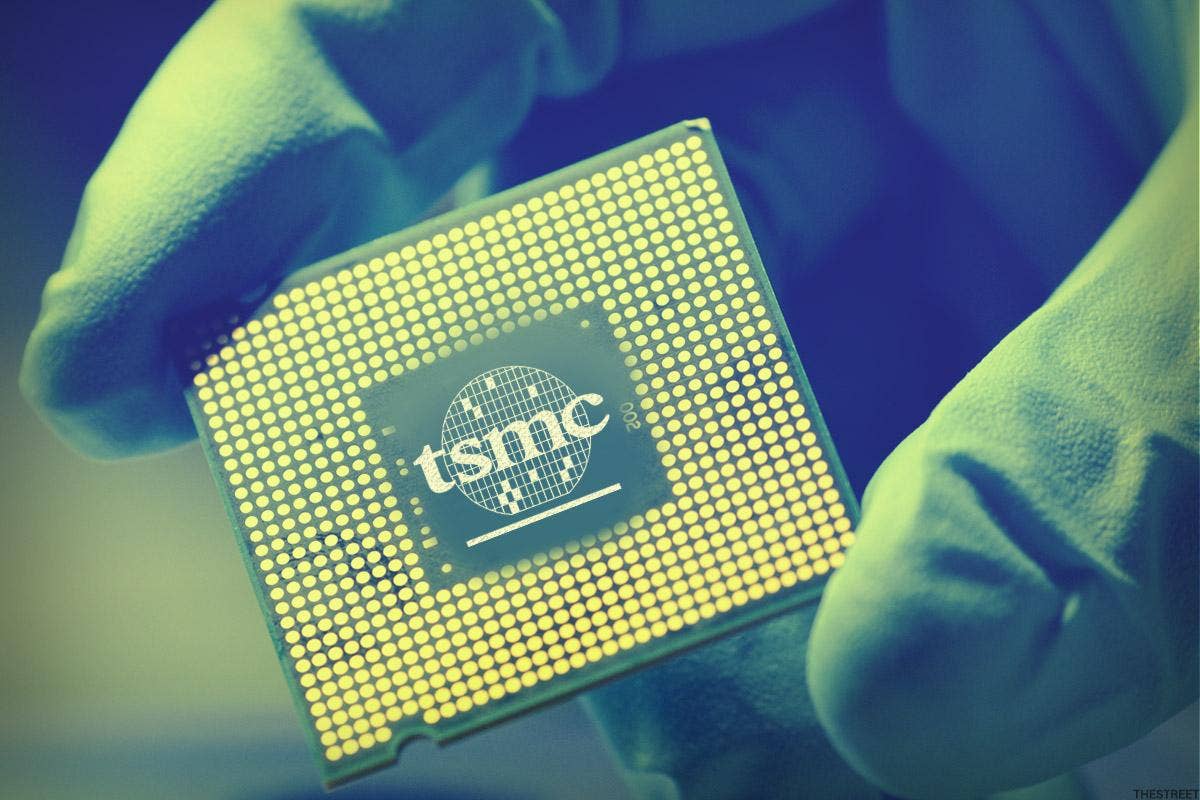
This time last year, I selected global chip-foundry market leader Taiwan Semiconductor Manufacturing Co. TSM (TW:2330) as my Asian equity pick for the year ahead. Here’s that story, in case you’d like a look back. And boy, has it performed.
TSMC is up 80.4% year to date as of today’s close in Taipei. There was a bit of a glitch for around a month from mid-July into August, when Nasdaq corrected in general, and the stock fell 24.5%. So, it’s all the more remarkable that it has made up all that lost ground, and sits just shy of its high for the year.
Two things attracted me to TSMC: It has a commanding market share (61.7% at last count) that is growing and it operates in an essential industry, churning out the semiconductors we all demand in our daily work and home lives. As a bonus, it is also an industry that has an incredibly high barrier to entry – it takes years and billions of dollars to build a chip fab. No one does it as well as TSMC, and apparently no one is going to catch them anytime soon.
I see no reason why any of these trends will change in 2025. In fact, with TSMC scoring $6.6 billion in CHIPS and Science Act subsidies to help back its $65 billion development of three chip fabs in Phoenix, its U.S. operations will be expanding near key customers such as Apple AAPL, Qualcomm QCOM and Nvidia NVDA. That will offset its current over-dependence on production in Taiwan.
So, essentially, I would select TSMC again as my stock to watch from Asia in the next year. Let that investment ride. No need to sell out of a good stock and buy a poorer-performing pick.
But that does seem like a bit of a cop out. So I’m going to force myself to provide another equity play from Asia.
China plays are off limits. There will be trade friction, and China has started drawing the battle lines by launch an investigation into Nvidia, as I explained last week. Actually, I think Donald Trump will be angling for another trade deal with China as soon as he takes office, which would necessitate closer ties. He’s already walked back tariffs of 60% on Chinese goods to an added 10% — which U.S. companies and consumers will pay.
But it’s not just the prospect of Trump 2.0. There’s simply a mounting number of Chinese companies on the “entity list” or subject to sanctions that prevent U.S. investors from holding them. It’s a minefield.
Then there’s local politics. As I indicated in mid-November, opposition politicians here in Hong Kong were sentenced to up to a decade in prison simply for holding an informal primary and trying to get elected. That raises the moral question as to whether we should be investing into hostile markets with values that run contrary to our own. A few investors sold out of their holdings based on that November story.
And the bottom line on China: I don’t think the Chinese Communist Party has the remotest clue as to how to turn the moribund Chinese economy around. It’s a downturn of their own making, precipitated by the “three red lines” that forced a rapid deleveraging of the property sector. Now buyers have lost faith in the real-estate market. The economy won’t turn around until the government backstops the market and reassures buyers that their apartment will get built.
China is struggling to hit its growth target of “around 5.0%” for this year. Next year, Nomura predicts growth will slow further, to around 4.0%, even though the government is likely to set the same target for next year.
So where in Asia do we turn for growth, if we can’t find it in China?
Most Southeast Asian markets have a shallow equity pool. In the case of places like Indonesia, banks, property developers and natural-resources companies dominate, hardly the stuff to set the pulse racing.
It’s got to be India. India continues to excite.
India passed China in April 2023 to become the world’s most-populous nation, as I noted at the time. And it has taken on many of the characteristics that investors used to prize in terms of equity investment, too.
The underpinnings are strong. It’s the world’s fastest-growing major economy. And it’s likely to remain that way.
The 2024 pace at 6.8% may ease slightly into next year, according to S&P Global, which pegs 2025 growth at 6.7%. But the following year should be back at 6.8% for 2026, leading into 7.0% growth for 2027.
Call it annual growth “just shy of 7.0%” on average. In fact, the ratings agency anticipates average annual growth of 6.7% through the end of next decade, which would see India rise to become the world’s third-largest economy by fiscal-year 2030 2031.
There’s a major problem investing into India, however. Corporate governance, as the whole saga surrounding the Adani Group suggests, is shoddy and transparency is murky. After a short seller’s attack, the company has come under fire from the U.S. stock watchdog and U.S. Justice Department, with Adani executives including founder Gautam Adani charged with bribing Indian officials to the tune of $250 million to secure sweetheart contracts on solar power.
Adani had built himself into Asia’s richest man, at one point the third-wealthiest in the world per a Forbes ranking behind only Tesla TSLA boss Elon Musk and the chief of the LVMH LVMUY luxury goods empire Bernard Arnault.
So, I have cautioned against investing directly in Indian equities. You could make a case that the country’s largest conglomerate, Reliance Industries, listed in London as RIGD, as well as Wall Street-listed outsourcing giant Infosys INFY are different, with higher reporting and governance standards. You can consider those two specific stocks.
But, in general, exchange-traded funds will be the way to play India. It has been a more-challenging year for the Nifty 50 and the Sensex benchmarks, with the Nifty up “only” 10.2% so far in 2024, and the Sensex moving ahead 9.6%.
There’s been a selloff since late September (with the Nifty down 8.6% and the Sensex 7.7% since then) that has halted what had been a strong and steady march higher since the lows of the pandemic selloff in April 2020. The selling is intensifying, so we should hold fire on India for now.
Get set to buy back in when this correction ends, which is driven by the U.S. stock selloff and very weak Indian rupee. Let’s identify which ETFs to play when India’s stock markets turn.
The iShares MSCI India ETF INDA is by far the biggest, at $10.5 billion in assets under management. That’s triple the size of second-largest WisdomTree India Earnings Fund EPI, at $3.7 billion. But size should not matter in an ETF, once you get past a certain size where the operator maximizes scale across its operations.

I prefer the “smart” indexing methodology that WisdomTree deploys. The India Earnings Fund weights net income from the prior 12 months, with the earnings scaled via the multiplication of an “investability weighting” factor based on how freely the shares trade. Any stock’s weighting is based on its earnings factor divided by the sum of all the earnings factors in the index.
The WisdomTree fund adjusts weightings to ensure that all holdings of 5.0% or above cannot, combined, exceed 50.0% of the index. This avoids any over-concentration on any particular company. That’s an issue in smaller emerging markets in particular, where one particularly large stock may dominate, such as in Taiwan with TSMC. It makes up about 30% of the Taiwan Stock Exchange main index.
For India, Reliance Industries was the top holding for the WisdomTree India Earnings Fund, making up 7.0% of the ETF at last count. HDFC Bank (5.1%) and ICICI Bank (4.9%) come next, then Infosys (4.4%). So, you’re getting exposure to what I’d identify as the highest-quality Indian companies.
Although they are smaller ETFs, I’m also interested by the Columbia India Consumer ETF INCO ($407.9 million in AUM) as well as the VanEck India Growth Leaders ETF GLIN ($165.9 million in AUM). The VanEck fund in particular is getting down to the kind of size where it’s hard to run even an ETF profitably, so that does give me pause for thought.
INCO concentrates on a specific sector that should benefit from India’s domestic growth and withstand any friction we see on global trade. The ETF tracks the Indxx India Consumer Index, comprised of 30 companies in the “consumer staples” or “consumer discretionary” sectors.
Its top holding at 7.0% of the ETF is Trent Ltd., the former Tata Retail Enterprise, which operates mainly apparel retail stores in India. Food-delivery app Zomato as well as auto manufacturer Mahindra & Mahindra and scooter maker Bajaj Auto are the other top holdings. They’re quite different holdings from EPI.
The long-term appeal of the Indian consumer sector is clear. The stock performance is far more volatile, with the INCO fund up 10.9% this year much like the Indian market, well ahead to the tune of 34.1% in 2023, but suffering losses in both 2022 and 2019.
The GLIN fund from VanEck seeks to identify “quality” Indian stocks. It tracks the MarketGrader India All-Cap Growth Leaders Index. MarketGrader scores Indian companies on 24 fundamental indicators across four broad categories: growth, value, profitability and cash flow.
The VanEck India Growth Leaders ETF is in fact outperforming this year, up 17.8%, well ahead of the broader Indian market. But the index suffers worse selloffs when the market turns. The index was, for instance, down 21.9% in 2022 when the Nifty 50 edged to a 4.3% gain.
Since Indian equities continue to move lower, I would wait for this correction to end before entering into positions in any of these ETFs. But I anticipate that the tide will turn in 2025.
So: My first call for Asian equities would be to maintain or even add to any holding in TSMC. It would take a collapse in the semiconductor industry for me to re-think that.
And: The Indian market is currently correcting. As soon as we see the Indian market form a second bottom and move back higher, it would be time to consider buying into those India ETFs.
I would make the WisdomTree India Earnings Fund EPI the first target. But I love the India consumer story. Particularly if we are seeing global trade tensions escalate again, and want to concentrate on a domestic sector, I would consider a second position in the Columbia India Consumer ETF INCO.
At the time of publication, McMillan had no positions in any securities mentioned.