Authorities say Adani 'Bribery' Scheme Hurt U.S. Investors. It's Also a Lesson.
The S.E.C. and Justice Department have leveled charges over a solar-power operation in India. Here's why the incident serves as further proof of the risks of single-stock ownership in Indian companies.
You've reached your free article limit
You've read 0 of 1 free Pro articles.
Shares in Adani Group companies have plunged in Indian trade today, after U.S. authorities charged the conglomerate’s founder with bribing Indian officials.
Flagship Adani Enterprises (NSE:ADANIENT) crashed 23.4%, while renewable-energy affiliate Adani Green Energy (NSE:ADANIGREEN) descended 19.0%. Electricity-transmission specialist Adani Energy Solutions (NSE:ADANIENSOL), formerly called Adani Transmission, fell 20.0%.
The charges, leveled by the U.S. Securities and Exchange Commission and the U.S. Department of Justice, revolve around a “massive bribery scheme” involving energy contracts.
In terms of securities law, the SEC states that group founder Gautam Adani and his nephew, Sagar Adani, orchestrated the scheme, winning a multibillion solar-energy project. Also charged is Azure Power Global AZREF board member Cyril Cabanes, who was managing director for infrastructure in Asia for Canadian pension fund giant Caisse de dépôt et placement du Québec (CDPQ).
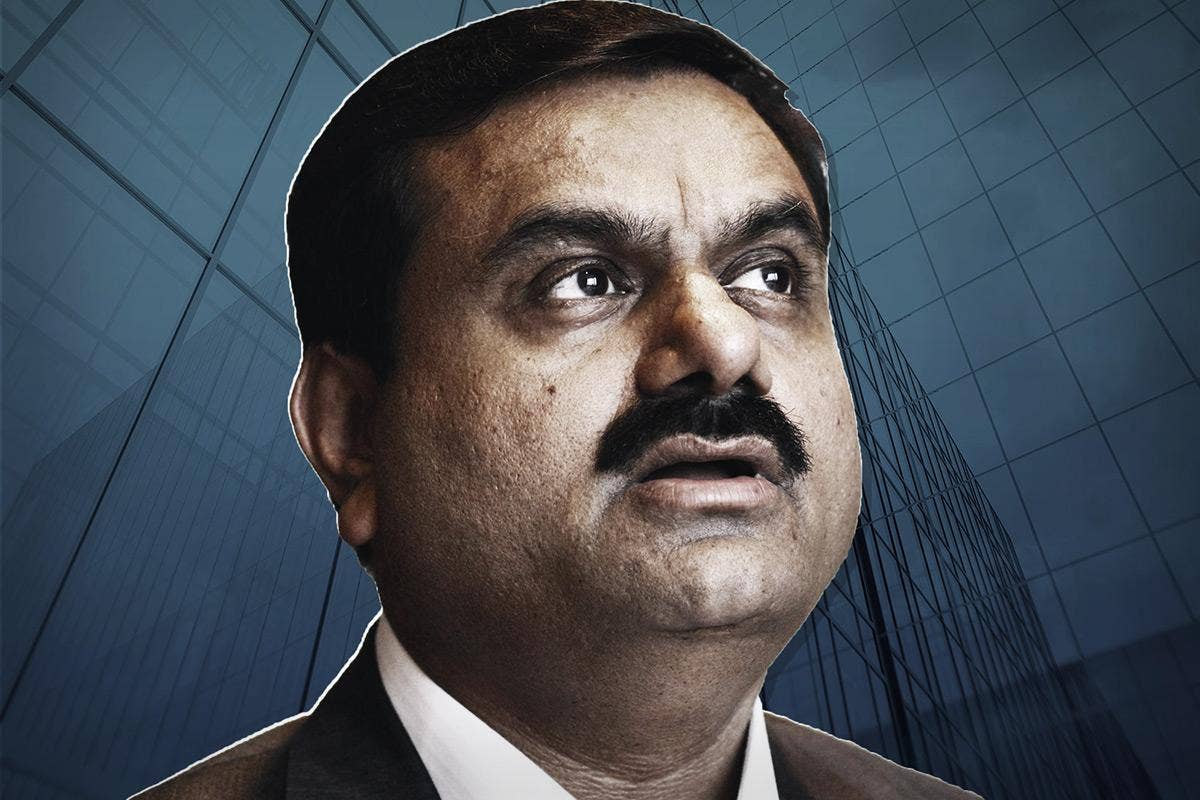
On the criminal front, prosecutors charge Gautam and Sagar Adani alongside Adani Green CEO Vneet Jaain, two Azure Power executives, and Cabanes alongside two other former CDPQ employees. The indictment levels five counts against those eight individuals.
“This indictment alleges schemes to pay over US$250 million in bribes to Indian government officials, to lie to investors and banks to raise billions of dollars, and to obstruct justice,” Lisa Miller in the U.S. Attorney General’s office states. This “corruption and fraud at the expense of U.S. investors” saw the bribes paid roughly from 2020 to 2024 to secure 20 years of lucrative solar-energy contracts, projected to generate $2 billion in after-tax profits, the indictment claims.
The allegations surround paying or promising to pay the more than $250 million to Indian government officials to secure pledges to buy power at above-market rates that benefit Adani Green and Azure Power, the pioneers of solar power in India.
The Adani Group issued a statement that the SEC allegations are “baseless and denied.” It cautions that it’s innocent until proven guilty. “We assure our stakeholders, partners and employees that we are a law-abiding organization, fully compliant with all laws,” it insists.
The SEC is getting involved, because it says Adani Green Energy raised more than $175 million from U.S. investors as part of a $750 million bond offering, while India-based solar power operator Azure Power was listed on the New York Stock Exchange under the ticker AZRE.
Azure Power was delisted from the NYSE in November 2023 for failing to file its financial reports in time, and is now an over-the-counter penny stock, down 94.5% all time. In January 2023, it disclosed that it was cooperating with an investigation by U.S. authorities. The company states today that the related individuals are no longer with the company, which is committed to “clean energy and strong governance.”
Adani Enterprises also used to have a U.S. over-the-counter ticker, ANNRY, but it’s no longer active.
Cabanes, who has worked in infrastructure-related finance since 1999, is leveled with charges under the Foreign Corrupt Practices Act, allegedly for facilitating the bribes while in the United States as well as abroad.
The accusations throw additional fuel on the fire initially ignited by the short seller Hindenburg Research early last year. I’ve been examining the ramifications ever since Hindenburg outlined its case, based on a two-year investigation, that Adani has engaged in “brazen stock manipulation and accounting-fraud scheme” over decades.
Regardless of whether these charges stick, or the Hindenburg claims are proven, I warned in July that U.S. investors (and Street Pro readers) should avoid single-stock risk in India.
What’s that they say about where there’s smoke? The SEC says it has found an additional fire.
Hindenburg attacked a different issue. It claimed that Gautam Adani was pulling the “largest con in corporate history.”
The short seller’s report in large part revolved around the concept that Gautam Adani had used his own money and corporate funds to round-trip investment into 38 offshore funds run by elder brother Vinod Adani, who is based in Dubai. The Mauritius shell companies then pumped the money back into Adani stocks, Hindenburg alleged, inflating them.
Dubai is a popular place to manage Indian family-office wealth. Mauritius is a legal base for funds looking to invest discretely back into India, like the Cayman Islands for U.S. markets.
India’s richest man before the Hindenburg attack began, Gautam Adani is a rags-to-riches story who has built his group in part on lucrative government contracts for infrastructure and utilities. From a start operating a jetty, Adani took over India’s largest commercial port, Mundra, then expanded into thermal electricity generation, solar power, the operation of Mumbai International Airport, and telecommunications.
Gautam comes from the same state, Gujarat, as Indian Prime Minister Narendra Modi, just north of Mumbai. Modi was previously chief minister of Gujarat before getting elected to the nation’s top job. Modi, then, was top regional official as Adani built up his empire. Indeed, the pair are so tight that Modi flew to Delhi in Gautam Adani’s private plane when he first took national power.
The SEC charges revolve around statements made in filings that Adani Green had a “robust anti-bribery compliance program,” and that Adani executives did not pay bribes. So the SEC is charging them with securities fraud. Likewise, the stock watchdog claims Cabanes helped the bribery scheme while sitting on the board of a U.S. listed company.
This could get tricky for any U.S.-affiliated company linked to the three men. The SEC is seeking not only fines but also rules barring them from being executives of U.S.-listed companies, or sitting on their boards.
The Indian authorities have repeatedly looked into claims surrounding Adani, without getting anywhere. The investigations, fraught with political ramifications and intense pressure, get dropped.
After the Securities and Exchange Board of India (SEBI), the SEC equivalent, looked into these claims again, it decided to go after ... Hindenburg.
SEBI has dropped its investigation into Adani, saying it was impossible to tell who owned offshore funds, and pointless to look into it anymore. The short seller, run by Nathan Anderson, retorted that SEBI chair Madhabi Puri Buch, who grew up in Mumbai, had herself owned investments in the offshore funds run by Vinod Adani and used by the group. She admitted ownership but says she divested long before becoming SEBI chief.
Still, the fact remains that Adani investigations inside India inevitably peter out. The political opposition has used them unsuccessfully to unsettle Modi.
So the intensity of the saga has ratcheted up several notches with U.S. criminal and securities charges at stake. Meantime, I would not touch Adani stocks, bonds or other instruments, while repeating my mantra that single-issuer risk is far too great in India. Transparency is sorely lacking, despite the terrific run for Indian stocks. The Nifty 50 has trebled, for instance, since a post-Covid low. Exchange-traded funds are undoubtedly the way to go.