TSMC Is the Stock to Watch in Asia as It Enters 2024 in Commanding Position
Shares of Taiwan Semiconductor, the world's largest chip foundry, should sustain further gains in 2024 as it expands production in the U.S., Japan and Germany.
You've reached your free article limit
You've read 0 of 1 free Pro articles.
The world's largest chip foundry, Taiwan Semiconductor Manufacturing Co. (TW:2330) TSM , is sitting pretty heading into 2024. So it's deciding the time is ripe for a leadership change.
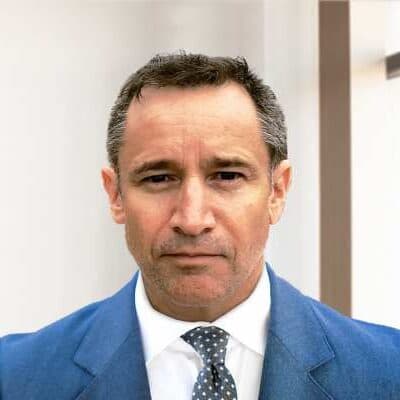
Taiwan Semi, or TSMC, said Tuesday that current chairman Mark Liu will step down in June at the next annual meeting of shareholders. The company is promoting Vice Chairman and current CEO C.C. Wei to chair the board, subject to the approval of shareholders.
Liu, who joined the company in 1993, will retire after leaving a post that he himself took when founder Morris Chang retired in June 2018. He says he's ready for the "next chapter" of his life.
"The past 30 years with TSMC has been an extraordinary journey for me," Liu says in thanking his team and announcing that he is departing. "It has been a privilege to serve as chairman after our legendary founder Dr. Morris Chang, for such a world-renowned enterprise."
I have a small long position in TSMC stock that I've held for some time, and plan to continue to hold. The company in May retook its top spot for the largest company in Asia by market capitalization, at a current US$489 billion, with previous incumbent Tencent Holdings (HK:3333) TCTZF slipping to US$380 billion given China's economic travails.
However, TSMC's stock performance for much of 2022 was concerning. The glut of cheap memory chips on the market has hurt the likes of Korean producers Samsung Electronics (KR:005930) (SK Hynix KR:000660), as well as TSMC. TSMC chips go into just about all things electronic, including smartphones, high-end computing products, cars and appliances.
In Taipei trading last year, TSMC fell a whopping 77.1% between mid-January 2022 and the end of October. So 2023 has been far stronger, particularly as the chip glut and inventory overload starts to clear.
While the overstock in cheaper chips hurt 2022 performance, the company is also positioning itself to make the highest-performance chips for advanced computing purposes such as Artificial Intelligence. So the rally in its shares looks to that future as well as the recovery in sales of "regular" consumer electronics.
The stock has seen four upswings since that October 2022 low. Each advance has been followed by a significant correction. But the shares are now up 29.1% year-to-date and appear well-poised for further gains in 2024. Despite the strong recovery this year, the stock is still 12.9% off that peak level from early 2022. That reset its prior high point from early 2021.
The shares seem to rally heading into the company's full-year results, based on a calendar fiscal year. It should be reporting results by the middle of next month.
The bulk of its business comes from North America, which accounted for 68% of sales last year. Investors will be wary of the contribution that China makes to sales and the bottom line, given the restrictions that the Biden administration has been placing on the export of high-end chips and chip technology. But China made up only 11% of sales last year, a similar proportion to sales it gets from the rest of Asia ex-Japan, with Japan chipping in another 5% of net sales.
TSMC commands some 55% market share as a contract chipmaker that is a major supplier to companies such as Apple AAPL and Alphabet GOOGL . Other semiconductor companies such as Nvidia NVDA and Intel INTC also outsource the physical manufacturing of their chips to TSMC. So I like the company's secular play on the semiconductor sector.
Liu has been a frequent advocate of TSMC's international expansion, with the company investing billions to make new facilities outsize Phoenix in the United States, although that's faced delays and is now due to come online in 2025, as well as in Kumamoto in Japan, due to begin operations in late 2024, and has announced its first physical manufacturing presence in Europe with a plant in Dresden, Germany, as well. It already produces U.S. chips in Camas, Wash., in China at Shanghai and Nanjing, and at 15 "fabs" in Taiwan.
Both Wei, who has a Yale doctorate in electrical engineering, and Liu, with a Berkeley doctorate in electrical engineering and computer science, are engineers by training. They have in fact shared roles in the past, as co-CEOs and previously co-Chief Operating Officer. However, while Chang and Liu have both had a high profile in their posts, and Chang remains an influential figure in the chip industry, Wei has been lower-key. He will no doubt start to carry more heft whenever he speaks, not only for the company but also in his new post for the chip sector as a whole.
The company did a good job in preparing Liu to take the reins and has likely been prepping for Wei to step into his shoes. Analysts don't anticipate that the company will see any serious shift in operations or strategic direction.
Wei, as noted, was co-COO in the past as well as working in business development. So he knows both the sales and manufacturing sides of the business inside out. Before joining TSMC in 1998, he held posts at Singapore-based Chartered Semiconductor Manufacturing (now a GlobalFoundries GFS subsidiary), the Swiss contract manufacturer ST Microelectronics STM , as well as Texas Instruments TXN .
Expect TSMC to sustain its strong showing and benefit from the tech resurgence further into next year, and beyond.
At the time of publication McMillan was long TSMC.