Friday’s After-Hours Advancers and Decliners
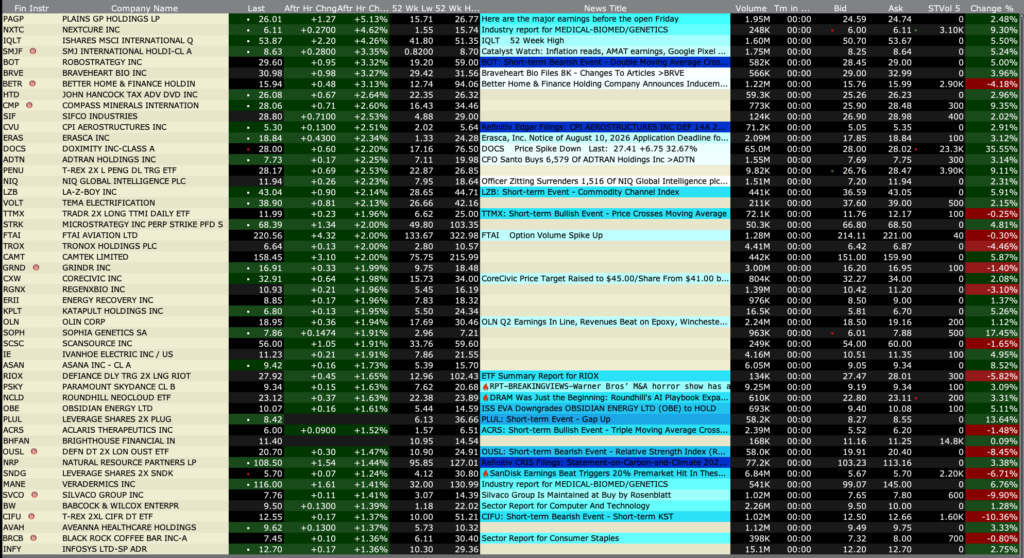
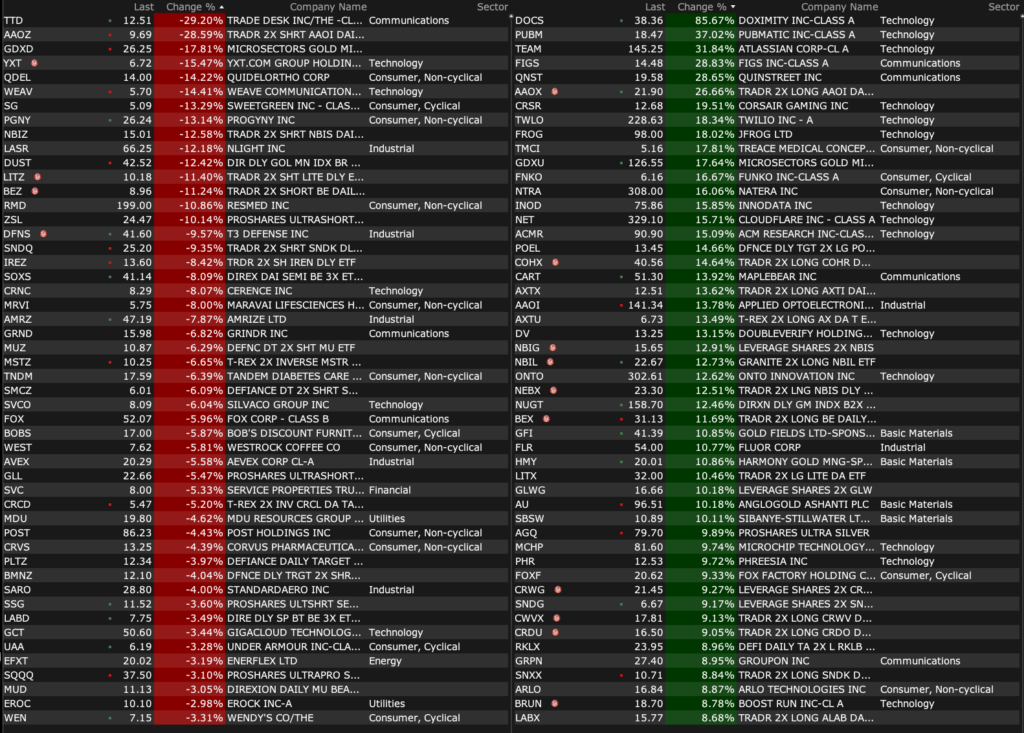
After-Hours % Advancers
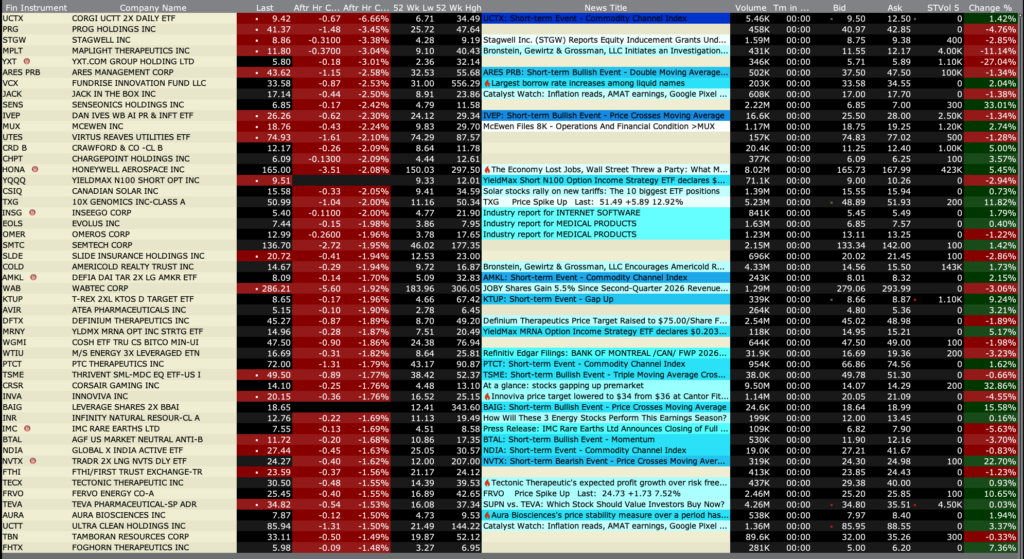
After-Hours % Decliners
Position: None
BY Doug Kass · Aug 7, 2026, 4:45 PM EDT
 Doug KassDoug Kass
After-Hours % Advancers
After-Hours % Decliners
Position: None
BY Doug Kass · Aug 7, 2026, 4:45 PM EDT
Closing Volume
– NYSE volume flat to its one-month average
– NASDAQ volume 66% below its one-month average
– VIX index: down 1.65% to 14.90
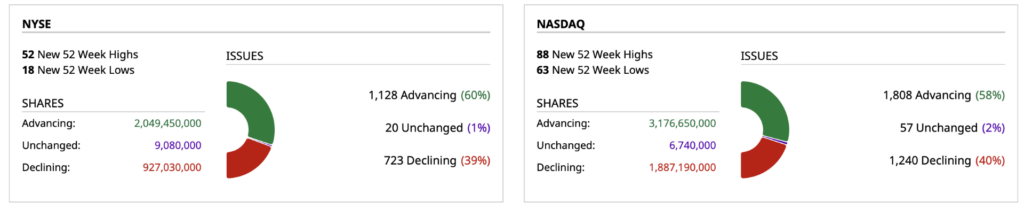
Breadth
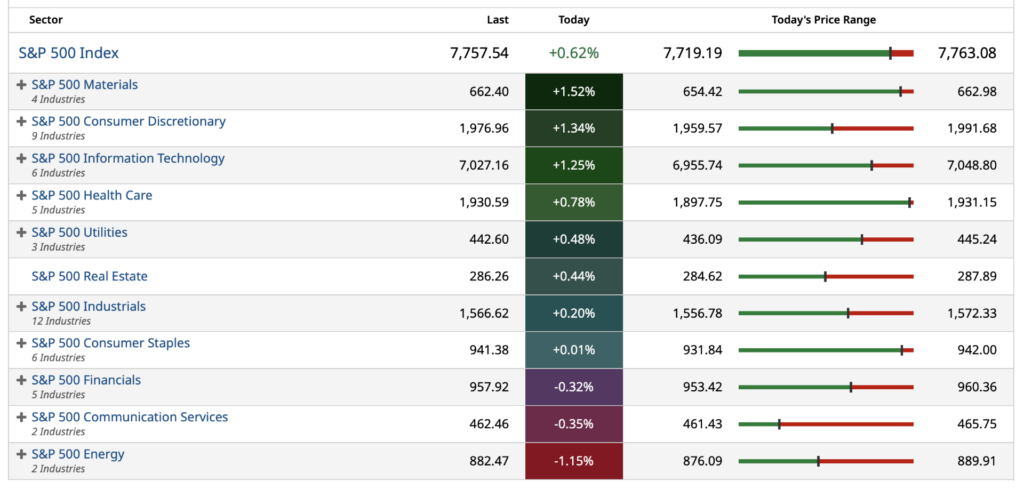
S&P 500 Sectors
% Movers
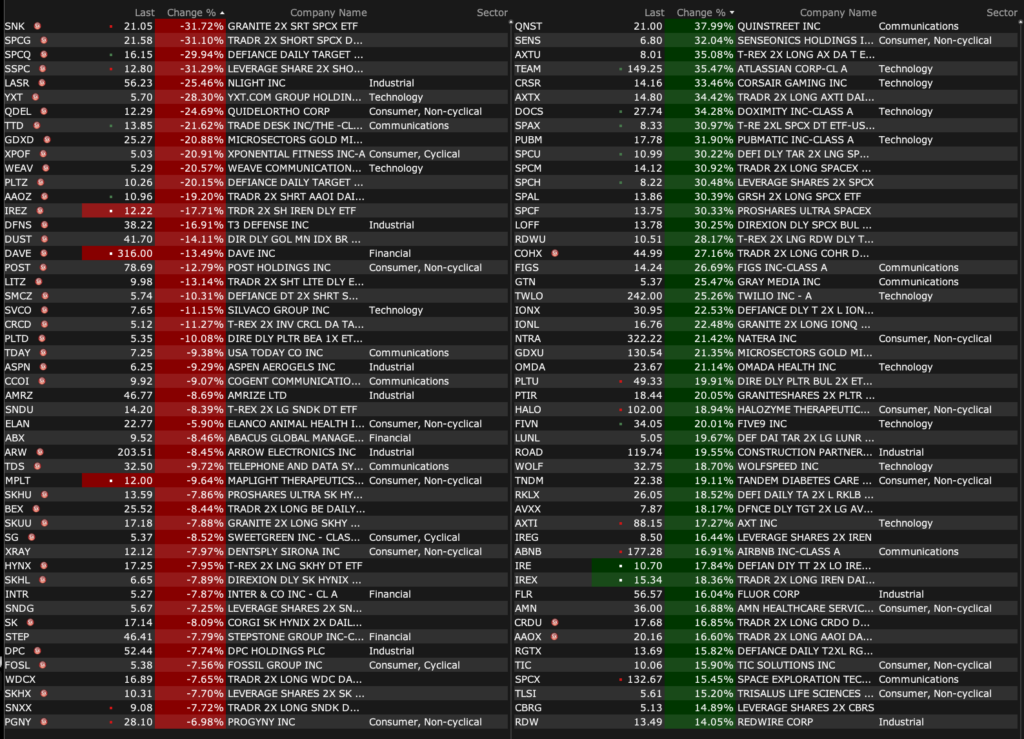
Nasdaq 100 Heat Map
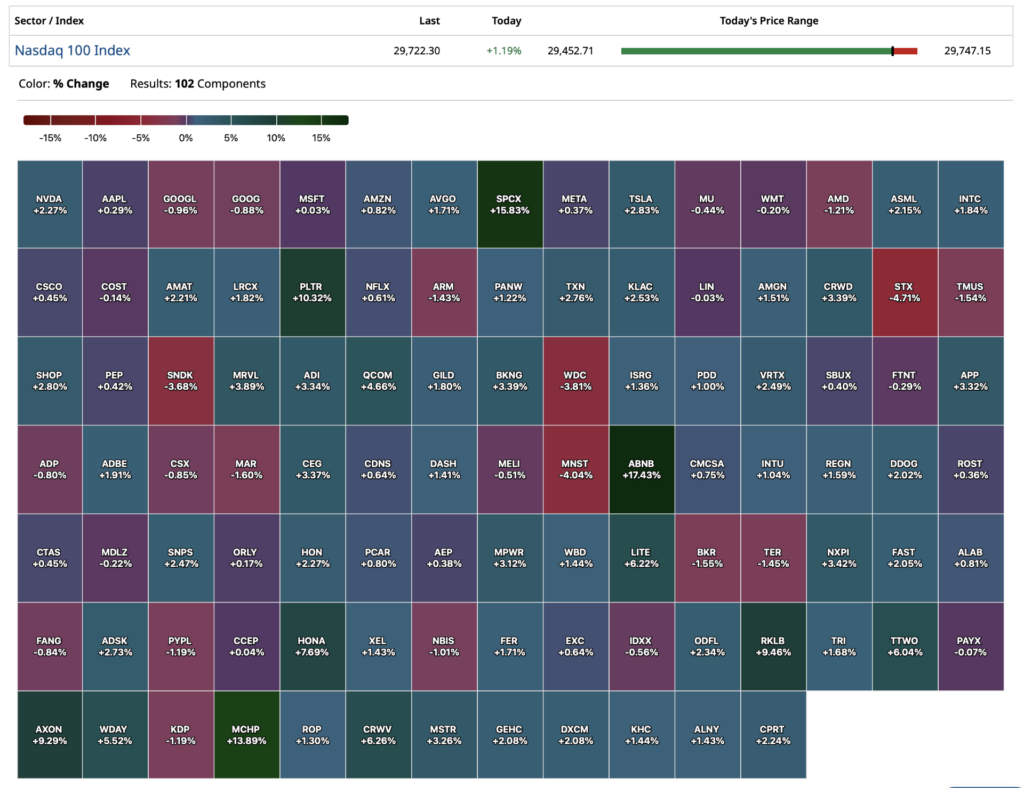
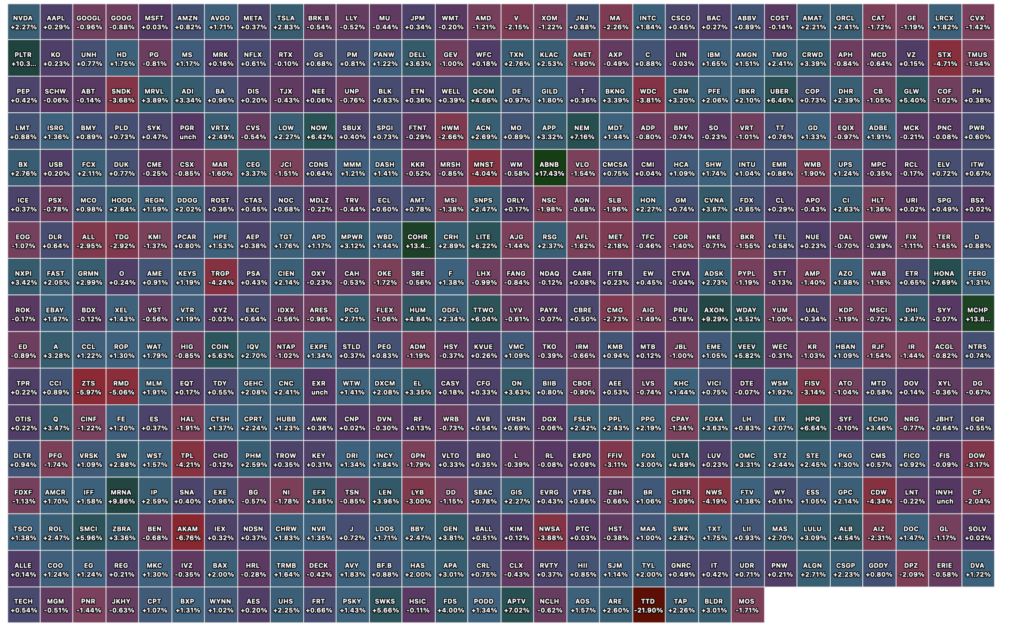
Closing S&P 500 Heat Map
Position: None
BY Doug Kass · Aug 7, 2026, 4:27 PM EDT
Unfortunately and with great sadness I have just learned that my friend has passed away.
I won’t be returning to my writing perch until Monday.
Enjoy the weekend.
Hug your dear ones.
Be safe.
Position: None
BY Doug Kass · Aug 7, 2026, 12:35 PM EDT
Position: None
BY Doug Kass · Aug 7, 2026, 11:45 AM EDT
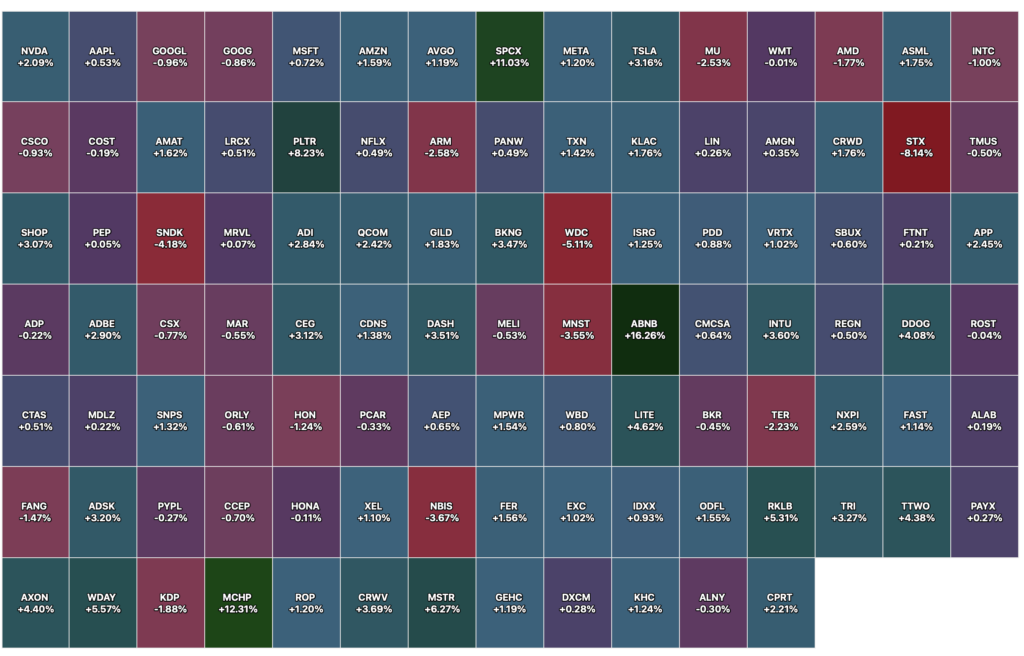
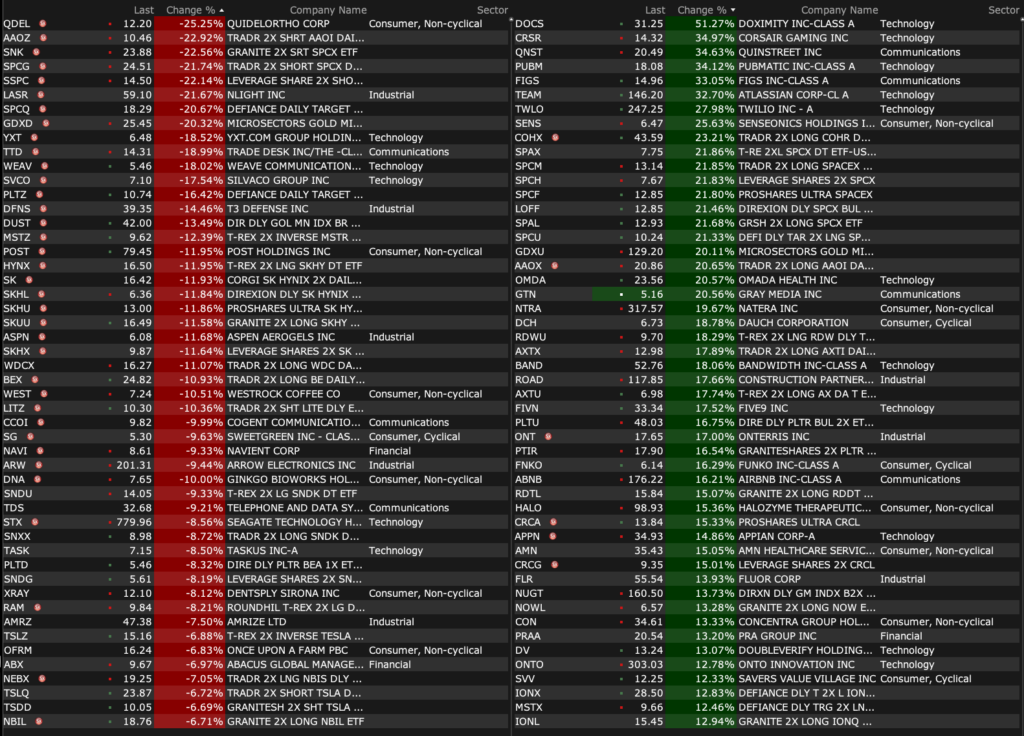
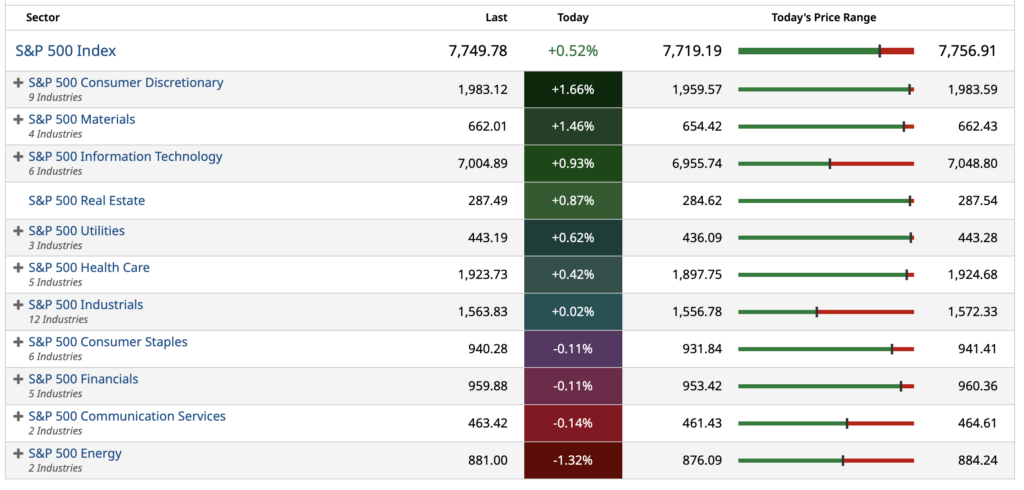
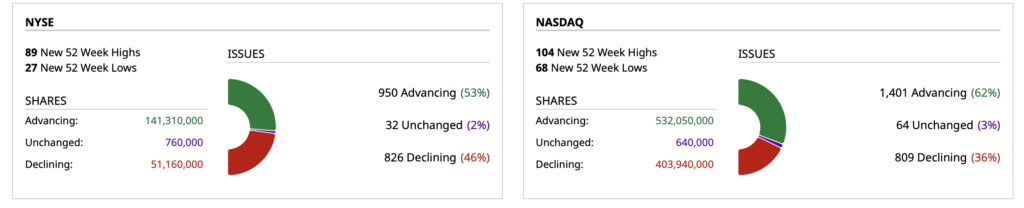
– NYSE volume 4% above its one-month average;
– Nasdaq volume 2% above its one-month average
– VIX index: down 1.32% to 14.95
Positions: None.
BY Doug Kass · Aug 7, 2026, 11:35 AM EDT
A good friend of mine in my weekend golf foursome fell and has stopped breathing at the golf course several minutes ago.
I have to attend to this (notify his wife, etc.) and will be back when I get more color on the situation.
Position: None
BY Doug Kass · Aug 7, 2026, 11:30 AM EDT
The early gains in bond prices (following the jobs report) have evaporated.
Position: None
BY Doug Kass · Aug 7, 2026, 11:20 AM EDT
* Jobs data was very consistent with a sector in weak balance; Job data is low hire, low fire;
* This data doesn’t ‘feel very good,’ but it is where it is
* We’re in a zero-to-modest positive job gain environment
* Watching corporate earnings for linkage to the job market; Earnings are quite strong and are growing quite nicely
* We may be moving into a world of greater instability
* Fed will get inflation to 2% target
* It’s no surprise that Fed Chair Warsh has new ideas for the Fed; He’s thoughtfully engaging
NONE
BY Doug Kass · Aug 7, 2026, 11:01 AM EDT
Positions: None.
BY Doug Kass · Aug 7, 2026, 10:45 AM EDT
I added to my SPY $772.70 short
Position: Short SPY M
BY Doug Kass · Aug 7, 2026, 10:35 AM EDT
BY Doug Kass · Aug 7, 2026, 10:20 AM EDT
Added to QQQ (QQQ) short at $721.94.
Positions: Short QQQ S
BY Doug Kass · Aug 7, 2026, 9:46 AM EDT
I am bidding across the board for cannabis.
Positions: Long Cannabis
BY Doug Kass · Aug 7, 2026, 9:39 AM EDT
The following is from Peter Boockvar:
Positives,
1) Initial jobless claims remained subdued at 199k vs 198k last week and 6k under the estimate. The 4 week average falls further to just 199k vs 203k in the week before. Continuing claims though ticked up to 1.801mm from 1.777mm but also about 100k ish below what we saw consistently last year.
2) From Challenger: “U.S.-based employers announced 33,429 job cuts in July, down 27% from the 45,849 cuts announced in June. It is down 46% from the 62,075 layoff plans announced in the same month last year, and marks the lowest monthly total in two years…July’s total is the lowest monthly total since July 2024, when 25,885 cuts were announced.” And, hiring improved too, “Employers announced plans to hire 16,095 workers in July, up 47% from the 10,933 plans announced in June and well above the 3,200 announced in July 2025. It is the highest July total since 2022, when employers announced 25,506 hiring plans.”
3) In the July ADP jobs report, wage growth improved for ‘job changers’ with pay up 7% y/o/y, up from 6.6% in June. For ‘job stayers’, wages grew by 4.4%, the same pace seen in June.
4) The July ISM services index was little changed at 54.1 vs 54 in June and just below the estimate of 54.5. The business activity component though gained another 3.7 pts to 59.1. Breadth was a hair weaker with 13 industries seeing growth vs 14 in June while 4 reported a contraction, the same figure in June. The bottom line from the ISM, “Tariff impacts and the Middle East conflict continued to be mentioned by respondents, but much less frequently than in prior reports. The World Cup was again cited in the comments regarding increased business activity and new orders. Overall, the U.S. services economy continues to be resilient. Concerns still exist regarding mortgage and inflation rates, and we are still in the midst of pricing impacts due to the recent run-up in petroleum costs.”
5) The July ISM manufacturing index rose 2.3 pts m/o/m to 55.6 and that was better than the estimate of 53.9. This is the 7th month in a row above 50 as the US manufacturing sector, globally too, finally gets out of its 3 year recession. Breadth improved a touch with 15 industries reporting growth vs 14 in June. Only one contracted, that being chemical products vs three in the month before. The balance saw no change.
6) From Disney: Focusing on the parks business, “We were pleased with 4% per capita spending growth at our domestic parks, reflecting the value our fans see in the parks experience and our decades of investment…Walt Disney World had a stand-out quarter, with healthy core attendance increases from domestic tourists and annual passholders, and effective summer promotions and new experiences that further supplemented growth…We continued to face headwinds from international attendance at our domestic parks, but as expected, those headwinds moderated relative to the y/o/y impact observed in fiscal Q2. We also saw strong attendance growth at Disneyland Paris following the opening of World of Frozen.”
7) From Marriott: “RevPAR in the US and Canada region rose 5%, the highest quarterly increase in 13 quarters, with strength in World Cup and non-World Cup markets. Excluding the World Cup, second quarter RevPAR rose 4%…Luxury and resort hotels continued to lead in the region in the quarter, with luxury RevPAR up over 9%. Importantly, strength was pervasive across chain scales with select service RevPAR increasing over 4%.”
8) From Booking Holdings: “While long-haul international travel remained pressured by elevated airline prices and reduced capacity due to the conflict in the Middle East, domestic and inter-regional travel remained healthy across many parts of the world…Globally, we saw a modest contraction in booking window and length of stay during the quarter, although both began to normalize in June. Importantly, in Europe, our largest region, both metrics were approximately flat for the quarter.”
9) From Wynn Resorts: “More recently, the business has seen solid volumes and increases in both slot revenues and RevPAR, though we experienced unusually low hold in the month of July. Looking ahead, we remain positive about the business in Las Vegas. We are currently on track for another strong F1 weekend and pacing ahead of last year in our transient and leisure business for that event…On the group and convention side, we saw the forward booking pace accelerate as July progressed, and the business looks strong heading into both Q4 and 2027.”
10) From Shake Shack: “Our teams delivered another quarter of positive traffic growth, marking four consecutive quarters of positive traffic and extending our streak of positive comp sales growth to 22 consecutive quarters.”
11) From Uber: “So the World Cup definitely was a benefit, but it was as expected to a large extent. And what I would say is the momentum that we’re seeing in the US is consistent with the theme that we have been talking about since the beginning of the year.”
12) From eBay: “The strength in focus categories was broad-based with collectibles, motors, fashion, and refurbished all contributing to growth…Collectibles GMV (gross merch value) continued to be led by strength in trading cards, where we saw sustained momentum across all of the major sports and collectible card game genres, including notable strength in basketball cards through the NBA Finals, and accelerating demand for soccer cards around the World Cup.”
13) From Wayfair: “While there’s still some broader macro uncertainty and depressed housing turnover, by our measure, this marked the first quarter of flat to slightly positive y/o/y category growth that we’ve seen in the US since 2021, though skewed towards higher growth in the higher income segments.”
14) From Sysco: “For fiscal 2027, we expect to deliver positive case volume growth for national contract customers, despite a macro foot traffic environment that remains challenged. Foot traffic to restaurants remains down y/o/y, and Sysco is growing our business, taking share, and delivering profitable growth y/o/y…Local restaurants are performing better than national chains for a host of reason, and increasing our work focus on local customers is a net, net positive for the long term.”
15) From Owens Corning: On their insulation business, “we’ve got pockets of real strength in data centers, which we would put it 5% or less of our overall revenue, but it’s growing at a fast enough rate.”
16) From Caterpillar: “Second quarter sales and revenues were better than expected due to strong sales volume growth in Construction industries and Resource industries, while Power & Energy was broadly in line with our expectations…Power generation grew 72% driven by very strong demand for large gen-sets and turbines used in data center applications.”
17) From Cummins: “Cummins delivered record second quarter results, reflecting robust customer orders for standby power for data centers and improving North American truck markets.”
18) From Dupont: “Top line growth was broad based, led by continued strength in healthcare, aerospace, and industrial water and semiconductor markets. In addition, we saw y/o/y growth in our building technologies business on strength in residential and non-residential end markets.” Asia Pacific is where they saw most of the strength in residential and non-residential markets.
19) From Expeditors: “The ongoing heavy demand from AI hyperscalers shows no sign of slowing down, and we have seen increased demand for freighter space, as some hyperscalers are requiring upper deck access for their servers.”
20) From Marriott: “With the conflict in the Middle East weighing on results, second quarter international RevPAR declined slightly y/o/y.”
21) From On Semi: “As we anticipated, the recovery continued to take shape during the quarter with continued strength in our AI data center business…We also saw multiple indicators of strengthening demand with China, BEVs and automotive, for example, and energy infrastructure and medical and industrial already showing over-market growth…Supply is tightening in several growth areas, lead times are extending, and we are seeing increases in both orders placed within lead time and customer escalations, all signs of a healthy recovery across the board.”
22) From Ferrari: “we continue to experience healthy demand across all geographies with an order book that covers the entire ‘27. This gives us strong visibility and confidence.”
23) From AutoNation: They still are upbeat, “We think the industry and consumers are in good shape. The June SAAR is the highest June in four years…Consumer sentiment is improving every month. Our banking partners are reporting a 20% increase in applications and originations and their delinquencies continue to improve. After sales was once again solid.”
24) German factory orders rose 3.1% m/o/m, well better than the estimate of up .5% and helped by high priced items which without would have seen orders decline. The Economy Ministry said “New orders in the manufacturing sector are currently trending upwards thanks to strong domestic demand. Significant growth among capital goods producers is likely related to public procurement projects for the modernization of the German Armed Forces, as well as contracts under the special fund for infrastructure and climate neutrality.”
25) Singapore’s PMI rose to 59.4 from 57.4 and remains an economic bright spot. The rest of the region were all above 50.
26) The July Eurozone and UK service indices were left little changed with the revisions but both holding above 50 at 51.7 and 52.2 respectively. The manufacturing PMI’s were each 51.9 and 51.9 for both.
27) Japan continues to have reason to hike rates again with the strong 3.4% y/o/y rise in June base pay. That matches the fastest pace since 1992.
28) The yen weakness has been stemmed for now.
29) China’s July trade stats were up sharply with exports higher by 24% y/o/y, helped by autos and tech products, and imports up by 27.5%.
Negatives,
1) July payrolls declined by 23k, well worse than the forecast of up 80k and the two prior months were revised down by a total of 103k. The household survey also showed a drop in jobs, by 87k and was joined by a 264k person fall in the size of the labor force. The participation rate continued to decline along with this, down another 2 tenths to 61.4% which kept the unemployment rate from rising and in fact it fell instead to 4.1% from 4.2% but for not good reason. Wage growth was also muted, with average hourly earnings up by one tenth instead of 3 tenths as forecasted and up 3.2% y/o/y. A give back from the World Cup was a factor as leisure/hospitality jobs dropped by 40k. Jobs were also lost in financial services and retail. Manufacturing added 5k and construction was up by 22k, likely helped by data center building. Information jobs rose by 11k. Health/social assistance rose by 23k and continues with its conistent contribution to the labor market. Jobs on professional business services were up.
2) ADP said 44k private sector jobs were added in July, 21k below the estimate and follows a 95k increase in June (revised down by 3k) . The smallest businesses (those with less than 20 employees) contributed most of the jobs, with a rise of 27k while those companies between 20-49 shed 7k. Large companies with more than 500 people added 13k and in between 8k new workers were hired.
3) In June, so dated, job openings totaled 7.359mm, down from 7.537mm. The hiring rate though ticked up to 3.4% from 3.3% while the quit rate held at 2%.
4) With the average 30 yr mortgage rate rising to the highest level in a year at 6.81%, purchase applications fell 3.6% w/o/w for a 2nd straight week and now is back to the lowest since February. Refi’s declined for a 3rd week.
5) From CDW: “Demand remained healthy with AI increasingly influencing customer activity despite cautious and deliberate customer spending…Infrastructure demand is strong, cloud consumption trends are favorable, customer engagement is healthy and AI-related activity continues to expand across industries and customer segments…Given this backdrop, we are increasing our full year outlook. We now expect the US IT addressable market to grow in the mid-single digits in 2026 on a customer spend basis with 200 bps to 300 bps of CDW outperformance.”
6) From ZipRecruiter: “when you look at the macro, if you just look at the data that’s out there, we’re definitely still in what I’d call a subdued labor market. It was stable with Q1, but you’re looking at hires and quits that are near 15 year lows when you look back over the trajectory of those two metrics.”
7) From Shake Shack: They mentioned “operating in one of the most challenging cost environments we have faced in many years…The quarter unfolded largely as we anticipated following the business update we provided in early June. At that time, we revised our 2nd quarter and full-year outlook to reflect several developments that emerged during the quarter including record high beef prices, higher fuel and distribution costs, and uncertainty surrounding the potential impact from the World Cup. Today’s results are consistent with that updated outlook.”
8) From McDonald’s: “Turning to the US. After a solid start to the year, the business slowed significantly, posting comparable sales growth of .8% in the quarter. This was below our expectations and something we’re going to address in greater detail on today’s call. We don’t have a strategy problem. We simply didn’t execute at the level we needed to in the 2nd quarter…Global comparable sales grew 1.3%, reflecting a challenging consumer environment that saw QSR industry traffic in several of our largest markets continued to be flat to negative. Global comparable sales were also impacted by execution that was below our expectations in the US business.”
9) From Chemours: “Net sales were slightly below expectations, primarily due to softer residential stationary AC demand in Thermal & Specialized Solutions. However, pricing improved across all our businesses, including continued execution in Titanium Technologies.”
10) From Owens Corning: With guidance, “For the third quarter, we expect discretionary remodel activity and new residential construction to remain under some pressure.”
11) From Mohawk Industries: “Our second quarter forecast had reflected uncertainty related to the Middle East conflict, but market conditions proved more resilient than we anticipated. Residential channels remained soft during the quarter, and we believe we outpaced the market and gained share in most regions. The commercial sector continued to outperform residential…The new home construction market remains pressured and existing home sales continue to be affected by affordability challenges…Across many of our products and geographies, we executed price increases in response to higher materials, energy and transportation costs.”
12) From Saudi Aramco: “Let me be clear, demand remains strong and has not been met by supply in the first half of this year, but rather from commercial and strategic inventories…Demand in the 2nd half of the year is expected to be around 2 million barrels per day higher than the first half. Restoring commercial inventories and strategic reserves to pre-conflict levels will materially add to calls on crude oil throughout 2027 and likely beyond. To put this into context, if the Strait of Hormuz was to open today, it would take up to 18 months at an average rate of 2.1 million barrels per day to replenish depleted inventories on top of demand.”
13) From Expeditors: Rising transportation costs, “Air buy and sell rates were highly elevated during the quarter, as demand for air capacity continued to outweigh available space, particularly late in the quarter and driven largely by a reduction in passenger flights and constrained belly capacity due to the conflict in the Middle East.”
14) From Boise Cascade: “During the second quarter, the operating environment remained uneven and competitive. Ongoing geopolitical uncertainty, volatile treasury yields and mortgage rates, and persistent inflation continue to weigh on the macroeconomic outlook. Against this backdrop, residential construction remains subdued, as affordability constraints and low consumer sentiment pressure market conditions…In response, homebuilders have relied on incentives to stimulate demand while maintaining discipline around starts and spec inventory.”
15) From Whirlpool: In North America, The 8% sequential sale growth was “primarily driven by successful execution of previously announced pricing actions.” Also in North America, The 1.5% y/o/y sales decline was “driven by lower volume resulting from industry decline, partially offset by favorable price/mix” and their “EBIT margin decreased y/o/y, pressured by volume decline and the unfavorable impact of tariff, raw material inflation and fuel costs, partially offset by favorable price/mix.”
16) From Clorox: “Throughout fiscal year 2026, we operated in a dynamic environment, marked by heightened value seeking behavior, increased competitive activity, inflationary pressures, and ongoing macroeconomic uncertainty…We expect the categories to continue to be muted given what’s going on from a macroeconomic perspective and consumers continuing to engage in value seeking behaviors, largely consistent with what we saw in 2026.” With respect to the cost pressures they are dealing with, “we expect fiscal year ‘27 inflation to be above $200 million. So for perspective, it’s about more than double our historical range, which has been in the $75 million to $100 million.”
17) From Colgate Palmolive: “We grew organic sales in every division except North America, which was impacted by continued weakness in US category growth rates, some market share losses, as well as retail inventory reductions…The US market remains challenging, as category growth rates slowed in May, but slightly rebounded in June.” They attributed the May weakness due to peak gasoline prices.
18) From Camden Property Trust: Negative from a renters perspective, “We also saw a 140 bps improvement in blended rate growth from negative 1.6% in the first quarter 2026 to negative .2% for the second quarter 2026 and our blended rate growth turned positive in both June and July…“We also saw a 140 bps improvement in blended rate growth from negative 1.6% in the first quarter 2026 to negative .2% for the second quarter 2026 and our blended rate growth turned positive in both June and July…Turnover rates across our portfolio remain very low with second quarter 2026 annualized, net turnover consistent with second quarter 2025 at 39%…And move outs for home purchases also remain low at 10.4% for the second quarter.”
19) The July China services index from RatingDog and focused on their private sector was soft, falling to 50.4 from 54.1. They blamed slower domestic demand for the weakness while strength was seen in services exports with “Anecdotal evidence linked to higher overseas client demand to exhibitions, study tours, increased settlement business and effective management.”
20) Hong Kong’s July PMI fell 1 pt to 51.
21) FX intervention never works on a sustainable basis and we will most likely need higher interest rates in Japan in order to more forcibly follow through.
Positions: None.
BY Doug Kass · Aug 7, 2026, 9:30 AM EDT
-DOCS +89% (earnings, guidance)
-TEAM +33% (earnings, guidance)
-HTZ +31% (earnings)
-QNST +30% (earnings, guidance)
-FIGS +27% (earnings, guidance)
-TWLO +18% (earnings, guidance)
-CART +13% (earnings, guidance)
-MTW +12% (earnings, guidance)
-AKAM +9.0% (earnings, guidance)
-GRPN +7.8% (earnings, guidance)
-SPB +7.7% (earnings, guidance)
-DCH +7.5% (earnings, guidance)
-ABNB +7.4% (earnings, guidance)
-FLR +7.4% (earnings, guidance)
-MCHP +6.8% (earnings, guidance)
-AD +3.1% (earnings, guidance)
-SEZL -26% (earnings, guidance)
-ARDX -17% (earnings, guidance)
-SG -13% (earnings, guidance)
-RMD -10% (earnings, color)
-ANIP -6.2% (earnings, guidance)
-WEN -3.7% (earnings; withdraws guidance)
-ARW -2.3% (earnings, guidance)
-TDS -2.3% (earnings, guidance)
Positions: None.
BY Doug Kass · Aug 7, 2026, 9:10 AM EDT
Positions: None
BY Doug Kass · Aug 7, 2026, 9:00 AM EDT
Positions: None.
BY Doug Kass · Aug 7, 2026, 8:47 AM EDT
10 a.m.: Fed Bank of Richmond President Barkin (Non-Voter) participates virtually in
fireside chat on the economy, leadership, and the evolving role of the Federal Reserve before event hosted by the National Association for Business Economics, Richmond, VA (Audience Q&A expected. No text);
12:45 p.m.: Fed Vice Chair for Supervision Bowman (Voter) participates in virtual fireside chat before the Kansas Bankers Association 2026 CEO & Senior Management Summit and Annual Meeting, Washington, DC ( No text. Q&A from moderator. Livestream here)

Positions: None.
BY Doug Kass · Aug 7, 2026, 8:36 AM EDT
Tough but real talk from Jim Bianco:
Position: None
BY Doug Kass · Aug 7, 2026, 7:45 AM EDT
* Rescheduling is happening, hemp might be going away, the illicit market is finally going to be addressed, cannabis pricing is likely to rise, credit cards are being introduced and synergistic industry mergers lie ahead (we expect VRNO to be one of the first to be acquired)
* Buying cannabis stocks today is getting ahead of these and other favorable factors and developments
* By accumulating cannabis stocks today we are getting in front of institutional capital, which is going to come into the sector…
Yesterday I outlined my optimism about the cannabis space (I Want to Take You Higher)
In that column I highlighted the case for industry takeovers and consolidation:
* The equity capitalization of the five largest cannabis players only totals about $5.5 billion!
* I expect industry consolidation over the balance of the year and it is not out of the realm of possibility that tobacco or consumer packaged goods companies try to get a toehold in the cannabis sector through the takeover of several of the top-five individual cannabis companies.
After the close, my friend Shadd Dales of The Dales Report hosted Curaleaf’s (CURLF) CEO Boris Jordan, who made a very strong case that we will see a swift consolidation and robust merger activity in the cannabis industry (upon rescheduling and the determination and (FinCen) guidance for some retroactive relief of U.S. uncertain tax positions (UTP)/liabilities): (starting at the 26 minute mark)
“M and A is definitely happening. Our job is to make our companies the best in the industry but there is no question that this industry is primed for consolidation. It’s going to happen, 100%. The benefits of the merger of two big MSOS – $150 million to $200 million of free cash flow drops to the bottom line after eighteen months. This industry makes no sense in having so many participants and existing in its current form. Already, all of our growth facilities are full (we are at 110% of growth capacity) and we are getting more efficient (we used to grow 50 grams/sq feet and we are now at 150 grams/sq feet) – double the efficiency of two years ago. We don’t have enough capacity. By bringing two companies together (instead of building another $100 million grow) is good for pricing… it’s the right thing for the industry. It’s a 2027 issue and it will happen quickly.
I have already approached top MSOSs for deals. Curaleaf would be better off being twice the size of its current state…
The tobacco companies need the cannabis companies, it’s a similar business (Altria and Philip Morris are already in the business. Japan Tobacco is looking around. Strategics will be buying. What will happen is that in the U.S is that we will ultimately have two or three major players.”
– Boris Jordan, Curaleaf CEO
Parenthetically I expect one of our largest individual positions (Verano Holdings (VRNO) to be one of the first large MSOSs to be acquired.
Back to fundamentals. I highlighted that an important investing case was that cannabis fundamentals are stabilizing and beginning to improve, which we clearly saw in yesterday’s release of Curaleaf’s second-quarter report.
Curaleaf (which I am long) reported much better than expected quarterly results on Thursday and the shares responded in kind (+9%).
Position: Long MSOS (VVL), MSOX (S), CURLF (VS), VRNO (S) GTBIF (S/N), TRLV (S/M), TSNDF (VS), GLAS (S)
BY Doug Kass · Aug 7, 2026, 7:00 AM EDT
Position: None
BY Doug Kass · Aug 7, 2026, 6:25 AM EDT
Position: None
BY Doug Kass · Aug 7, 2026, 6:10 AM EDT
The S&P Short Range Oscillator moved further into overbought territory at 2.93% vs. 2.12%.
Position: Short SPY (M), QQQ (S)
BY Doug Kass · Aug 7, 2026, 5:55 AM EDT
I shorted QQQ (at 4:45 AM) at $718.03.
Position: Short QQQ (S)
BY Doug Kass · Aug 7, 2026, 5:45 AM EDT
The bond market is pricing something it has not since 2008. The real 30-year Treasury yield, (what you keep after inflation), just hit its highest since the 2008 crash. It was only ever higher for a few days at the depths of that crisis. Investors demand a bigger real return Show more

@TheJudgeCNBC @carlquintanilla Regarding your discussion about the upside to semiconductors with Adam Parker. I know it is unpopular and not customary to question your guests, but the one thing I am certain of is that 85% margins are unsustainable. @cnbc
S&P 500 volatility dispersion soars to highest level since the Dot Com Bubble 🚨 🚨

Only one thing is certain with 85% margins on semiconductors: there will be significant increases in supply. Admittedly it takes time, but it’s already in queue with yet more production announced by SK Hynix today.
The CEO is Mat Ishiba, majority owner of the Phoenix Suns and has an option to buy the Chicago White Sox in 2030. This is the oldest story in business: when you're distracted by a professional sports team, let alone two professional sports teams, your original business falls Show more

United Wholesale Mortgage plunges 40% after suspending dividend and raising capital cnbc.com/2026/08/06/uni…
Tweet of the Day

Former WSJ journo Jon Hilsenrath responds on LinkedIn ATTENTION MR. BESSENT, 2.0: YOU ARE COMING UP SHORT ON YOUR OWN '3-3-3' GOALS Treasury Secretary Scott Bessent has been attacking financial journalists on Twitter [X] this morning. It's petty, but let's judge a man not by
Top Cannabis Executive Weighs In on Industry's Future x.com/i/broadcasts/1…


