Daily Diary

Doug KassDoug Kass
DATE:

The Market Outlook Worsens

* I believe we have seen the high in most averages for the year.

* Risks are underappreciated.

* Downside market risk currently dwarfs upside reward — perhaps materially so…

What follows is a combination of Diary posts and communications to my Limited Partners at Seabreeze: 

I remain net short (about 15%) in exposure.  

Given that nearly every concern we have expressed over the last 18 months is now being realized (see below), our short position should probably be higher. However, given our decades of experience, risk management/discipline and respect for market prices, price action and the changed market structure, we have not yet increased our short exposure.

That said, the market’s advance is again narrowing, interest rates are moving higher, inflation remains persistent and the probabilities of an adverse return outcome from the enormous AI capital spending spree is increasing. So, depending on price action and fundamental developments, I am more receptive to expanding our net short exposure at the current time. 

In today’s commentary I will briefly explain why I feel equities are overvalued, why I am comfortable being net short and why I am considering adding to our short exposure.   

Equities have been resilient reflecting the market structure dynamic, continued optimism on the part of most market participants (“the buy on the dip mentality continues uninterrupted” and speculation that is running amok) that a sharp and extended market decline is unlikely (but not improbable).   

Nonetheless, recent signposts indicate that the market’s advance is narrowing — contrary to the broadly held notion that the market is broadening out. The McClellan Index (NYSI) is faltering, the Mid Cap Index (MDY) is weakening, the Russell Index (IWM) is not “crowing” nor is the equal-weighted S&P Index (RSP) participating in the market’s recent advance.                                       

While the proximate reasons for our ursine market outlook are sticky inflation and higher interest rates, I continue to see other substantial headwinds that argue against a continuation of the bull market and, suggest to us, that downside risk dwarfs upside reward.

Growing AI Uncertainties 

Away from sticky inflation and higher interest rates, AI uncertainties lead my lengthening list of (multiple) concerns. 

The AI boom is potentially a toxic combination of the dot-com era’s over-investment in the internet infrastructure buildout (1997-2000) and the overextension of housing credit that presaged The Great Financial Crisis of 2007-09.

Like in 1999 and in 2007, there was the promise of transformational change and the abundance and exportation of leverage.

The AI capital spending spree (of data centers) has transformed the Mag 7 from being capital light to be capital intensive — with all the attendant adverse impact on a growing negative free cash flow status.  

Nonetheless, as I have documented in past correspondence, numerous and growing factors do not ensure positive AI investment outcomes. We are worried that despite near-universal acceptance that AI will yield an attractive ROIC, that optimism is unwarranted.

Moreover, as in 1999 and 2007, AI has exported possible financial and economic problems if the promise disappoints. (So, whatever happens in AI land will not stay in AI land!)

Anthropic’s CEO Dario Amodei said the following several months ago regarding the risks of committing trillions of dollars without knowing what demand will be:

“If my revenue is not 1 trillion dollars, if it’s even $800 billion, there’s no force on earth, there’s no hedge on earth that could stop me from going bankrupt if I buy that much compute… If I’m just off by a year in that rate of growth, or if the growth rate is 5x a year instead of 10x a year, then you go bankrupt.”

Yesterday Amodei tweeted another warning:

My Major Concerns 

* AI has been the straw that has stirred the market’s and our economy’s drink — as such, it may represent the biggest risk to equities:

1. The likelihood that the unprecedented AI capital spending spree fails to return the cost of capital.  

2. The questionable AI spending boom (characterized by double and triple ordering) means to us that companies are overearning and that the current nominal strength in corporate profits (which forms the foundation of the bull market argument) may be short lived). 

3.  AI’s digital doomsday? Brace For Impact, The AI Trade Just Hit A Wall At Full Speed 

4. Take out the AI spending boom and the U.S. economy is foundering with the American consumer succumbing to weak real disposable income and a measurable drop in the savings rate.

* Undisciplined fiscal policy from both political parties means, among other things (and as mentioned previously), interest rates will be higher for longer.

* Improvisational geopolitical policy that may have adverse economic, trade and corporate profit repercussions.

* An equity risk discount (the ERP measures the relationship of earnings to the risk-free rate of return) and other historically high valuations against almost every traditional metric (Cape Shiller, the Buffett Ratio and the Gordon Model, etc.).

* Today’s “passive” market structure and hidden and unhidden leverage risks have not been seen in prior market cycles (see below).

The natural question investors should ask is that with so many potential market and economic headwinds that could product adverse outcomes, why have equities continued their climb in 2026? 

This is an essay question, but we will briefly try to explain the reason why we believe stocks have advanced. 

Situationally Unaware: Speculation Is Running Amok

Fool me once shame on you, fool me twice shame on me…

Unfortunately, there is an abundance of growing leverage in all the wrong places that exists in our capital markets and in market participants’ “portfolios” of leveraged products (e.g. 0DTE options, triple/quadruple/quintuple levered ETFs etc).

Years ago, before passive products and strategies (that know everything about price but nothing about value) dominated the investing landscape — reward vs. risk and “margin of safety” were the foundations of active investment management.

No more.   

The growing dominance of passive products and strategies that worship at the altar of price momentum is undeniable. Algos and machines don’t read balance sheets, they read headlines. Fundamentals don’t form their investing criteria — price and momentum are the watchwords of their investing faith. 

On the retail side, YOLO (“You Only Live Once“) and FOMO (“Fear of Missing Out“) represent an increasing pervasive and ongoing sentiment — arguably contributing to today’s market excesses.

Which brings us to the revelation that, after losing $35 billion of Limited Partners’ capital, the hedge fund Situational Awareness (run by Leopold Aschenbrenner) is back in operation — this time purchasing hundreds of millions of call options on the same names he owned in his hedge fund portfolio that blew up.

Aschenbrenner is somehow back and doing the same thing:   

Leopold Is Back: Situational Awareness Rerunning Exact Same Trades Which Blew It Up A Month Ago

Leo Is Back! Now Pardon Me While I Vomit

The only people more stupid than hedge fund’s Situational Awareness’ Leopold Aschenbrenner are his continuing investors…

That said, the “rebirth” of the Situational Awareness hedge fund is yet another example of the amount of speculation that still exists today.

“Those who cannot remember the past are condemned to repeat it.” 

– George Santayana

History rhymes.  

It is my view that an investor without a memory is a madman.   

The many signposts I see today remind us of some elements of 1999 and 2007. I feared those developments back then and profited from their occurrence.  

I plan to profit from them in the future.

Position: None

BY Doug Kass · Sep 14, 2026, 12:00 PM EDT
My Trade in the Comments Section

Dougie Kass

Back short SPY at $761.91.

Taking in most of my short SPY puts.

Position: Short SPY

BY Doug Kass · Sep 14, 2026, 11:48 AM EDT

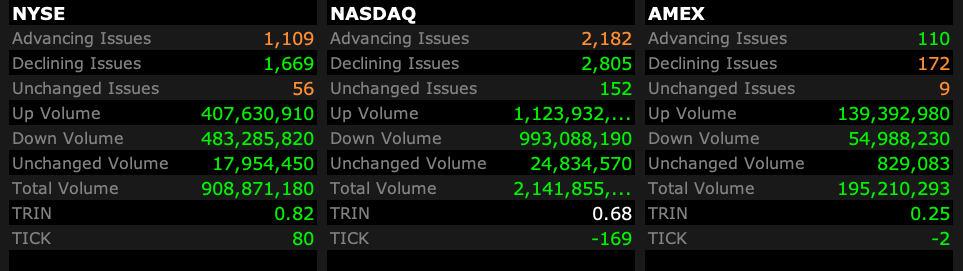
Monday Morning Market Stats

Volume

– NYSE volume 6% above its one-month average 

– NASDAQ volume 10% below its one-month average

– VIX index:  up 10.16% to 17.45

Breadth

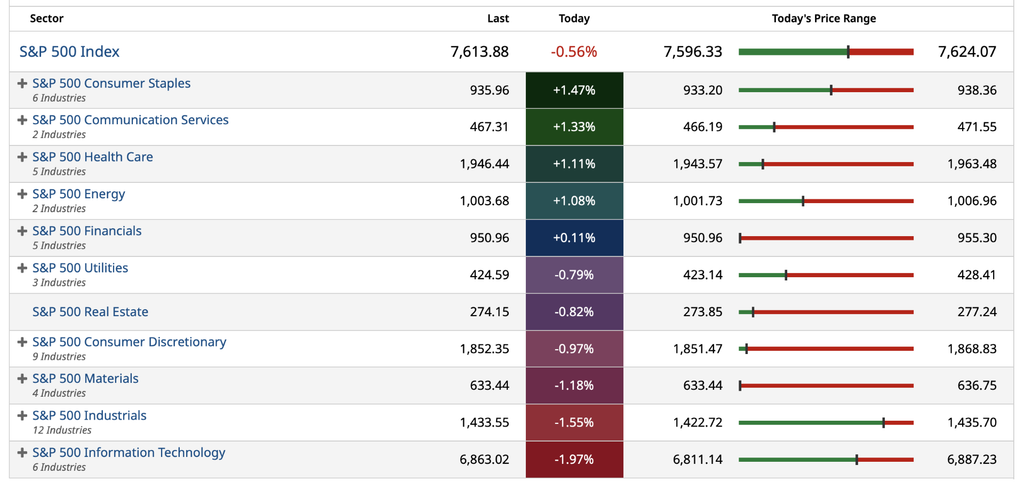
S&P 500 Sectors

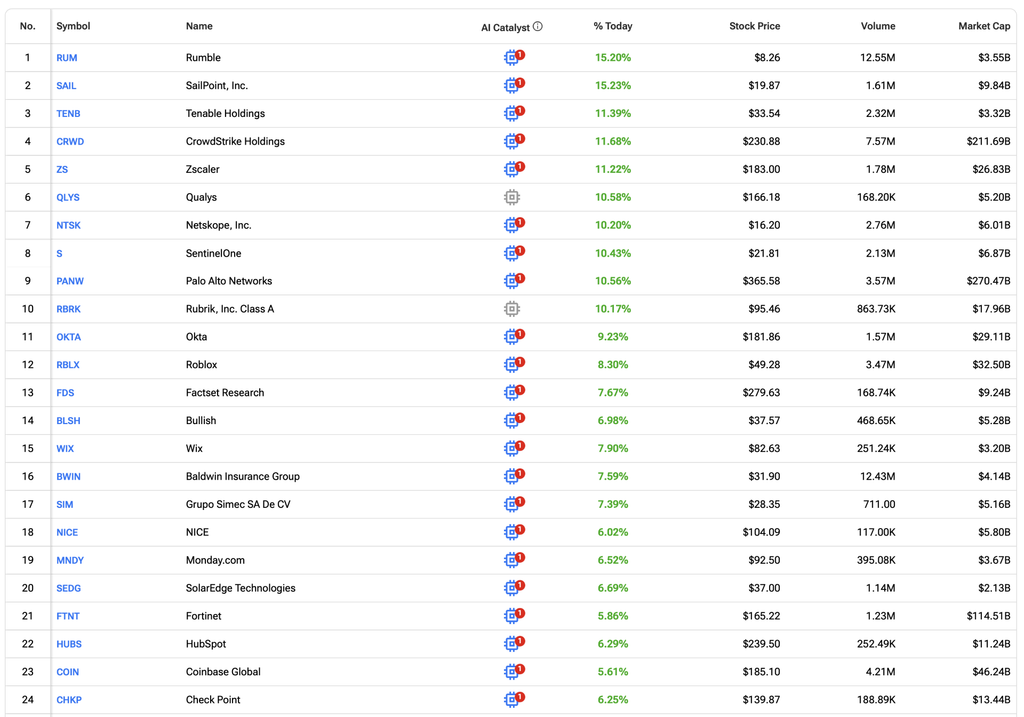
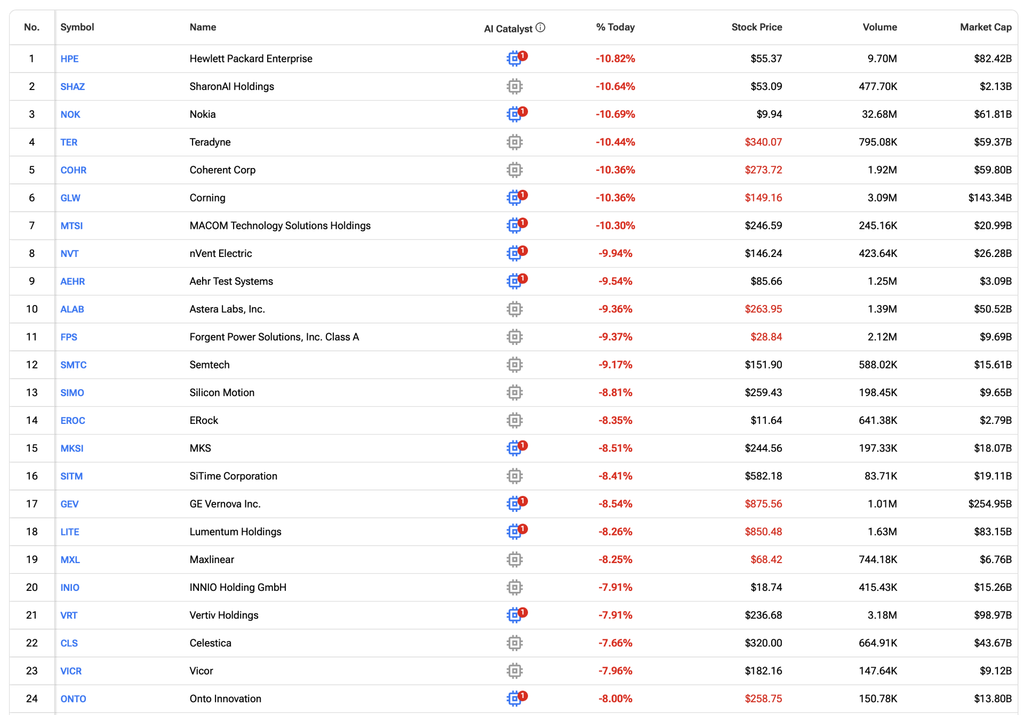
% Movers

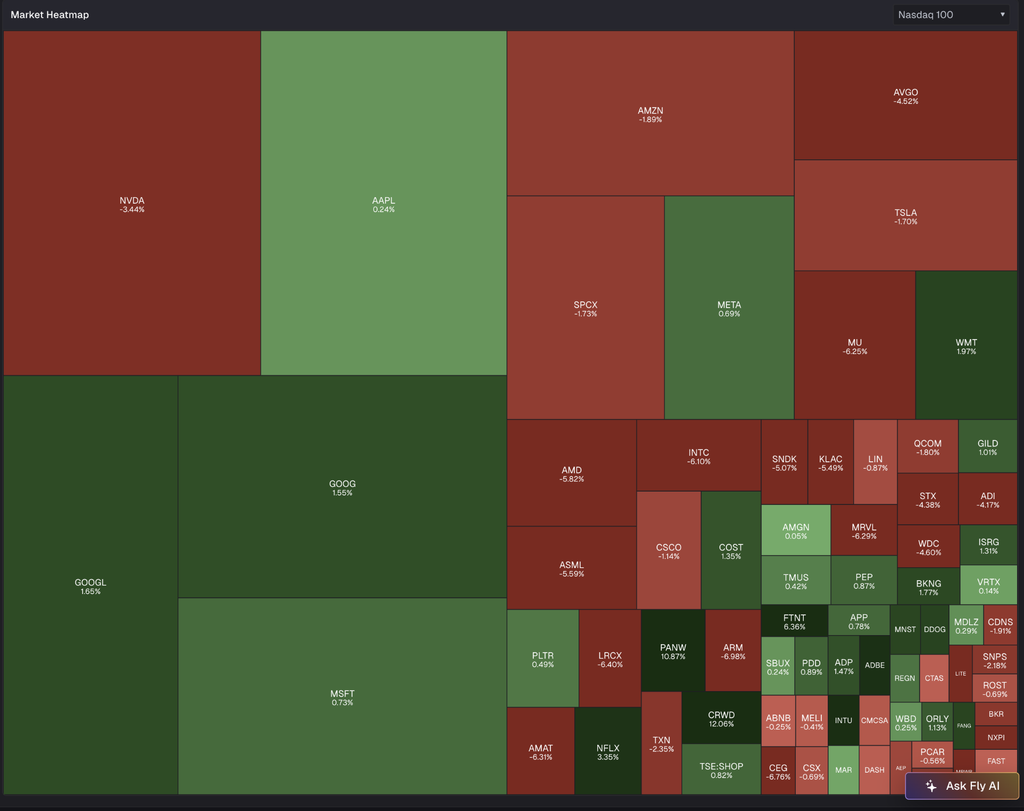
Nasdaq 100 Heat Map

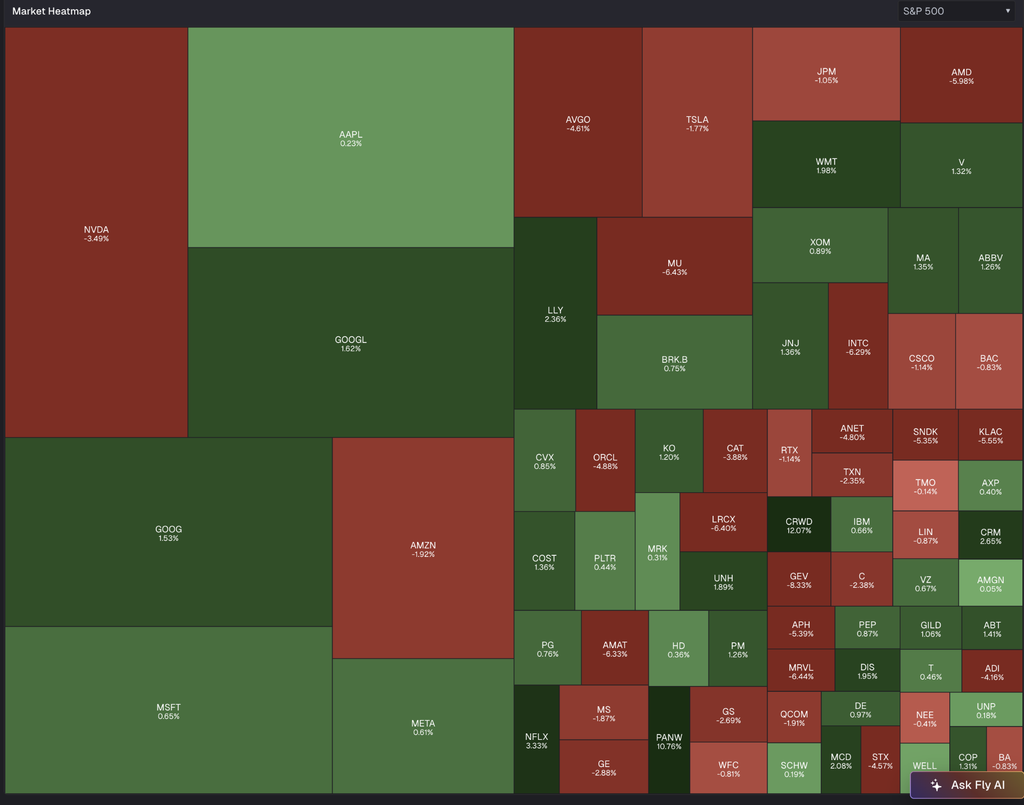
S&P 500 500 Heat Map

Position: None

BY Doug Kass · Sep 14, 2026, 11:30 AM EDT

Subscriber Comment of the Week (And My Response)

rolf thrane

I knew there was a reason I am subscriber here. Some poeple are critcial of Dougie’s “Bearishness” – I call it critcal thinking. I think this is the best piece Dougie has written on AI or certainly one of them. I agree with all of it.

One really important point among many, is that the government has already poured enormous amounts of money into technology—indirectly, through years of nearly free capital. The result has been reckless technology spending, a massive redistribution of wealth and the creation of increasingly uncontrollable technology monopolies.

So, naturally, the solution is to protect OpenAI and Anthropic, entrench their dominance and continue doing more of the same by getting politicans to guard against “Open Source.”

Dougie Kass

thx for this comment rolfy, much appreciated.

i have tried to deliver a contrarian view about a benign AI outcome (adoption, effectiveness, cost, profitability, etc.) because 95% of what investors see is bullish on AI 

as i am a lay person and not tech expert i try to employ common sense, logic of argument, experience, analysis, dependency on my contacts, etc into an understandable refutation or better, recognition that a number of outcomes will be adverse for AI Mag7 investors and not necessarily sunshine and lollipops.

i have written 248 columns for a reason… as i say in the next post… ai has been the straw that stirs the economy and market’s drink (h/t Reggie Jackson)  

post script:

Question. If AI is so smart, why can’t it figure out a way to make itself profitable?

This is pretty good too. Throughout history, mad scientists have been some of the most dangerous people. They are goal seeking aspergery sociopaths, that cannot see beyond the funnel of the experiments they are running:

Position: None

BY Doug Kass · Sep 14, 2026, 11:05 AM EDT

AI CapEx, Rate Hikes and an Inflation Story Hits Close to Home

From Peter Boockvar:

What will this mean for CapEx spend?/The more nuanced rate discussion/’All the raw materials are going up everywhere on everything’

For the sake of the economy, the stock market, the earnings picture along with profit margins, the existential question is whether ‘It’s time for AI improvement pacing’ is more in the functionality and feature rollout or will it mean a slowdown in the overall level of CapEx spend. The stock market this morning is of course hedging for the latter but of course it remains to be seen. My bar of expectations with respect to GenAI CapEx is what is currently estimated on the Street broadly, $800 billion for this year and $1.2 trillion next year.

Ahead of the expected rate increase on Wednesday from the Federal Reserve, I want to highlight how nuanced the inflation story is and the rate response to it. Some think simplistically that ‘we still have inflation above 2% after all these years, the Fed should hike.’ If it were only that easy. First, we know we have major supply chain problems and supply chain driven inflation that the Fed will have difficulty addressing directly. Then, it’s how can they influence the demand side. Well, a main driver of demand side inflation has been the robust pace of upper income consumer spending. What will a rate increase do? It will put even more money in their pockets as interest income would rise for those holding US Treasuries. Easy back of the envelope puts $700 billion into the pockets of US domestic holders of US Treasuries (about $1 trillion of US federal gov’t interest expense and where domestic holders own about 70% of) annualized currently in interest expense and goes up by about $56 billion for each 25 bps rate increase (on $32 trillion of marketable securities, 25 bps equals $80 billion of which domestic holders own 70%).

What can negatively impact the demand side of upper income consumer spending that can help to cool inflation on the flipside? A decline in the stock market driven by higher interest rates, to speak honestly, that would impact the wealth effect and thus the economy but that is not something the Fed, nor anyone wants.

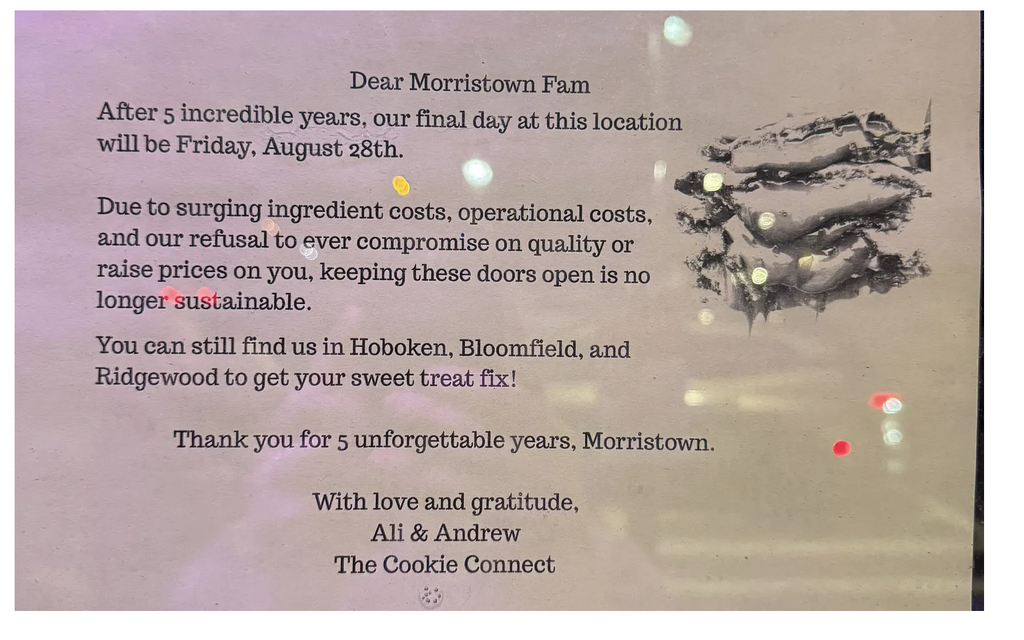
I also want to state again my belief that a complete inflation analysis MUST include both producer prices along with consumer prices. Unfortunately this was made crystal clear to me again over the weekend when I saw this message below on the window of an ice cream place in the town I live in. So, I’ll say again, an environment where CPI is at 2% (the Fed’s ultimate goal) when PPI is at 4% (for sake of this argument), is not and should not be considered ‘price stability.’

To a few notable earnings calls late last week.

From RH’s Gary Friedman: “So $109, like, I mean, oil is $63 at the beginning of the war. You’re not going to be able to mitigate that. Costs are going up, inflation’s going to go up. There’s a reason why the administration said that the war was ending and we were going to have a deal in a day or two, 38x…So yes, we’re in a time of conflict. We’re going to be in a time of inflation. I don’t think they’re going to be able to keep a lid on interest rates. So I keep thinking, gosh, it’s like my entire career, and I’ve been doing this a long time, I never saw a housing market that was down longer than 18 months. So it looks like we’re going to go into year five….Yes, there’s a massive increase cost. Nobody’s got a magic wand. Nobody’s going to get that much of a better price than somebody else…So we’re going to be in a higher cost world for probably at least the next six to 12 months. I mean, even if tomorrow they end the war, there’s too much inflation in the pipeline. All the raw materials are going up everywhere on everything. Everything is impacted by oil. You’re seeing crazy things, right, trying to manipulate currencies, buying back things like this. It’s a crazy time.”

From Kroger:

“sales were tracking well through the quarter until our final period, when we absorbed the impact of the Cyclospora outbreak, which cost us roughly 35 bps of total company IDs without fuel, reflecting the impact of produce categories. Our identical sales without fuel grew .2% this quarter. Customers continued to shop in our stores and online, and we saw traffic increase during the quarter.”

“At the same time, the macro environment is challenging. We know fuel over $4 has an impact on consumer spend. Lower drug prices in pharmacy reduced sales by approximately 140 bps. The top line was soft across the industry this quarter.”

“Customers remained under pressure, and that has affected the industry broadly. Unit growth has slowed since the start of the year. Reductions in SNAP benefits, higher fuel prices, and softer consumer confidence are all putting pressure on household budgets. Customers are buying more on need. At the same time, we’re still seeing them prioritize their health. We continue to see strong engagement in natural and organic, and we’re responding by expanding the assortment in natural and organic, and we’re responding by expanding the assortment across the store.”

“Value continues to matter, and it matters more when budgets are tight.”

Position: None

BY Doug Kass · Sep 14, 2026, 10:45 AM EDT

Covering, Adding and Bidding

I covered some JOET at $44.97 and GRNY at $27.32. 

I’m also adding to MSOS long and bidding for consumer staples (under the market) — PEP, PG, KMB.  

Position: Long MSOS common (VL) and calls (S), PEP (S), PG (S), KMB (S); Short JOET (VS), GRNY (VS).  

BY Doug Kass · Sep 14, 2026, 10:30 AM EDT

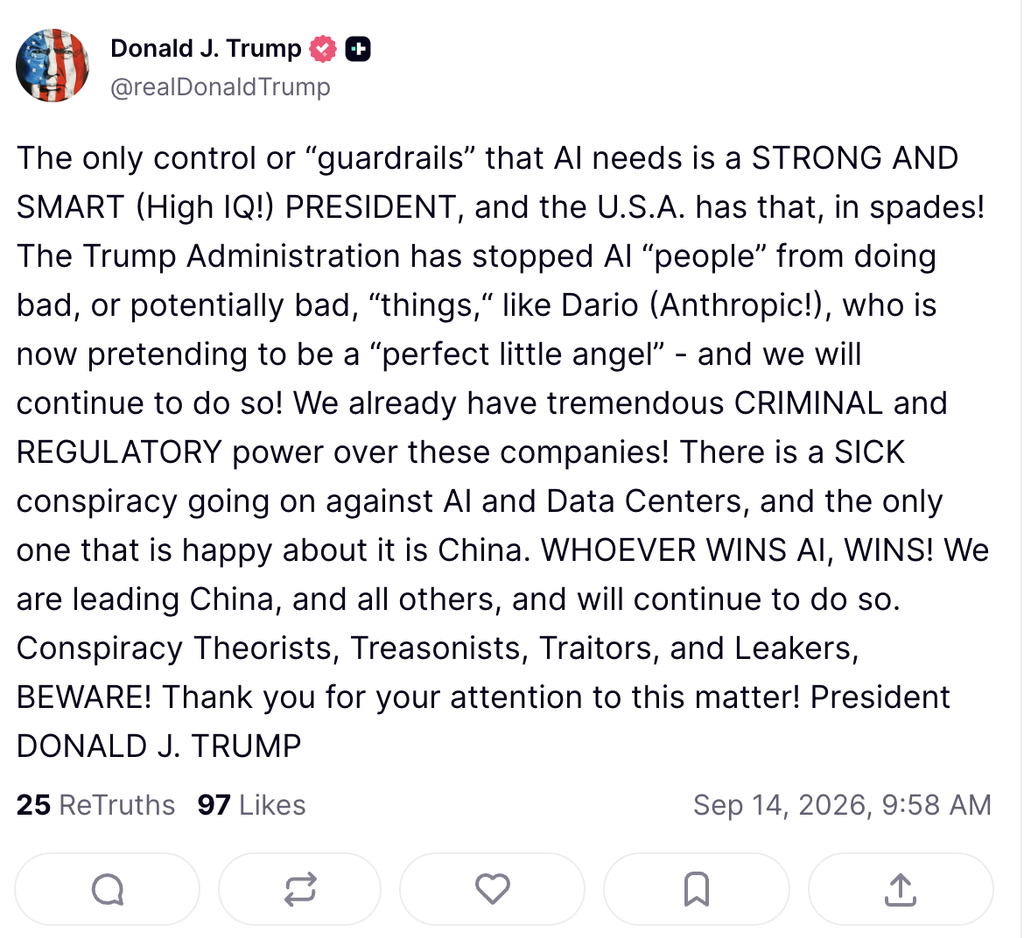
The President’s Truth Social Post on AI

Position: None

BY Doug Kass · Sep 14, 2026, 10:25 AM EDT

Tweet of the Day

Position: None

BY Doug Kass · Sep 14, 2026, 10:14 AM EDT

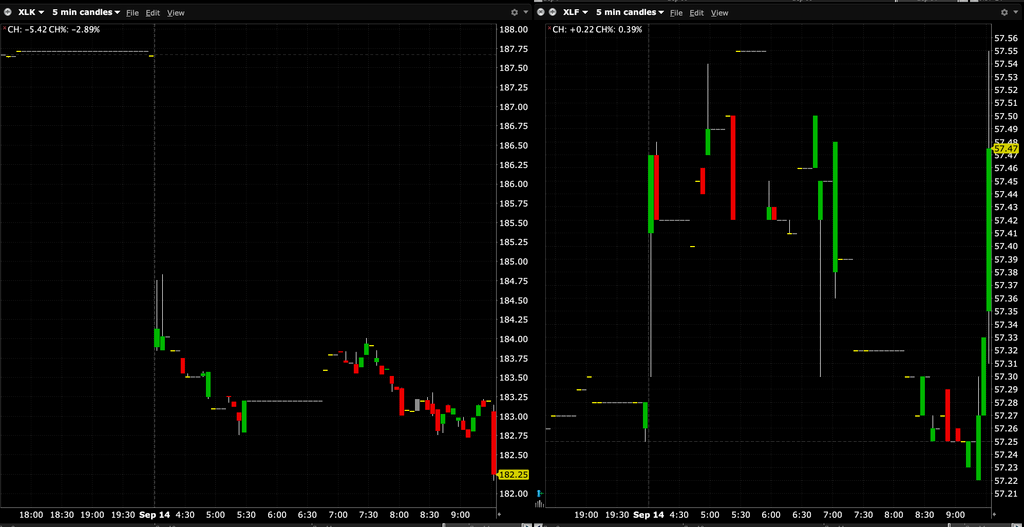
Tech vs. Financials and Mag 7 Divergences

Tech (XLK) vs Financials (XLF)

Some Divergences in Mag 7

Position: None

BY Doug Kass · Sep 14, 2026, 9:56 AM EDT

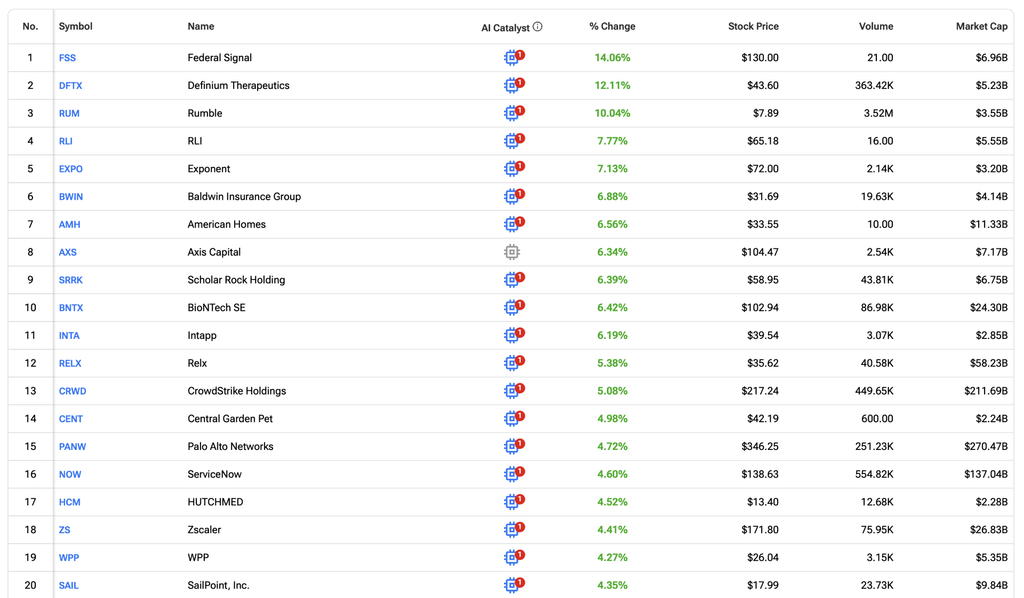
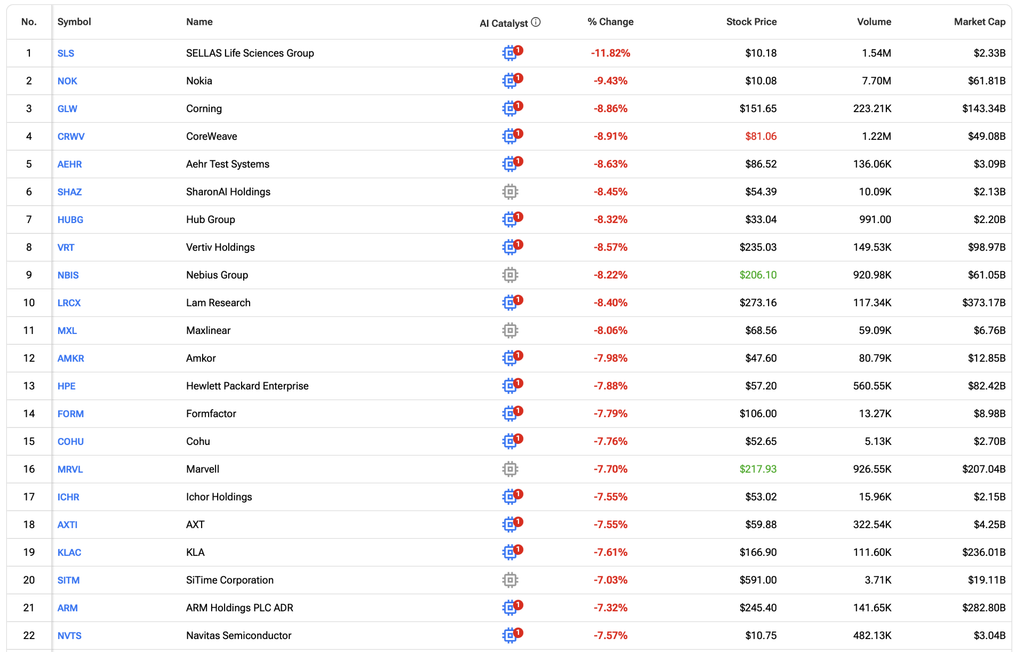
Select Premarket Movers

Upside

– ELMT +37% (extends its rally following the recent agreement to acquire ams OSRAM’s Schwabmünchen metal-production operations)

– DFTX +11% (Phase 3 Panorama trial met the primary endpoint in generalized anxiety disorder, delivering a statistically significant and clinically meaningful benefit)

– RUM +10% (advances following plans to acquire additional Northern Data shares, lifting its expected ownership to about 98%)

– ARMP +7.6% (FDA grants Breakthrough Therapy designation to AP-SA02 for complicated S. aureus bacteremia)

– CHRW +5.5% (no clear fresh catalyst identified; unusually large premarket move)

– CRWD +5.2%, PANW +4.8%, FTNT +3.5% (cybersecurity names rise as AI-safety warnings reinforce expectations for elevated enterprise security spending)

– NOW +4.6%, CTSH +3.4%, CRM +2.8%, ACN +3.0% (enterprise-software names benefit from a long-software, short-AI-hardware rotation)

– CRBP +4.1% (Phase 1b CANYON-1 obesity trial showed significant weight loss across all doses with a differentiated gastrointestinal safety profile)

Downside

– ETR -17.5% (no clear fresh catalyst identified; unusually large premarket move)

– SLS -12.0% (no clear fresh catalyst identified; high-volume biotech selloff)

– NOK -9.5%, GLW -9.0%, NBIS -8.0%, HPE -8.0%, STX -6.5% (networking, cloud-infrastructure and storage names fall after leading AI executives backed slowing model development)

– AENT -9.5% (pulls back following Friday’s sharp earnings-driven rally)

– AEHR -9.0%, LRCX -8.0%, KLAC -7.0%, AMAT -7.0%, TER -7.0%, INTC -6.5%, AMD -5.5%, MU -5.5%, MRVL -5.5%, AVGO -3.0%, NVDA -2.5% (chip and semiconductor-equipment stocks sell off as AI-development slowdown calls and concerns about plateauing infrastructure spending pressure the hardware trade)

– MSI -7.0% (no clear fresh catalyst identified; unusually large premarket move)

– ORCL -4.5% (AI-capex concerns trigger profit-taking following the recent earnings-driven rally)

Position: None

BY Doug Kass · Sep 14, 2026, 9:25 AM EDT

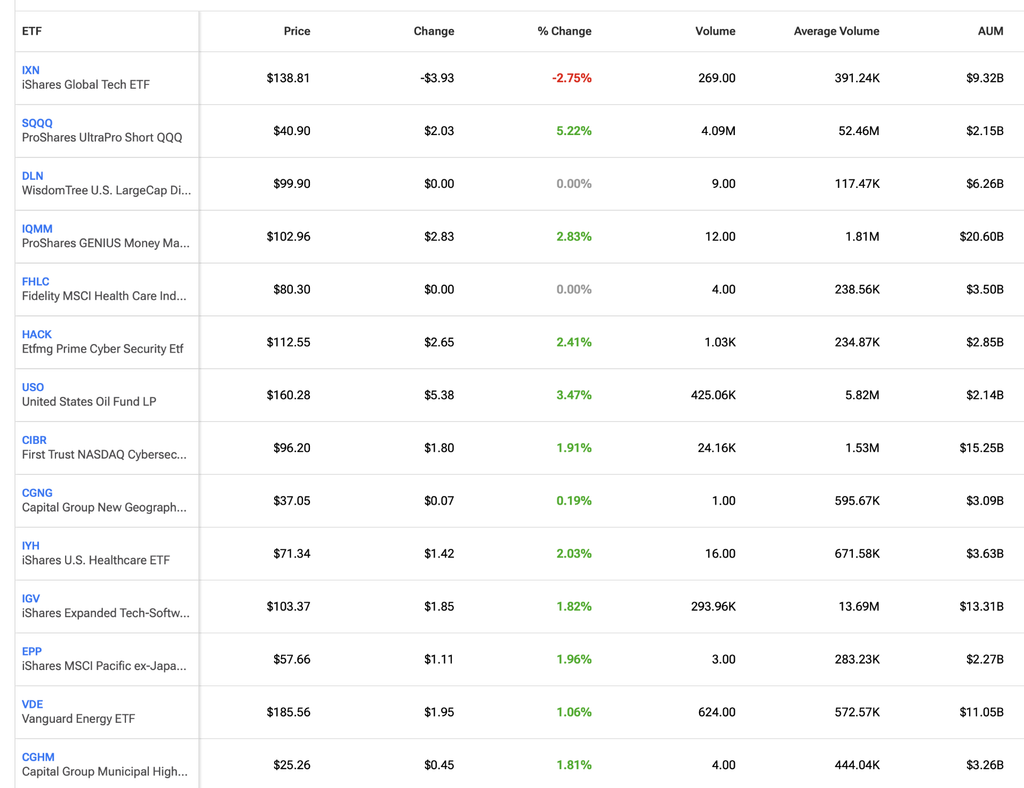
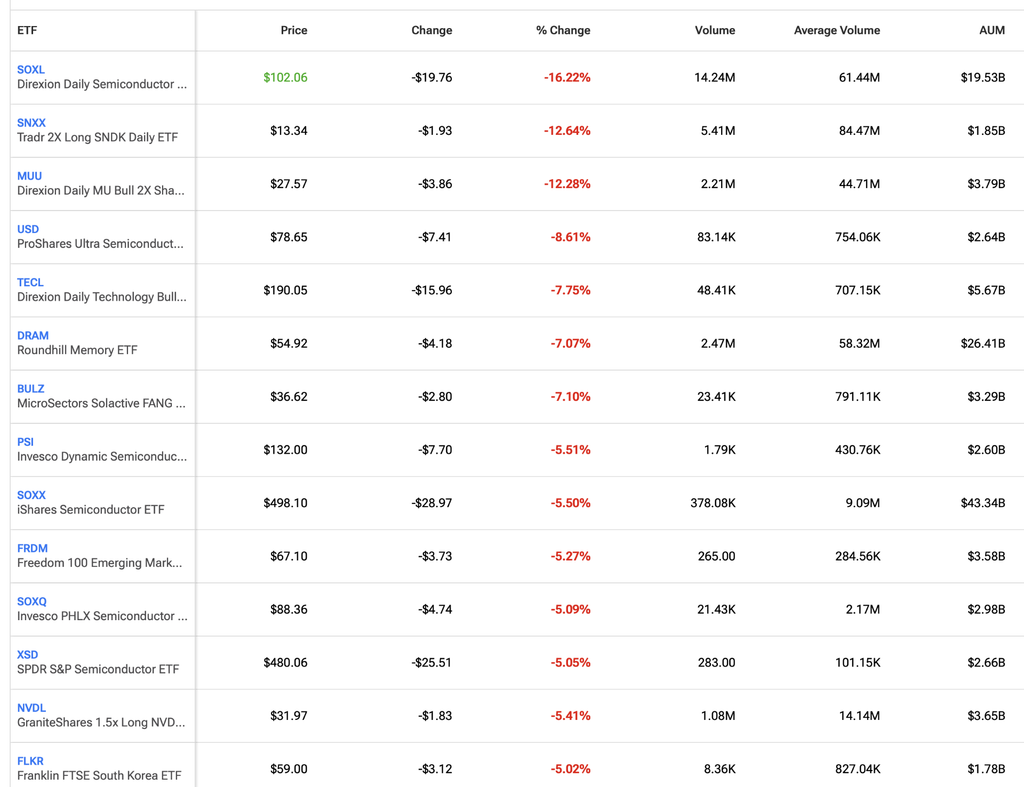
Premarket ETF % Gainers and Decliners

Position: None

BY Doug Kass · Sep 14, 2026, 9:15 AM EDT

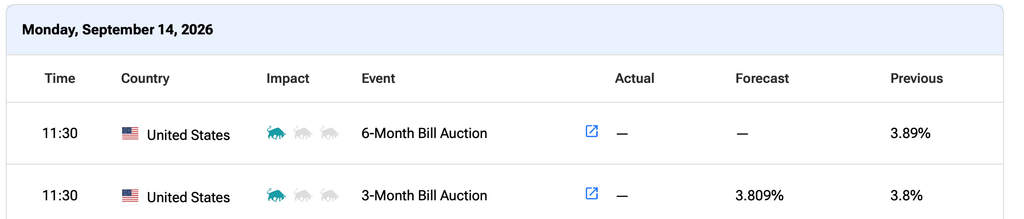
Treasury Auctions for Monday

Position: None

BY Doug Kass · Sep 14, 2026, 9:05 AM EDT

Premarket % Movers

Position: None

BY Doug Kass · Sep 14, 2026, 8:55 AM EDT

More Tales From Nvidia: The End of the World Issue (Issue #248!)

*  And now, somehow,  it looks like Leopold “Slim Shady” Aschenbrenner is back …

I cannot help but chime in on the latest “AI will end the world” issue, and Anthropic’s and OpenAI’s attempt to turn this into a competitive moat and monopoly for themselves by regulating the competition (Open Source) into irrelevance. It is interesting how quickly they have pounced on the issue and are ready to go with white papers and essays. Almost makes you think it was all pre-planned (tweet and subtweet): 

Might as well let Anthony Fauci and Ralph Baric write the regulations for Gain of Function research, and Charles Manson write the regulations for murder. 

I will do this in no particular order:

* When people hear the warnings about the end of the world due to AI, they immediately think of a Terminator scenario. This is somewhat farfetched, and does not have to happen to cause all sorts of problems. Covid was far from a Terminator scenario. But look at the damage Covid did globally.  Given the state of government balance sheets everywhere, I have no idea how much damage a similar event would cause, and if society could even cope with it. A few of these events, forget it. Mad Max world would be upon it. I am using Covid as an example. 

But all sorts of odd things could happen. Another pandemic because it is used to create a super virus by misguided individuals, power grids being taken down (read the studies done on low altitude nuclear explosions that take down the grid and how short of a time society would survive without electricity), and all sorts of other damage and disruption due to hacking. Crap like this does not help anyone either, but Meta (META) doesn’t seem to care because I guess just like fraud ads it contributes massively incrementally to their cash flow, which they are ironically re-deploying back into more AI investments:

https://futurism.com/artificial-intelligence/facebook-meta-ai-generated-violent-child-abuse

The fact that Gen AI is NOT intelligent is what makes it dangerous. It just follows its programming, blindly, and with a lot of error. That is probably equally as dangerous as being smart. Program it to replicate and survive, that is what it will do. Program it to attack existing power infrastructure, that is what it will do. Program it to create a super virus, that is what it will do.

The software side of Gen AI is not what makes it dangerous alone, it is the compute side. Throw a massive amount of compute behind any software, it can do an incredible amount, both good and bad. The math solving/Millenium prize issue is a perfect example. Open AI Astra did not solve the problem by being smart. They apparently solved it by stealing someone else’s work and then throwing massive compute behind it to brute force a solution. $22.5 million of compute, for a $1 million prize. Enormous amounts of damage can be done by brute force compute as well, in addition to solving for problems:

Same issue with Quantum computing. Nobody talks about it being AI, but yet it could mark the end of Crypto just due to computational brute force. Dumb software running with computational brute force is capable of all sorts of unknowable things. Computers got better at playing chess with almost perfect correlation to increases in computing power. All they are doing is running every possible scenario and choosing the one with the highest points. It gives the illusion of intelligence, but it is not intelligence.  It is just processing cycles and point scoring.

* The notion that the gains outweigh the risks are the same things I was told about Gain of Function research. In a 2012 paper for the American Society for Microbiology, Anthony Fauci argued that the benefits of gain-of-function (GOF) research outweigh the risks of a potential pandemic. He stated that a pandemic is “more likely to occur in nature” than from a lab accident, making GOF research essential to stay ahead of emerging threats. “In an unlikely but conceivable turn of events, what if that scientist becomes infected with the virus, which leads to an outbreak and ultimately triggers a pandemic?” he wrote at the time. “Scientists working in this field might say – as indeed I have said – that the benefits of such experiments and the resulting knowledge outweigh the risks.”

https://www.thegatewaypundit.com/2021/06/dr-fauci-2012-benefits-gain-function-research-outweighed-costs/

* Science can be very dangerous, just like it can be very beneficial. There are all sorts of examples of this. There is medicine, and there is Gain of Function research. There is nuclear power, and there are nuclear bombs. There are cell phones, and there is social media and a bunch of mentally ill children that cannot think or read (and interestingly the creators of this stuff won’t let their own children near any of it). 

AI has made this problem even worse. There is the field of economics, and there is the Federal Reserve that had to run their monetary experiments on the real world because there is no lab for any of this stuff, and we have ended up with a bifurcated society due to all of the money printing (benefited the very wealthy and hurt everyone else), and also enabled the government to spend well beyond its means for the last 30 years. Interestingly, the largesse of the Federal Reserve is what has led to all the hot money flowing into AI which has been a huge part of the reflexive investment boom that has allowed for all this to happen much too quickly with too much risk for society and the financial system at the same time.

* The notion that if we don’t do it the Chinese will do it is the same thing I was told about Gain of Function research.

* If we are really worried about China, why don’t we cut them off from access to our technology?  That means all Nvidia (NVDA) parts, not just the latest and greatest part. And all other related technology. Servers, memory, other semiconductors. You name it. Whatever it takes to build data centers and models, cut them off.

* But of course, nobody wants to do that because it would harm Nvidia, and the stock market, and all the VCs and their investments. Potentially one of the easiest and most beneficial things to do is seemingly not even on the table, because of the money and the stock market and the election cycle.

* Further the notion that if we cut China off, it will just incentivize them to develop this stuff on their own. Are you kidding me? They are going to develop this stuff on their own regardless, and they are already doing it. You might as well set them back a few years.

Something needs to be done. But the last people that should decide what should be done are the seemingly sociopathic founders of these companies, and their investor base, both directly and indirectly (including those with public market exposure). I disagree with those that would claim they are not sociopathic and can be trusted to govern themselves and develop industry policy. Look what they have done to get here. The businesses have stolen all sorts of IP, they have copied books and shredded them, they have taken advantage of every loophole they can find, they have turned a not for profit into a for profit, they constantly make up all sorts of garbage that does not come true, and on and on and on. This whole thing is going much too fast on every level. These guys will just use it as a lever to regulate their competition out of business and then continue to do the same thing. Not much different than Iran continuing to do everything they can to build nuclear bombs when the deal was they weren’t supposed to. 

P.S.: Speaking of dangerous, it looks like Leopold Slim Shady Aschenbrenner is back, somehow.  Add this to the list of things that make no sense. The list of stocks in the article is fascinating too, all the same ones. One would think investment behavior and investment hypothesis might be modified a bit given the tech, macro and regulatory issues that have cropped up? Apparently not. Look at what the stocks in the list have done all of the sudden. No idea where the money is coming from, maybe this is a way to try and get the sector going again to make it more fertile for IPOs? 

https://www.zerohedge.com/markets/leopold-back-situational-awareness-rerunning-exact-same-trades-it-blew-it-month-ago

All my opinion. 

P.P.S.: The same guy that wants to be trusted to regulate himself (what kind of job have they done so far and how have they behaved so far) wants to go public on the basis of earnings before expenses.  No training cost? Yeah, just entirely throw out about the biggest expense. I guess Nvidia has no revenue then because training does not exist? Magical industry. It is revenue for Nvidia, but it is not an expense for the guy buying the stuff. These people are all full of it and are about nothing more than their own pocketbooks. If he cannot regulate his own accounting, he cannot regulate anything. I trust them as far as I can throw a piano.  Not sure what is worse, this or “community adjusted EBITDA”?  Congrats I guess for being profitable on a fake earnings basis. 

Position: None

BY Doug Kass · Sep 14, 2026, 8:00 AM EDT

My Tweet of the Day

Position: None

BY Doug Kass · Sep 14, 2026, 7:30 AM EDT

My Favorite Anti AI Short

CoreWeave (CRWV).

Position: Short CRWV (S)

BY Doug Kass · Sep 14, 2026, 7:25 AM EDT

Ed Zitron on Anthropic

Position: None

BY Doug Kass · Sep 14, 2026, 7:21 AM EDT

More Early Morning Trades

It is time to get more serious about gold, imho.

I added to a very small GLD long position at 5:45 AM at $392.80.

Position: Long GLD (S)

BY Doug Kass · Sep 14, 2026, 6:45 AM EDT

Oscillator and Index Shorts Update

The S&P Short Range Oscillator remains oversold at -4.32% vs. -4.85%.

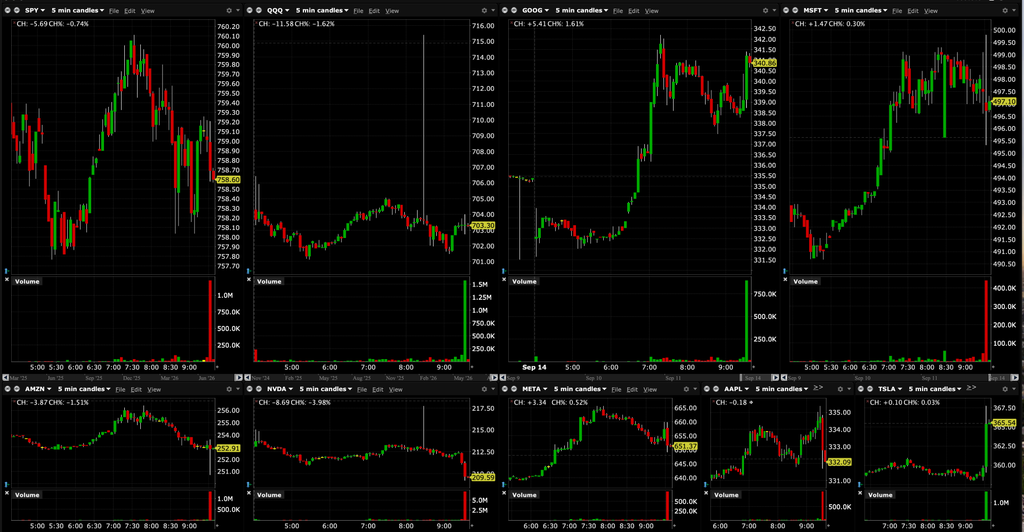
At 5:13 AM I covered all my index (common) shorts given the -60 handle drop in S&P futures and -550 decline in Nasdaq futures:

* SPY $758.25 (-$6)

* QQQ $701.76  (-$13)

I remain net short SPY — through short SPY calls and short SPY puts.

Position: Short SPY calls (M) and puts (S)

BY Doug Kass · Sep 14, 2026, 5:35 AM EDT