No Reason to Buy MicroStrategy as Bitcoin Price Flashes Warning
Michael Saylor's bitcoin firm has lost its primary value offering as crypto-focused ETFs are now available.
You've reached your free article limit
You've read 0 of 1 free Pro articles.
The question persists as it has for investors for quite some time: Is owning shares of MicroStrategy MSTR worth it?
That stock was added earlier this week to the Nasdaq 100 along with my pals at Palantir Technologies PLTR. That means that a certain amount of semi-recent investment had been made by those, mandated by their charters to track that index and do so according to the stocks weighting within the index. That mandated capital is most likely all invested at this point.
MicroStrategy is still a software firm that designs and develops its own platform and markets and sells that platform through licensing agreements and cloud-based subscriptions. However, the firm has become better known as a Bitcoin proxy due to its relentless pursuit of ever larger holdings of the planet's best-known cryptocurrency on its balance sheet.
The firm's founder and CEO, Michael Saylor, has never wavered in his belief that Bitcoin has a much brighter future than its past, despite the pretty amazing recent past for the blockchain-based token. Amazingly, as pointed out by Silin Chen at TheStreet, Saylor recently commented, "We'll just keep buying the top forever; every day is a good day to buy Bitcoin" in an appearance at CNBC.
However....
According to a preliminary proxy filing with the DEC, MicroStrategy is asking its shareholders to approve increasing the authorized number of class A shares outstanding to a whopping 10.33 billion from the current authorization of 330 million. Right now, the firm actually has a rough 244 million shares outstanding. Basically, the firm wants everything in place so that it can both borrow and issue new stock in secondary offerings, most likely to buy more Bitcoin. Going back to October, MicroStrategy issued about $13 billion worth of new equity and sold about $3 billion in convertible bonds, using those proceeds to buy the crypto that Saylor has so much faith in.
Earnings
For the firm's third quarter, reported on October 30, MicroStrategy posted an adjusted EPS of $-1.56 on revenue of $116.07 million. That's right, that's just an "M," not a "B." These top- and adjusted bottom lines both fell well short of Wall Street's expectations, while that revenue print was "good enough" for a year over year contraction of 10.4%. For the current quarter, whose results will most likely not be released until early February, Wall Street is looking for an adjusted EPS of $0.05 on revenue of $123.5 million. That would compare poorly to an adjusted $0.56 for the year-ago period and amount to another quarter of year over year sales contraction.
Fundamentals
The firm has now put together back-to-back quarters of negative operating cash flow. Seven of the past nine quarters have reflected negative operating cash flow. Basically, the underlying business stinks. The business of this firm is really that of a Bitcoin holding company.
Turning to the balance sheet, readers will find a very unique statement of financial condition. As of the end of that third quarter, MicroStrategy held a cash position of $46.3 million and current assets of $186 million. Current liabilities added up to $288.1 million, including $184.4 million in unearned revenue. Adjusted for that unearned revenue, which is not a true financial obligation, the firm's current ratio stood at 1.78, which is not bad. However, that's not where the strength of the balance sheet is.
Total assets amounted to $8.344 billion, including assets labeled as "other," which most likely means Bitcoin, printing at $6.897 billion. Total liabilities of $4.57 billion to include long-term debt of $4.212 billion. That's an awful looking debt-to-U.S.-dollars ratio, but not an awful debt-to-Bitcoin ratio. While Bitcoin can be valuable, there is enough there at these recent and lofty prices (despite the very recent pullback) to cover this debt, even if factoring in the $3 billion in convertible bonds just added since the quarter ended. The balance sheet is not in poor shape, but is reliant upon a highly-volatile asset. That makes the firm's balance sheet health potentially fragile.
My Thoughts
I am not in love with Bitcoin. I recognize its value as a commodity to more people than see no value in it at all, so I do trade it through an ETF, though I could see owning the tokens in a wallet. Owning MicroStrategy for its software business would just be foolish. Owning MicroStrategy as proxy for "physical" Bitcoin once had a role in our financial marketplace, but now with the proliferation of Bitcoin and Bitcoin futures related ETFs, I am not sure it does.
I recently held a long position in one of those ETFs as Bitcoin made its recent run for the roses. I was in the ARK 21Shares Bitcoin ETF ARKB. I exited that position on December 18 a little above $103. Not so bad.
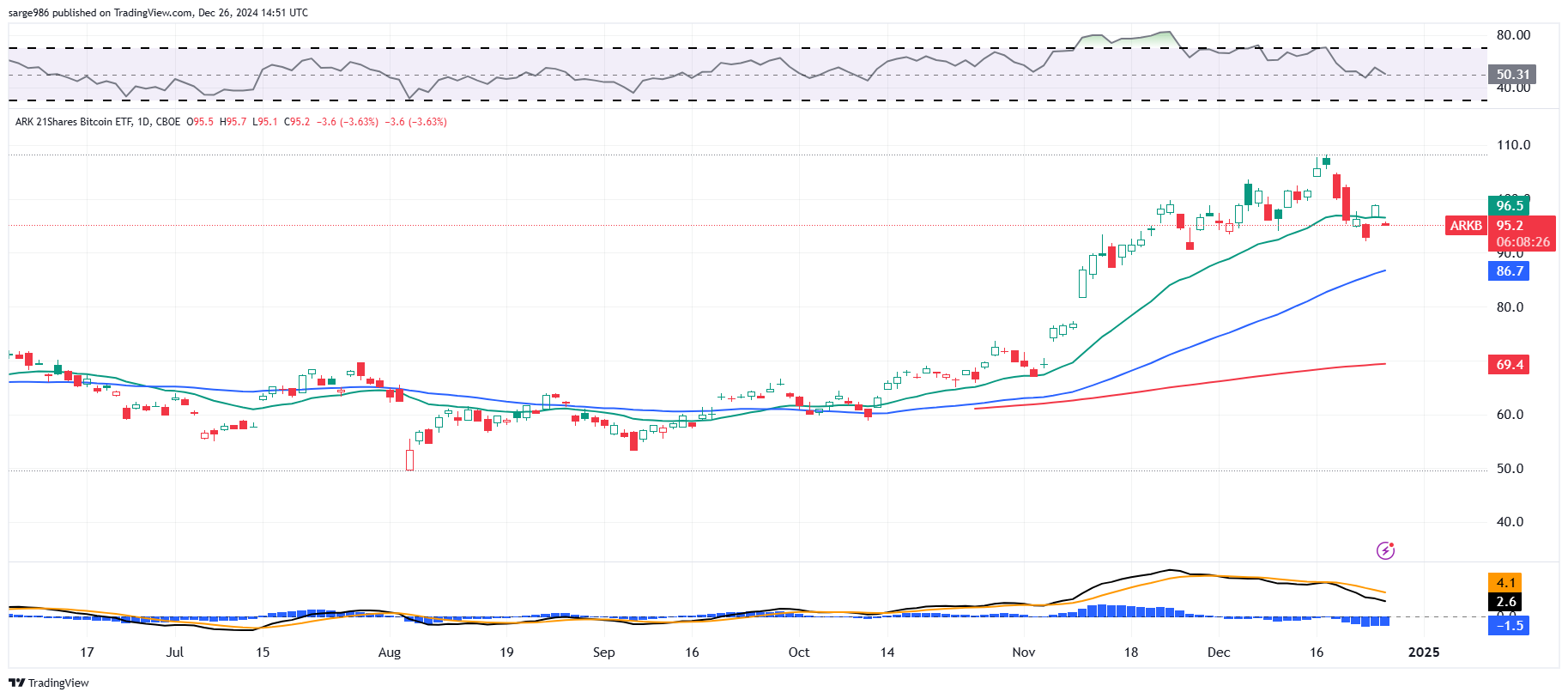
One will see that from the September low through the mid-December apex, ARKB ran 104.7% and has since come in 12.1%. Compare to MSTR.
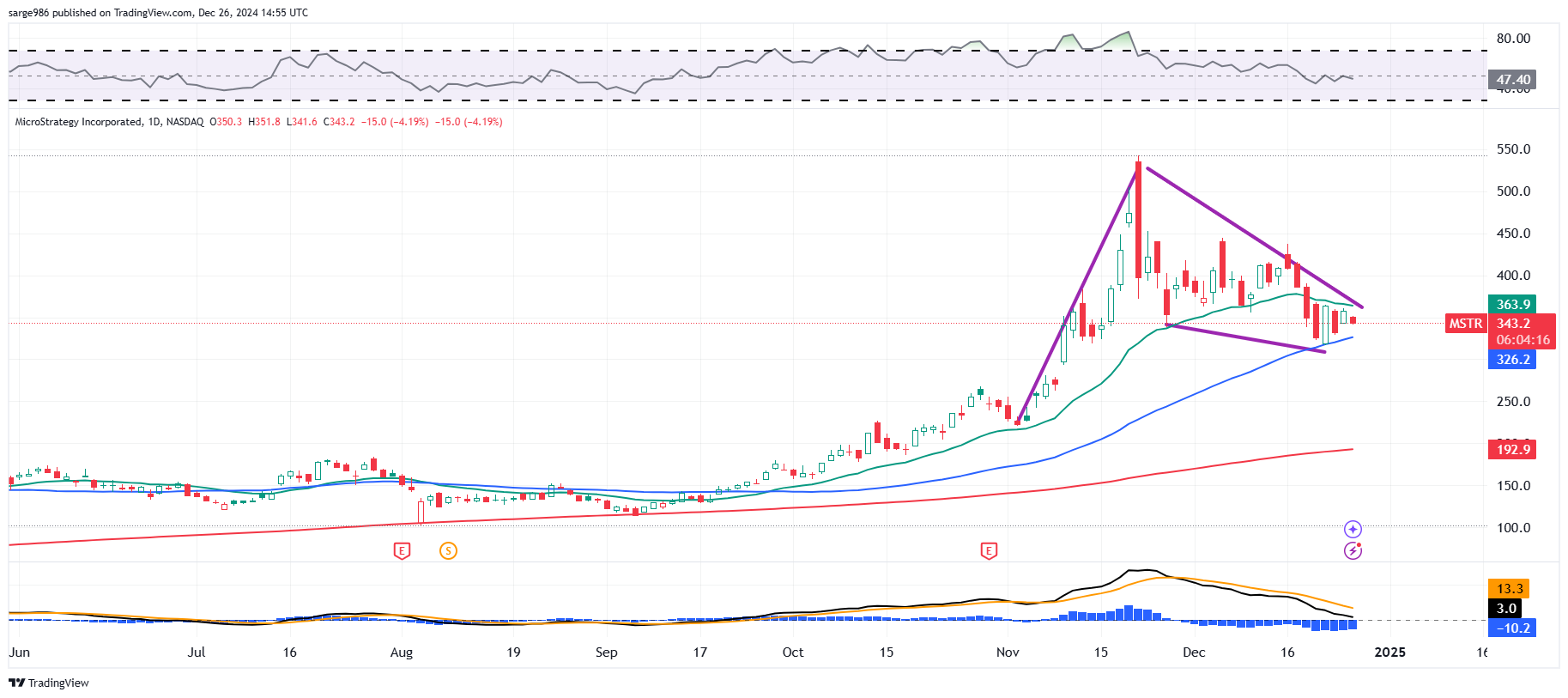
Over that same time frame, MSTR ran an incredible 342.7% into the mid-December apex, and has since come in 31.3%. An investor might have made a lot more dough, but also depending on when that investor jumped on board, there was much greater exposure to risk. In my opinion, as a somewhat but certainly not overly conservative investor, I would rather be in this ETF or one like it than in MSTR. Look below for Bitcoin itself versus the U.S. dollar...
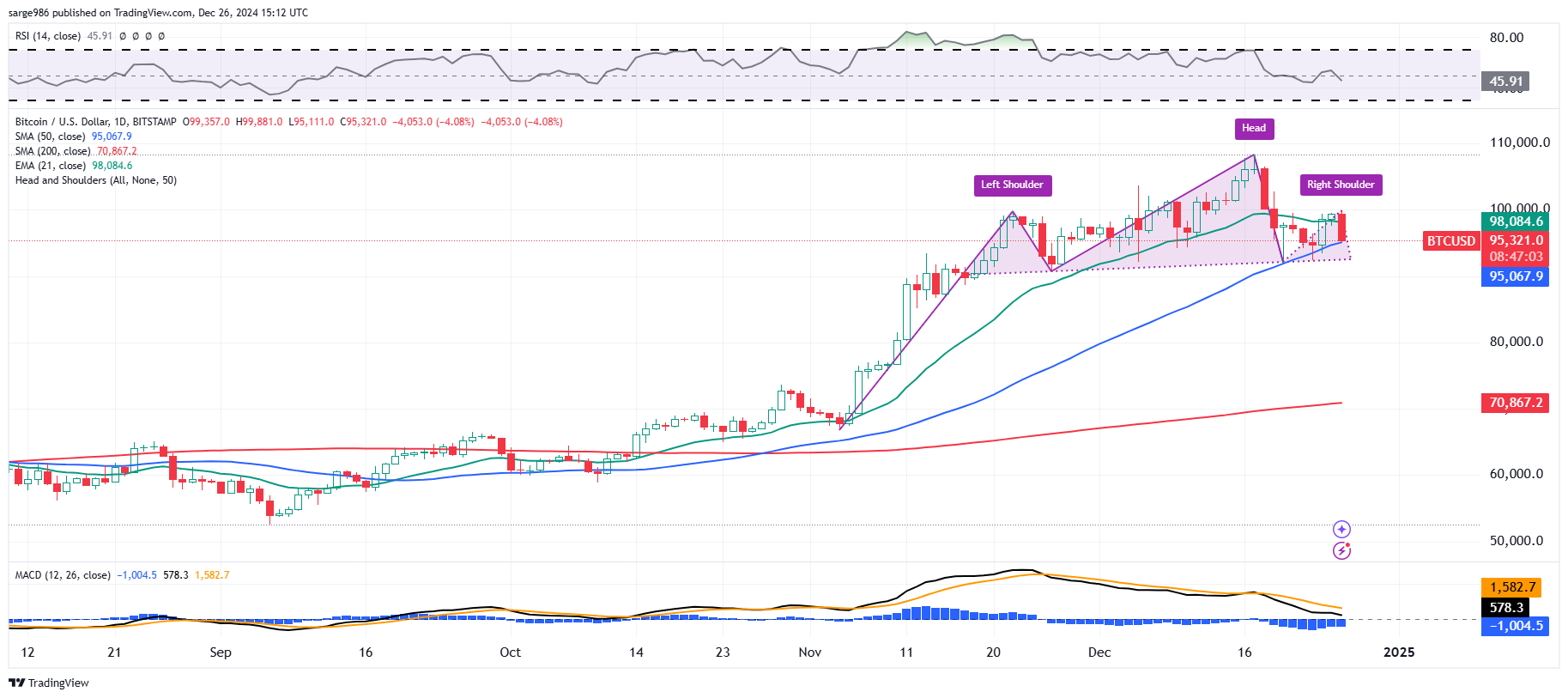
In dollar terms, Bitcoin ran 106.2% from that September low into the December high and has come back in about 12.2% since. Hence, the ETF performed within the approximate range of what Bitcoin itself did during that period, both to the upside and to the downside. MSTR wildly outperformed both ARKB and Bitcoin on the way up and of course fell significantly harder as well.
Final Point
Personally, I think owning actual Bitcoin is a better idea than investing in Bitcoin through a proxy. That said, in order to keep Bitcoin in the same portfolio as one's stocks and other ETFs and for ease of entry and exit, I do see a base case for the use of an ETF. Especially since one full unit of Bitcoin prices out most retail investors.
Lastly, if looking to invest in Bitcoin, which I don't think even with the dawn of a crypto-friendly administration in D.C. should be an extremely large percentage of one's investable capital, it appears to me that there is no reason to invest in MSTR at this time, or really going forward, especially since the ETFs make maintaining long positions in Bitcoin much more manageable.
Oh, and that head-and-shoulders pattern in the actual Bitcoin could be something of a warning. Be careful.
At the time of publication, Guilfoyle was long PLTR equity.