Gold Price Enters Bearish Pattern With U.S. Dollar Breakout
Gold can become a victim of the U.S. dollar rally and short-term traders should consider a move.
You've reached your free article limit
You've read 0 of 1 free Pro articles.
Gold has had an incredible run. Over the past 12 months, the price of gold has climbed by about 40%. Over the past two years, gold has gained just over 60%.
Gold’s ascent coincided with the worst bout of inflation in 40 years, which makes perfect sense, since gold is a hedge against inflation.
However, the golden era of gold could be coming to an end, thanks to a decline in the rate of inflation. Wednesday’s consumer price index is expected to show an annual inflation rate of about 2.5%, well below the 9.1% figure registered in July 2022.
There is more than one way to tame inflation. Increasing interest rates can slow inflation, but a similar effect can be achieved via currency strength. Specifically, the strength of the U.S. dollar.
The greenback is currently in the midst of a breakout from a cup-and-handle pattern (shaded yellow). On Wednesday, the dollar closed at a four-month high.
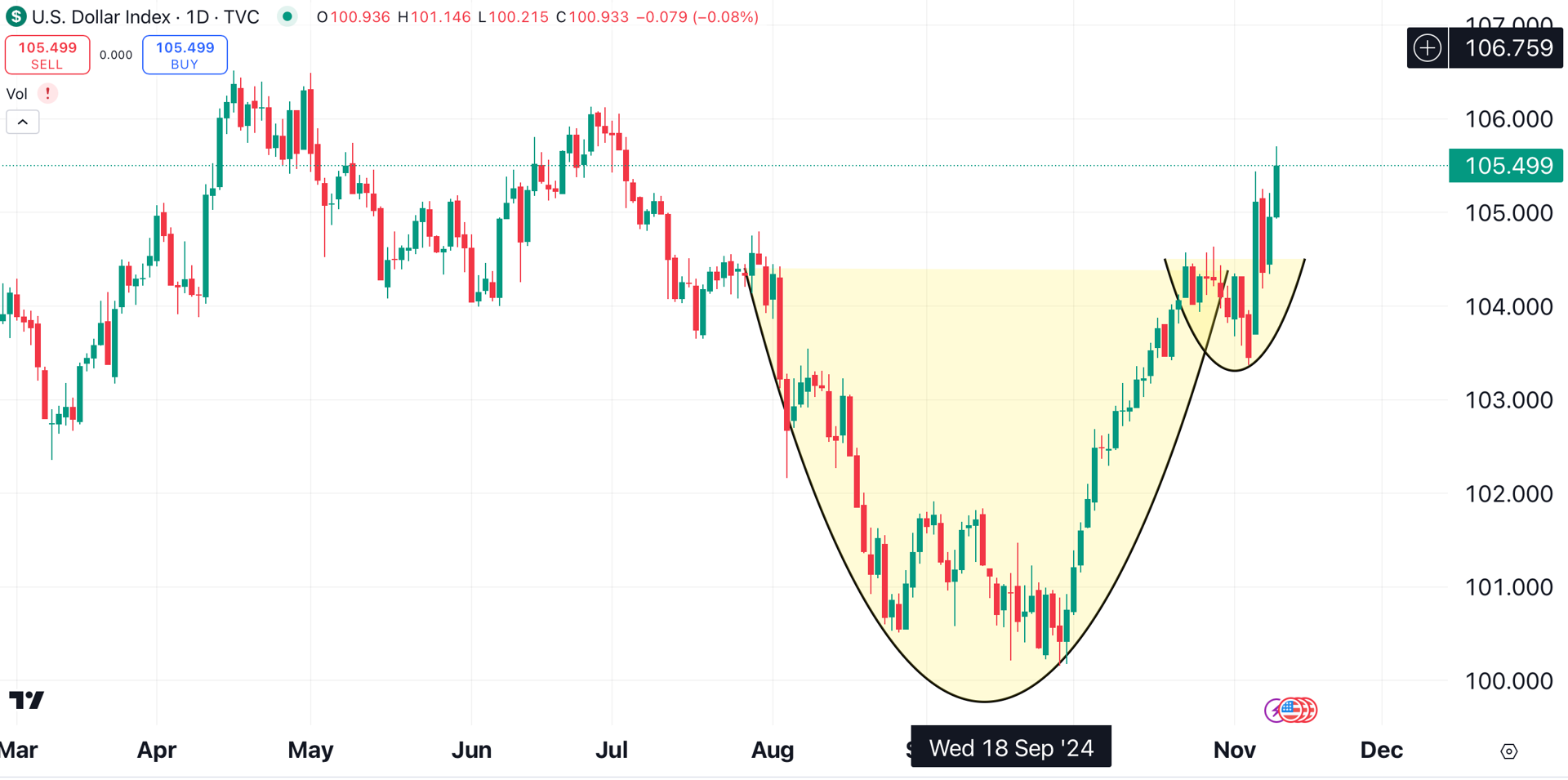
Think of exchange rates as a seesaw; if the dollar is going up, other currencies are moving down in relation to the dollar. The euro, Japanese yen, British pound and a host of other currencies are falling as the buying power of the dollar increases.
For example, on Tuesday, as the dollar reached a four-month high, the euro reached a six-month low versus the greenback. The euro/dollar exchange rate is now at 1.0650, meaning one euro is currently worth about $1.06.
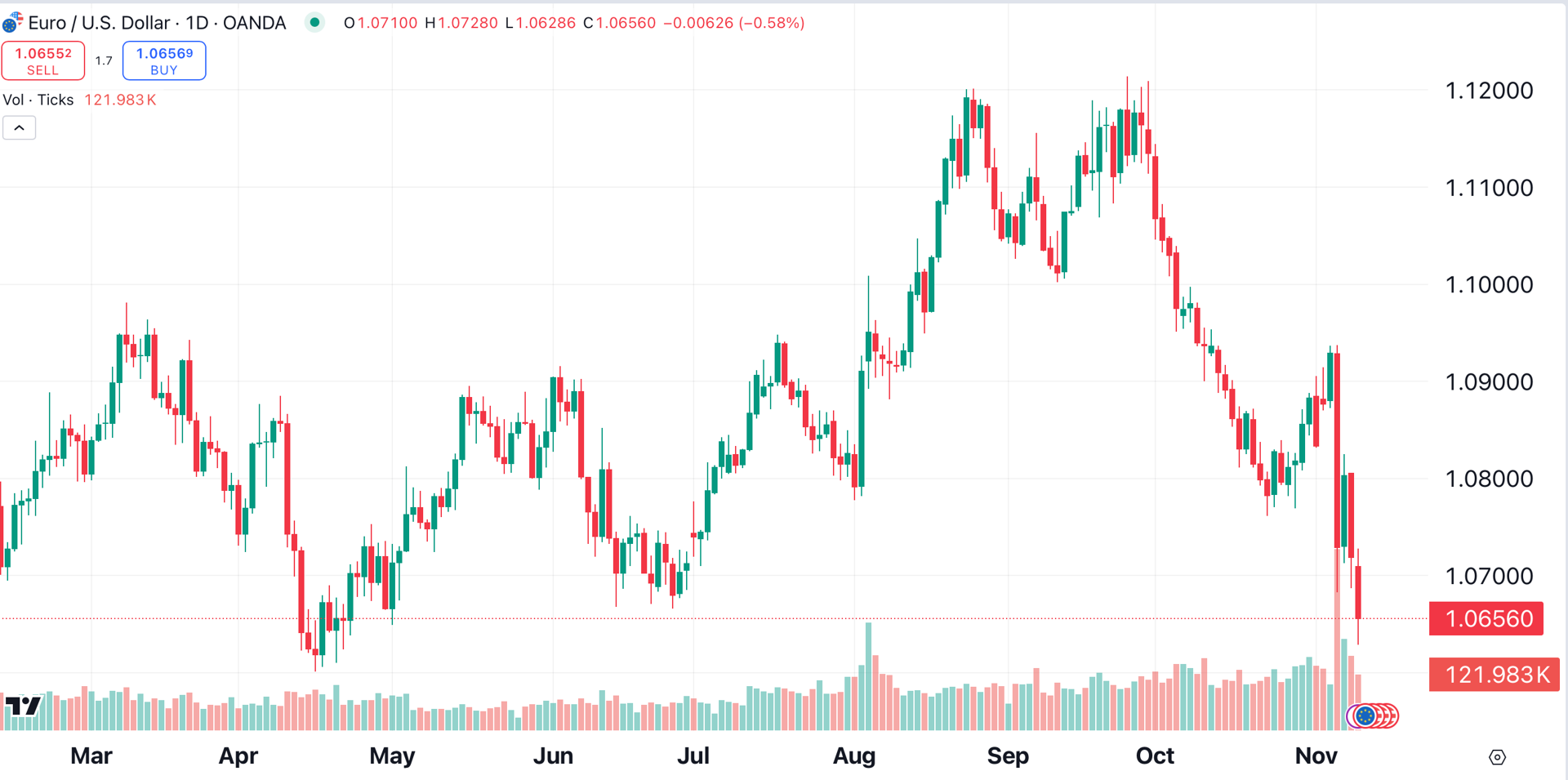
With that favorable of an exchange rate, it might be time for a European vacation. Japan could be even more attractive, with the yen recently hitting multi-decade lows against the dollar.
The strong dollar should have a disinflationary effect on the cost of goods coming into the U.S. It should also have an inflationary effect on U.S. goods sold overseas, which could hurt the bottom line of some U.S.-based exporters.
Favorable exchange rates should reduce the cost of imports, especially if dollar strength persists. How could this dynamic affect the price of gold?
Since gold is a hedge against inflation, it loses its shine as inflation becomes less of a concern. This process may already be affecting the price of gold, which has suddenly halted its ascent. A bearish pattern could be in the process of forming (shaded yellow)
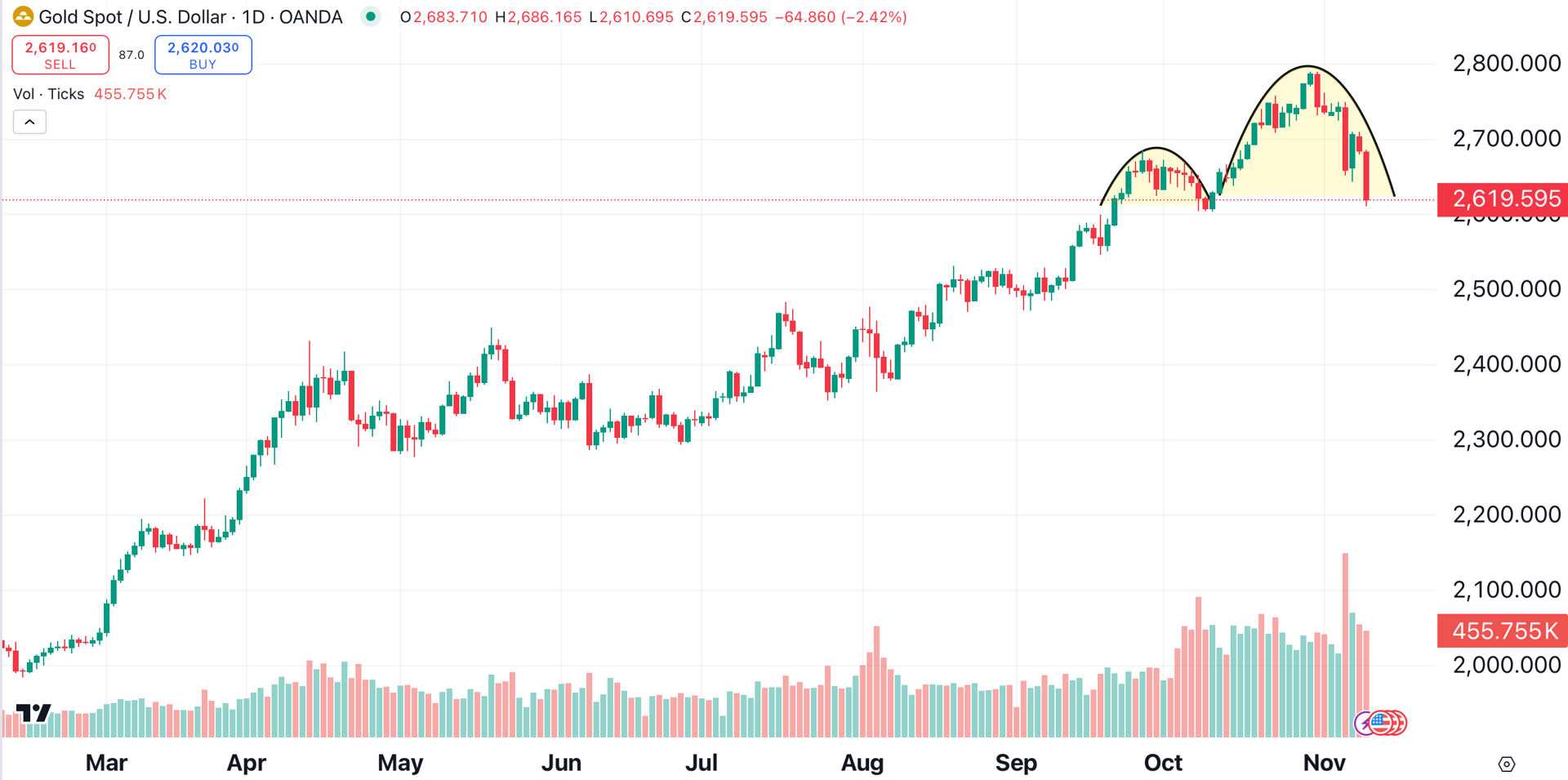
Given these circumstances, it's not hard to see the market losing its enthusiasm for gold. Long-term gold investors should be unaffected, but short-term traders might want to take something off the table, with an eye toward re-entry at lower prices.
.At the time of publication, Ponsi had no positions in any securities mentioned.