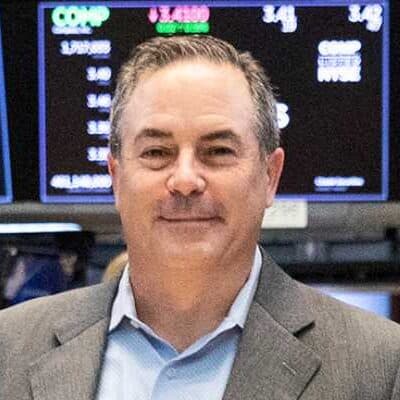
VIDEO: Chatting Markets With Helene Meisler
Chris is joined by the noted technical analyst to discuss the put-call ratio, panic volumes, spike lows, and why the market is likely to remain volatile
You've reached your free article limit
You've read 0 of 1 free Pro articles.
In today’s Daily Rundown video, Chris Versace has a timely conversation with Helene Meisler discussing the market’s recent selloff, key indicators she’s watching and some stocks that are catching her eye.
As Helene discusses what she is seeing in the put/call ratio and trading volumes, she shares why she thinks the market is likely to be volatile in the near-term and explains what comes next after a stock’s “spike low.”
Transcript
CHRIS VERSACE: Hey, everybody. Chris Versace here. Wednesday, September 4. And as you know, I like to tap into the expertise that we have over at the pro-- for the street pro, I should say. And from time to time you'll see my conversations like you did last month with Sarge Guilfoyle, but today, I'm really happy to be talking with Helene Morrison, because, as you know, the market looks to be getting a little-- what's that word? Funky yet again.
And I talked about in our opening comments today. I laid out the things that we'll be watching over the next couple of days, as well as indications of where the market could wind up if it seems that the fed may not have to be as aggressive in cutting rates as the market Hopium suggests. So with that, let's talk with Helene, see what she's thinking because we do want to pay attention to the technicals as we factor that into our fundamental thinking. Helene, how are you?
HELENE MEISLER: Good morning, Chris. I am well, as I hope you are.
CHRIS VERSACE: I am. I am. You know, we just closed the book on summer. I know you were away. I know you visited very quickly the US Open. Was it a good summer?
HELENE MEISLER: Of course, it was a good summer because weather that is sunny is always good.
CHRIS VERSACE: OK, all right. All right. I'm here in Northern Virginia enjoying some much cooler temperatures, but it is sunny and makes for a nice day. Excellent, excellent. So let's shift gears to the market because I think a lot of folks were unnerved by what they saw yesterday.
For some folks it's the pros are back from the beach, that sort of thing, but I think there's a lot of anxiety in the market yet again. I touched on the potential for rate cuts being out over their skis. There's questions about earnings, renewed concerns about AI and data center and other interest rate sensitive areas so I'm really happy that we're talking today because I know that you really like to go zoom out and then help folks zoom in with your market thinking. So with that, what is on your mind? What has you concerned these days?
HELENE MEISLER: Well, I don't know, concerned is the word. But, basically, the market got oversold on a short term basis after the early August whoosh, and we rallied back to resistance. And I know everybody thinks the last two weeks of August everything was great, but quite frankly, the market did nothing. I left we were at 5,600 and I came back we were at 5,600.
OK, so maybe I left and it was 55, 90, and I came back it was 50 by 50, but bottom line is you were either side of 5,600. So we had spent a lot of time round up there. You had the former market leaders-- i.e. the mag seven or whatever you want to call them, I call them the index movers-- they had stalled out. They were already-- prior to Monday, they were already down 3% from the high of that rally in mid-august. So I really was focusing on them. And then I think they fell, what? Another 2% or 3% yesterday.
CHRIS VERSACE: Yes.
HELENE MEISLER: So. I think early August, it's all a part of up and down the up and down the up and down and working that out. There's an old adage in the market that [AUDIO OUT] the market's way leadership.
And what we've gotten now is for now-- I mean, everybody thought the big leadership change was in July with IWM leading and-- but, really, if you go back and you take a look, it started bottoming and leading of the April low. [AUDIO OUT] drugs, staples, utilities, they have been persistently strong. Not across the board, but a majority of them have been consistently strong since that April low.
If you go back and you look, I mean, Maurice or-- I forget what the PM one is called, [AUDIO OUT]. But that's up like 30%. Coca-Cola is up 26%. And if you go back and you look, NVIDIA maybe is up 30% or something like that. But if I told you that Coke was up almost as much as NVIDIA you'd be like, no way.
CHRIS VERSACE: Yeah, yeah, yeah, yeah, yeah. I mean, look, NVIDIA was one of those names that got almost oversold in early August, and it rallied back tremendously during the rest of the month, up about that 30% going into earnings.
HELENE MEISLER: If you go back-- I'm just talking about if you go back to April. So i.e in the last five months, four or five months of that April correction. And so if you think about it-- I might call it the recession stocks. That's what I'm calling it.
But it's also the dividend stocks because you have utilities, you have Verizon and telephone, dividend paying stocks. And I can make stuff up but I hate to make up a narrative, but I'll make one up anyway, and that's maybe people are searching for yield because they feel they're not going to get it out of bonds anymore.
CHRIS VERSACE: It's funny you say that because in August I did write a piece about let's connect the dots for if the fed enters a rate cutting cycle. And I made that very point that the safe 4.4%, 4.5% high yield savings account, they're going to go away. People will be looking for yield, as you're saying.
And I think the other category, you may have mentioned it, maybe I missed it, but it's not just dividends, but REITs been moving higher. And that's something that we're talking more and more about for the bullpen.
Depending on what happens my thinking is that if the market is ahead of itself with an expected 100 basis points of rate cuts, then the oncoming economic data says the market's got to dial that back, REITs might come in a little bit. That might be an opportunity for us to do something in the portfolio.
HELENE MEISLER: Right. I feel like, honestly, I see the REITs but I feel like I miss the move. But if you take a look, if you take a look at IYR, just for example, the last month, I can take a look at that April low. The IYR got to 81, 82 [AUDIO OUT]. That's 20% in my book. And it's been steady as she goes.
I mean, it's not like it's made low or lows. It's not like it's been incredibly volatile. And like I said, Coca-Cola looks the same way. I recommended Pepsi quite a while ago and I'm shocked that Pepsi hasn't gone yet.
CHRIS VERSACE: Well, it's starting to. The last couple days of-- now, we own Pepsi in the portfolio so I'm right there with you. We're entering the seasonally strongest time of the year for both its businesses. And it is starting to move, as a matter of fact.
HELENE MEISLER: It's starting to move. But, again, but if I go back to April, it's flat. Whereas I say that all those staples, it's the old no Coke Pepsi joke.
CHRIS VERSACE: Yeah, right, right.
HELENE MEISLER: [AUDIO OUT] a long time ago in "Saturday Night Live" but in this case it's Coke, not Pepsi. But, again, smoke them if you got them. The two Philip Morris, Altria and Philip-- Morris have been doing great. Procter & Gamble had gone up and it stalled out, but now this week it's breaking out. Colgate has been terrific.
CHRIS VERSACE: Is it-- so--
HELENE MEISLER: So you've got a lot, if you will, dividend stocks that are doing great.
CHRIS VERSACE: Well, it's funny because I made a mention this morning in my note that some of the health care stocks like Elevance bumping up against our price Target. Some of the REITs are actually moving into overbought territory, if you subscribe to the RSI numbers. Lockheed Martin has been a champ, so there are areas outside of tech that are performing or really starting to perform.
HELENE MEISLER: Right. And then we've got-- but you also have a Lilly that's been a champ. So everyone looks at XLV which has been terrific but that's because Lilly has such a strong weight in it. I say-- which I've said now-- I admit for a long time, I say Bristol Myers and Pfizer is where you want to take a look because those are your drug names that are down and out, good yields and good charts.
CHRIS VERSACE: OK, well, maybe that's something we should take a look at for the bullpen for the portfolio. So that's where we've been, but in your note last night-- and I find it funny because during the office hours that I run, someone was like, do you read what Helene says? And I'm like typing back, of course I do. So last night you talked about the importance of the put call ratio, but you also said that despite everything that happened yesterday, there was not what you would call panic volume, Right?
HELENE MEISLER: Right.
CHRIS VERSACE: So walk us through that thinking. Why is the put call ratio important for those who don't know about it? And why is panic volume important when we see days like yesterday?
HELENE MEISLER: OK, let me just in the very, very, very near term, like I did today, I do think we rally.
CHRIS VERSACE: And so far we are. So far we are.
HELENE MEISLER: OK, the S&P is up 11. I think we had enough sailing. We got down to the 50 day moving average line on the S&P, on the on the Russell on-- so I think there's just a natural bounce that should take place here.
But if you're looking for the kind of panic that we saw in early August, in early August [AUDIO OUT] will put call ratios that were over 1.0. That's [AUDIO OUT] then calls. OK, we had some that got up to 128, 118, 112. I mean, there were a lot of high readings.
What we had on Friday was a put call ratio that got down to 73. That's pretty low. It was the lowest we had since July. And then you would think yesterday people would do a little panicking and they might buy some puts to hedge. But instead to put call ratio I said 79 last night, but the final number was 81. That's still relatively low. I mean, when you consider that we got well up over one for many, many days, it's-- so to me that's a little concerning in that nobody's really panicking.
And then if we talk about volume in the sell off that we got-- just let's talk about total volume yesterday, stock exchange was 3.9 billion shares. That's like Bupkus. If people were really concerned, you'd be pushing it 5 billion shares.
CHRIS VERSACE: Do you think that some of that might be due to the fact that even though summer is over-- I kind of joked about that yesterday-- today being a short week, there might be some stragglers, people using the last of that vacation. So is it possible that a better indication of true volume really happens early next week?
HELENE MEISLER: Anything is possible but don't like to rationalize an indicator, and that's rationalizing, number one. Number two, if there was true panic, we would have seen more than 77% of the volume on the downside yesterday.
CHRIS VERSACE: And we did not. OK.
HELENE MEISLER: OK. Because people ran to the flight to safety, they were buying Procter & Gamble and Colgate.
CHRIS VERSACE: Right, right. right.
HELENE MEISLER: So in a true panic, I'm not buying that stuff. I'm staying out and I'm selling stuff, which is what happened in early August where we had 92% of the volume on the downside. And then the other thing I like to look at is the triple qs.
We know that the triple qs have been where most heavily exposed to the market. And in a in a true panic, the volume on the triple qs will expand 5 million shares. Early August, 80. It was the most we've seen in almost a year. 45 million shares is, again, not nothing. I mean, that's like a typical day.
CHRIS VERSACE: Yeah, average day. Average day.
HELENE MEISLER: So in other words, if I'd seen true panic yesterday, i.e. even if I saw the qs get to 70 million-- they don't have to get to the 80 that we had in early August-- but even 70 million, hell, even 60 million would have shown me that people were really scared. Now, do a little segue a little-- well, not really, I want to take an off ramp for a minute.
CHRIS VERSACE: Go right ahead.
HELENE MEISLER: OK. In my note last night, I highlighted chart of Lam Research. And I would really like everybody to go take a look at it because there is that spike low from August. I don't remember the number so please don't ask me to remember. I can picture the chart in my head. Here, actually, I'll look it up so that I'm not sounding like an idiot.
CHRIS VERSACE: You know, we're not editing this conversation.
[LAUGHTER]
HELENE MEISLER: That's OK. OK, so Lam Research got down to just under seven and a quarter, 7.25 in early August. That's a spike low. You get an oversold rally, which we got. We got up to about 900. And now we've come down again. Very strong view that's bike loads set to hold the first time we visit them.
CHRIS VERSACE: Can you say that again, Helene?
HELENE MEISLER: Bike loads, i.e. that 7.25 spike low in early August should not be broken for the first time we come down and visit it, i.e. now, because this morning we got down under 750. So to me that's the first time we're revisiting that spike low. And what you're looking for is all the buyers who jumped in, had a panic low coming back.
CHRIS VERSACE: Right, OK.
HELENE MEISLER: Or are they willing to let it go?
CHRIS VERSACE: Go, right, right.
HELENE MEISLER: And my instinct is that the first trip down to a spike low is almost always a positive edge.
CHRIS VERSACE: OK.
HELENE MEISLER: Over and over and over again. You see it with spike highs too. You get a spike high in the stock, it comes down, it comes back up, it runs right smack into that resistance again, up at that old high. That doesn't mean-- spike high that fails the first time up, it doesn't mean the stock is totally done. That first trip on a trading basis tends to be successful.
CHRIS VERSACE: OK. So in these spike lows, you're viewing them almost as a test, correct?
HELENE MEISLER: Yes. To me that's a successful test. The chart should then start to look like a w. I can't always-- it's the third trip down, maybe it holds, maybe it doesn't.
CHRIS VERSACE: Yeah, yeah, yeah, yeah. I mean, look, these are things that--
HELENE MEISLER: Because by then, whoever's wanted the trade is probably out already.
CHRIS VERSACE: Maybe, maybe. I mean, that's for short to medium term folks. We're longer term in nature. Let me bring us back on the ramp, so to speak. So you talked about not seeing things, whether it's the put call ratio, the volume, not really telling you that there's panic in the market. So it sounds like you're going to continue to watch those indicators to see if we do get panic in the market, maybe a more pronounced move lower, but what if they don't emerge? What does that tell you?
HELENE MEISLER: What if the fear mongers don't emerge?
CHRIS VERSACE: Yes.
HELENE MEISLER: And the panic goes? We've seen times where we don't get panicked and the market just manages to grind higher. It's possible. It's not how my indicators are set up.
CHRIS VERSACE: No, that's all right. I'm just trying to--
HELENE MEISLER: And so if it happens, then I'll be wrong. If I take a look at how my indicators are set up, set up differently than they were in early August, but if you think of [AUDIO OUT] my indicators take, early August we were up here, came down, cycled halfway back up. And now we're sort of cycling back down, and I need them to get down here and to get further.
And so if you think of the fact that they cycle down, they cycled halfway back up, and now they're cycling down, I need them to get oversold. And sometimes they work it off. They work off an overbought or oversold by going sideways, but more often than not, [AUDIO OUT] the panic at the end.
CHRIS VERSACE: OK, OK. I mean, we have a lot of stuff from a fundamental perspective coming up, right? We've got a bunch of data this week. It's going to, in my view, sharpen or reshape expectations for those rate cuts. We've got the start of the September conference season. Managements are going to be updating their outlook for the September quarter, sharpen their guidance for the back half of the year. There's a lot that can happen in the next week to 10 days.
HELENE MEISLER: We have the fed.
CHRIS VERSACE: And the fed. yes, of course, of course. But I do think that the data we'll get between now and, let's say, before the fed meeting is going to probably dictate what they're going to do for September and how they're going to update their set of economic projections, which will tell us wink, wink, nudge, nudge, how many rate cuts we might get before the end of the year. So I think the next two weeks is going to be a little tenuous. The market's going to trade, let's just say, based on what it heard last.
HELENE MEISLER: The market should be volatile.
CHRIS VERSACE: I'm sorry, you broke up there, Helene.
HELENE MEISLER: Sorry, the market should be volatile. We should see a lot of ups and downs.
CHRIS VERSACE: But that's not necessarily-- I mean, look, as an investor, volatility is not a bad thing. Right? Volatility can bring opportunities.
HELENE MEISLER: Exactly. Which is why I look for a panic. You tend to get the panic at the end. And so if we get this, let's say-- like I said, I'm looking for a rally today. So let's say I get a rally for a day or so and then I come back down and then a little bit more fear creeps in. And then I get a rally and then-- and that kind of thing. And then let's just say as we're finally getting to an oversold condition, and that's when I get the panic. And that's usually at the end.
CHRIS VERSACE: We saw that unfold in early August with the portfolio at least, we actually started buying. We waded into some existing names, we also called in meta platforms, Eaton Corp, and Dutch Bros all in the first half of August using that weakness to do so. It's also why we're revisiting our bullpen as well as our shopping list of stocks. And I'm glad that you mentioned Bristol Myers and Pfizer and a couple other names. Any others? Any others catching your eye?
HELENE MEISLER: Well, in the defense area? I mean--
CHRIS VERSACE: Just anywhere, anywhere, anywhere.
HELENE MEISLER: Not really. I've been on a lot of these drugs like Abbott and Baxter, and they're kind of creeping up. I mean, there's nothing-- here's the thing I've been thinking about a lot lately is that [AUDIO OUT] used to the index movers that move percentages a day.
Stocks that are moving now are like they creep and they crawl and they're not exciting and-- but yet you get them up 20% but they get up 20. As opposed to 20% in a couple of weeks, they go up 20% in a couple of months.
CHRIS VERSACE: You know, I would say this, it pays to have a nice diversified portfolio.
HELENE MEISLER: Don't you go there. I knew you'd go there.
CHRIS VERSACE: Well, it's the truth, though. It's the truth, though. All right, Helene. So we have a lot of things to watch in the next couple of weeks and I know you'll be paying attention as well. And I would suggest that everybody, whether you're in the portfolio or not, please be sure to read Helene's comments. They come out every night, top stocks. And you also write some other columns as well, correct, Helene?
HELENE MEISLER: One comes out at night and one comes out in the morning.
CHRIS VERSACE: Right, right. So you just go there, let Helene be your technical guide, your technical dare I say it, guru, especially, over the next couple of weeks. Because the market is going to be volatile but as we discussed, that doesn't mean you have to fear it. Smart thing to do is get prepared, and you can always follow us and see what we're doing with the portfolio. Helene, any parting words?
HELENE MEISLER: No. Just do yourself a favor and try never to panic.
CHRIS VERSACE: Yeah, I would say keep the emotion on the side. All right, thanks, Helene, for joining us.
HELENE MEISLER: Thank you, Chris. Good luck.