Stocks & Markets Podcast: Regenerative Medicine’s Next Leap with Conexeu Sciences CEO
Leveraging wound care to tackle the much larger aesthetics market.
You've reached your free article limit
You've read 0 of 1 free Pro articles.
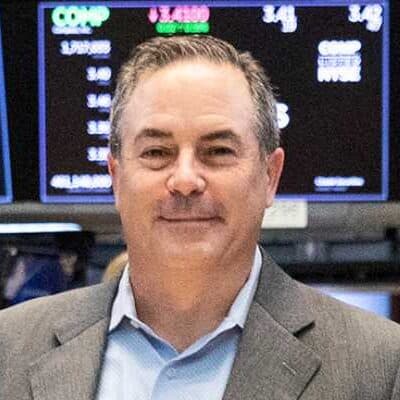
TheStreet Pro Portfolio’s Chris Versace is joined by Miles Harrison, CEO of Conexeu Sciences (CNXU) in a wide-ranging conversation about the company’s regenerative tissue platform and its opportunities in wound care and the aesthetics markets. Combined those two markets are over $13 billion, and as you’ll hear from Miles, there is another $2 billion opportunity tied to the GLP-1 market. The conversation also discusses the company’s unique platform and why the management team sees its intellectual property giving Conexeu a clear runway through 2036. We also discuss the company’s pre-revenue status as well as its FDA roadmap and related timelines.
Viewers that would like to know more about Conexeu Sciences should visit the company’s Investor Relations page, and review its latest investor presentation.
TRANSCRIPT
CHRIS VERSACE: Hello, and welcome to the Stocks in Market Podcast, where we share our thoughts about the market and what’s driving it, as well as conversations that help us formulate our thinking. I’m Chris Fersacci, the portfolio manager of the Street Pro Portfolio and the Chief Investment Officer of Tematica Research.
Today I’m joined by Miles Harrison, the CEO of Conexeu Sciences, a preclinical stage regenerative tissue platform company, that is focused on developing and commercializing cellular therapies for skin restoration in wound care and aesthetics. And I’m gonna tease a little bit here. I think some of you, as we move into this conversation, might be a little surprised about how the rise of GLP1s and their adoption is a potential tailwind for the company, which is publicly traded under the ticker symbol CNXU on the NASDAQ.
Miles, thank you so much for joining me today.
MILES HARRISON: Nice to be here. Thank you very much.
Chris: Miles give us a little background on Conexeu, the elevator pitch, your background and how you came to be CEO.
Miles: Yes, so maybe we’ll start with me. I have a background in healthcare, about thirty years. I was fortunate to be in All areas of the industry of healthcare. So I worked in big companies where we were in pharmaceuticals and oncology. I worked in a skincare company called Galderma, which recently IPO-ed, where I helped that business on three different verticals – a consumer brand, which is a cosmeceutical for skincare, a prescription portfolio and an aesthetic portfolio, which is important for later. So and that aesthetic portfolio is around 1.2 billion.
I later founded a company after that called Novaestiq, which got acquired. And then I joined Conexeu. So actually, I’ve been very fortunate to cover a whole spectrum from a corporate standpoint, global healthcare, to how to create categories with Galderma and then entrepreneurship with Novaestiq.
What attracted me to Conexeu was that I have you know all these experiences and actually I can work with them all in a small startup which has now become a public company because we have outstanding science. So that’s about me.
About Conexeu, what I saw when I first saw the platform, and I was discussing this with a good colleague of mine, Dr. Paul Laurence, who’s one of our board directors, and he told me, you know, I need to take a look at the company as I exited my last company in July of last year. And over the two or three months, before I joined Conexeu, what I saw was a couple of things.
Number one, I saw some outstanding talent. I mean, we’ve got a chief science officer who’s been in the space for years. We’ve got another co-founder, David Bogart, who has been around entrepreneurship for years, and we have a chief medical officer who has been he is a wound care PhD as well as been in the space for years. And I competed against him when I was in Galderma. The talent bench was fantastic, and the knowledge on you know both human capital and how to capitalize a company was very strong. But then the science was very compelling.
The science that we’ll talk about today, you know, this is this is 10-12 years of research. This is, I believe, a transitional phase in in healthcare, meaning that we’ve gone from sort of modern medicine replacing what the body has lost to what I believe now is going to be the body regenerating what it can rebuild and actually that is precisely where Conexeu is and I believe that you know this is a pivotal moment but also this is a company that has a very unique platform technology but a very unique product ultimately that will would change a lot of I think a lot of industries worldwide
Chris: As investors, when we don that hat, we’re looking for somewhere between a growth opportunity, a pain, a problem to be solved. What’s the pain point that is going to use Conexeu technology and its platform to solve? And how does that kind of open additional markets?
Miles: You know, it’s a good question. So what’s the pain point we’re addressing? Let’s think about it more about w what are the sort of where have been the advances and how we manage problems to how we can like think about a next step or next generational formulation or product that could replace that. So if I think about the biggest problems in that I’ve seen in my careers where you know medicine has advanced.
As we are looking at the problem, but we haven’t really talked about why the problem exists in the first place. So if we think about medicine, right, and if we’re very specifically thinking about here about chronic wounds and reconstructive surgery or facial aging and dental soft tissue loss, there’s a common biological issue. And the wonderful thing about the pain point that Conexeu is trying to address is tissue loss right . It’s regeneration.
How can we help the body regenerate lost tissue so that’s you know for your listeners it could be sounding quite complex but I’ll make it pretty easy so the what we have is called the extracellular matrix which is a structural framework that supports healthy tissue and if that’s damaged that’s like a wound, a burn degraded, aging or very simple things, just like lifestyle, you know, the sun and other things. Or loss, then we need to find a way to replace that.
Historically, we have replaced these things, so what the body has lost. We’ve replaced joints, we replace implants, we inject fillers, for example, and those technologies have helped millions of lives and created entirely new categories, which is a really good thing. But increasingly, what we see is that patients and physicians are asked a different question.
Instead of you know replacing the tissue, how can we help restore it? And this is the opportunity that we believe regenerative medicine represents. If I think about you know the opportunity or the pain point, it really is quite pretty compelling. So for a product that is positioned in tissue regeneration, we can solve problems because we’re agnostic, meaning we believe that we can go across all types of tissue.
Gum tissue or you know dermal, which is sort of at the higher layer of your skin, or subcutaneous, much lower in your skin, medical aesthetics, veterinary or specialty tissue. So we believe that we are the pain point that we are addressing is regeneration, supporting the body rather than an implant. And our ambition really is to develop a technology that works with the biology of the of the body itself rather than simply build around it.
Chris: In in my short introduction, I kind of teased GLP1 adoption and how that’s kind of exposing this tissue restoration gap that today’s is excuse me, aesthetic tools, they really weren’t anticipating. They’re not really geared to addressing what’s happening. I don’t know about you, but I’ve seen some people on GLP1s, and you we’ve seen the physical toll. Walk us through this a little bit because my understanding is that this in and of itself could be a $2 billion market on its own by 2030.
Miles: That’s correct. Let’s go back to one of the points I made a little earlier, which was this extracellular matrix or ECM, which you’ll see written down, is this structural framework that supports the healthy tissue. And sometimes it’s either damaged, degraded, or lost. That’s what I said before. Now think about if it’s rapidly lost, right? So you know the structure has been lost through rapid weight loss. So if you have rapid like weight loss, that’s a wonderful thing.
It’s actually so good for I think for Medicare and Medicaid, for overall for industry where people are, you know, losing weight, and obviously the comorbidities and the burden on healthcare is dramatic when this is not stopped. So by having this technology, I think it’s fantastic. These peptides are really good. but what it does is it you know you lose fat tissue and you lose contouring in areas that maybe you didn’t think.
You’re gonna lose. So it’s alright taking it from the middle, right? That’s what we try to do, or on from your legs. But you know, if you start losing fat pads in the face and areas on your arms, then then you really do look, you can look five to ten years older, and you know your body has changed shape. So this is a big opportunity for the aesthetics business because there is an opportunity to find a solution to
That so the big question really is you know how can we think about that knock-on economy which you talked about? So today, in terms of you know how we can address this, we have simple products, HA fillers which you get injected, they last you know nine to twelve months, or some biostimulators can last up to two years, but it’s not they’re not they were never thought about for regeneration. So we have an opportunity to potentially inject a product, provide the volume.
And help that tissue loss, you know, through that structure and you know the signaling and the cells coming together, and to regenerate tissue, therefore keep the volume and improve the volume that you’ve lost. And that’s the big opportunity here. And that’s, as you quoted before, that’s the $2 billion sort of market that we could have by 2030 on top of the aesthetics market today that’s worth $11 billion. So, you know, in terms of total numbers, these are big numbers.
Chris: You recently put out a filing with the SCC that kind of walked through I believe it’s proof, P-R-O-O-F, kind of talking about where you are in this marketplace. But you also said something though that really stood out to me in that. And it was that, the path to aesthetics is first preceded by wound care. What is wound care as you guys think about it? How do the two tie together?
Miles: Yeah, so I think we think about product for wound care today. What you have is you have a range of products that have performed very well. But are somewhat lacking in terms of completion, right?
So we have wound dressings, we have some what’s called sort of flowables, but they’re more like toothpaste. The opportunity here, we believe in wound care is to find a product that can specifically help within a wound. And when I mean wound, what do I mean by a wound? So burns are surgical wounds. You have a cut, and that’s a wound. You have irregular or tunneling wounds, right?
These are very unusual, awkward-shaped wounds. What you need to do with these, or it could be DFU, which is diabetic foot ulcer, what you need to do with all these wounds is address them, clean them, dress them, and then you have a sort of a likelihood of helping to solve that wound.
That issue and allowing the body to regenerate some tissue, but it regenerates rather quickly and it can cause some scar tissue. Or the wound dressing itself is not fully complete, so you’re going to get, you know, maybe a replacement. So the thinking behind wound care and the sort of 11-peer-reviewed publications that we have in the 12-13 years of work that came out of the University of British Columbia, where this asset stays.
Started was that what if you know if we can seal an attic, right, for heat loss and to keep out the cold with a foam, why can’t we generate a foam you know for wounds that you could just inject? we didn’t get a foam, but we did get a liquid. I can explain a bit more about the design of the product. So imagine that you can just fill a wound completely, right? So you just inject with a large syringe, it doesn’t have to be narrow. A large syringe you inject into the wound, into a new regular wound, and it will go and fill all the space.
And the wonderful thing with this product is when it hits 37 degrees centigrade, which is your body temperature, the liquid becomes a gel. It’s thermosensitive. So, with that warm environment, it starts gelation and it takes 10 minutes and then it stays in place. So it’s not going to move as you’re injecting it, it stays in place, and that then allows the body.
That’s a scaffold that we have now injected, and that’s the house, that’s the home, and that allows the cells and the signals and the body, which says, safe environment, I like this environment, to come in and start that regeneration, start rebuilding tissue. And we’ve in that proof study that we announced that we haven’t got the data yet. That data will be on podium in the fall.
But what we’re seeing and what we were pointing to in our latest press release is that we have an opportunity to show that we can have some vascularization, that’s veins, some you know cell migration. Cells are coming in and duplicating and that whole environment becomes the right environment to generate tissue, regenerate tissue. So we have this wonderful opportunity in wound care, which was built for years with all these publications, with all of these
All this work that was done through a PhD, that asset then was acquired by Conexeu, and the University of British Columbia is a key stakeholder in the business, it’s a shareholder. That now is ours. So it’s all our IP worldwide, any changes, any modifications, any combinations, it belongs to us. And we decided that the best way forward is you know is to get into wound care.
Because A, we have a problem to solve, but you know, large volume wounds, it could even be like Moe’s surgery wounds that you know you have when you have a cancer resection. So we have a problem to solve, and we have a unique product proposition. And the other thing is that from a regulatory standpoint, we can use a predicate product that’s available today, and in the words of the FDA and how you submit products, we just have to show non-superiority, we have to show similarity to that predicate today, and then we can take all of those indications that predicate has.
So that’s the fastest way, and we have already started to work with the FDA on our submission, we’re starting on our manufacturing scale up, looking at our chemical composition, all this work that needs to be done to submit to the FDA, and the timing will be by the end of the year. Beginning of quarter one to allow them to take a look at the technology, look at the manufacturing, and look for an approval by the end of quarter one, 2027. So that’s the wound care opportunity in a nutshell, and that’s the background to how we get to where we are today.
Chris: A minute ago you said that the aesthetics market is an $11 billion market opportunity. We can toss in, if I if I heard you correctly, another two billion on top for GLP ones in that aspect. How big is the wound care market opportunity?
Miles: Wound care represents around $2.6 billion. the difference really between the two is one is very much regulated, you know, so you will have reimbursement. Although we are positioning our product as a volume player, not as a surface player. And there’s some changes that have just happened that still allow us to play, and you know and get some reasonable sort of reasonable support to you know to wound care specialists and dermatologists whoever working on that on a patient.
$2.6 billion today, the bigger pie obviously is aesthetics at $11 billion and the $2 billion that we just quoted, because that’s more cash pay. And so that you know that is that is not reimbursed. That’s you know something that you would you know yourself elect and go and pay for. So those are the two numbers.
Chris: And is there a third or fourth market that you’re targeting longer term?
Miles: We are one product, one so one platform, multiple markets. That’s if you go to our website, you’ll see that on Conexeu. The point here is that we’re backstopped in wound care. The big opportunity is in in aesthetics, but this is a very versatile product that we talked about before. So, you know, there are multiple regenerative tissue applications that could also be in dental soft tissue, for example. That’s a $4 billion market.
Periodontitis – about 63% to 66% of Americans suffer from this sort of degrading of the of the gingiva, of the you know, the tissue around the tooth. And as that degradation happens, you know, you’re sitting in the chair, you get a one, two, three, four, five, six, and you don’t want a six, but we see a lot of this happening.
We believe, because we’re somewhat tissue agnostic, we believe, that this product could be injected into the ginger and build up that tissue. So dental is about four billion dollars, veterinary is about one to two billion dollars. and because we’re working in collagen and bovine collagen for wound care, this is a very easy next step for us to get into veterinary,
The final one is 3D bioprinting – literally printing with this with this formula on a 3D printer and then using that product to perhaps replace a breast. We can talk further about that, or you know, print a sort of a lumpectomy where you have a removal of a cancer from the breasts. You could potentially CT scan that and then design specifically uniquely for the patient that formulation that form and then replace that. So 3D bioprinting at medical grade would be quite a breakthrough and that’s also another platform that we’re focusing on.
Chris: That sounds, if you’ll forgive me, very sounds like something out of Star Trek, but Miles, let let’s talk a little more about near term versus you know longer term. Wound care, you’re hoping to submit to the FDA by the end of the year, hopefully have some feedback, a ruling by the end of the first quarter of 2027. So that gets you into the wound care market. How long does it take to go from that market, which as you mentioned, backstops the business to the aesthetics market? Does that is that a 2028, 2029 timeframe?
Miles: I would be a little bit more generous on time, only because there is not a clear path here, and that doesn’t mean that that’s a concern or a risk, but we have an opportunity because in wound care, we’re using a predicate device, and that’s that that’s a product that already exists. Then we will come with our product, and as you said, you know, we’re looking to get that approval in Q1. could be delayed, it’s up to the FDA, right? They have a clock stop on 90 days.
We could have more questions, we’d work through that. Now, once we get to that point, so that we have the product available. Then on market, we’ll now start to be using this product, bovine-based collagen hydrogel. This is the product that we will use in womb care. And we’ll start to see the safety and the efficacy and the performance of the product in human. We then plan to move to human collagen.
We’ve already done the studies on human and bovine collagen, same results, but just from an aesthetic standpoint it’ll support our aesthetics positioning because in aesthetics, patients, consumers, injectors, they will look for a human-based collagen, not bovine collagen. So, what we’re going to do in wound care, the idea is that we would then, after getting the approval for bovine, is seek an approval for human collagen in wound care.
Then obviously see the safety data in large volume in wound care and then go with that data to the to the FDA and discuss with them what the path to enter the aesthetics market will be. Is it a 510K indication for aesthetics? That would be not the first time but would be there’s already predicates there and we’ve seen that, but it would be a different approach. Or you would go a standard approach, which would be a pre-marketing approval, which is a PMA. And PMAs are typically what you need for HAs and other products in aesthetics and these devices, which is you have to, you know, in human in a number of offices with a couple of hundred patients more likely and then over a period of two to three years you know you’re gathering data and submitting that data and putting that data package together for the FDA. So that would take a little longer.
So, in terms of timeline I wouldn’t be thinking about you know 28, 29, I’d be thinking more about 3031 for aesthetics that gives us that allows us if we were to do a PMA to work through that PMA. But it could be quicker if we can scale up on the human collagen side and get the approval for a 510k in medical aesthetics that would make it a little quicker.
Chris: You are pre-revenue, right? You have R& D work to do, so let’s talk a little bit about the capital structure, cash, that sort of thing.
Miles: Sure. So let’s wind back to about a year and a half ago and the company started raising cash. about fifteen million dollars was raised in total up to May of this year. we then we then did a direct listing on the Nasdaq on the basis of our cash runaway, which allowed us to work with the Nasdaq and the SEC to get ourselves on you know listed.
What we have today is we have a runway which will last us through that end of quarter one, which is the timeline for our 510K approval in wound care. The next inflection point would be scale up for commercialization or you know working through on one of the pipeline opportunities and accelerating that. So the cash need would be more prevalent. At that stage. So cash runway-wise, capital-wise, we are in a good way. But we will be looking to raise cash for the sort of the post-approval phase of wound care.
Chris: Miles, as you’re steering the ship at the same time, for you, what what’s the biggest worry, the biggest concern, the biggest flag that the roadmap that you’ve laid out is taking either longer or things are just not coming to fruition the way expected?
Miles: I think I think our experience, our leadership team’s experience, our global healthcare experience, we understand the market. I mean there’s always a risk going from bench to the scale up, there’s always a risk in terms of it doesn’t do what you had hoped it would do, or in volume, you know, it’s not potentially may not do what you think it’s going to do.
The beauty here, however, is that we have done these 11 peer-reviewed publications, and within that, we have already done some of the studies that the FDA are going to require. So you can read about that. They’re on our website, and we have already done a used the predicate in a study. An animal study and shown that this you know performs as we expect it to perform. So, in terms of risk with regards to you know approval, I think it’s pretty low. there’s always a risk with the FDA, and that’s the way they’re set up, and that’s good, you know, that we have this this governance around this, but there’s always there’s always a risk. But you know, we do believe that we’ll execute and get that approval.
The risk every single day is around execution. We have a small team. We have six FTEs today. So in a company that’s you know worth $270, $300 million, that’s a very resourceful and excellent capability, you know, team members that we have here. But we do have you know execution is the key thing here. You know, we have to get the regulatory process, we have to Then understand the commercial executional process, and that will require outstanding people, disciplined, governance, operational excellence, and some patience. So all of that for me is the risk, right?
As you move from bench to scale up to launch. But what gives me, you know, what makes it very positive for me is that we’re not bringing a Me-Too product in actually in any of the industries we’re talking about. We’re bringing something that you know has really going to be the talking point on regeneration, on how to how we can give a blueprint to the body to regenerate what it has lost. So that for me is remarkable. So you know from a passion perspective on the on the team, you know, and on all the things that we need to execute on, our single-minded focus really is to you know get into wound care and then start the path across multiple other areas to execute.
Chris: Let me just ask this question. Maybe it’s there’s an obvious answer, I’m just not seeing it. It throughout our conversation, we’ve referenced the FDA. But if I remember your filings correctly, you have your patents extended to, I think, forty countries, your patent pending in other countries. Could you get started elsewhere? Maybe not the US?
Miles: A little harder because I think and you’re right, we we have a global patent and but y you know, a l a lot of those other markets look to the FDA for approval. So having an FDA approval actually makes it much easier in the other markets as a company. You can look at your investors and yourself, you’re probably very well aware, but if your knowledge and your human capital is based in the US, it’s much harder to launch elsewhere, maybe with a third party, which is out of sight.
So, the focus really is the US. It’s half of the world’s aesthetic market anyway. So, you know, fifty percent of sales are here in the US of aesthetics. So it makes absolute sense for us to bring the product here to the US and launch in the US and know and you know, watch, see, feel, touch, you know, talk to our advisors and to you know key opinion leaders and thought leaders talk to them directly here in the US and really get a good understanding. So I would not go elsewhere first but yes, the potential is to you know as the ripple effect happens you know is to move away from the US and look to other markets based on the success that we’ll have here in the US.
Chris: I’m not really sure what to read into the revelation that the US is half of the global aesthetics market. I think there’s something to be said about us as a people. Not sure what but Miles, let me let me ask you before we get out of here, is there anything that we didn’t talk about that we should that that we might have missed?
Miles: We probably didn’t really go into a lot of depth on the product itself and how you know how differentiated is. And I I’d really like to just make that very clear for your listeners to understand the difference. So the beauty of this product, and we talked a bit about it, so forgive me, but it starts as a lyophilic powder. That’s a powder in a small vial.
Today in many areas, ophthalmology but also in aesthetics, you get powders very, very similar. So we all produce you know this product, it will come in a powder, there’s no cold chain, there’s no you know, fridge required, it which already sets it apart. It sits in a practice, and we can reconstitute it with a serum, and then that becomes the simple liquid that we inject through a fine gauge needle for aesthetics, or we can inject you know into the wound.
The same injectors and patients already know this technology. So, it’s very, very simple. We’re not actually bringing a new working method, new way of working, you know, into a practice. It’s the way the practice works today. It’s very understandable, it’s very simple, and so that’s a good thing. Now, this whole thermosensitivity of this gelation at 37 degrees setting into the scaffold sets this product apart, right?
So, you get that gelation, and the scaffold isn’t just an inert filler sitting there. It’s not like a you know just a structure. It’s a combination of collagen, which is a triple helix collagen, which is the fundamental structure unit of collagen itself. It’s responsible for the tensile strength and stability. And then you have glycosaminoglycans, so gags they’re called, which are these negatively charged polysaccharides, these like sugars that attract water.
All natural, okay. Collagens in the body, gags are in the body, and then the hydrogel, which is a water-rich jelly-like material, it’s a three-dimensional sort of polymer network, and they these can absorb and hold up to 99% of their weight in water alone. So, they’re widely used in medicine and wound healing. So, all of these products that I’ve or the ingredients that I’ve talked about are actually already approved by the FDA.
There’s nothing unique or foreign or different, and the beauty of putting these together is that, and what we’re seeing in the preclinical work that we made an announcement on is that we are we are seeing you know the body’s own cells move in and re-rebuilding of the native tissue. But that formulation is what sets us apart, whether that’s human collagen in the first side or bovine collagen. We can use these. You can use bovine collagen in dentistry, you can use bovine collagen in human, you know, for wound care. We just we would select human collagen.
For aesthetics, because we just think that that would be a better positioning. So, the wonderful thing is that we are, you know, we are creating something that is already pretty well known in the body, right? These are just combinations of products that you get in the body today, and that’s quite simple. It’s a complex, you know, ingredient, and you know, our secret source is something that we worked on for you know for 10 years, and that also allows us, I think, to differentiate the product.
We believe will not have a competitor for a number of years. I mean that that the IP you talked about gives us a clear runway till 2036. So, we have great product, very easy to you know utilize that product within the practice or you know in a wound care facility, and you know from a supply chain standpoint, super easy. And that sometimes can become the problem, right, where you’re impressing something very new to be built upon and people find it difficult. This should be a very simple product to use in practice.
Chris: That that also kind of suggests, Miles, that to the extent that you start hitting some of these milestones, other companies will come knocking.
Miles: Sure, so come knocking, competing, but you know, maybe look at this technology and have that part of their portfolio. That’s something. We’re not gonna commercialize in all of the verticals that I talked about. we we’d be crazy to do that. We’re not a General Electric, we don’t have the cash. We’ll pick our spots. We know where we’re strong, we know where we have the capability. and we also know where others, you know, where this would fit potentially in their portfolio. So there could obviously be discussions around these assets, you know, as we move forward across the geographies that you mentioned, but also across the verticals, yes.
Chris: Sounds like licensing opportunities to me. That’s what it smells like. We will see. Miles, folks who want to learn more about the company, obviously there’s the company website, investor relations. Your latest investor presentation is there. We will link to it in our notes as well. Any other place, any other readings that folks might want to tune into, as they’re doing their homework to stay abreast of what’s happening or think a little more about the aesthetic the aesthetics market.
Miles: Yeah, we post on Instagram, we’re also on LinkedIn with our own site and our own for you know for Conexeu. so those are the areas I would say as well, you know, within the website itself there’s the corporate deck but there’s also the publications that you can read and we are penned you know clearly all the press releases so everything is there it’s very I think a very well structured website, which we made a big change to in the last six months.
Chris: Excellent. Well Miles, thank you so much for joining me. Thank you so much for sharing the story, the opportunity. And I look forward to having you back in in the, you know, probably sometime in the first half of 2027 so we can get a meaningful update and see where the company is.
Miles: That would be great, Chris. Thank you. Appreciate it.
Chris: Excellent. Thank you so much. All right, folks, that is the latest episode of the Stocks and Markets podcast. As I mentioned, please be sure to check the show notes below for more information on Conexeu, and we’ll be back with a fresh episode before you know it.
Disclosure: TheStreet Pro Portfolio has no position in the shares of Conexeu Sciences (CNXU). This conversation is provided for informational purposes only and shall in no event be construed as an offer to sell or a solicitation of an offer to buy any securities. The information described herein is taken from sources that we believe to be reliable, but the accuracy and completeness of such information are not guaranteed by us. The opinions expressed herein may be given only such weight as opinions warrant. The opinions offered in connection with this content are subject to change without notice. The opinions made known to you in connection with this content are not exclusive to you and may have been previously or subsequently discussed in other media. Comments made known to you in connection with the content: (a) may not be suitable for you; (b) do not take into account your particular investment objectives, financial situation, or needs; and (c) are not intended to provide investment advice or recommendations appropriate for you. TheStreet Pro was compensated by a third party to conduct this interview. Before making any investment or trade, consider whether it is suitable for you and consider seeking advice from your own financial or investment adviser.
At the time of publication, TheStreet Pro Portfolio has no positions in any securities mentioned.