The Truth About Building Wealth: Kate Stalter on Investing, Retirement, and Avoiding Costly Mistakes
Next up in our series on getting to know TheStreet Pro’s contributors is Kate Stalter.
You've reached your free article limit
You've read 0 of 1 free Pro articles.
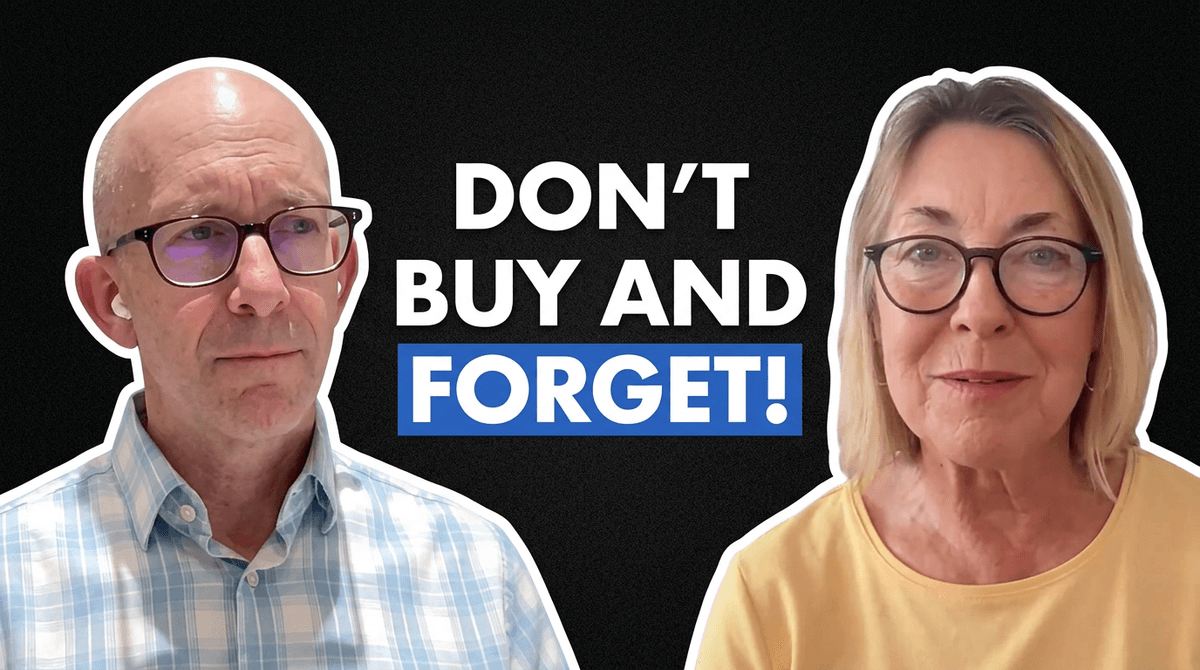
If you’re an investor and you’re not reading Kate’s work, I’ve got news for you, you should. She’s a financial advisor with a passion for helping people retire. While she’s not much for stock picking, she can help you find the right ETF for your portfolio or develop the strategy to keep you on track for retirement.
I had fun with this conversation, especially when her cat made a brief cameo. I hope you enjoy it, too.
Key Takeaways
• Investing is about having a plan, not chasing stock picks. Kate explains why long-term wealth building starts with understanding your goals, managing taxes and withdrawals, and ensuring every investment serves a specific purpose within your portfolio.
• A successful portfolio is built through diversification and thoughtful asset allocation. Rather than focusing on the latest hot stock, Kate advocates broad diversification, value-oriented investing, fixed income where appropriate, and regular portfolio management based on your stage of life and financial objectives.
• Know what you own—and why you own it. Reflecting on a painful Crocs trade during the early stages of the financial crisis, Kate shares how the experience shifted her focus from stock trading to asset allocation, reinforcing her belief that investors should understand the role of every investment and avoid accumulating a random collection of holdings.
Video
Transcript
Jason Meshnick (00:01.584)
Hello and welcome to another segment in our series introducing the Street Pros contributors. Today we are going to get to know Kate Stalter. Kate’s been with us for a couple of years. And Kate has been writing our popular filthy rich animal newsletter along with me, although I’ve taken a step back from it for time, but but Kate does a great job writing pretty much things that you need to know as an investor. So with that,
Let’s dig in. Hello, Kate.
Kate Stalter (00:32.236)
Hey, Jason, great to be here.
Jason Meshnick (00:35.344)
Alright, yeah, thanks for joining us. okay, so the way that this works is I ask you a bunch of questions so that our readers and subscribers and potential subscribers get to know us a little bit better. So the first thing that we’re going to do is start with a fun fact about you. This does not have to be anything related to investing. It can be, you know, your first pet’s name or anything that you want.
Kate Stalter (00:58.158)
Okay, one that kind of d I don’t know, tends to surprise people or something is that when I was like in junior high, I played bagpipes and I was part of a bagpipe band. And what’s funny about that is that people always think that it has a lot to do with your breath and holding your breath. It’s really the arm movement. Like if you watch somebody playing bagpipes and they’re kind of controlling the air with their arm. And
Jason Meshnick (01:09.284)
Ha ha.
Kate Stalter (01:26.04)
To this day I just I I understand why bagpipes have such a bad reputation kind of musically, ’cause honestly most people who play are terrible. And I hear it and I just I’m like, that’s terrible. so but yeah, it was a lot of fun and yeah, just got busy, moved on to some other things, but it was a lot of fun while it lasted.
Jason Meshnick (01:49.806)
That that is amazing. That is not what I was expecting. you know, I’ll I’ll tell you a a little story about the bag type bagpipes, from my perspective. my wife and I just did the Camino the Santiago in Spain and
Kate Stalter (01:53.304)
Ha ha ha ha ha.
Kate Stalter (02:05.46)
Wow, cool.
Jason Meshnick (02:07.011)
Yeah, and so after you know, we we just did the last portion of it, the last you know, a hundred and ten kilometers or so. And we’re tired, it’s the day five, and we’ve just done this giant walk, and as we’re walking into the plaza, there’s a man playing bagpipes in the old city. And it just not the thing you want to hear when you’ve when you’re so tired from the trail to come across these bagpipes, but
Kate Stalter (02:32.365)
Yeah, it’s gotta be the right vibe for sure. Yeah.
Jason Meshnick (02:35.183)
Great. Okay. It does have to be the right vibe. So so as long as you can promise not to play the bagpipes for our subscribers, we’ll be good. let’s let’s move on to question number two, which I kind of hinted at already, but why don’t you talk? It’s actually a more complex answer than what I started to give. how long have you been with the Street Pro? And with that, let’s also just talk briefly about, you know, what else you do outside of the Street Pro.
Kate Stalter (02:45.549)
Ha ha ha
Kate Stalter (03:05.133)
You know, I actually, I mean, yeah, you’re right. The Street Pro, it’s been a couple years, I think, but then there was some iterations with the street before that, maybe going up through about maybe 2017 or so. I started out writing for real money back in 2010. So, and then, but you know, it’s been off and on for the years. So this is not, this is not my my first go-around with the street. And then other things that
I do. Well, I I am I am a financial advisor. I work with people on financial planning, really Gen X, the youngest boomers called Generation Jones, a lot of solo retirees, women, couples. And I really enjoy that work, Jason. That’s that’s really just something I love helping people solve some of the difficult problems, you know, around maybe
the Medicare surcharges around the tax implications of their investing. I I just I really feel as the years have gone on, and we can talk a little bit about my background, I think we will, but as the years have gone on, I’ve really moved more in that direction and away from stock picking.
Jason Meshnick (04:21.207)
Yeah, great. And I think that’s that’s why you’re such a natural for a filthy rich animal, because that that is more what it was geared towards was helping helping investors as opposed to helping traders. or or people who are, you know, being self directed. Everything across the street pro is for people who are self directed, right? You’ve got the trading side with Doug Cass, and and a lot of the other contributors, but then, you know, the portfolio is really not a trading portfolio, really is for investors. But I think that you occupy a slightly
different niche in helping people who are really maybe asset allocators is is a slightly better word. Whereas you know Chris Versace is a stock picker. You’re not picking stocks as much. You’re really more interested in how is that allocation and and how is that allocation going to serve you well as you know build a a nest egg for retirement.
Kate Stalter (05:11.393)
Yeah, exactly. And I’m I’m not against stock trading per se. I mean I’ve had I’ve plenty of clients who do. I mean I I I I I enjoy that too, but I just think that it’s it’s don’t trade stocks at the expense of what the income is that you need to generate for the long term, the income and then manage the tax consequences and what you want to do.
with your money in terms of a legacy or you know, it’s more the the thing that’s really common these days is die with zero. And I respect that. You know, it’s people that are just saying, hey, our our kids are fine. They have great jobs. They’re doing great. We’re we’re going to take care of us and enjoy our lives. But it’s all about this. Think about what the money is for. Not so much like, hey, you know, my stock popped three hundred percent overnight or something, you know?
Jason Meshnick (06:07.341)
Right, exactly. Yeah, yeah, it’s about it’s about building building something for the long term. as opposed to I look at trading really in in a lot of ways as you know income generating, right? You’re looking at at the bottom line from each trade and investing really isn’t about that.
there’s there’s nothing wrong with either one, right? You know, as long as you have have a plan and understand what your yeah, what your what your goals are. Great. so with that I think because I think we’re already getting sort of into our question number three, which is around you know, so so what is your investment philosophy and style and and with that
I’m I’m also trying to get at what type of member, what c what kind of which of our subscribers really would get the most out of your your commentary and ideas.
Kate Stalter (06:55.393)
Let me answer that part first. I think I think there’s a couple different types of subscribers. maybe the people that in addition to their stock trading portfolio, they also do have long-term investments, maybe in a 401k or an IRA. and that’s really common. You know, a lot of people do have both, and that’s great. So, really, for those folks, I’m addressing that kind of longer-term side of their portfolio. There’s so many good authors.
an analyst at the street who who can help them with the trading side. you know, and the other thing is too, people that would like to get started more in a longer term planning direction. this is I I it’s it’s actually I don’t think it’s all that complicated. It’s it’s a very different mentality. Maybe you start working in some of the rules surrounding withdrawals, taxes and so forth. But that’s another group that I think
my writing is appropriate for is the people who would like to get started on something longer term. yeah, yeah, exactly. You also asked about my investment philosophy, which is super simple. It’s diversify broadly, tilt towards value stocks, you know, they’re kind of the boring large cap dividend payers, you know, definitely not so exciting.
Jason Meshnick (07:59.662)
People that need help with a plan. Yeah. Yeah.
Kate Stalter (08:22.209)
But it’s about being patient. And there’s a reason you have those because you got to think about like the house on the block that maybe doesn’t look so great, but it’s been there for years. And maybe with a coat of paint, spruce it all up and it looks great again, you know? That’s a little bit how to think of of value stocks. So that’s that’s what’s really important, I think, to me, is look at every type of asset class you should have there, including fixed income.
you know, and I know in in we’ve had the last fifteen years when investors have been very spoiled by what’s been going on in the equity markets. It’s been very easy to avoid fixed income to say, well, that doesn’t return what stocks do. Well, no, no, it doesn’t. It’s not supposed to. That’s not the idea. It’s there to dampen the volatility and to give you some income. that’s part of the total return that, you know, is part of the dampening the volatility. It’s
Therefore, you in a market downturn and sure, granted, if you’re in the accumulation phase of your life, that’s not going to be as important probably as when you’re older and you do need to time your income withdrawals from your portfolio.
Jason Meshnick (09:35.565)
Right, exactly. how do you feel about buy and hold?
Kate Stalter (09:41.044)
Yeah, you know, I mean I spent years at Investors Business Daily teaching can slim. That was kind of how I got my start in this business. So I’m familiar with the stock trading world. And I remember back then, I think people who weren’t very familiar with asset allocation would kind of mock buy and hold. And I get it, because that that sort of has the connotation of you buy something and you walk away. Now frequently that works.
I I don’t recommend it. I’m just saying we’ve seen a lot of times, I mean, you know, you see all those comparisons. I don’t have one in front of me, but all those comparisons about right, if you just bought an S P five hundred fund in, you know, nineteen seventy or something, where you’d be at today, just l buy it and leave it sitting there. but you know, a lot of it really depends on your your life cycle and where you are, what the money is there for. I mean
Sure. If you are in your twenties and you’re in your first job and you could put a little money away, just stick some in a in an S P index ETF and just leave it there for five years, you’re probably you’re gonna be okay. You really you’re probably I I I have to qualify everything just, you know, compliance wise, but you’re probably gonna be okay, right? but you know, if you’re 70 and you’re retiring
Well, you need to be a little more circumspect about this, right? And and and figure out, okay, do I need to balance this out with maybe some fixed income? With some other types of assets that maybe would give me a little bit more growth. I mean, even even retirees do need to add some growth assets, you know, like for example, not recommending this, but for example, emerging markets, higher risk, but also higher growth over time, right? So it it’s just the idea of
rebalancing. I don’t object to tactical allocation at some point. if it does make sense. A few years ago, this is this is quite quite a few years ago actually, but commodities seemed to be something that a lot of my clients needed more exposure to in their portfolios. So we did add a small dose of small allocation into commodities on a very tactical basis. So yeah, so the term buy and hold is is in most cases
Kate Stalter (12:04.897)
Very misleading ’cause it’s not really the optimal strategy for income generation and then just also cost management in terms of taxes and so forth.
Jason Meshnick (12:16.355)
Right, it it all comes back to having a plan, right? And and yeah, once once you have that plan, you’re not necessarily holding even if you own something for many years. Right? It’s it you’re yeah, you’re you’re managing at that point, not holding.
Kate Stalter (12:24.653)
Yeah.
Kate Stalter (12:28.203)
Right. And it’s also the matter of, you know, you make you make a great point there. It’s also the matter of when you are in the withdrawal phase, what do you withdraw from? You know, it’s not just, I’ll just sell that. No, there’s a little more to it. Figure out what what makes the most sense.
Jason Meshnick (12:45.687)
Exactly. okay, so with that, what I normally ask people for a fourth question is what do they learn from their best trade? Really the the better question that I’ve been asking is what does a good trade look like? So let’s change that a little bit for you and say, you know, what does what does a good portfolio look like?
Kate Stalter (13:09.285)
yeah. Well, first of all, it’s different for everybody. So there’s not there’s not a one size fits all here. And I actually believe something that’s a little bit controversial from a lot of advisors. I kind of feel like, you know, something is better than nothing. So, you know, if you go to advisor LinkedIn, somehow my LinkedIn algorithm has a lot of financial advisors on there.
and there’s a lot of people that love to debate all day long about, you know, this fund and the turnover and then the expenses and the sharp ratio. And I’m like, you know what? You’re much better off starting with something. I understand that, that a lot of these say mutual funds that you find in a four one K, a lot of them have very high expense ratios.
A lot of times people don’t even know why they own a particular thing other than when they bought it, it did well last year. But I would say something is better than nothing. Some investment, some type of portfolio. Get yourself started. You often find yourself in a situation where you buy something, and this is back to the buy and hold question, right? You’ve let it sit there for three years and then, well, maybe it maybe it went up a little, maybe it went up a lot, maybe it it declined.
But that gives you a starting point. So, you know, we you can debate all day about you want IV V or SPY. I mean, the truth is either one of those SP 500 ETFs would be fine. It it it it really is just about what is the right mix for you and what’s your time horizon. That sounds very cliche, but it’s cliche for a reason, is because if you’re, you know, 25 and just starting your career.
Jason Meshnick (14:44.247)
Right, right.
Kate Stalter (14:58.689)
That’s really different than being seventy five and needing to manage the money you have in front of you because you’re not making any more from work most of the time, right? so, you know, the a good portfolio is the one that you have managed your costs. You you do have the right things in there, not that met life stock that you inherited from your father twenty years ago. That’s an actual example I saw and you don’t even know why it’s there, you know.
Jason Meshnick (15:26.223)
Ha ha ha.
Kate Stalter (15:28.181)
Know why it’s there. Understand that costs do matter, and and when I say cost, I’m talking about the expense ratio within an ETF and index funds are very, very cheap. And I think the biggest thing though is why why is everything there? Why is that stock fund there? Why is that bond fund there? Why do you have emerging markets there? What are we doing with international bonds? And if you are working with an advisor, ask them.
Ask them those qu and you know, you don’t have to be in a confrontational way, but just say, you know, I’d like to understand what is in here and what is the purpose. That’s a perfectly fair question.
Jason Meshnick (16:06.125)
Yeah, sounds good. so we’ve all got one of these. Whether you’re you’re an investor or trader, it doesn’t matter. what is your worst trade and what did you learn from it? You can learn more from the bad trades than from the good ones.
Kate Stalter (16:16.398)
Yeah. yeah, I have one that I just I’ve never forgotten and it was almost twenty years ago. It was Crocs in October two thousand seven. And that was one of those IBD stocks at the time. And it fell like I actually pulled up the chart a little while ago, looked at it, it fell like thirty six percent overnight when they reported earn I can’t remember now, it was twenty.
Jason Meshnick (16:46.457)
No.
Kate Stalter (16:49.164)
Almost twenty years ago, but they either reported earnings or issued a forecast or something. Now think about that. October two thousand seven, that was when we started to see the very early signs of the great financial crisis coming in. I mean we didn’t we didn’t know what we were seeing at the time, but it was it was very much that. So that was something and
That bothered me for a long time, Jason. I spent a lot of time looking at that chart, saying, What could I have caught here? Should I have not held it through earnings? What should I have missed? And what I kind of realized eventually was I didn’t want to have my money tied up in kind of a a strategy or tactics where I had so
little control. Now we don’t have control over what the market’s doing. So that that’s that’s not really what I’m saying. But what I what I what it kinda taught me eventually, and it took me a few years to figure this out actually, the idea of a more cohesive approach. And it’s it’s interesting because that was about the time that I after I kinda had mowed on that for a while and and figured this out and I left I left Investors Business Daily. I’d worked at Investors Business Daily for like ten years.
teaching their trading and writing about it. And it was right about the time I left Investors Business Daily that I kind of started gravitating towards asset allocation, the philosophy of dimensional funds. And that was something that I did learn from this Crocs trade. It’s kinda, you know, I I don’t know if it was all your eggs in one basket because I didn’t have everything in there. But it was that was a pretty big loss. And I just kind of realized I didn’t want to be so much at the mercy
Jason Meshnick (18:11.799)
Mm-hmm.
Kate Stalter (18:39.671)
Of trading like that.
Jason Meshnick (18:41.967)
Yeah, that that can be a challenge. especially during a market like that. we we like the ones where rising tide lifts all boats. Yeah.
Kate Stalter (18:43.906)
Yeah. Yeah.
Kate Stalter (18:49.932)
Yeah, yeah. There was a commercial years ago. It said something like, dur during the whole like dot com boom was many years ago. The commercial was something like, I like stocks that go up. Yeah. Yeah, right.
Jason Meshnick (19:01.657)
Yeah, exactly. I just buy the stocks that go up. yeah. So all right, moving on to question number six. what investment wisdom do you have for our viewers?
Kate Stalter (19:15.788)
Yeah. You know, I think I said this a few minutes ago. But again, look at look at how does everything you have how does it fit together? There’s a there’s there’s a an advisor he I don’t know if he still is, he used to be on C N B C a lot, I actually don’t know. But his name is Mark Matson and I went to a seminar that he gave about ten years ago, and I remember something he said is that a lot of advisors
or not advisors, I’m sorry, a lot of investors just use have a bunch of stuff. It’s just a collection of stuff. It’s like you got this stock, you got that fund, you got that fund. you got that over there that duplicates that and you didn’t even know it. Understand what you own. You know, I mean, again, for the past fifteen years and you had a blip like two thousand like twenty twenty two, right? Okay? When when basically everything got got killed. But
I think over the past fifteen years or so a lot of people have become very complacent because they like stocks that go up and what have stocks done? They’ve gone up. but really having having something where each each investment serves a different purpose and has a job, I think that’s really really the wisdom. Understand what you own and why you own it. And if you have of a an account over there that you’re like, no, I’m just I’m just going to
For small caps, pennies, penny stocks, growth stocks. That’s fine. I don’t object and I’m not saying give that up, but it’s just in your longer term investments, understand what you got. All right, I got a cat coming over here. Speaking of understand what you got. So yeah. Yeah. Yeah. Right.
Jason Meshnick (20:51.979)
Exactly.
there we go. Yeah. Yeah. Hello Kitty. and so what what advice would your cat have for for our viewers? Feed me. Right, which is which is all that your portfolio wants as well. Yeah. So
Kate Stalter (21:10.414)
Yeah, ki fe feed me. Keep keep just keep feeding me. Yeah.
Yeah, that’s pretty pretty much true. Pretty much true. You know, the the investments don’t have to drive your planning. And it’s actually the thought that your planning is all about investments is actually kinda old school. It’s the idea like, well, I’m not paying an advisor one percent to pick stocks. You know, the whole industry’s moving away from that. Because y you don’t need to do that, really. You know, I think the millennials understood that a lot more than the boomers.
And Gen X I never know, and they’re they’re my people, I I never know where Gen X fits into any of this. But you know, the the the old fashioned mentality that financial planning is investments is outdated. And you can ignore all the people yelling at you on TV about this stock or that stock and who got a buy rating today, because ultimately none of that should really affect what happens to you and your money ten, twenty, thirty years down the road.
Jason Meshnick (22:17.167)
Right, exactly. Yeah. Well, I think that was great, Kate. a lot of great information, and I really appreciate your time. so I just want to say thank you for being a part of the Street Pro and for all the great writing that you do and and thank you for helping to inform our subscribers.
Kate Stalter (22:38.574)
All right. Thanks, Jason. This has been fun.
Jason Meshnick (22:40.922)
Yeah.