The Iran War Is Back and Causing Broader Market Weakness
Rotational action has been a safe haven, but it is now under pressure.
You've reached your free article limit
You've read 0 of 1 free Pro articles.
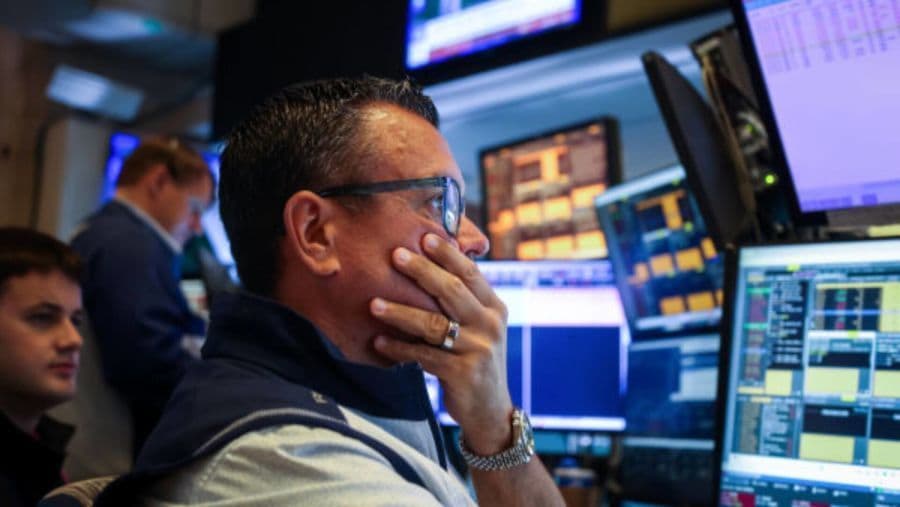
The Iran ceasefire is unraveling, adding pressure to an already shaky market on Wednesday morning. President Trump said the ceasefire deal he signed in June is “over” following another round of Iranian attacks on ships in the Strait of Hormuz. The U.S. military hit more than 80 targets along Iran’s coast, and Iran then responded with strikes on Bahrain and Kuwait.
Trump stopped short of saying the U.S. would restart the war but called the Iranian leadership liars and cheats and said he did not want to deal with them anymore. He is scheduled to hold a press conference at noon.
Oil jumped on the news. Brent crude is more than 5% higher at roughly $78 a barrel, which is well above the prewar level. This means the market has to contend with renewed inflationary pressure from higher energy prices at the same time the technical damage under the surface is spreading.
The major stock indexes have held up fairly well recently, but the damage under the surface has been expanding and is gaining momentum Wednesday morning. The biggest problem is that the former leaders in technology and AI infrastructure are breaking down and violating support around their 50-day simple moving averages.
What has saved the market from a much more robust correction is rotation. Money has moved out of the broken leaders and into healthcare, biotech, financials, transports, and insurance.
The big question now is whether that rotation can keep going as the correction in tech continues or will the negative sentiment start to impact the recent rotational winners.
The Rotation Has Been the Shock Absorber
The rotation is the reason we have not seen a broader correction. Every time money comes out of the old leaders, it has found a new home in one of the groups that has been working. That is the healthy version of a market going through a character shift rather than a decline. The money stays in the market and moves to better opportunities.
There is no guarantee the rotational action will continue, however. It works as long as sentiment stays positive enough that money coming out of the old leaders stays in the market and looks for a new place to go. But once sentiment turns negative enough, the money does not rotate. It goes to the sidelines. That is the risk right now. If the damage to the old leaders keeps getting worse, sentiment sours, and folks who would have rotated into the next group instead pull back and wait. Without that rotational action, breadth will dive and that will scare away the market players who have benefited from chasing names with relative strength.
The Extension Problem
The other challenge is that the rotation winners are already extended. Biotechnology has been the standout and the group is stretched after a long run.
The iShares Biotechnology ETF (IBB) has been hitting a series of new highs and the move is getting thin. When the groups receiving the rotation are already extended, the new money has fewer obvious entries and the rotation gets harder to sustain in the short term.
That combination is what makes the next few weeks tricky. The old leaders keep breaking down, which pressures sentiment. The rotation winners are extended, which makes the entries less obvious.
Why the Rotation Should Continue
Despite the near-term challenges, I think the likelihood is that the rotation continues after some rest and resets. The extended groups need to digest their gains and that process may look like weakness for a period. But the underlying setup that drove the rotation has not changed.
The old leaders have problems with margins, pricing power, and valuation that are not going away. The money that has been leaving those names still needs a home, and the groups that have been working still have better fundamentals and less demanding valuations.
Biotech, healthcare, financials, and the other rotation winners are likely to pull back and consolidate before they resume. That rest is healthy and it creates the entries that were not available when the groups were running. After the resets, I expect biotech and the other rotation leaders to continue to outperform because the reasons they have been leading are still in place.
The key mistake to avoid is staying married to the former leaders. The names breaking down and violating their 50-day lines are likely ready to pause and digest for a while. Holding them and hoping for a return to leadership is the trap. The better approach is to let them go, keep some cash for flexibility, and be ready to add to the rotation winners when they finish their rest and set up again.
My Strategy
My posture stays defensive with elevated cash. I am watching the health of the rotation as the primary signal. I have some big profits in biotechnology and I don’t want to give back too much.
The key issue right now is stalling in the rotation that drives cash to the sidelines. We need to monitor that closely, and breadth will be the most obvious measure.
For now, I am staying with the rotation winners, trimming the ones that have run too far, keeping cash for the pullbacks, and avoiding the temptation to catch a bottom in the broken leaders. The rotation has been working and I expect it to keep working after some rest, but it is likely to be bumpy as volatility spikes.
At the time of publication, Rev Shark had no positions in any securities mentioned.