The Chip Story Just Got More Complicated
AI Is bouncing, but a significant shift in the market is building. Here’s what to watch.
You've reached your free article limit
You've read 0 of 1 free Pro articles.
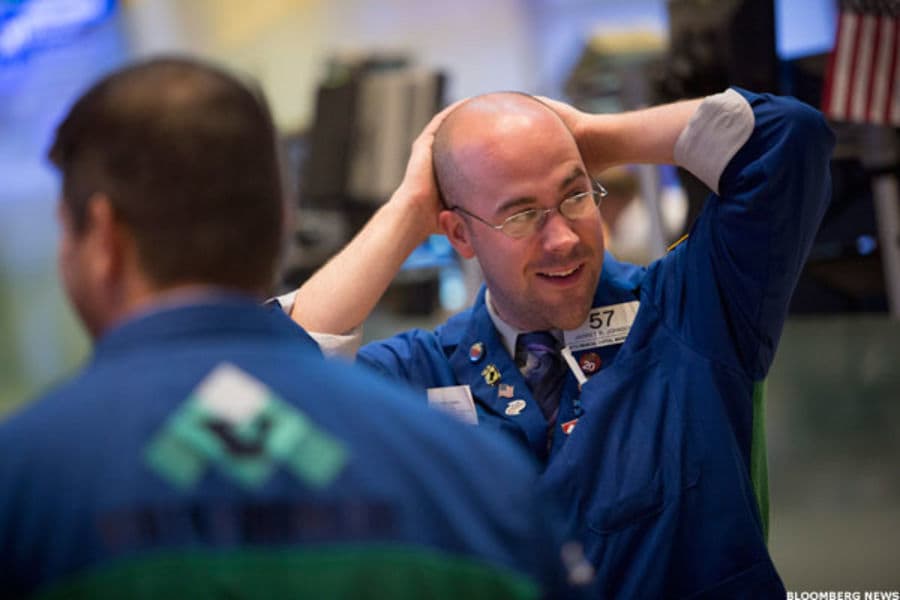
The market starts on Monday morning with a positive bias on news that the U.S. and Iran have agreed to pause hostilities after a weekend of military exchanges. Dow futures are up 0.39%, S&P 500 futures up 0.74%, and Nasdaq 100 futures up 1.08%, as a I write. Oil is higher rather than lower despite the pause news, which tells us the market has concerns about the potential for de-escalation. Bonds are slightly weaker amid concerns about inflation from oil.
The headline catalyst is the Iran pause, but the more important developments are happening under the surface as investors grapple with a rapidly changing AI environment. The market’s character has been shifting since the Micron Technology (MU) earnings report and last week’s chip cascade. Additional chips news is extending the shift rather than reversing it.
The Chip Story Gets More Complicated
South Korea’s Samsung Electronics and SK Hynix are expected to announce major investment plans worth up to 2,000 trillion won, or roughly $1.3 trillion, over the next 10 years. The figure is larger than the entire global semiconductor industry’s annual revenue. Both Samsung and SK Hynix shares were down 3% to 5% in Korea on the news because the magnitude of the capex commitment is going to compress margins for everyone in the memory group over time.
This is the second piece of evidence in five days that the chip pricing power thesis is going to face significant challenges. The first evidence of a shift was Apple’s (AAPL) reported interest in qualifying Chinese suppliers to break the cartel grip on memory. Now the Korean government is committing to absolute dominance in AI memory capacity, which means more supply hitting the market starting in 2027 and 2028.
Micron’s 84.9% gross margin from the recent report cannot survive for long with such intense competition looking to remove their monopoly-like dominance.
The market is brushing it off Monday because the Iran pause is the headline and the chip stocks are bouncing in sympathy with the broader rally. The longer-term view, though, is bearish for the memory cartel pricing over a 12 to 24-month horizon even if the current quarter and next quarter come in strong. That is good in the long run for AI but it will not provide immediate relief.
AI Names Get an Oversold Bounce
The Roundhill Magnificent Seven ETF (MAGS) and the speculative AI names such as Palantir Technologies (PLTR) are due for an oversold bounce after the punishment they took last week. The bounce is showing some signs of extending on Monday morning as positioning gets cleaned up and quarter-end flows provide some support. The temptation will be to read the bounce as the start of a new leg higher in the AI names but some of this is due to the reverberations of the Russell rebalancing and that is not sustainable.
Bounce action at this point is not trustable. The issues that drove the selloff have not changed. The hyperscalers face tighter margins due to the chip suppliers. The Fed is preparing to hike rather than cut. The valuation cushion has been compressed by the recent declines but the underlying margin pressure is still building. The bounce is positioning rather than thesis change. The right response is to use any strength in the AI names to lighten remaining exposure rather than to add aggressively.
Nasdaq announced last week that SpaceX (SPCX) will be fast-tracked onto the Nasdaq 100 index. That creates mechanical buying from index funds tracking the NDX, which provides a floor for SPCX. This is a stock-specific story rather than a broader signal about the AI trade.
Rotation Winners Need to Digest
Biotechnology has been the rotation winner and the group has worked through seven consecutive sessions of gains. The iShares Biotechnology ETF (IBB) hit a new all-time high Friday. The names in the group that have run hard are now extended and need some consolidation before they can mount another leg higher.
The risk this week is that the rotation slows as biotech digests and the AI bounce attracts capital back to the wrong names. My response is to take partial profits in the biotech winners that have run the most and to be patient about adding to the names that are pulling back. The setup is still strong but the entries are less obvious than they were two weeks ago. We need a little patience at this point after a nice run.
The character shift in the broader market means that the leadership groups are going to keep rotating. Biotech has had its move. The next sector to attract attention is what we should be watching for.
Distributed power, electrical infrastructure, the names that supply the AI buildout without depending on AI software profits, and the rate-sensitive groups that benefit if the Fed manages a hawkish hold without actual hikes are all candidates. Stock picking is going to matter more than sector allocation as the rotation gets more complicated.
Strategy
My defensive posture remains in place. My cash levels are around 45%. I’m heavy in biotechnology but trimming the winners that have run hard. I’m also avoiding the AI names entirely despite the bounce setup and looking for the next group to rotate into rather than chasing what has already worked.
The week ahead has limited catalysts. Quarter-end flows Tuesday may produce some noise. The July 4th holiday is Friday so trading volume will drop heading into the three-day weekend. Second-quarter earnings season starts in roughly two weeks.
The dog days framing from last week still applies, and the cross-currents from the chip story shifting and the Iran pause holding or not are the variables to watch. There does tend to be some positive seasonality in front of July 4th but I’m not looking for that to be particularly important.
Stay disciplined as the cross-currents play out, take profits when names run hard, hold cash for opportunities, and let the rotation tell us where the next leadership is forming. This is a stock picker’s market more than an index buyer’s market, and the rotation makes the stock picking harder rather than easier as the obvious winners get extended.
At the time of publication, Rev Shark had no positions in any securities mentioned.