As Gaps Fill, Investors Are Left Wondering if There's a Canary in the Coal Mine
Here’s how to interpret the mixed signals of the stock market.
You've reached your free article limit
You've read 0 of 1 free Pro articles.
Stocks are breathing a sigh of relief. On Wednesday, the S&P 500 rose for the seventh time in the past eight sessions. Even this week’s much-anticipated consumer price index report couldn’t rattle investors' nerves.
It’s hard to believe that just two weeks ago, all hell was breaking loose.
The S&P 500 plunged on August 1, 2024 (point A), and then gapped lower in the two sessions that followed (points B and C). The large cap index lost 7% during those three sessions.
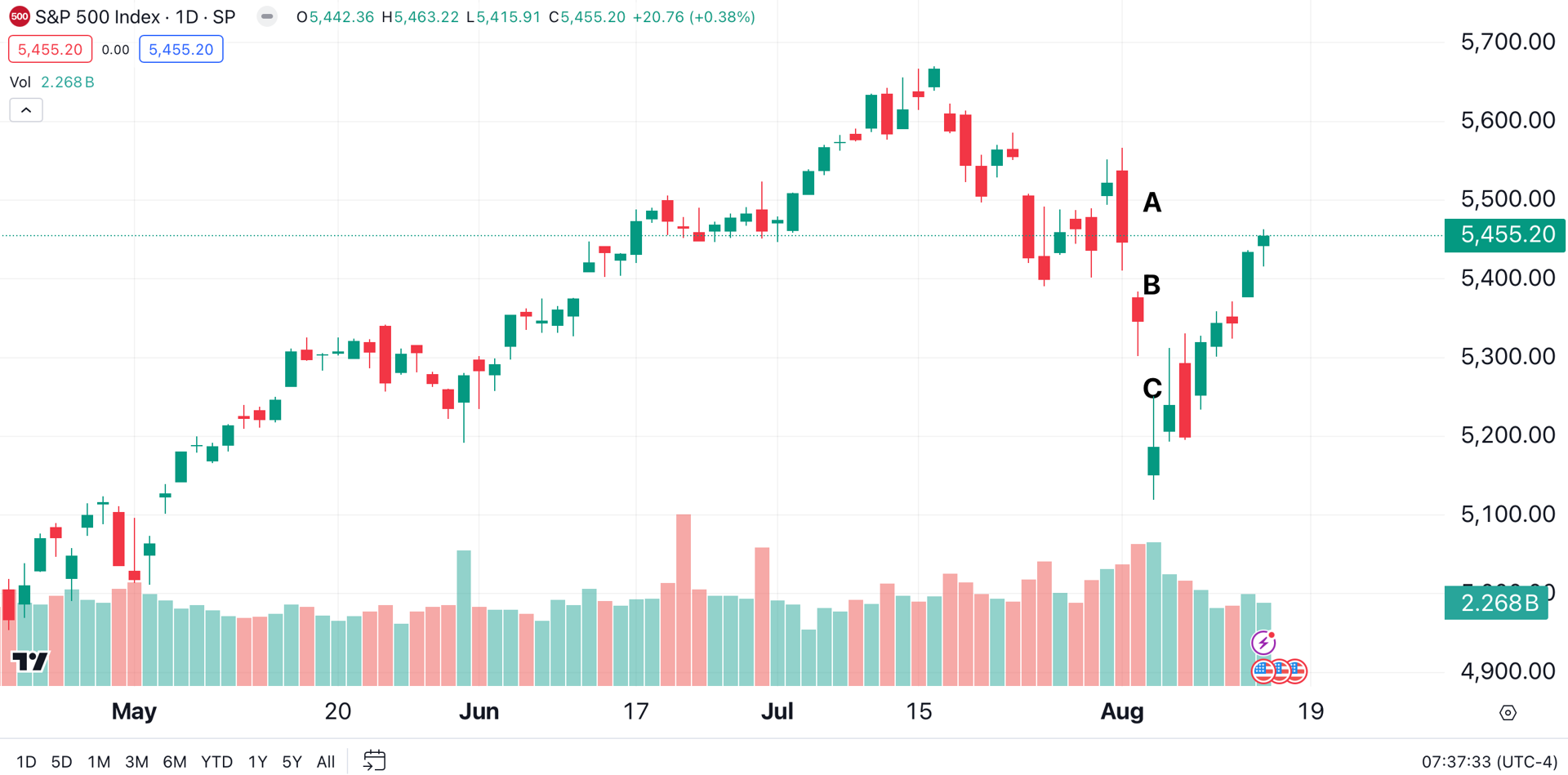
Now, just two weeks later, those gaps have been filled, and the S&P 500 is trading above its August 1, 2024 closing price.
To help understand what’s happening in the market now, let's focus on those gaps.
There are traders who believe that gaps are destined to be filled. This holds true much of the time, especially where the major indices are concerned.
There’s sound logic behind that theory.
Gaps represent areas where buyers and sellers couldn’t agree on a price; therefore no transactions occurred in that area. Because of this, gaps often contain unfilled orders.
This is significant because brokers make money when orders are filled. In their view, gaps are potential profits that have been left on the table.
If there were any unfilled orders due to gaps earlier this month, those orders have now been filled. Therefore, there is no longer an incentive for institutions to push prices in order to fill gaps.
The buy-the-dip crowd was rewarded yet again. Hopefully, investors embraced the pullback, as we suggested here.
The filling of those gaps leaves investors at a crossroads. On the bullish side, momentum could carry us to fresh highs from here.
The S&P 500 is now just 3.8% from its all-time high. Soon, the first week of August could be forgotten, just a bump in the road as markets continue their northward trek.
On the other hand, the reasons why that bump occurred in the first place still exist.
The unemployment rate is ticking higher. Every recession for the past 30 years was preceded by rising unemployment.
One year ago, U.S. unemployment stood at 3.5%. By the start of this year, it had climbed to 3.8%. Now unemployment stands at 4.3%, its highest level in over two years.
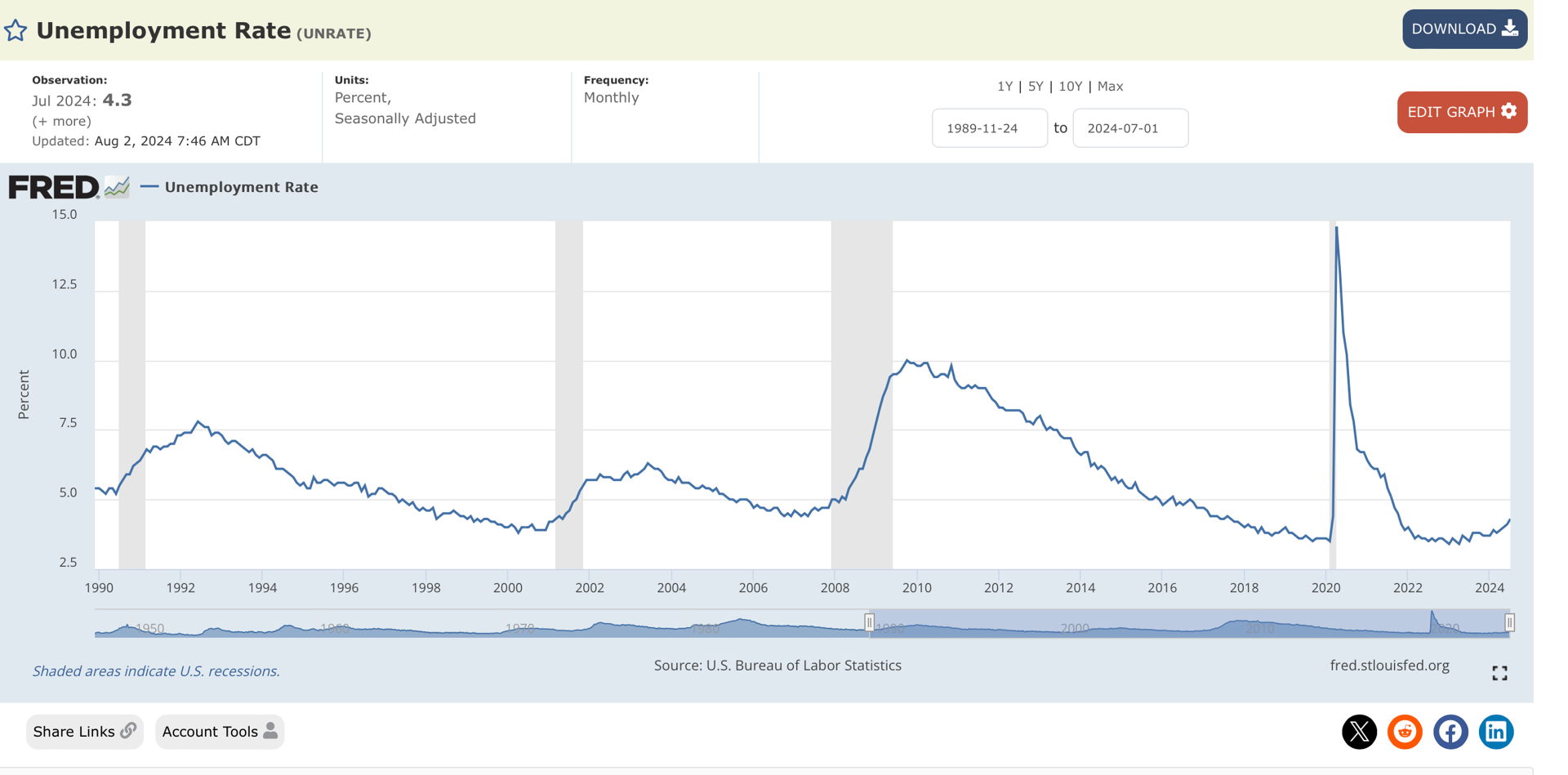
The rising unemployment rate is just one of numerous reasons for investors to feel pessimistic about the U.S. economy. Could it be considered a canary in a coal mine?
Maybe, but that doesn’t mean that disaster is inevitable.
On Sunday’s season premiere of HBO’s "Industry," a drama about life on the trading floor of an institutional investment firm, one of the characters made a jarring comment about the "canary in a coal mine" cliche:
“This business is people making money on a hill of dead yellow birds.”
There will always be concerns. There is always something to fear. If investors stay focused on the long-term trend, they'll be less likely to be rattled by short-term volatility.
At the time of publication, Ponsi had no positions in any securities mentioned.