Here’s How Asia Called the Election Early for Trump
Stock and currency moves in Asia indicated from the get-go that traders were calling a decisive Trump victory, spelling a stronger dollar, higher inflation, and greater trade tariffs.
You've reached your free article limit
You've read 0 of 1 free Pro articles.
Out here in Asia, it was clear as soon as markets opened that they were calling the election for Donald Trump.
Trading is still taking place across much of the region as I write, and election results in U.S. swing states are yet to be finalized. But currency and stock moves indicate investors are prepping for a second Trump presidency.
Hong Kong equity investors have taken fright. The benchmark Hang Seng Index is down 2.5% just ahead of the close on Wednesday, with Trump’s tough talk on tariffs spelling greater friction for the Chinese economy.
The biggest declines came in China-focused consumer stocks as well as major exporters such as solar-panel and solar-glass maker Xinyi Solar XISHY (HK:0968), which suffered the biggest fall, down 5.7% just ahead of Wednesday’s close.
Chinese e-commerce companies JD.com JD (HK:9618), down 4.8%, and Alibaba Group Holding BABA (HK:9988), down 4.5%, also suffered. Electric vehicle maker BYD BYDDY (HK:1211), down 4.1%, and white-goods producer Haier Smarthome HSHCY (HK:6690), down 4.5%, also fell hard.
There’s speculation that many senior Chinese leaders would prefer a Trump presidency, given his divisive nature and lack of success during his first term in terms of diplomacy on the foreign-policy front. But Trump’s election presents a problem for China’s manufacturing output, at a time the Chinese economy is flagging.
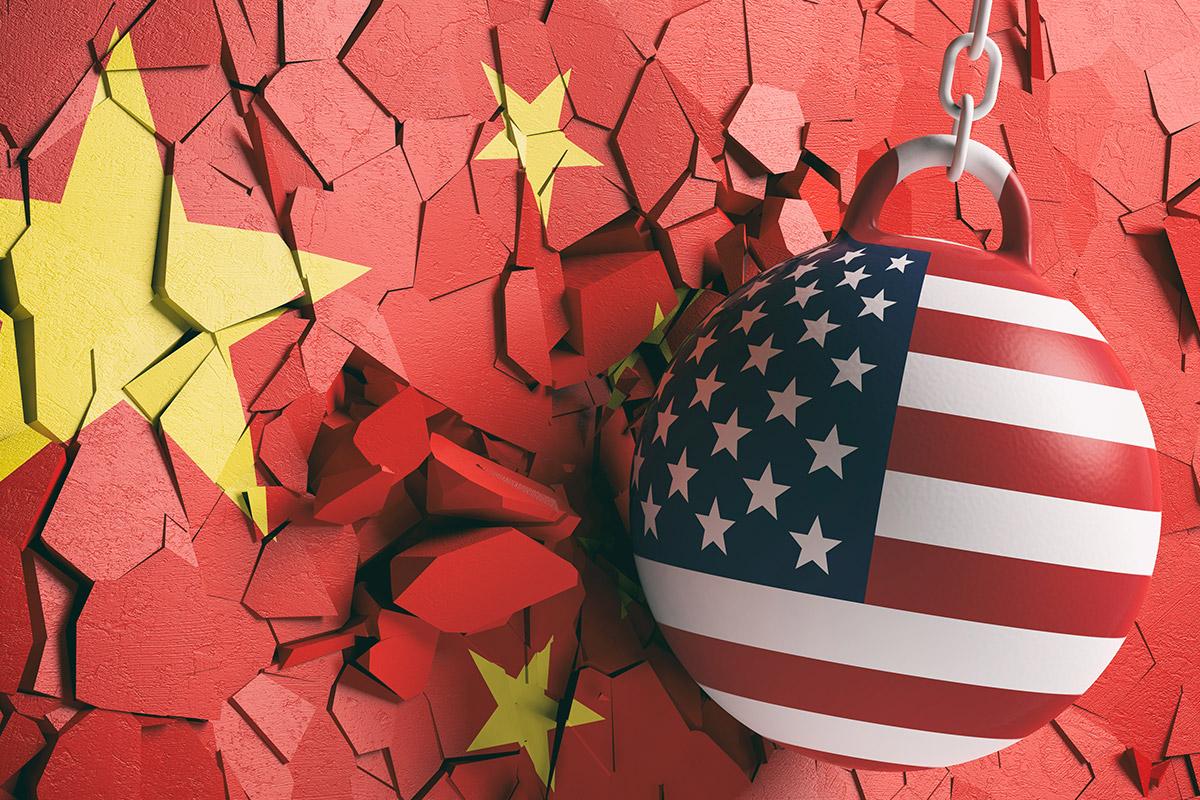
Trump has pledged to slap tariffs of 60% on all goods imported from China, and up to 20% on imports from anywhere else. “Tariffs are the greatest thing ever invented,” Trump said on the campaign trail, in the Rust Belt city of Flint, Mich.
Mainland Chinese markets, which move far slower than the free-trading Hong Kong market, started Wednesday slightly higher. But they gave way as Trump’s victory became clear, with the CSI 300 index of the largest listings in Shanghai and Shenzhen down 0.5% at the close.
China’s leaders are holding a meeting this week that’s expected to result in market-supportive stimulus. But there’s a clear threat to Chinese exporters from a second Trump term, even if such freight duties are inevitably paid by U.S. consumers in the end. Trump’s tariff proposals would increase costs by US$2,600 per year for a typical middle-income household, according to a forecast by the Peterson Institute for International Economics.
The math doesn’t work. But raising tariffs will certainly make imported goods more expensive, reducing demand, decreasing the need for the foreign currency used to buy those imports, and therefore increasing the value of the U.S. dollar. The tariffs will, overall, be inflationary, with inflation peaking between 6.0% and 9.3% during Trump’s tenure, according to Peterson Institute forecasts, then settling 2 percentage points higher than it otherwise would be, at close to 4.0% after Trump’s term.
The Japanese yen has shot from ¥151 to ¥154 to the U.S. dollar, a weakening of 1.7%, as the greenback strengthens across a slew of Asia Pacific currencies. Beyond the U.S. dollar’s status as a safe haven in times of turmoil, it’s likely that Trump will pursue a “strong dollar” policy, counteracting the start of easing rates from the U.S. Federal Reserve.
The U.S. dollar is also 1.6% stronger against its Australian counterpart, 1.3% stronger against the Korean won, and even 0.9% stronger against the Chinese yuan. Typically speaking, tariffs will be inflationary elsewhere in the world, except in China, which is teetering on the brink off deflation already. This may be enough to tip it fully into price decline.
Trump may go further, warning while in Flint that he would punish agricultural-equipment maker John Deere DE with a 200% tariff if it moves production to Mexico, and then ships goods made there back into the United States under the trade deal between the two nations and Canada.
There’s no precedent for tariffs being used by a U.S. president against a single U.S. company. Trump warned that he intends to use tariffs as a major source of government revenue, and to: retaliate against nations with unfair trade practices; rebalance trade with Europe and Japan; penalize American companies; prevent aggressor states from waging war with neighbors; rebuild the American industrial base; repair the U.S. tax base; and cut the federal deficit.
Universal tariffs are also part of his
Trump’s mental image of the U.S. economy is rooted in the 19th century, if you ask me. During his first tenure, he struck what he called the “biggest deal anybody has ever seen” with China on trade, which saw China pledge to purchase US$200 billion in American goods and services, with a focus on agricultural and industrial exports.
It was a trade deal – which China never fulfilled – designed to serve the production lines of Henry Ford and the wheat and potato fields of the American West. The design, technology and intellectual-property advances of the 21st century saw short shrift.
A clear and swift result for the election is a positive for global markets. Outside Hong Kong, most Asian stock markets moved higher on Wednesday, with the Nikkei 225 in Japan up 2.6%.
The Nikkei has a weighting toward “Japan Inc.” and the major exporters that benefit from a weaker yen, both by making their goods cheaper internationally and by inflating profits made abroad, then repatriated home. The broad-market Topix saw a little less of a bounce, up 1.9% on Wednesday thanks to its greater influence from domestic companies.
I’m seeing U.S. networks call the election for Trump as I conclude my piece, with the trading day coming to an end in Asia. But it was already clear from market moves early in the day that traders believed he had won.