3 Massive IPOs Undermine Nvidia’s Market Leadership
The AI sector is undergoing a substantial change as new giants enter the fray.
You've reached your free article limit
You've read 0 of 1 free Pro articles.
A Nvidia (NVDA) beat-and-raise report that produced little movement is the big event of the week, but not because of anything specific in the earnings results. The numbers were better than estimates, with EPS of $1.87 well above the $1.75 consensus, revenue at $81.6 billion topping the $78.9 billion consensus, and the guidance and tone giving bulls everything they had asked for.
The initial after-hours move was lower, and the stock recovered through the night to trade slightly positive early on Thursday. There is the usual analyst price target increases and positive comments but nothing surprising.
I suspect that a sell-the-news reaction to the good news was so well anticipated this time that it isn’t taking place to the extent that it did in prior quarters. We’ll see how NVDA stock acts as the report is digested, but there is a much bigger issue developing that will have a significant impact not only on Nvidia but the entire market.
A Driver That Has Lost Its Lift
The Magnificent Seven trade has been running for two years on a simple theme. Nvidia leads, the rest of the group follows, the index goes higher, and the passive flows reinforce the move. That feedback loop has been driving the chatter about bubbles and overvaluation, but it is on the cusp of a major change.
Without Nvidia leading the charge, the AI group cannot pull the index higher like it did before. Market structure is about to shift, and the recent shift in market character has been a warning that it is coming.
The IPO Wave Is the Other Side of the Story
The news Wednesday that is far more important than Nvidia is that three companies that have spent years as the most-watched names in private markets moved closer to becoming major players in the public market in a single 24-hour window.
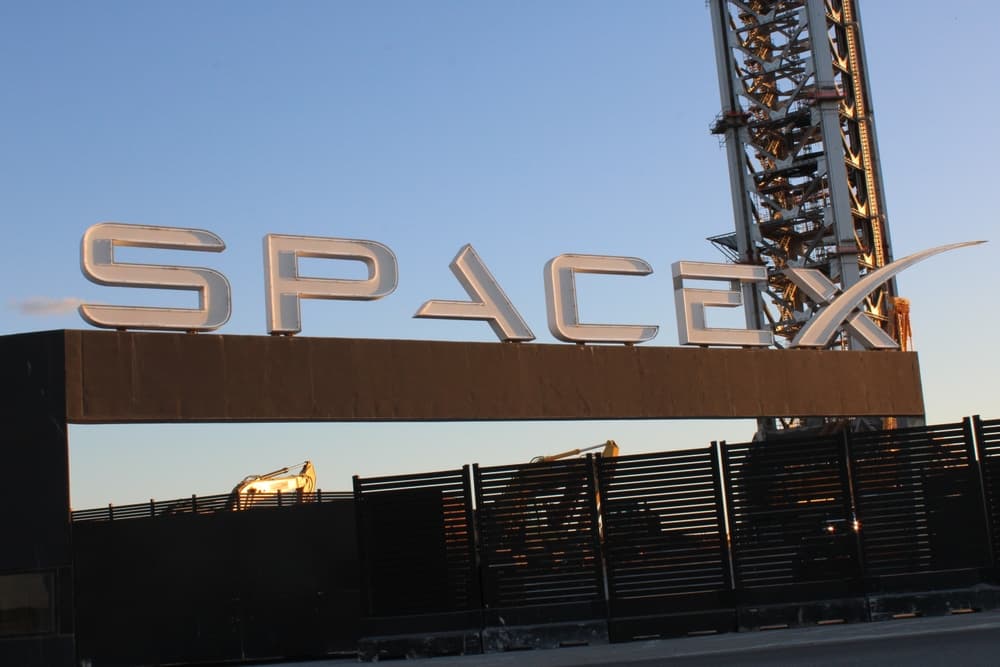
SpaceX filed its public S-1 with the SEC under the ticker SPCX on the Nasdaq, targeting a valuation of $1.75 trillion to $2 trillion with a raise of up to $75 billion. That would be the largest IPO in history by a wide margin. The roadshow is targeted for June 8, with a listing as early as June or July.
OpenAI is preparing to file confidentially as soon as Friday, with a targeted valuation near $1 trillion and Goldman Sachs (GS) and Morgan Stanley (MS) advising.
Anthropic is in active talks to raise $50 billion at a $900 billion valuation, with an IPO targeted as early as October. If all three proceed near the reported ranges, the combined new equity supply would approach $150 billion to $185 billion, a scale with little modern precedent.
The issue here is liquidity, and it will have a significant impact on rotation. New issues of this size do not pull capital out of thin air. Active managers raise cash to participate, and that cash comes out of existing positions. The most obvious source is the existing mega-cap AI group, because the names that get sold to fund the next thing are the names that already worked. That alone creates pressure on Nvidia, the other Mag 7 members, and the broader semiconductor group.
There will be even more pressure from indexing. When SpaceX prices and starts trading, it will eventually be added to the S&P 500 and the Nasdaq 100. So will OpenAI and Anthropic if they proceed near the reported valuations. At a trillion-dollar-plus market capitalization, each of these names commands an index weight that will create forced buying from every passive index fund.
That capital does not come from outside the system. It comes from the existing components, in proportion to their existing weights. The largest existing weights belong to the same Mag 7 names that have led the rally. Index funds will have to allocate more capital to the new entrants and less to the existing leaders, and Nvidia sits at the top of that list.
This is not a theory. It is basic math. The only question is the timing and the magnitude. There will be selling pressure on the Mag 7 group when new giants enter the indexes.
The Other Side of the Same Story
As these giants enter the fray, we have news that Meta Platforms (META) is laying off 8,000 employees. The existing AI infrastructure leaders have matured to the point of headcount consolidation.
The new generation is coming public at trillion-dollar valuations, and the old AI is mature enough to start cutting overhead and reducing its workforce. The ingredients for profound rotation are in place.
Strategy
The character shift in the market that I have been writing about for a week is now gaining a much clearer focus and catalyst. There is a forced rotation out of the existing mega-cap leaders into the new generation of mega-issues, layered on top of the broader rotation out of extended growth into rate-sensitive groups that started the shift in the market.
Money moving from mega-caps to small-caps is one story. Money moving from existing mega-caps to the new mega-caps is a different and bigger one, and it may be the cause of the actual shift in market character that we are now seeing.
My game plan stays where it has been. Cash levels high near 50%, incremental buys small, no rush to commit. The names that benefit from this shift are not the ones currently leading the indexes.
Keep an eye on the rate-sensitive groups that have been ignored for months, the smaller-cap stories that get repriced when the mega-cap concentration unwinds, and the few names with their own specific catalysts. We have been positioning toward that side of the trade in biotechnology names and in National Energy Services Reunited (NESR). The case for this sort of stock picking has improved as a massive shift in the AI sector is about to hit.
The media is just starting to figure out the market repercussions of these giant IPOs, but this story will be a recurrent headline in the months ahead.
At the the time of publication, Rev Shark was long NVDA and NESR.