Taiwan Semi Powers Toward $1 Trillion as Asia’s Most-Valuable Company
Taiwan Semi, the world’s largest chip foundry, with almost two-thirds of the market, is seeing its shares rise as it warns supply for top-flight chips will be tight into next year.
You've reached your free article limit
You've read 0 of 1 free Pro articles.
The world’s leading chip foundry, Taiwan Semiconductor Manufacturing Co. TSM (TW:2330), has nearly doubled in value this year. It's riding high on a wave of excitement about the next generation of chips, and should soon join the exclusive club of companies that are worth more than US$1 trillion.
That strong showing helps explain why the Taiwan market is the top performer in Asia so far this year. The broad-market Taiex is up 36.6% year to date. For Asia, only Japan comes anywhere close to that showing. The Nikkei 225 up also at record levels, with a broader rally than U.S. markets, as I explained in greater detail in my last column. The Nikkei closed Thursday up 0.9% for a 26.8% advance so far in 2024.
TSMC is the largest company in Asia by market capitalization. Its shares are up 3.4% today to a record TW$1,080 in Taipei. That’s on the back of the release of strong sales figures for June, which were up 32.9% year-on-year, meaning revenues for the first half of the year increased by almost one-third, up 28.0%.
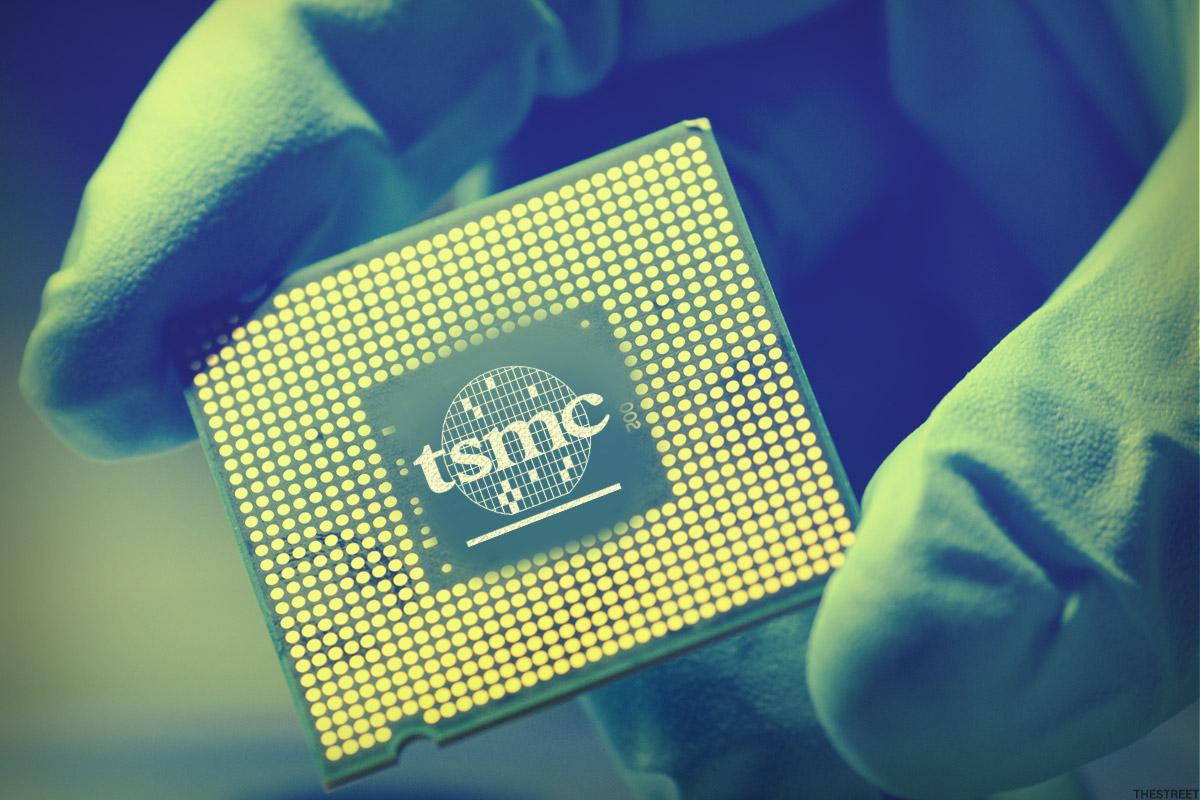
The company will report full second-quarter earnings on July 18. So investors are buying on the monthly sales betting those second-quarter numbers will also look good.
My Street Pro colleague Stephen Guilfoyle ran the ruler over the charts and details of the numbers when the figures came out. Meantime, Morgan Stanley raised its target price on the stock by 9%, saying it expects the company to raise full-year sales estimates when it releases earnings.
I highlighted TSMC as my stock pick in Asia for this year, a call that has paid dividends. The shares are now up 82.1% to date in 2024. I should note that I hold a small position in the stock, which I have maintained at the same level as the start of the year. I wish I’d added to that!
TSMC, based in a science park in the city of Hsinchu, an hour’s drive southwest of Taipei, now has a market capitalization of US$860 billion. Since its New York shares trade at a premium to Taiwan, its market cap has at times crossed US$1 trillion using its Wall Street price.
There are only seven companies already in the US$1 trillion bracket: Apple AAPL, Microsoft MSFT, Nvidia NVDA, Google parent Alphabet GOOGL, Amazon.com AMZN, the Middle East-listed oil giant Saudi Aramco, and Facebook parent Meta Platforms META.
As it currently stands, Apple is currently the world’s most-valuable enterprise, thanks to a June rally. But it, Microsoft and Nvidia have been trading places, all worth more than US$3 trillion.
TSMC, of course, physically makes the most-advanced chips for Apple and Nvidia. So its shares offer a little more value at a current price/earnings ratio of 33-times earnings, slightly cheaper than Apple at 36-times earnings. Both trade at substantially lower multiples than Nvidia, at 78-times earnings, after that stock’s 177.4% run this year.
TSMC last year retook the crown of Asia’s most-valuable company from videogame-and-app designer Tencent Holdings TCEHY (HK:0700). While advances in Artificial Intelligence and data centers have turbocharged the Taiwanese company’s prospects, the malaise that persists in greater China has seen both Tencent and e-commerce platform Alibaba Group Holding BABA (HK:9988) slip.
Tencent remains within the top 20 most-valuable companies worldwide, and retains the title of largest in China, with a current market cap of US$461 billion. China bulls have been waiting for some kind of recovery in Alibaba, which remains highly profitable, but are repeatedly disappointed, its market cap slipping to “just” US$181 billion, having lost 75.5% of its value since the first Covid-era rally in October 2020.
TSMC is so big that it now accounts for 50.1% of the Taiwan MSCI Index, which focuses on large-cap and mid-cap companies. That heavy weighting means investors should look to indexes that cap weightings, if they are seeking broad exposure to the Taiwan market in general.
The Taiex (full name the Taiwan Stock Exchange Capitalization Weighted Stock Index) tries to capture all the stocks in Taipei. TSMC accounts for 17.6% of the exposure, which is a little more reasonable. The Taiex contains almost 1,000 companies (992 to be exact) compared with the 88 big companies tracked by MSCI.
TSMC has a lock on the chip-foundry market, producing chips for all the major designers, and an increasing array of tech companies. It has a 61.7% market share as of Q1, according to Statista, with Samsung Electronics (KR:005930) in second place at 11.0%. If anything, TSMC is building a head of steam – prior to Q3 2019, it had less than 50% of the market.
New York-based GlobalFoundries GFS was in third place but has slipped to fifth, with 5.1% of the market. It’s now behind United Microelectronics Corp. or UMC UMC (TW:2303), also based in Taiwan, and mainland China’s greatest chip hope, Shanghai-based SMIC (HK:0981), with both UMC and SMIC now producing 5.7% of the world’s chips.
The Biden administration’s attempts to curb China’s access to high-end chips is both an opportunity and a threat. Chinese President Xi Jinping has called on China to end its overreliance on foreign-made chips, but analysts say SMIC lags behind TSMC, and can’t make the most-advanced chips.
The tension is prompting TSMC to diversify. The bulk of TSMC’s current production is in Taiwan, its 15 “fabs” on the island bolstered by 2 more in mainland China. But it is looking to expand its global presence.
The Taiwanese company already owns Japan Advanced Semiconductor Manufacturing and has a fab on the outskirts of Portland, in nearby Washington state. But it is building three fabs in Phoenix, where it has announced investment worth a combined US$65 billion.
TSMC will make cutting-edge 4-nanometer and then 2-nanometer chips in Arizona. A new operation should start mass production in Kumamoto in Japan in Q4, and it’s building its first plant in Europe, in Dresden, Germany.
Despite those production plans, TSMC has been stressing that foundry supply will run tight for top-of-line chips in 2025. Watch this space as the company reports next week.