Has the Short Side of Alibaba Become Too Crowded for a Trade?
If the markets turns, crowded shorts are susceptible to a short squeeze.
You've reached your free article limit
You've read 0 of 1 free Pro articles.
In the latest short interest report from www.shortsqueeze.com, the short interest of Alibaba Group Holdings BABA jumped to 42,270,000 shares from 35,100,000 in the prior month. This is a hefty rise and it begs the question whether the short side has become too crowded for a trade or whether the shorts are going to press their advantage. Let's check out the charts and other indicators.
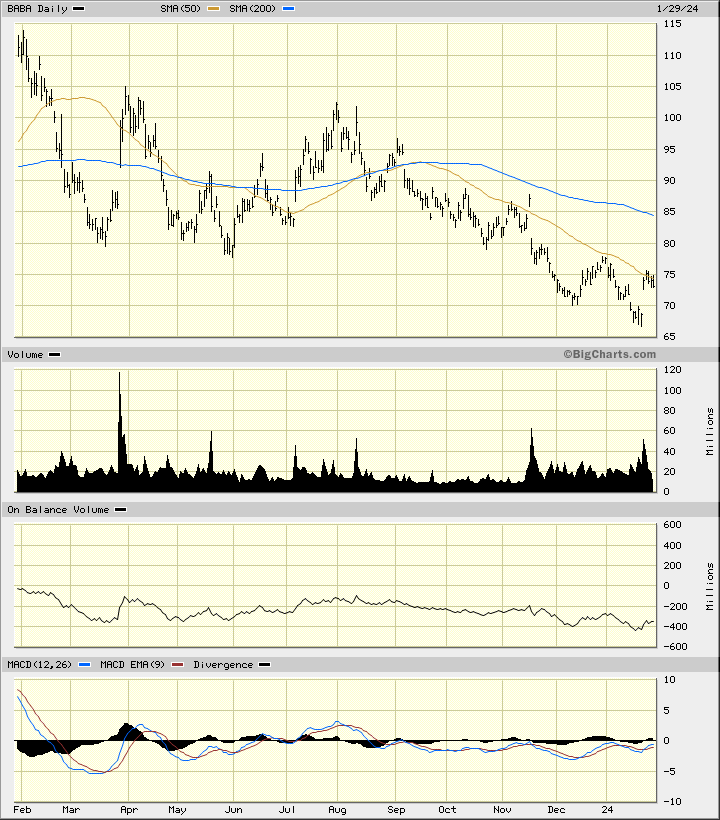
In this daily bar chart of BABA, below, I can see that prices have been weak the past twelve months. BABA trades below the declining 50-day moving average line and below the negatively sloped 200-day line. The trading volume has increased since the middle of November. The On-Balance-Volume (OBV) line has been weakening since August. The Moving Average Convergence Divergence (MACD) oscillator has stayed below the zero line since August and tells us that the trend strength has been weak.
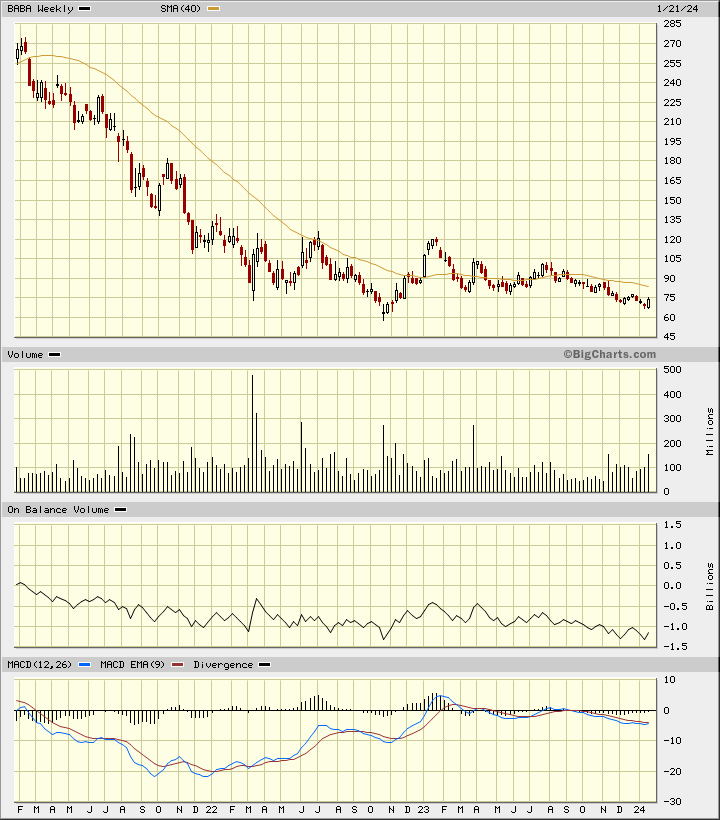
In this weekly candlestick chart of BABA, below, I can see a three-year bear market. Prices have tried to bottom but the sideways price movement has only resulted in weaker and weaker bounces. The slope of the 40-week moving average line is negative so the math tells us that the trend is down.
The weekly OBV line is not far away from making a new low. The MACD oscillator is on a bearish trend below the zero line. Until I see a pattern of higher lows and higher highs on increasing volume I cannot say we are looking at a base.
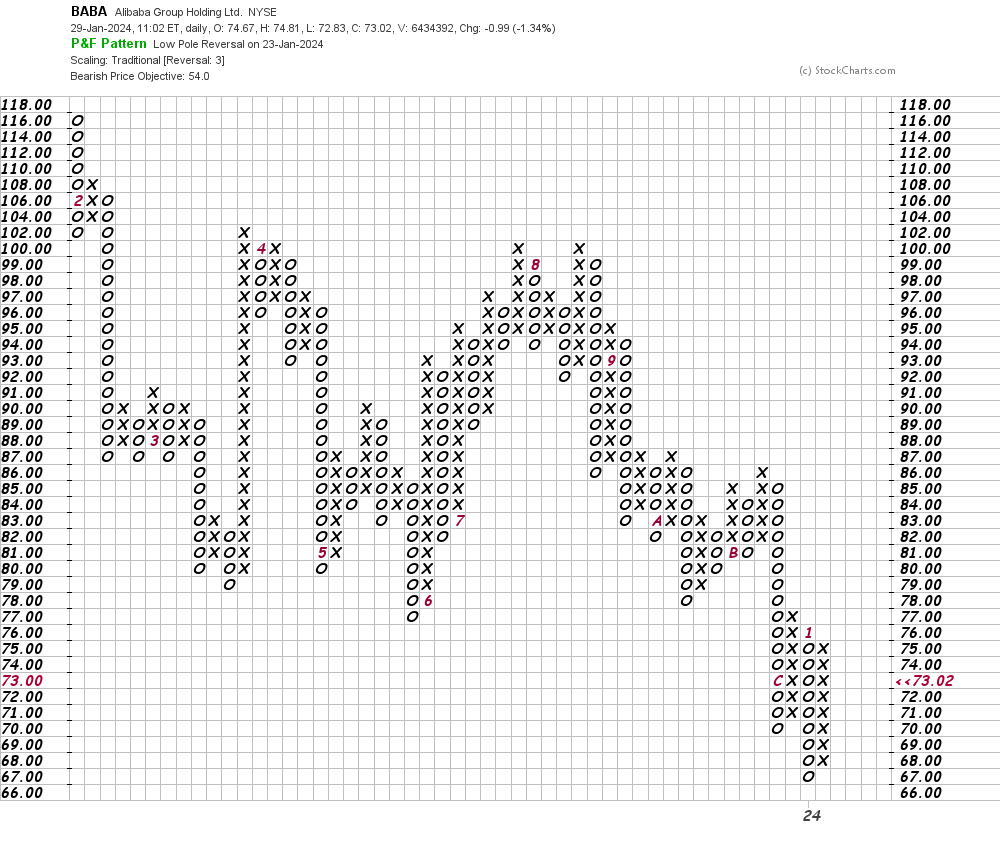
In this daily Point and Figure chart of BABA, below, I can see a downside price target in the $54 area.
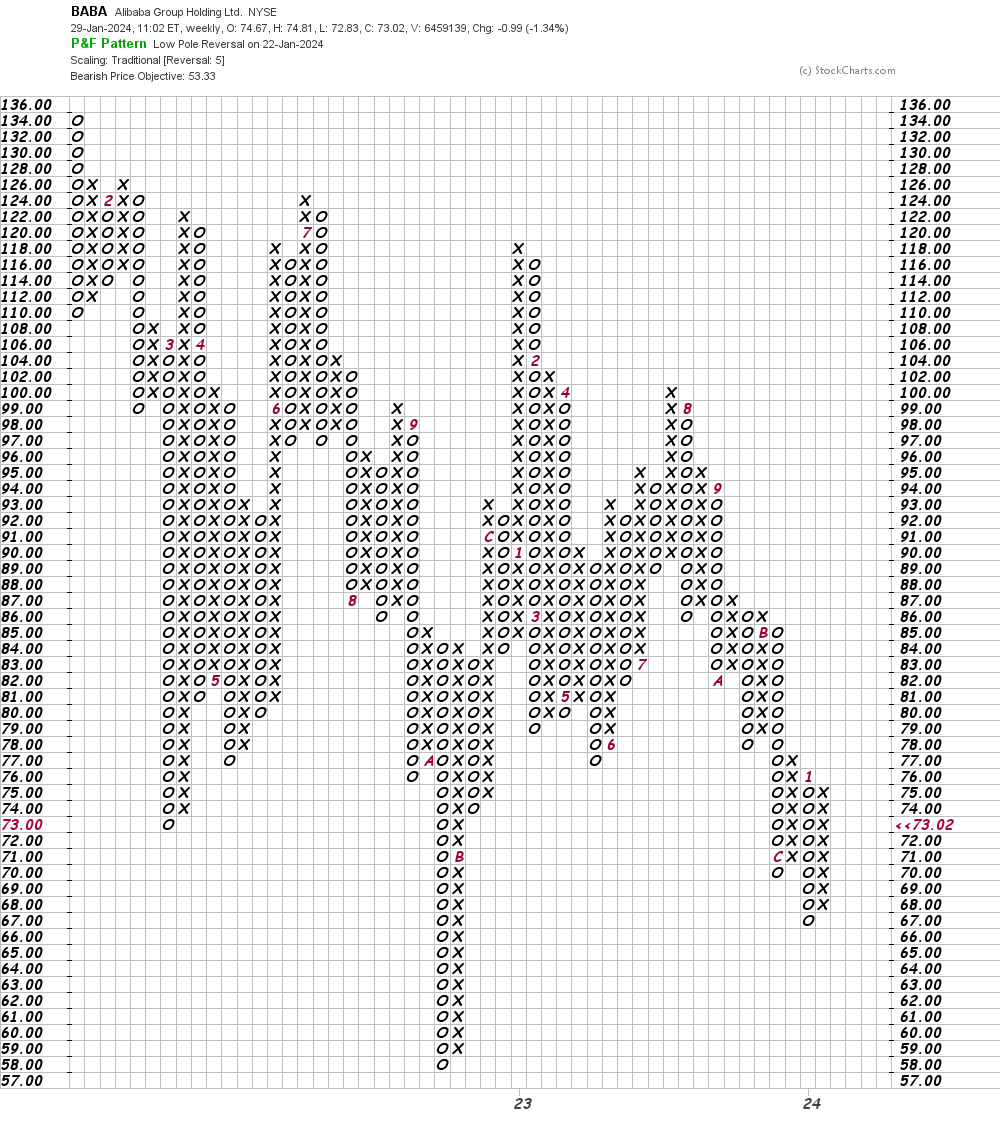
In this second Point and Figure chart of BABA, below, I used weekly price data with a five box reversal filter. Here the software projects a target of $53.
Bottom line strategy: China is looking at different ways to lift its economy while bears point to problems in real estate and demographic issues that cannot be solved quickly. It is easier to look at the trends and price action. It looks like the bears are still in charge.
Employees of TheStreet are prohibited from trading individual securities.