Three AI Stocks About to Roll Over
The good news is, if you own one of these names, you’re probably sitting on a gain. The bad news is the momentum is shifting.
You've reached your free article limit
You've read 0 of 1 free Pro articles.
Is a changing of the guard at hand? Over the past few weeks, secondary names in artificial intelligence have started to pull back.
I’m not talking about the big names in AI. The stocks that immediately come to mind — Nvidia NVDA, Microsoft MSFT, and Alphabet GOOGL — are holding up well, and could see continued gains.
Meanwhile, some less-popular names in this field have been giving up ground. If you’re holding one of these stocks, you’re probably sitting on a gain, but the momentum is shifting from bullish to bearish.
Let’s go to the charts to take a look:
Super Micro Computer
Super Micro Computer SMCI closed at $311 on January 18 (point A). Within two months, the stock traded above $1,200 (point B).
Why did Super Micro Computer rip higher this year? The company provides AI server products, and has partnerships with Nvidia and Advanced Micro Devices AMD.
After nearly quadrupling in price in a short time, Super Micro Computer formed a large descending triangle pattern (dotted lines). The main support for this bearish pattern is near $715.
If that level breaks, SMCI could fall to its 200-day moving average (red), located at $553. The stock’s 50-day moving average (blue) is tilting lower, a bearish sign.
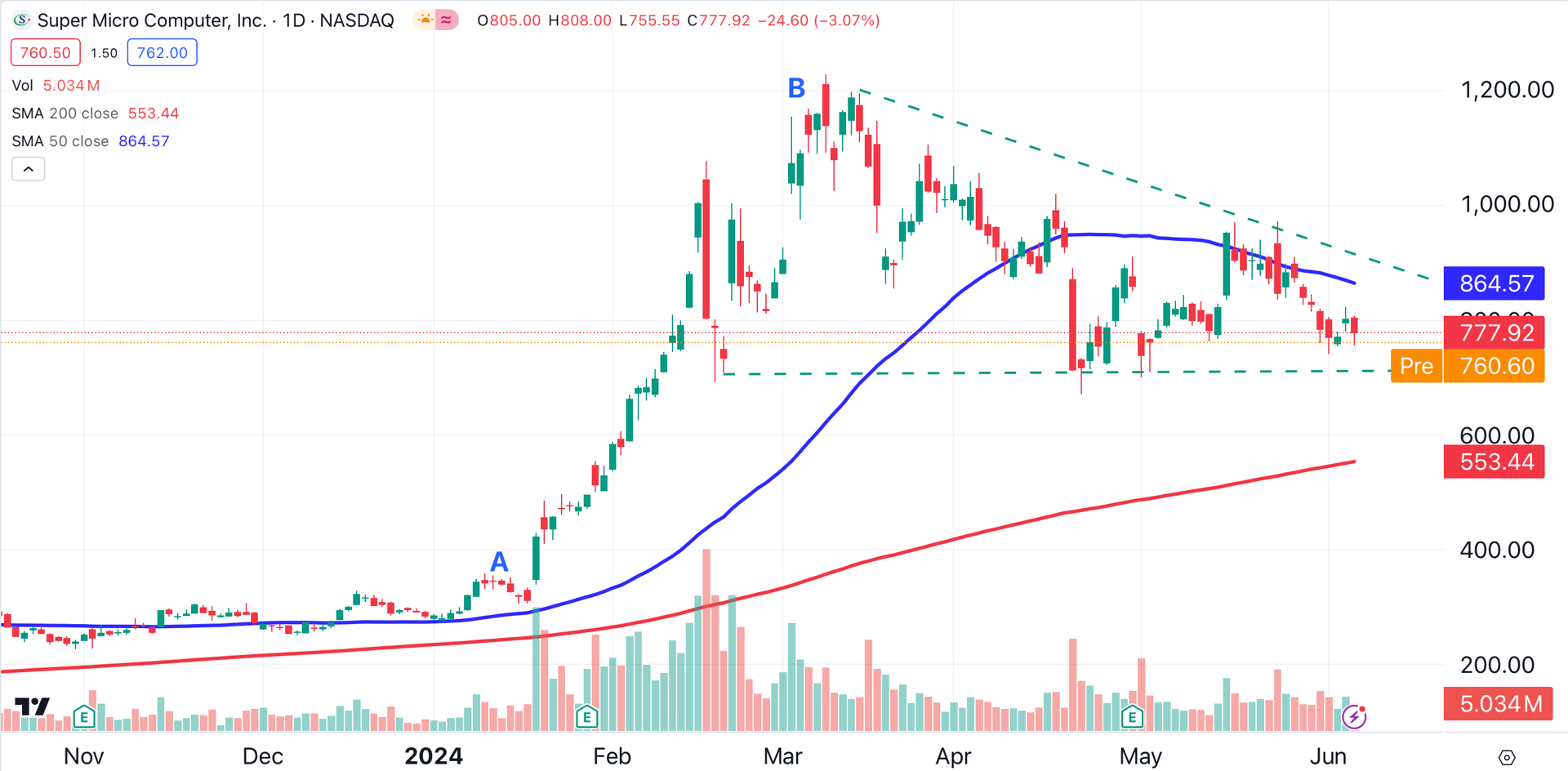
After a multi-month pullback, SMCI is still up 171% year-to-date. This means that many traders are still holding a profit, so the potential for continued profit-taking remains high.
Dell Technologies
Another stock that’s having a banner year is Dell Technologies DELL, which has gained 79% year-to-date. On May 29, the stock closed at its lifetime high (point A).
Two days later, Dell gapped sharply lower after a disappointing earnings report (point B). Investors were displeased to learn that Dell’s AI servers are being sold at a minimal profit.
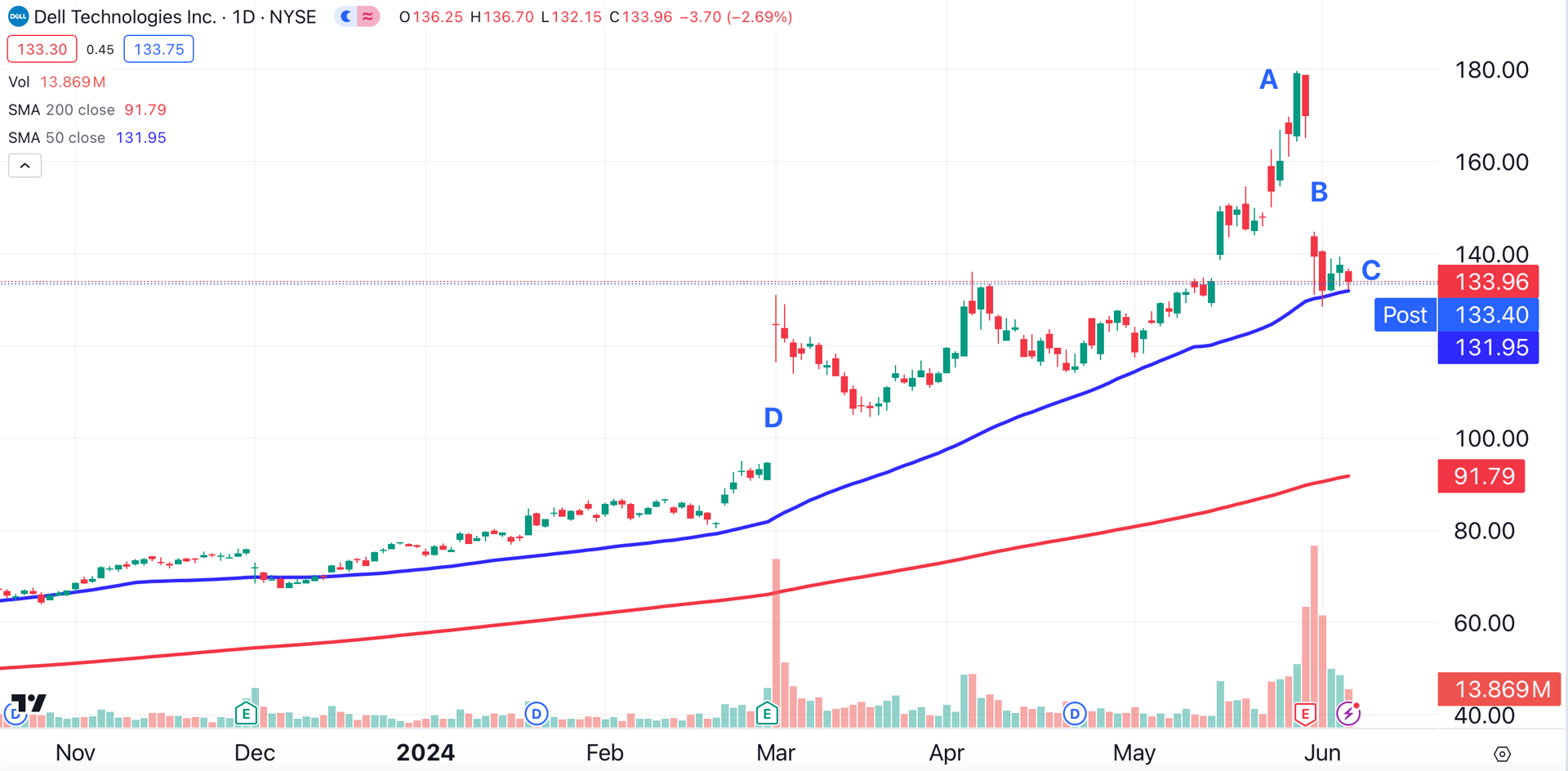
Dell is clinging to its 50-day moving average (blue). Dell has tested that key indicator (point C) repeatedly over the past week.
If the 50-day moving average breaks, look for Dell to fill a gap from its prior earnings report (point D).
Vertive Holdings
Vertiv Holdings VRT is an AI infrastructure play, offering products that power and cool AI systems. Vertiv boasts a 92% year-to-date gain, but the stock’s chart shows waning momentum.
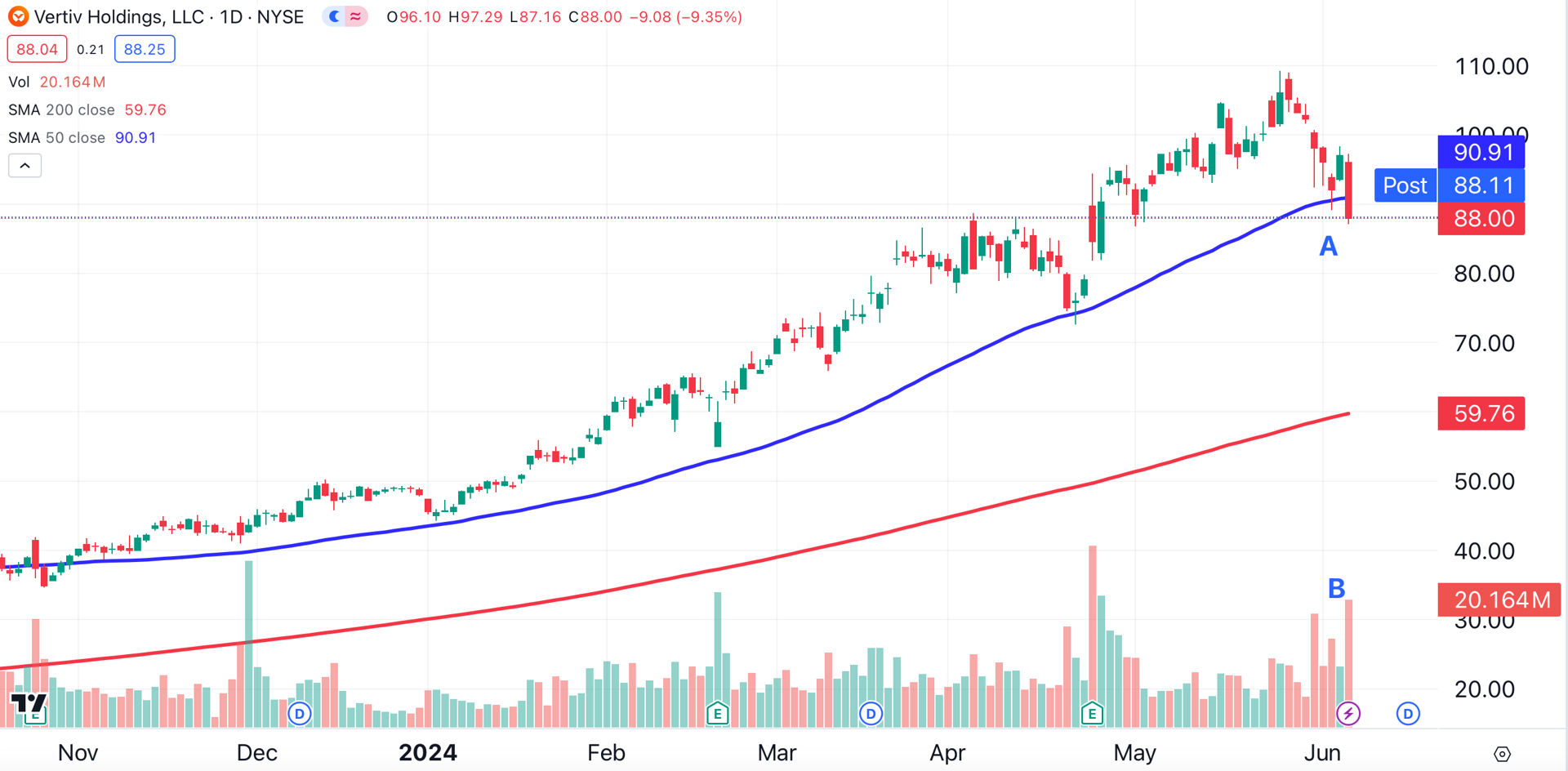
On Thursday, Vertiv closed below its 50-day moving average (blue) for the first time this year (point A). The stock has sold off on heavy volume since late May (point B). Thursday’s 9.35% loss was the worst percentage decline for the stock since September of 2022.
The good news is, if you own one of these stocks, you’re probably sitting on a profit. All three are still in profitable territory for this year. Now might be a good time to protect those gains, either by closing part of the position or via protective puts.
At the time of publictaion, Ponsi had no positions in nay securities mentioned.