Silver Hits Its Highest Price in a Decade: Here’s My Trading Strategy
Shaking off the U.S. dollar rally, silver roars to new heights — and there's a way to play it.
You've reached your free article limit
You've read 0 of 1 free Pro articles.
Silver broke out in a big way on Friday, reaching its highest point since late 2012. On Monday, silver crossed above $34 for the first time in nearly 12 years.
How should traders play this breakout, and what’s next for silver? Let’s go to the chart.
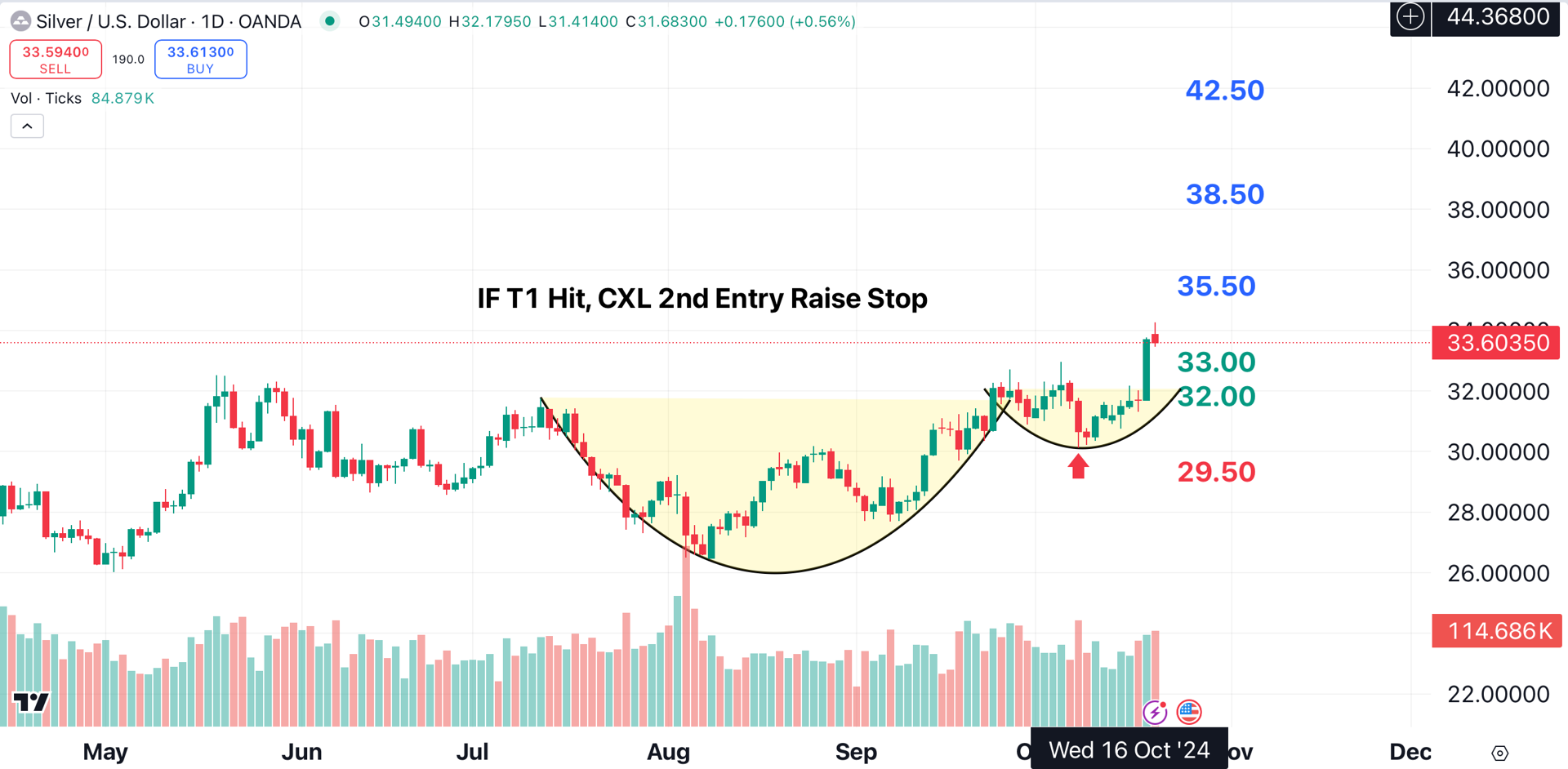
Silver has just broken out of a cup-and-handle pattern (shaded yellow). The bullish formation could also be described as an inverted head-and-shoulders continuation pattern, but it really doesn’t matter what you call it.
In any case, a measured move based on the size of either pattern projects silver to the $38.50 area. That figure will be used as an intermediate target (blue).
Two more targets have been added, at $35.50 and $42.50 (blue). The former corresponds to the monthly high of October 2012, while the latter is just below the highs of August and September 2011.
The stop of $29.50 (red) is below the October 8 low of $30.12 (red arrow). A move below that $30.12 figure creates a lower low, a circumstance bulls should seek to avoid.
The entry is near the breakout point of $32.50. In fact, we’ll use two half-sized entries, one at $33.00 and another at $32.00 (green), for an average entry of $32.50. By splitting the entry, my chance of getting a fill increases, although it’s possible that I may only wind up with half my normal-sized position.
As indicated on the chart, if the first target is hit, and if the $32 entry is unfilled at that time, that entry will be canceled, and the stop will be raised appropriately.
This entry will require a pullback from Monday’s highs, and if that doesn’t happen, I won’t get filled at all. I’m OK with that, because my only other alternative is to chase silver and buy it near its highs.
Buying silver as it reaches new highs might or might not work out, but I generally don’t buy anything as it reaches new highs, or short anything as it reaches new lows. If you've ever been burned after buying at the highs, then you're familiar with my reasoning for preferring a pullback.
Both silver and gold are roaring higher as the U.S. dollar gains strength. This goes against traditional wisdom, which states that the dollar and precious metals like gold and silver have an inverse relationship.
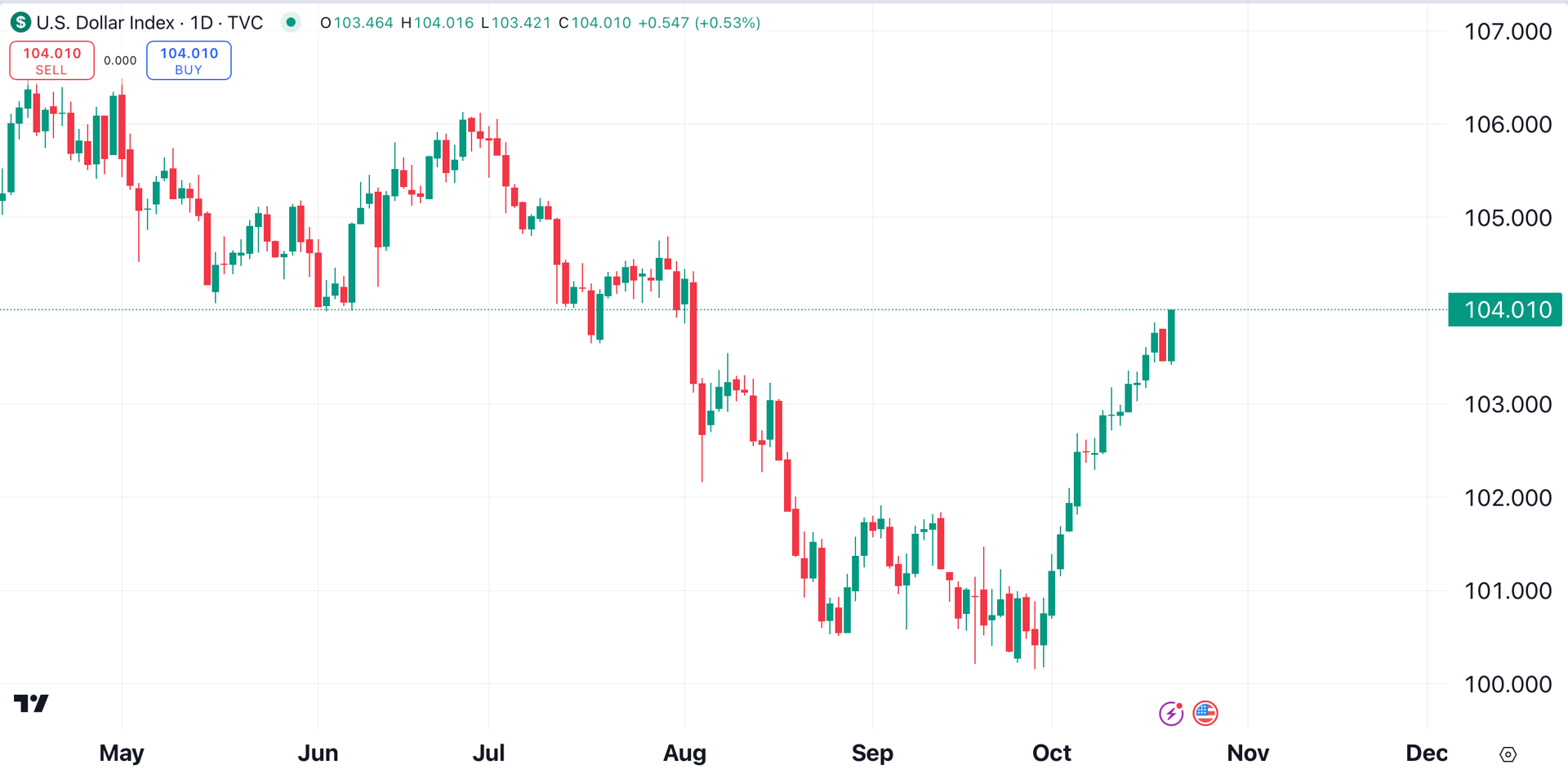
That’s a logical conclusion, and one that is frequently pushed in the academic world. I've read countless books that described the relationship between precious metals and the U.S. dollar as inverse.
While the reasoning behind that inverse relationship makes sense, it doesn’t always hold up in the real world. In the real world of trading, few things are always true, and there are exceptions to nearly every rule.
At the time of publication, Ponsi had no positions in any securities mentioned.