Moving Averages Don't Lie. Here's How to Use Them
Unlike more subject trading tools, this indicator let's traders see their stocks, indexes and other holdings in black-and-white.
You've reached your free article limit
You've read 0 of 1 free Pro articles.
Moving Averages are a great indicator for traders and investors to follow.
Many subjective tools are used by technical analysts and traders, but moving averages are black and white. There is no gray area. Averages smooth out prices, so a trend can be seen as a line, making it easier to find the beginning and the end of a trend. Trend-following indicators lag or follow the price action. They tend to be useful in trending markets and to give poor results or even losses in sideways markets.
I want to point out a little trick or adjustment I sometimes do with averages. The 5-10-20-day moving averages are popular in a number of circles and commodity futures traders in the 1960s shortened that to the 4-9-18 system.
Most traders are familiar with the 200-day moving average line and the trading rules put forth by the late Joseph Granville. Like the futures traders of years ago, I often shorten the 200-day average to the 195-day average line. If a stock has rolled over and declined enough to break the 195-day line it is likely to go on to break the 200-day line.
Easy to understand? Take a look at this daily bar chart of the S&P 500, below:
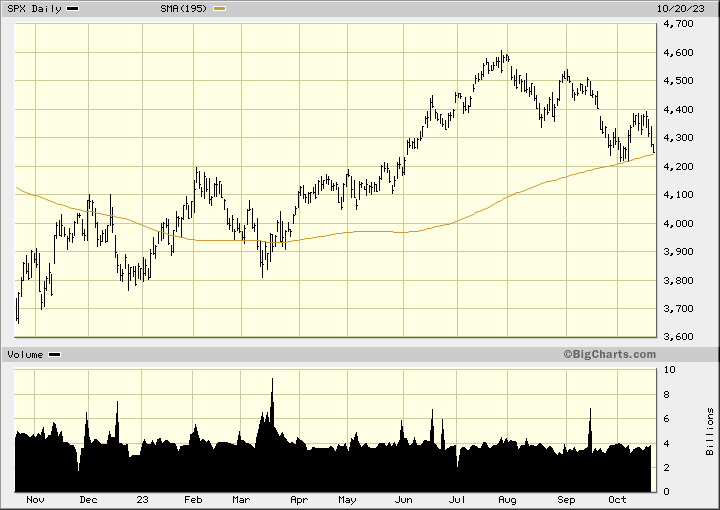
You'll notice I have overlaid the 195-day moving average line, which appears as a smooth, orange line across the chart. While you could continue to listen to the commentators on the financial news channels, you could instead just watch this average line and make your own trading decision.
Employees of TheStreet are prohibited from trading individual securities.