The Russell Rebalance Adds to the Mix as Market Themes Are Shifting Fast
Semiconductor pricing power that drove Thursday’s rally is already being challenged.
You've reached your free article limit
You've read 0 of 1 free Pro articles.
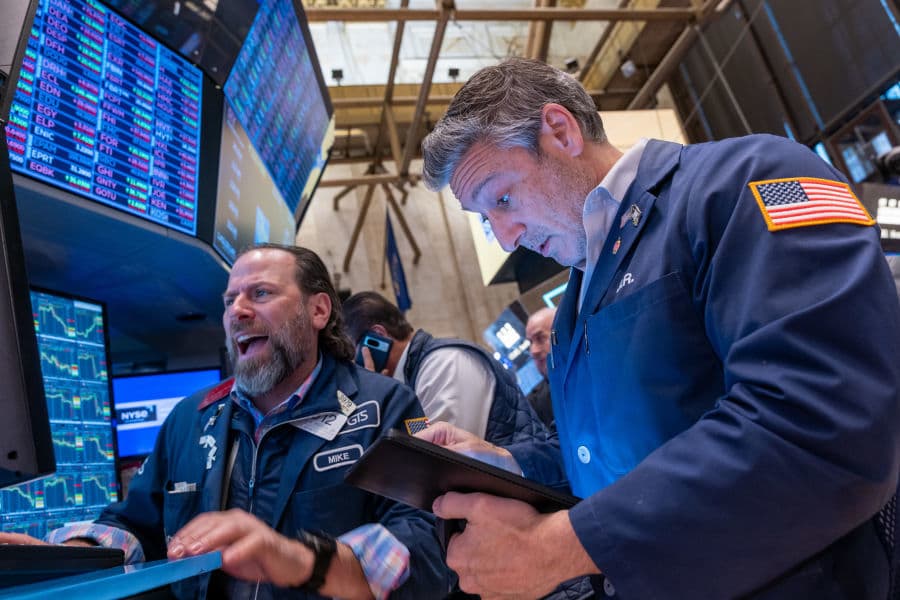
The mood on Friday morning is cautious with mixed action. The Nasdaq 100 (QQQ) is indicated 1.3% lower, S&P 500 futures are down 0.7%, but signs of rotational action persist. The chip rally from Thursday is not extending and the broader market is holding up better than the tech-heavy indexes.
The Russell Rebalance Is the Big Event of the Day
Friday is Russell Reconstitution Day. The rebalance occurs at the close and produces the year’s largest single-day volume as thousands of large blocks cross. Index funds tracking the Russell indexes have to buy or sell the names being added or removed to match the new index composition, and the matching has to happen at the closing prices.
The most interesting development this year is that SpaceX (SPCX) is being added to the Russell indexes Friday. That means every index fund tracking the Russell has to buy SPCX at the close, which creates short-term demand for a stock that has been struggling since its IPO.
The flows are positive for SpaceX into the close and likely create some unwind next week as positioning normalizes. SpaceX is in danger of cracking its post-IPO lows but that will likely be delayed due to the Russell rebalance.
Many other stocks have been moved around in recent sessions in preparation for this event and will see some volatility next week as the speculative positioning that built up around the rebalance gets removed. The price action Friday may be influenced by the rebalancing but it is impossible to game as the brokers that accumulate the funds for the closing traders use a variety of tactics to deliver shares at the best prices.
The Chip Pricing Power Story Is Already Being Challenged
Twenty-four hours ago the narrative was that Micron Technology (MU) demonstrated monopoly pricing power and that the chip suppliers would be the only winners in the AI buildout. The Wall Street Journal called this the third wave of inflation. The MU gross margin of 84.9% was the hard proof.
Friday, the chip narrative is shifting. South Korea’s Kospi closed down another 5.54% overnight, with Samsung Electronics down 6.40% and SK Hynix down 9.92%. This is the second major selloff in Korea this week after Tuesday’s 10% plunge that triggered a circuit breaker. MU is down around 5% in premarket.
The new development is that South Korea’s labor minister urged the country’s biggest tech companies to distribute more of the gains from the AI semiconductor boom with workers and suppliers, saying record profits risk worsening income inequality. That is a margin pressure story for the Korean chip giants that did not exist 24 hours ago.
If the Korean government forces wage and supplier redistributions out of the chip company profit pools, the pricing power story shifts. The market is reading this as the first crack in the cartel pricing power that the MU report seemed to validate.
The other issue facing chips is the threat of diversification. There is already talk that Apple (AAPL) is considering new suppliers in China to reduce its dependence on Korean and U.S. memory makers. The hyperscalers are likely considering similar moves.
The supply timeline of 2027 and 2028 that I wrote about on Thursday assumed the buyers had no alternatives. Once the largest hyperscalers and the largest consumer device maker start qualifying alternative suppliers, the negotiating dynamic changes even before any actual diversification happens. The threat alone is enough to pressure margins.
A Morningstar analyst warned this morning that the current AI-driven memory boom could eventually give way to a supply glut and a sharp revenue decline. Retail traders remain overwhelmingly bullish, with most Stocktwits voters expecting MU to top $1,500 within a year. The divergence between professional caution and retail enthusiasm is the kind of setup that usually resolves with retail being wrong.
My Strategy
My defensive posture remains in place. My cash levels are around 45%. I’m heavily weighted in biotechnology, which has been the rotation winner, but the group is starting to look short-term overbought and may need some consolidation. I am taking partial profits in the names that have run hard rather than riding full positions through whatever Monday brings.
The May Personal Consumption Expenditures report, released Thursday, came in hotter than expected, reinforcing the inflation issue that drove Fed Chair Warsh’s hawkish first meeting. The Fed has more reason to lean hawkish at the next meeting, not less.
This is a market where themes are shifting in days rather than weeks. The Micron pricing power thesis that drove Thursday’s rally is already being challenged 24 hours later. The right approach is to stay flexible, take profits when names run hard, hold cash for opportunities, and let the action confirm the direction before committing capital. The market favors patience and position management over directional bets in an environment that is repricing within sessions.
I’m heading into the weekend with high cash levels and reduced position sizes in the names that ran hard. The Russell rebalance creates noise Friday and the unwind creates more noise next week. Stay in position to act on the next clear catalyst and trend rather than chasing the current action.
At the time of publication, Rev Shark had no positions in any securities mentioned.